Catering
Book Catering: Save Time and Feed Teams Right in 2026
Learn how to book catering fast. Step-by-step for Woodbridge offices: headcount, dietary needs, delivery windows, formats, and recurring programs.
June 26, 2026 · LunchLink
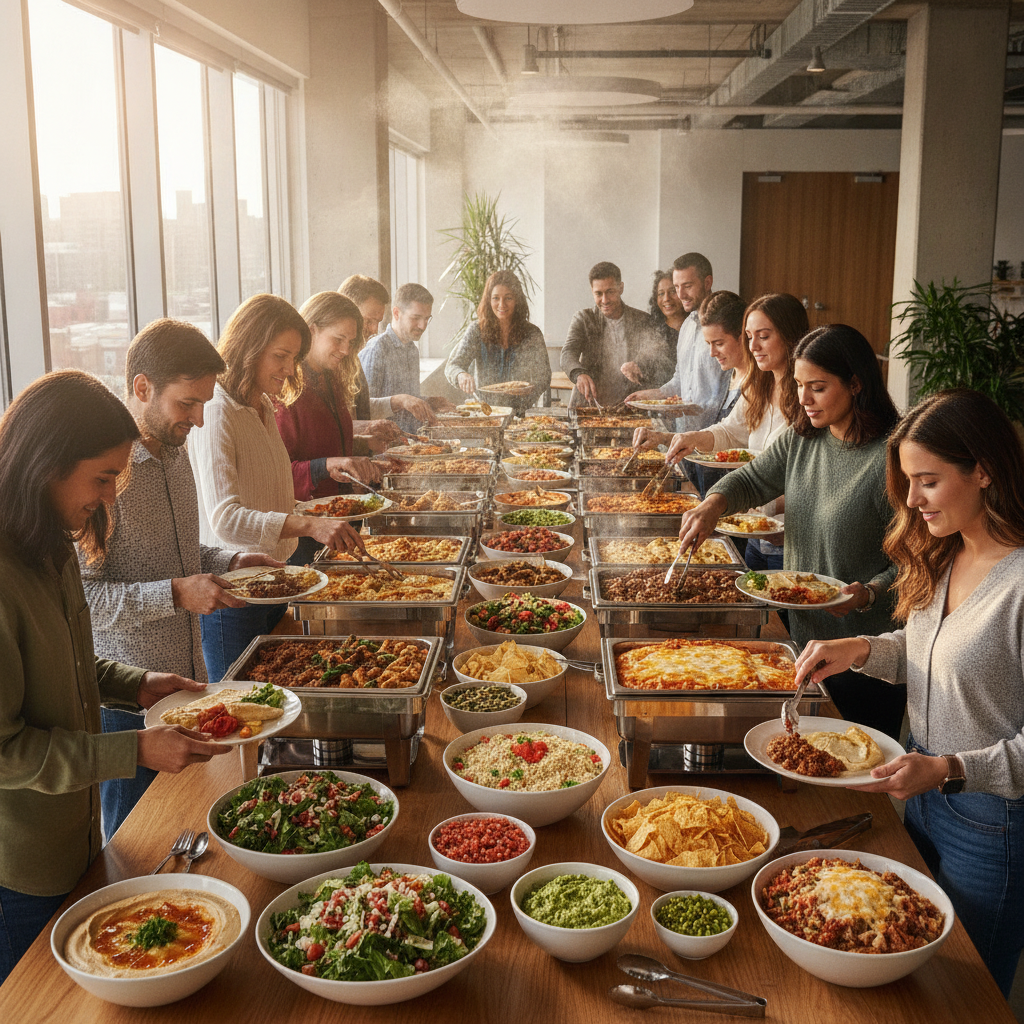
To book catering is to reserve a professional food service for a specific date, headcount, and menu. It covers planning, ordering, and delivery with dietary labeling and setup. For Woodbridge teams, the fastest path is choosing a vetted provider with labeled meals, reliable delivery windows, and easy invoicing aligned to your office schedule.
By LunchLink · Last updated: 2026-06-26
Above the fold: why this guide matters + table of contents
This complete guide shows you exactly how to book catering for office lunches and events—from estimating headcount to choosing service formats, managing dietary needs, and setting recurring programs. Use the step-by-step checklist, templates, and pro tips to reduce admin time, avoid mistakes, and deliver reliably delicious meals.
Corporate meals should be simple, inclusive, and on time. Yet many teams still wrestle with last-minute changes, unclear labeling, and clunky invoicing. This practical, Woodbridge-focused playbook was built for office managers, EAs, HR/People Ops, event planners, and operations leads who need dependable outcomes.
• What booking catering means for corporate offices
• Why great workplace meals improve culture and productivity
• Step-by-step process to go from idea to confirmed delivery
• Which service format to use: individually packaged vs. buffet
• Dietary, allergen, and food-safety musts (with checklists)
• Recurring office meal programs and headcount flexibility
• Tools, templates, and a quick-read booking checklist
Use these deep-dive sections to jump around:
• What is “booking catering”?
• Why it matters for workplaces
• How to book catering (step-by-step)
• Service formats and when to use each
• Dietary accommodations, safety, and labeling
• Logistics, delivery, and recurring programs
• Tools, templates, and resources
• Case studies and real-world examples
• FAQ: Booking corporate catering
• Conclusion and next steps
What is “booking catering”?
Booking catering is the process of reserving professional food service for a date, time, and headcount with a defined menu and delivery plan. In corporate contexts, it includes dietary labeling, setup preferences, invoicing details, and a confirmed logistics window to ensure meals arrive hot, safe, and on schedule.
In practice, to book catering is to align four things: people, menu, timing, and logistics. You capture headcount, dietary needs, and the event schedule, then select a service format (individually packaged meals or buffet-style). Finally, you confirm delivery windows and any onsite setup. Simple in theory—easy in reality when you use a streamlined provider.
• People: headcount, roles (execs, clients, staff), and seating style.
• Menu: cuisine, protein mix, and inclusive options (halal, vegan, gluten-free, nut-free, dairy-free, pescatarian).
• Timing: exact delivery window, meeting agenda, and buffer time to stage service.
• Logistics: building access, loading area, elevator timing, and disposal plans.
LunchLink specializes in workplace-ready details like fully labeled meals, reliable delivery, and corporate invoicing. The team coordinates globally inspired menus—Mexican, Mediterranean, Greek, and healthy salads—so every guest can eat confidently. With 850+ events executed and 25,000+ employees fed across the GTA, consistency isn’t an aspiration—it’s a habit.
Why booking catering matters for workplaces
How to book catering (step-by-step)
Follow a simple seven-step flow: define goals, estimate headcount, capture dietary needs, pick a service format, lock delivery window, confirm menu, and finalize invoicing. This sequence avoids the most common mistakes and gives your team or clients a predictable, polished meal experience.
• Clarify the goal: Internal team lunch, client pitch, training day, or all‑hands? The event type shapes menu tone and portions.
• Estimate headcount: Use calendar RSVPs and add a small buffer for walk‑ins or last‑minute approvals.
• Capture dietary needs: Ask for halal, vegan, gluten‑free, nut‑free, dairy‑free, and pescatarian needs in one quick form.
• Choose format: Decide between individually packaged meals (zero‑touch simplicity) and buffet‑style (communal, flexible portions).
• Lock the delivery window: Align with meeting breaks and building access; share any elevator or security notes.
• Confirm the menu: Balance proteins and sides; include at least one veggie‑forward entrée and a labeled allergen‑safe dessert or fruit option.
• Finalize invoicing: Set cost center, PO, and preferred payment terms; confirm a single point of contact.
Pro tip: For recurring programs, bake steps 1–7 into a standing template so weekly or monthly orders take minutes, not hours. LunchLink can run a rotating global menu and issue one consolidated invoice—reducing admin while preserving variety.
Need a partner that already thinks this way? Explore our corporate catering in Toronto and see how we structure menus for fast, reliable ordering.
Service formats: when to use packaged meals, buffets, and programs
Match the format to the moment. Choose individually packaged meals for easy distribution and precise labeling, buffet‑style for communal energy and flexible portions, and recurring meal programs for predictable cadence, variety, and simplified administration.
Different events call for different service models. A confidential board review benefits from individually packaged, labeled meals—no long lines, no guesswork. A team‑building session or client mixer may thrive with a buffet that invites guests to customize plates. Recurring programs keep morale high and logistics simple for busy offices.
Format Best for Strengths Considerations Individually packaged Trainings, workshops, travel days, offsites Precise labeling; easy distribution; minimal contact Lock counts ahead; build a few flexible extras Buffet‑style Town halls, celebrations, cross‑team socials Customizable; great for varied appetites Allocate staging space; plan service flow Recurring program Weekly lunches; monthly all‑hands Predictable; rotating menus; single invoice Set headcount window; communicate holidays Same‑day / last‑minute Urgent client meetings; extended sprints Fast turn; vetted menus ready to go Keep selections simple; confirm access fast • LunchLink supports packaged and buffet service with fully labeled meals, plus recurring office meal programs coordinated across vetted GTA partners.
• For halal and other inclusive needs, see our halal corporate catering options.
• When speed matters, our same‑day playbooks prioritize reliable, workplace‑friendly menus that travel well.
Teams that align format to event type report fewer service bottlenecks and smoother meetings. We’ve seen this with finance, healthcare, and education clients alike.
Dietary accommodations, safety, and labeling
Inclusive catering covers core dietary patterns (halal, vegan, gluten‑free, nut‑free, dairy‑free, pescatarian) and uses clear, consistent labeling. Strong partners also follow food‑safety controls from prep through delivery to reduce risk while preserving taste and presentation.
Corporate meals succeed when every attendee can scan, select, and eat confidently. That demands precise labels, separation of allergen‑containing items, and packaging that keeps hot foods hot and cold foods cold. LunchLink deploys fully labeled meals and never‑frozen meats, then coordinates trusted couriers to maintain temperature control during transit.
• Core accommodations: halal, vegan, gluten‑free, nut‑free, dairy‑free, pescatarian.
• Labeling: concise descriptors plus clear dietary flags on each item.
• Separation: pack allergen‑free meals apart from common platters; avoid cross‑contact.
• Temperature control: stage hot and cold zones; use insulated carriers; minimize door‑to‑door time.
The list of major allergens used in U.S. On illness prevention, you’ll find the scale of the challenge—1 in 6 Americans affected each year—summarized in CDC estimates. Great operations turn those facts into routines.
Want a deeper overview of how we operationalize safety and inclusion across cuisines? Skim our corporate catering guide next.
Local considerations for Woodbridge
• Plan delivery windows around typical mid‑morning traffic patterns to keep hot foods within target temperatures upon arrival.
• In colder months, allow a few extra minutes for staging near building entrances so insulated carriers don’t sit in the cold.
• For larger town‑hall lunches, confirm elevator availability and a contact at reception to speed courier check‑in.
Logistics: delivery, setup, and recurring programs
Successful logistics pair a clear delivery window with building access notes, staging space, and a single point of contact. Recurring programs add cadence—rotating menus, predictable invoicing, and headcount flexibility—so coordination time drops while meal quality stays high.
Operational clarity is half the battle. Share suite access instructions, a reachable phone number, and any security timing. If your meeting has a hard start, target a 20–30‑minute buffer for staging. For recurring programs, align a default delivery slot and roll weekly headcounts 24 hours in advance.
• Delivery windows: Set a 15–30‑minute arrival range aligned to the agenda.
• Staging and flow: Reserve a counter or table near the meeting room to reduce travel time with plates.
• Recurring cadence: Weekly, bi‑weekly, or monthly with rotating menus to keep variety high.
• Invoicing and admin: One invoice; one point of contact; standardized cost‑center fields.
LunchLink manages recurring office meal programs across vetted Toronto partners. Many clients “set and forget” their weekly schedule, then review menus quarterly. This preserves variety across cuisines—Mexican Mondays, Mediterranean Wednesdays, Greek Fridays—without adding admin overhead.
Ready to streamline your logistics? Our office catering page outlines delivery and setup preferences that work best in professional spaces. For hands‑on events planning, also see how to elevate corporate catering.
Tools, templates, and resources
Use a one‑page intake form, a headcount and diet tracker, and a run‑of‑show checklist. These simple tools cut planning time, prevent ordering gaps, and make it easier to hand off responsibilities across office management, HR, and operations.
One‑page intake form
• Event name, date, and owner; meeting purpose and audience type (internal, client‑facing).
• Desired cuisine and format (packaged, buffet, recurring).
• Headcount target with ± buffer; delivery window; building access notes.
• Corporate invoicing details (cost center, PO, contacts).
Headcount and diet tracker
• Columns for attendee name, RSVP, and dietary flags (halal, vegan, gluten‑free, nut‑free, dairy‑free, pescatarian).
• Automate totals by category; reserve a few flexible meals to handle surprises.
Run‑of‑show checklist
• Delivery buffer confirmed; staging tables clear; cutlery/plates/napkins arranged.
• Signage for allergens and traffic flow (left‑to‑right on buffets).
• Post‑event wrap: leftovers plan, sustainability notes, quick survey link.
LunchLink’s forward‑looking technology includes an upcoming app for individual ordering, live tracking, and admin dashboards—ideal for larger headcounts and flexible hybrid schedules. Until then, a shared spreadsheet plus calendar reminders work surprisingly well.
Need a 10‑minute planning consult? Our coordinators can translate your meeting plan into a labeled menu and delivery window. Start here: office lunch catering.
Case studies and real‑world examples
Corporate teams across finance, healthcare, education, and professional services use structured booking to reduce admin time and improve meal quality. These anonymized snapshots show how aligning goals, format, and logistics translates to reliable outcomes at scale.
Healthcare campus lunch‑and‑learn
• Context: A multi‑building healthcare team in the GTA needed 120 boxed lunches with halal, vegan, and gluten‑free coverage.
• Approach: Individually packaged Mediterranean and salad options; separate allergen‑safe packing; 30‑minute delivery buffer.
• Outcome: On‑schedule service; zero labeling questions; positive feedback on freshness.
Quarterly finance all‑hands
• Context: A downtown finance group alternates between buffet and packaged meals for 180–220 attendees.
• Approach: Buffet for celebrations; packaged for training days; rotating Mexican, Greek, and healthy salad menus.
• Outcome: Fewer lines; clear labels; simplified invoicing through a single point of contact.
Education program welcome week
• Context: Staggered orientations across three days with variable headcounts and strict building access windows.
• Approach: Recurring schedule with rolling headcount updates; mixed buffet + packaged hybrid for flexibility.
• Outcome: Consistent experience; easy adjustments; strong reviews from staff and students.
LunchLink’s track record—850+ events, 25,000+ people fed, 98% client satisfaction—reflects a focus on details that matter most in office environments: timing, inclusion, and presentation.
FAQ: Booking corporate catering
Booking corporate catering starts with your headcount and dietary list, then moves to menu selection, delivery timing, and invoicing. These quick answers address the questions we hear most from office managers, EAs, and event planners coordinating meals in professional settings.
How far in advance should I book catering?
For standard office lunches, a few business days is ideal. For larger town halls or multiple dietary constraints, aim for a week or more. If you’re in a pinch, LunchLink supports last‑minute and same‑day options with vetted menus that travel well.
What’s the best format: packaged meals or buffet?
Choose packaged meals for trainings, offsites, and precise labeling; choose buffets for celebrations and social energy. Many offices alternate formats based on event goals. For recurring programs, a rotating mix maintains variety while fitting different agendas.
How do you handle dietary restrictions safely?
We label every meal clearly and separate allergen‑safe items during packing and delivery. Our menus cover halal, vegan, gluten‑free, nut‑free, dairy‑free, and pescatarian needs so attendees can choose confidently without disruption.
Can I set up a recurring office meal program?
Yes. We establish a regular cadence, a rotating global menu, and a 24‑hour headcount update window. You get one point of contact and simplified corporate invoicing, so weekly lunches take minutes to manage.
What cuisines work best for mixed groups?
Mediterranean, Mexican, Greek, and salad‑forward menus perform well with diverse tastes. We balance proteins, grains, and vegetables so everyone—from halal to vegan to gluten‑free—has a satisfying option without compromise.
Conclusion and next steps
Booking corporate catering is straightforward when you align goals, headcount, diet coverage, format, and logistics. Use one provider, one invoice, and rotating menus to simplify operations and keep teams happy—from weekly lunches to high‑stakes client meetings.
Key takeaways
• Define the goal, then select format and delivery around the agenda.
• Collect dietary needs early; label clearly to reduce friction.
• Use recurring programs to cut admin while maintaining variety.
• Choose partners with proven delivery reliability and corporate invoicing.
Action steps
• Outline your next event using the intake form fields.
• Decide between packaged, buffet, or a hybrid plan.
• Send headcount and dietary list; confirm a delivery window.
• Lock your menu and relax—your meals are handled.
Ready to book catering for your Woodbridge office or GTA event? Start with office lunch catering or explore office catering options. Prefer a big‑picture overview first? See our boardroom‑to‑BBQ guide.