Guides
Boxed lunch meal prep: why it matters for Toronto offices
Six-item decision checklist to help Toronto office managers choose DIY boxed lunch meal prep or order individually packaged boxed lunches from a local caterer.
August 6, 2026 · Yash Patel
Boxed lunch meal prep: why it matters for Toronto offices
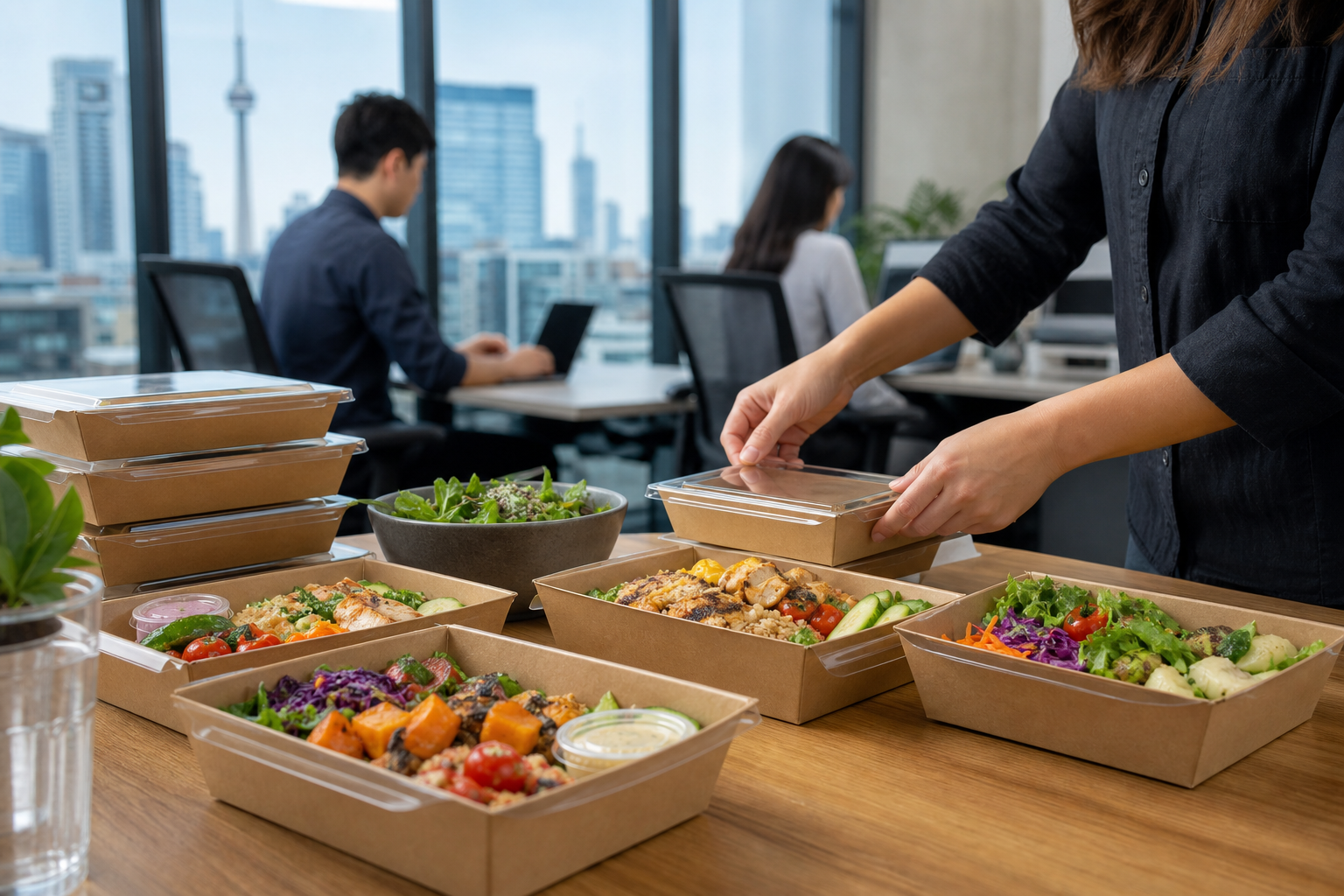
Boxed lunch meal prep is the process of assembling individually portioned lunches ahead of distribution at work. For Toronto offices the practical choice is usually between in-house, do-it-yourself prep and ordering individually packaged boxed lunches from a caterer. That choice affects food safety, dietary risk management, staff experience, procurement simplicity, and final cost. This article gives a concise six-point decision checklist you can use to decide quickly whether to self-prep or outsource boxed lunches for a Toronto or GTA workplace.
Why this decision matters
Making the wrong choice can create avoidable problems: allergic reactions from unclear labelling, cold-chain failures that spoil meals, hidden vendor fees that blow budgets, or an uninspiring menu that reduces participation. Conversely, a vetted caterer who supplies labeled, individually packaged meals and consolidated invoicing can save time and reduce procurement overhead. Local vendor signals to compare include per-meal labeling, claimed same-day capability, and whether volume pricing or free delivery applies to your order (LunchLink).
Six decision signals: quick guide to choose caterer or self-prep
Use these six signals as a rapid checklist. For each item, either confirm internal capacity and controls, or ask a vendor to prove compliance.
• Food safety, including cold-chain controls and allergen separation.
• Dietary needs and labeling, such as halal, vegan, gluten-free and clear ingredient lists.
• Cost and invoicing, the true landed cost after labour, packaging and delivery.
• Logistics and timing, for same-day orders, headcount flexibility and recurring deliveries.
• Portion sizes and menu variety, to satisfy a diverse team.
• Packaging and presentation, including sustainability and client-facing standards.
Read the checks below for the specific procurement evidence to request under each signal.
Food safety: cold chain, labeling and allergy controls
Packed lunches require the same basic food-safety controls as any catered meal. Practical checks include confirming proteins are fully cooled before boxing, packing dressings separately to preserve texture and reduce cross-contamination, and transporting meals with cold packs or refrigerated vehicles. Industry checklists stress a maintained cold chain and clear allergen labelling for transported meals; use those items as non-negotiable criteria when comparing options (work-lunch cold-pack checklist, tips for keeping salads crisp).
If you self-prep, document and assign responsibility for cooling times, refrigeration capacity, and transport equipment. If you use a caterer, ask for written confirmation of cold-chain procedures, photos of sample packaging, and whether meals are prepared and boxed in temperature-controlled kitchens.
Dietary needs and labeling: halal, vegan, gluten-free and more
Clear ingredient lists and per-meal labels reduce legal and HR risk and improve staff confidence. Request an itemized ingredient list and sample label for every menu item. Prefer vendors that advertise inclusive options and fully labeled meals, and verify claims in writing. If you self-prep, implement strict separation procedures for allergen-containing components and require printed labels that travel with each boxed meal (LunchLink provides labeled options).
Cost and invoicing: per-person pricing, hidden fees and volume discounts
Compare total landed cost, not only the per-box price. Include delivery fees, packaging, gratuities, taxes and staff time to source ingredients and prepare meals. A quick budget test compares staff-hours and food cost per person for DIY against a vendor quote that includes corporate invoicing and volume discounts. Written vendor quotes should break down food, packaging and delivery to reveal true savings (simple budget test).
Ask whether an advertised baseline price applies to your chosen menu, and whether consolidated invoicing, free delivery or volume pricing is available for recurring programs.
Logistics and timing: same-day options, delivery windows and headcount flexibility
Operational realities often determine whether self-prep is practical. If you need same-day orders, 24-hour headcount flexibility, recurring weekly deliveries, or live delivery tracking, a vendor with those capabilities usually outperforms an internal team. Confirm lead times, cut-off windows and whether the vendor offers live tracking or last-minute adjustments in writing (LunchLink advertises same-day and recurring options).
Portion sizes and menu variety
A balanced boxed lunch typically combines a wholegrain, a lean protein and at least one serving of vegetables; that baseline helps avoid under-portioning or repetitive menus (balanced packed-lunch baseline). For recurring programs or large groups, vendors with rotating menus or vetted partner networks provide variety that keeps participation high. Ask for sample menus and photos for the exact items you plan to order.
Packaging and presentation: professional expectations and sustainability
Packaging affects perceived value and environmental impact. Decide whether you need individually sealed boxes, branded presentation or compostable materials for client-facing events. Vendor-supplied, labeled packaging reduces onsite setup time and improves sanitation. If sustainability is a priority, ask for material specifications and compostability documentation and confirm your office waste streams can process those materials.
Food-safety checklist to follow when packing or ordering boxed lunches
• Confirm proteins are cooled before boxing and pack dressings separately to reduce cross-contamination and preserve texture (keep dressings separate).
• Require per-meal allergen labels and an ingredient list for every menu item.
• Document transport method and cold-pack procedures for every leg of delivery (cold-pack checklist).
• Verify sample packaging and photograph a completed boxed meal before approving a recurring program.
• If self-prepping, assign clear roles for prep, cooling, packing and transport, and confirm refrigeration capacity for final storage.
Procurement checklist: contract and invoicing items to confirm
• Per-person price with a full breakdown: food, packaging, delivery, gratuity and taxes.
• Minimum guest counts, cancellation and adjustment windows, and penalty fees.
• Sample menu, sample ingredient list and sample allergen label files.
• Insurance and food-safety certifications, plus one point of contact for the account.
• Whether recurring programs include consolidated invoicing and volume pricing.
When to choose boxed lunches versus buffet-style service
Choose boxed lunches when you need desk-side distribution, strict allergen control or minimal onsite setup. Choose buffet-style service for client events that require hot food presentation, plated service or a display. For a fuller comparison, review the internal resource comparing boxed lunches and buffet office formats (boxed lunches vs buffet office).
Common objections and practical responses
• "DIY is cheaper." Run the budget test. Include staff labour, kitchen supplies, transport and waste. Vendor volume pricing and consolidated invoicing often offset internal labour costs (budget test).
• "We must control ingredients." Request full ingredient lists and sample labels before placing your first vendor order.
• "Vendors can’t meet certs." Ask for written confirmation of halal sourcing or other certifications; if unavailable, consider controlled DIY or a certified specialist.
• Sustainability concerns. Ask for material specs and compostability documentation and confirm your waste-handling capacity.
• Last-minute changes. Prioritise vendors that advertise same-day ordering and headcount flexibility and confirm cut-off windows in writing (LunchLink).
Copy this six-item decision checklist for boxed lunch meal prep
• If you cannot guarantee cold-chain controls and cooled proteins during transport, order from a caterer.
• If you require per-meal allergen labels and halal or vegan certification, order from a caterer that provides ingredient lists and labeled meals.
• If total landed cost including labour and packaging is higher for DIY after a budget test, order from a caterer.
• If you need same-day orders, recurring weekly delivery or live tracking, choose a vendor with those operational guarantees.
• If you must serve a large, diverse team with rotating menus, choose a caterer with vetted partners and sample menus.
• If presentation, branded packaging or compostable materials are required for client-facing events, order from a caterer who supplies professional packaging.
FAQ
Can a caterer provide per-meal ingredient lists and allergen labels for boxed lunches?
Yes. Reputable corporate caterers supply itemized ingredient lists and printed allergen labels for each boxed meal on request. Always request sample labels before confirming a program and keep copies on file for HR or security teams (LunchLink).
How far in advance should I confirm a boxed-lunch order for a Toronto office event?
Lead times vary by vendor and order size. For standard menus and small groups, 48 to 72 hours is common. Catering companies that advertise same-day capability may accept last-minute orders; always confirm cut-off times in writing.
Will ordering from a caterer support last-minute headcount changes or same-day needs?
Some vendors offer headcount flexibility and same-day orders. Confirm the vendor policy, any minimums and whether the price changes for last-minute additions. Vendors with dedicated corporate accounts typically provide clearer adjustment terms (LunchLink).
What should I compare to decide whether DIY boxed lunches are cheaper than a caterer?
Compare full landed cost: ingredient and packaging cost, staff labour hours, transport, waste disposal and administrative time against a caterer’s per-person price, delivery and consolidated invoicing savings. A simple budget test reveals hidden internal costs (budget test guide).
Do caterers offer sustainable packaging options and how should I evaluate them?
Many caterers offer compostable or recyclable packaging. Ask for specific material specifications and any third-party compostability claims, and ensure your office waste handling supports those materials to avoid unintended landfill waste.
Next step
If you want sample boxed-lunch menus, ingredient lists or a local quote for a Toronto or GTA office, request a sample menu and a quote from LunchLink. For a longer comparison of service formats, review the boxed lunches versus buffet office resource to confirm which fits your event goals (boxed lunches vs buffet office).
Short voice-friendly summary: Use the six signals—food safety, dietary labeling, cost, timing, portions and packaging—to decide whether to self-prep or order boxed lunch meal prep from a local caterer.