Catering
Boxed Lunches Explained: Make Group Meals Easy in 2026
Boxed lunches make office meals fast, safe, and inclusive. Learn menus, labeling, and workflow tips for Woodbridge teams using LunchLink’s corporate catering.
July 2, 2026 · Yash Patel
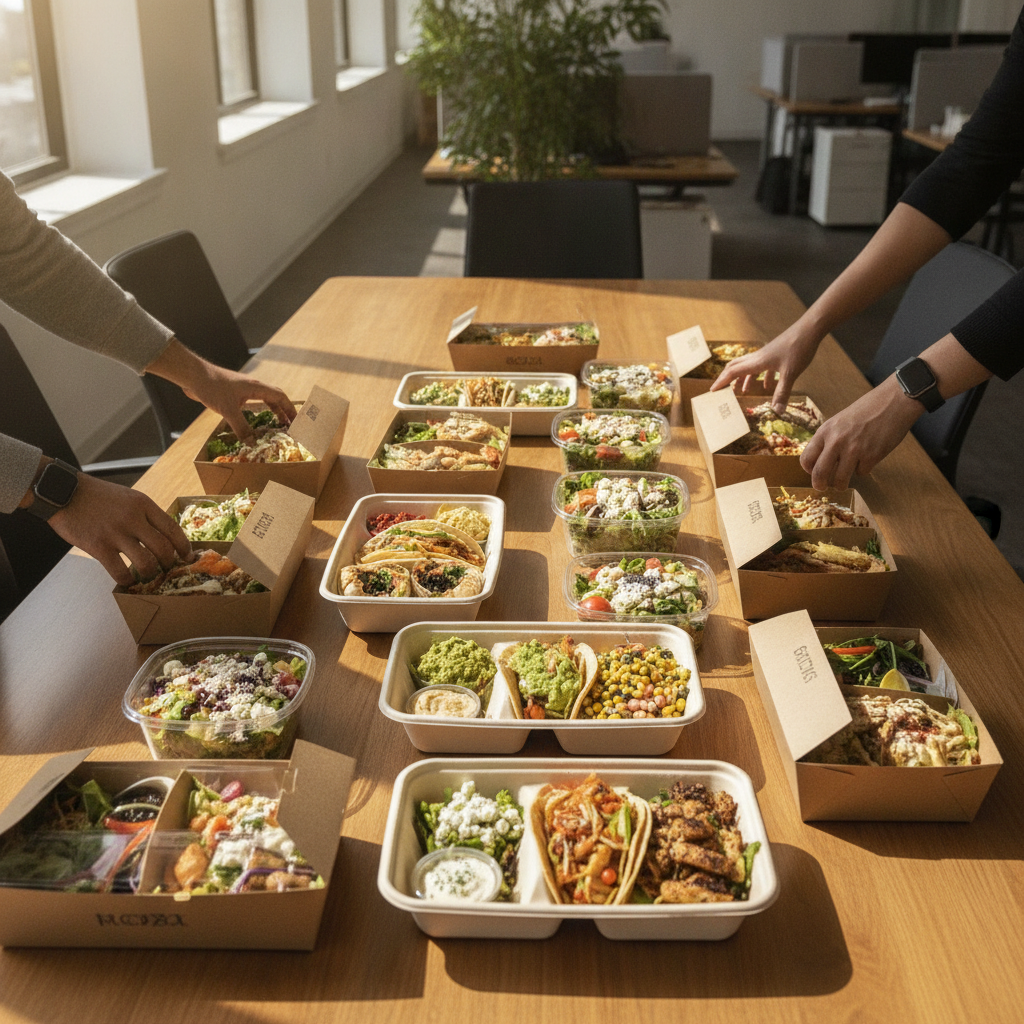
Boxed lunches are individually packaged, ready‑to‑eat meals designed for easy, safe distribution at meetings and events. They keep portions consistent, label allergens clearly, and speed up service for groups. For Woodbridge teams using LunchLink, boxed lunches streamline office lunches and client meetings without setup, serving lines, or guesswork.
By Yash Patel · LunchLink Last updated: July 2, 2026
Overview and contents
This complete guide explains what boxed lunches are, why they work for corporate teams, and how to plan, order, and serve them with confidence. You’ll get menu ideas, dietary-labeling tips, a simple ordering workflow, a comparison table, local considerations for Woodbridge, and ready-to-use checklists for stress-free execution.
Use this guide to quickly align your stakeholders, pick the right menu, and run a smooth, inclusive meal service. It’s written for office managers, EAs, HR/People Ops, event planners, and operations leaders coordinating recurring office meals or one-off events.
• What boxed lunches are and when to use them
• Why they improve safety, speed, and inclusivity at work
• How to order: headcounts, menus, labeling, delivery
• Types of boxed lunches, by cuisine and dietary needs
• Best practices, tools, and real-world examples
• FAQ with clear, direct answers
• What are boxed lunches?
• Why boxed lunches matter
• How boxed lunch catering works
• Types of boxed lunches and menu approaches
• Best practices for ordering and serving
• Tools and resources
• Case studies and examples
• FAQ
• Key takeaways
• Conclusion
What are boxed lunches?
Boxed lunches are individually packaged meals—typically a main, sides, and utensils—prepared for fast, hygienic distribution to groups. They minimize cross-contact risk, simplify portioning, and help teams serve 10–500+ people in minutes. Clear labels make dietary needs easy to honor without slowing down the line.
In practical terms, a boxed lunch bundles a complete, balanced meal into a single sealed container. Typical components include a protein or plant-based entrée, a smart side (salad, grains, or vegetables), and a finishing item (fruit or dessert). Each box includes utensils and napkins to reduce setup time.
• Consistency: Standard portions reduce waste and simplify planning.
• Speed: Distribute meals directly to seats or a pickup table; service often completes in 10–15 minutes for mid-size groups.
• Safety: Sealed packaging and labeled ingredients support allergy awareness and confidence.
• Professionalism: Clean presentation reinforces your brand during client meetings and workshops.
LunchLink specializes in boxed lunches for Toronto and GTA workplaces, with globally inspired options (Mediterranean, Mexican, Greek, healthy salads) and inclusive accommodations like halal, vegan, gluten-free, nut-free, dairy-free, and pescatarian meals. Labels and dietary flags keep distribution simple and safe for everyone.
Why boxed lunches matter for corporate teams
Boxed lunches improve meeting flow, reduce allergen risk, and boost participation because everyone gets a labeled meal that fits their needs. Operations get faster service with less cleanup, while HR supports wellness by offering balanced options that still feel chef-crafted and culture-forward.
For busy offices, time saved is momentum gained. Boxed lunches cut bottlenecks caused by buffet lines and let people eat on schedule—especially important when you’re managing workshops, sprint reviews, or client sessions that can’t slip. They also reduce “decision fatigue” by pre-curating balanced choices.
• Reliability for schedules: Meals arrive ready to hand out; no setup or chafers required.
• Inclusive by design: Labeled boxes help people with allergies or dietary preferences eat with confidence.
• Cleanliness and control: Less shared handling limits cross-contact and keeps tables tidy.
• Predictable portions: Facilities and finance teams prefer the clarity of one-box-per-guest.
LunchLink’s corporate focus shows in the numbers: 850+ events catered, 25,000+ employees fed, and a reported 98% client satisfaction rate—evidence that consistency, labeling, and flavor can scale. For recurring programs, that consistency compounds into a smoother workplace ritual.
Soft CTA: If you’re building a quarterly calendar of meals, our team can map a rotating boxed-lunch plan by cuisine and dietary profile. See our corporate catering overview or explore office lunch catering for formats and menus.
How boxed lunch catering works
Ordering boxed lunches follows a simple flow: confirm headcount and dietary needs, select a curated menu, schedule delivery, and assign a labeled pickup point. On event day, distribute boxes by label or color code so every attendee gets the right meal within minutes.
Here’s a straightforward workflow you can copy for your next meeting. It keeps details from slipping and supports last-minute adjustments without drama.
• Define the event: agenda, length, and any speaker or client needs.
• Confirm headcount: add a 5–10% buffer for drop-ins and bigger appetites.
• Capture dietary needs: ask for halal, vegan, gluten-free, nut-free, dairy-free, and pescatarian preferences.
• Pick cuisines: rotate options (e.g., Mediterranean Tuesday, Mexican Thursday) to maintain variety.
• Lock the menu: choose 3–5 distinct boxes covering your dietary mix.
• Schedule delivery: set a 20–30 minute buffer before mealtime for distribution.
• Assign pickup points: 1 table per ~25–40 people, with clear signage and flow.
• Label rigor: ensure each box shows dish name and dietary flags.
• Distribute quickly: hand out by name, label, or color tag.
• Close the loop: collect feedback and capture learnings for the next order.
Use LunchLink’s corporate-friendly ops to make this even easier—one point of contact, consolidated invoicing, and recurring meal support. For one-off events, individually packaged meals keep teams on task with minimal coordination.
Format Best when… Setup & speed Dietary coverage Boxed lunches You need fast, low-touch service with clear labels No setup; distribute in minutes Excellent—each box can match needs Buffet-style You want a shared experience and warm entrées Moderate setup; lines can slow flow Good if well-labeled and separated Family-style You’re hosting smaller groups in collaborative rooms Light setup; paced service Fair; harder for strict allergies
For day-to-day office lunch delivery, boxed meals are the simplest option to scale. When you’re planning an offsite or celebration, a buffet works great—see our office catering overview for how to pick formats by room and agenda.
Types of boxed lunches and menu approaches
Plan boxes by cuisine, dietary profile, and balance. Offer 3–5 distinct choices across Mediterranean, Mexican, Greek, and healthy salads, mirrored with halal, vegan, and gluten-free variants. That mix satisfies most offices while keeping picking simple and distribution fast.
A well-constructed lineup respects variety without overwhelming the picker. Here are proven templates and examples we use with Toronto teams.
Mediterranean lineup
• Chicken souvlaki bowl: lemon rice, Greek salad, tzatziki on the side.
• Falafel vegan box: tabbouleh, hummus, roasted veggies (vegan, dairy-free).
• Salmon and grains: herbed farro, cucumber-tomato salad, citrus dressing.
Mexican-inspired lineup
• Chicken fajita box: spiced chicken, peppers, corn salad, pico, lime.
• Veggie burrito bowl: black beans, roasted squash, avocado, brown rice (vegan).
• Carne asada salad: greens, grilled steak, charred corn, chimichurri.
Greek-inspired lineup
• Gyro protein box: beef/lamb, or chicken, with village salad and pita.
• Halal shawarma box: spiced chicken, rice, pickled veg, tahini (halal).
• Greek salad + protein: feta, olives, tomato-cucumber, with tofu or chicken.
Healthy salad-forward lineup
• Power greens + quinoa: seeds, roasted veg, lemon vinaigrette.
• Protein Cobb (GF): grilled chicken or tofu, egg, veg, dairy on side (gluten-free).
• Pescatarian bowl: baked fish, grains, lemony greens, herb sauce.
Every box should ship with clear labeling. LunchLink’s fully labeled meals call out major allergens and dietary tags so distribution runs on autopilot. For sample layouts and distribution tips, skim our corporate catering guide.
Best practices for ordering and serving
Keep it simple: gather dietary needs up front, offer 3–5 balanced choices, and label every box clearly. Distribute from multiple pickup points and keep a small buffer of universal options (vegan, halal-friendly, gluten-free) to solve last-minute swaps gracefully.
These practices reduce friction at handoff and help your team feel looked after—without extra work for coordinators.
• Plan with buffers: add 5–10% more boxes; mix in flexible options like vegan and gluten-free.
• Separate by label color: use color coding or table signs to segment dietary groups.
• Protect allergens: store nut-containing items separately; keep vegan and halal boxes distinct.
• Time your delivery: arrive 20–30 minutes early; build in a quick staging step near the door.
• Communicate pickup: share a floor map with attendees so lines don’t form at one table.
• Close the loop: collect 1–2 questions of feedback to improve the next order.
Need a deeper dive into formats for boardrooms, town halls, or casual team days? Browse our field notes in the Boardroom-to-BBQ guide and general office catering overview.
Local considerations for Woodbridge
• Plan for traffic cushions around peak commute times; scheduling a 20–30 minute buffer helps distribution start on time.
• During winter, stage handoff tables away from cold drafts to keep meals at better serving temperatures.
• For multi-floor offices, assign one pickup point per floor; it shortens lines and keeps meetings on schedule.
Tools and resources
Use simple tools to remove friction: a shared headcount tracker, a dietary-intake form, and an ordered distribution plan. Lean on LunchLink for one invoice, one point of contact, and support for recurring office meal programs and individually packaged meals.
Here’s a compact toolkit we see work well across Toronto organizations.
• Dietary intake form: capture halal, vegan, gluten-free, nut-free, dairy-free, pescatarian needs in one place.
• Headcount tracker: maintain RSVP status and a 5–10% buffer in a single shared sheet.
• Menu rotation plan: pre-plan monthly cuisines to avoid repeat fatigue.
• Distribution map: show pickup tables by team or floor to split lines.
• Feedback pulse: collect a 10-second rating after each meal to refine the next order.
For formats, menu ideas, and healthy office planning, explore these companion resources: office lunch catering, healthy office lunch planning, and template-driven tips in our corporate lunch guide.
Case studies and real-world examples
When teams switch to boxed lunches with clear labeling and a rotating menu, they cut setup time, reduce lineups, and improve satisfaction. These three snapshots show how different Toronto workplaces streamlined meals using a simple boxed-lunch playbook.
Weekly engineering town hall (120 people)
An engineering org held Friday town halls with tight agendas. Swapping buffet lines for boxed lunches cut service from ~25 minutes to ~10. A rotation of Mediterranean, Mexican, and salad-forward boxes kept variety high. A 10% buffer of vegan and gluten-free boxes solved last-minute swaps.
Healthcare training day (60 clinicians)
Training ran on a precise clock. Individually packaged meals with halal and dairy-free options ensured everyone could eat quickly and safely. Staging two pickup points (30 each) eliminated a single long line. Feedback scores improved week over week as favorites were logged and repeated.
Client workshop series (30–45 attendees)
Workshops needed quiet, efficient meals. Boxes labeled by name and dietary tag allowed tables to stay seated while a coordinator distributed in under 8 minutes. Attendees noted the professional feel and appreciated that the menu anticipated common restrictions.
From our experience across 850+ events, the combination of rotating menus, rigorous labeling, and multiple pickup points consistently drives smoother service and higher participation.
Frequently asked questions
Most offices ask about lead times, dietary accommodations, and how to keep service quick. In short: gather needs early, offer 3–5 choices, label clearly, and stage multiple pickup points. The answers below cover the details you’ll want before your next order.
How far in advance should I order boxed lunches?
For routine meetings, place your order 48–72 hours ahead when possible. For recurring programs, plan menus monthly, then adjust headcount 24 hours prior. If you’re handling a last-minute meeting, contact us—our operations are designed to help with short-notice corporate needs when capacity allows.
What dietary needs can you accommodate?
We routinely accommodate halal, vegan, gluten-free, nut-free, dairy-free, and pescatarian requests. Each boxed lunch is labeled with dietary tags and common allergens, making distribution fast and safe. If you have a complex requirement, include it in your intake form and we’ll advise on the best options.
Can boxed lunches work for large groups?
Yes. With multiple pickup points and clear labeling, we regularly see smooth service for 100–500+ attendees. Plan a 5–10% buffer of flexible boxes (for example, vegan and gluten-free) to handle no-shows or swaps without disrupting the flow.
How do I keep lines short during distribution?
Split the room. Use one pickup table per 25–40 people, stage near entrances, and color-code dietary groups. Share a quick floor map in your calendar invite so attendees know where to go. With labeled boxes and two coordinators, most rooms clear in under 10 minutes.
When should I pick buffet or family-style instead?
Choose buffet for celebrations or offsites where a shared hot spread adds to the atmosphere. Pick family-style for small workshop tables that eat together. Stick to boxed lunches for tight schedules, complex dietary profiles, or when you want minimal setup and cleanup.
Key takeaways
For most office lunches, boxed meals deliver speed, safety, and inclusivity. Keep menus tight, label rigorously, and distribute from multiple points. Use a small buffer of flexible options to resolve last-minute swaps and protect the schedule.
• Boxed lunches cut lines and protect schedules.
• Labeling and a 3–5 choice lineup cover most dietary needs.
• Multiple pickup points keep rooms moving.
• Rotating cuisines maintain engagement over time.
• Use quick feedback to refine the next order.
Conclusion: Ready to feed your team well?
Boxed lunches simplify office meals without sacrificing flavor, inclusivity, or presentation. With a clear intake, balanced menus, precise labels, and smart staging, you can feed 10–500+ people quickly and confidently—week after week.
If you’re coordinating meals for a Woodbridge office or a Toronto-area team, we’re here to help. Explore corporate catering options, or set up a plan via office lunch catering. When you need healthy variety, our healthy office lunch ideas keep menus fresh. For larger events, see our Boardroom-to-BBQ guide.