Catering
Office Breakfast Catering: Keep Teams Happy in 2026
Plan breakfast catering for office teams with inclusive menus, clear labels, and on-time delivery. A Toronto/GTA guide to formats, logistics, and setup.
June 14, 2026 · LunchLink
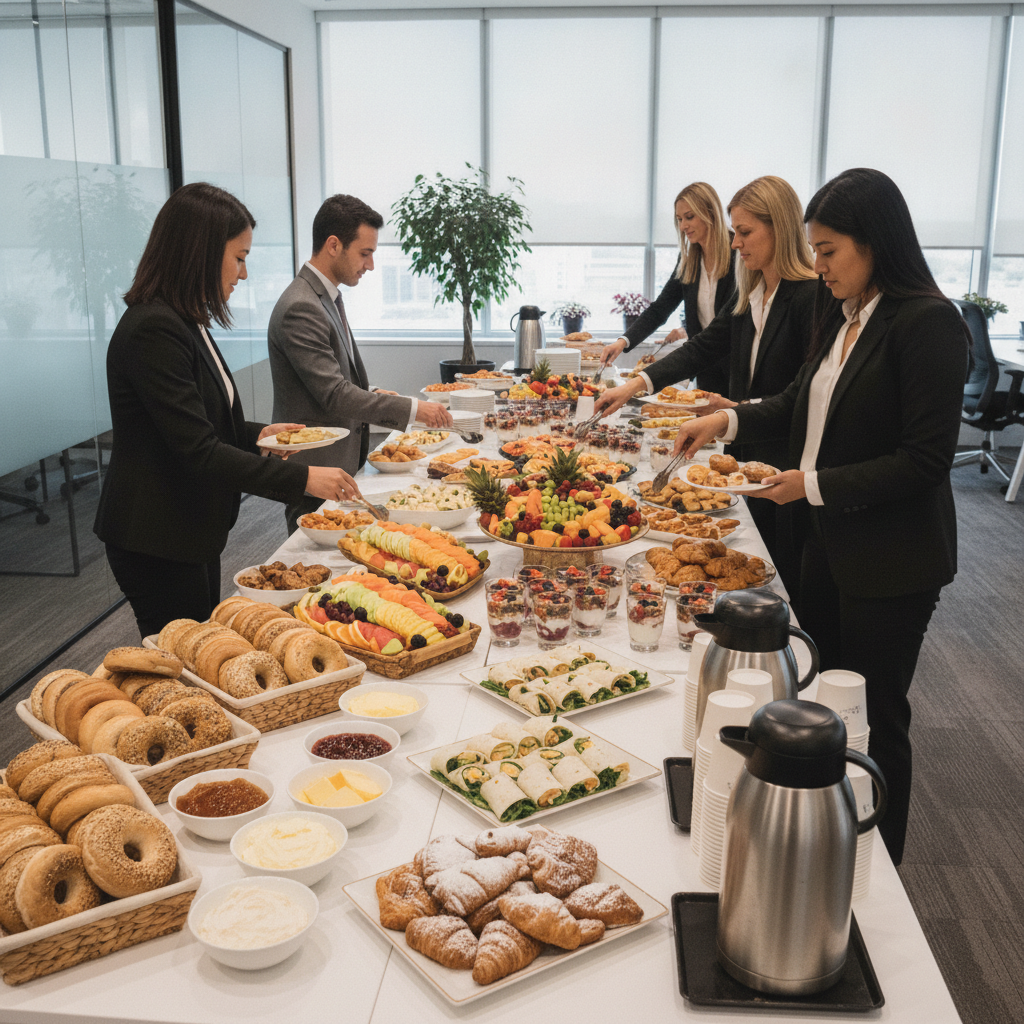
Breakfast catering for office is a professionally planned morning meal service for workplaces, designed to feed teams quickly and reliably before meetings or during stand-ups. From our Woodbridge hub at Unit #23 120 Woodstream Blvd, LunchLink coordinates chef-curated menus and on-time delivery across Toronto and the GTA so your morning starts strong.
By LunchLink • Last updated: 2026-06-14
Quick Summary
Office breakfast catering streamlines morning meals for teams with curated menus, dietary-safe labeling, and reliable delivery. LunchLink offers individually packaged or buffet-style formats, vetted partners, and corporate-friendly operations to feed groups of 10–500+ across Toronto and the GTA—without the morning scramble.
• What you’ll learn: menu planning, dietary coverage, formats, logistics, and setup.
• Who it’s for: office managers, EAs, HR/People Ops, operations, and event planners.
• Why it matters: better attendance, sharper meetings, and inclusive team culture.
• How LunchLink helps: labeled meals, reliable delivery, and recurring meal programs.
• What Is Breakfast Catering for Offices?
• Why Breakfast Catering Matters
• How Office Breakfast Catering Works
• Formats and Menu Approaches
• Best Practices and Checklists
• Tools, Templates, and Resources
• Planning in Woodbridge and the GTA
• Examples and Case Insights
• FAQ
• Key Takeaways and Next Steps
What Is Breakfast Catering for Offices?
Breakfast catering for offices is a coordinated service that delivers early-morning meals—individually packaged or buffet-style—directly to workplaces. It emphasizes speed, dietary safety, and presentation so teams can eat, meet, and start productive work without kitchen setup, vendor wrangling, or last-minute coffee runs.
In practical terms, your provider plans the menu, prepares food off-site, and delivers on a set window aligned to your agenda. The goal is to fuel focus during 8:00–10:00 a.m. starts while avoiding meeting delays.
• Core elements: reliable delivery windows, labeled meals, and serving gear (plates, cutlery).
• Audience fit: groups of 10–500+ for stand-ups, training, and client sessions.
• Safety first: clear allergen flags across halal, vegan, gluten-free, nut-free, dairy-free.
LunchLink specializes in corporate settings, pairing chef-curated options with corporate-friendly operations like one invoice, flexible headcounts, and recurring programs that keep variety fresh across weeks.
Why Breakfast Catering Matters
Breakfast catering boosts attendance, starts meetings on time, and signals care for employee wellness. When teams find inclusive, clearly labeled options waiting, they join early, focus faster, and collaborate better—turning morning logistics into a culture win.
Morning food is a lever for engagement. It removes the “where do we grab something?” friction and helps hybrid teams arrive earlier. Clients and candidates read it as hospitality.
• Time impact: catered breakfast reduces pre-meeting delays and late arrivals.
• Culture signal: inclusive menus make dietary needs visible—and respected.
• Wellness nudge: balanced items (protein + fiber) stabilize morning energy.
Trusted by well-known institutions—like the University of Toronto, CAMH, RBC, CIBC, and UHN—LunchLink reports 850+ events catered and 25,000+ employees fed with a 98% satisfaction rate. That level of repetition shows how consistent morning experiences become part of the office rhythm.
How Office Breakfast Catering Works
Successful office breakfast catering follows a simple flow: confirm headcount and dietary needs, choose format and menu, lock a delivery window, and assign a setup lead. Providers handle cooking, labeling, logistics, and cleanup gear so meetings can start exactly on schedule.
Here’s the typical flow we help offices run with confidence:
• Set your goals: Align food style to agenda (standing huddle vs. sit-down).
• Collect dietary info: Ask attendees for restrictions and strong dislikes.
• Pick a format: Individually packaged for speed; buffet for social energy.
• Choose menu: Balance proteins, carbs, fruit, and a warm option.
• Lock delivery window: Aim for arrival 20–30 minutes before first bite.
• Assign a setup lead: One point of contact owns room flow and signage.
• Confirm headcount: Adjust within 24 hours for last-minute changes.
Timeline Owner Key Actions 5–7 days out EA / Office Manager Poll dietary needs, set goals, shortlist menu, confirm room. 2–3 days out LunchLink + You Finalize format and menu, reserve delivery window, equipment check. 24 hours out EA / Office Manager Lock headcount, share final attendee notes, prep room layout. Event morning LunchLink Deliver, label, and stage food; hand off utensils and cleanup plan.
For recurring programs, we rotate menus weekly so your team never sees the same spread twice in a row—easy variety with one vendor and one invoice.
Formats and Menu Approaches
Choose between individually packaged meals for speed and safety, or buffet-style spreads for social energy and visual impact. Both formats can cover halal, vegan, gluten-free, nut-free, and dairy-free needs with clear labels so every plate is safe and stress-free.
Format determines how people move and how fast they eat. We recommend matching your room flow, agenda timing, and culture norms.
Individually packaged vs. buffet-style
Feature Individually Packaged Buffet-Style Speed Fast grab-and-go; minimal lines Slower lines; plate-building Dietary safety High—sealed and labeled High with strict labeling and utensils Room vibe Heads-down, efficient Social, collaborative Presentation Clean kits, easy distribution Visual abundance, centerpiece impact Waste control Predictable portions Optimizable with replenishment
Menu building blocks that work
• Protein anchors: egg wraps, egg-white frittatas, turkey sausage, smoked salmon.
• Grains and bakes: whole-grain bagels, breakfast burritos, mini croissants.
• Fresh produce: fruit platters with berries, melon, citrus, or seasonal picks.
• Dairy and alternatives: yogurt parfaits, coconut-based yogurts, and lactose-free milk.
• Warm tray: a rotating hot item (breakfast hash, shakshuka, baked oats).
• Condiments + beverages: spreads, dairy/non-dairy creamers, coffee, tea, juices.
LunchLink curates globally inspired themes—Mexican, Mediterranean, Greek, and healthy salad-driven options—to keep interest high. For example, a Mediterranean morning might feature spinach-feta egg bites, herbed tomatoes, pita, hummus, and citrus bowls.
Allergen-safe and inclusive planning
• Label clearly: halal, vegan, vegetarian, gluten-free, nut-free, dairy-free on every item.
• Separate serving tools: one utensil per tray; no cross-plate transfers.
• Designate safe zones: keep allergen-friendly trays apart from general items.
• Confirm counts: match meal numbers to each dietary category + 5–10% buffer.
• Communicate early: send menu and labels in advance to reduce day-of questions.
We build inclusive breakfasts around real restrictions. Teams commonly require halal and vegetarian mains plus several gluten-free and nut-free items, all fully labeled so colleagues eat with confidence.
Best Practices and Checklists
Anchor your breakfast with a tight checklist: confirm headcount, capture dietary needs, plan room flow, stage signage, and choose backup beverages. Clear owners and timelines reduce morning chaos and get everyone eating within five minutes of setup.
Simple discipline turns a good spread into a smooth experience. Here’s what we advise for first-time planners and seasoned EAs alike.
Seven-step pre-event checklist
• Room flow: place coffee first, then plates, mains, sides, and condiments last.
• Traffic plan: two-sided buffet or two identical lines for 50+ attendees.
• Dietary zones: dedicate a separate table for allergen-friendly items.
• Utensil map: tongs for breads, spoons for parfaits, separate ladles for hot items.
• Signage: visible labels for each tray; place allergen warnings at eye level.
• Waste strategy: recycling + compost near exits to avoid bottlenecks.
• Contingency: extra stir sticks, napkins, and a second coffee urn on standby.
Serving temperature and timing
• Target a 20–30 minute buffer between delivery and first serving.
• Keep hot items warm with chafers; cold items chilled with ice packs or fridges.
• Refresh coffee every 45–60 minutes for taste and heat.
Our teams arrive within a locked window, stage the buffet, and brief your point person on replenishment so you can stay focused on the agenda.
Communication that prevents surprises
• Send a day-before memo with menu, allergen notes, and serving times.
• Post a digital room map so early arrivals know where lines form.
• Share a dietary summary with counts by category; invite quiet questions.
When everyone knows what’s coming, browsing turns to eating—fast. This also reduces plate waste by guiding people to choices that fit their needs.
Tools, Templates, and Resources
Use a one-pager plan, a dietary-tracking sheet, and a delivery-day run-of-show. LunchLink supplies labeled menus, utensils, and a single point of contact—plus an upcoming app with individual ordering, live tracking, dietary filters, and admin dashboards.
Working documents save mornings. We’ve refined these templates across 850+ events:
• Breakfast planning one-pager: goals, headcount, room layout, and timeline.
• Dietary tracker: names by category (halal, vegan, etc.), plus safe alternates.
• Run-of-show: delivery ETA, staging order, lineup control, replenishment cues.
If you’re mapping out a larger series, scan our corporate catering guide for deeper planning frameworks, and bookmark our office catering overview for everyday ordering tips and tricks used by Toronto teams.
Planning Office Breakfast Catering in Woodbridge and the GTA
For Woodbridge and ON L4L 7Z1 offices, anchor deliveries to traffic patterns and building access. LunchLink times morning windows, manages loading protocols, and labels meals clearly so Toronto and GTA teams can grab breakfast and reach 9 a.m. meetings on time.
Local context matters—especially for early windows. We plan around elevator schedules, security sign-ins, and lobby congestion so trays reach your room intact and on time.
Local considerations for Woodbridge
• Lock a tighter delivery window on high-traffic mornings after long weekends.
• During winter, reserve an indoor staging spot to keep hot trays warm on arrival.
• For larger towers, pre-clear security and freight access to avoid elevator delays.
Need halal-forward menus or gluten-free focus? Explore options on our office catering page or ask about fully labeled kits that make dietary navigation effortless.
Examples and Case Insights
Real programs succeed with clear goals, inclusive menus, and repeatable logistics. These snapshots—drawn from 850+ events and 25,000+ meals served—show how different teams solve for speed, safety, and culture without overcomplicating mornings.
We’ve supported one-off breakfasts, quarterly town halls, and weekly rotations. A few anonymized highlights:
• 120-person training day (finance): two mirrored buffets, halal mains, 18 labeled trays; eating in 7 minutes, zero allergy issues.
• 60-person hybrid summit (healthcare): individually packaged kits + coffee stations; 15-minute turnover between sessions.
• 30-person client pitch (agency): executive boardroom, smoked-salmon station + fruit; elevated visual for first impressions.
• 200-person town hall (education): four lines + separate gluten-free zone; steady flow, low waste with paced replenishment.
These patterns repeat: unambiguous labeling, a balanced menu, and a room plan you can diagram in a sentence. That’s how breakfast helps—not hinders—your schedule.
Above-and-Beyond Details That Teams Notice
The small things win mornings: lids that open quietly, condiments at the end, decaf marked boldly, and fruit cut into fork-friendly sizes. These touches keep lines moving and help every guest find a safe, satisfying plate in one pass.
• Noise-aware gear: prefer quiet-lid trays in small boardrooms.
• Condiment logic: place spreads and hot sauce last to avoid long pauses.
• Utensil intuition: tongs for sticky pastries, spoons for parfaits, forks for fruit.
• Allergen clarity: use bold, consistent label positions and colors per category.
• Refill cues: stage backup coffee urns rather than refilling live lines.
We also standardize tray heights for camera-friendly photos during exec offsites—subtle, but a cue that presentation matters as much as punctuality.
Sustainability and Waste Reduction
Plan portions to your headcount, right-size drink orders, and centralize waste stations. Pair individually packaged items for strict diets with shared fruit and pastry trays to balance safety and sustainability without creating leftovers.
Right-sizing is operational excellence. Consider:
• Portion mapping: match one main + one side per person, plus a shared fruit tray per 10–12.
• Refill pacing: keep backup trays sealed; replenish only when lines appear.
• Hydration mix: one coffee cup per attendee plus a water station to reduce bottles.
• Compost and recycling: co-locate near exits; add clear icon signage.
We track what moved, what lingered, and what to tweak next time—useful for weekly programs where small adjustments compound into big waste savings.
Dietary Coverage with LunchLink
Every breakfast can be inclusive. LunchLink supplies halal, vegan, vegetarian, gluten-free, nut-free, dairy-free, and pescatarian options—each clearly labeled and separated. This removes guesswork, lowers risk, and makes it easy for everyone to eat confidently together.
Dietary coverage is more than a checkbox—it’s psychological safety at the table.
• Halal-forward menus: protein mains, separate utensils, distinct signage.
• Gluten-free confidence: sealed kits, separate prep pathways with our partners.
• Vegan/vegetarian balance: protein-rich beans, tofu scrambles, and dairy-free yogurts.
• Nut-free diligence: supplier checks, no shared scoops between nut and non-nut items.
Explore our cross-category coverage in this halal and dietary overview to see how labeling and separation policies translate into everyday breakfast confidence for your team.
Recurring Office Breakfast Programs
Recurring programs run on variety, predictability, and one invoice. LunchLink rotates menus weekly, locks delivery windows, and provides a single point of contact so your office enjoys fresh breakfasts without repeating admin work.
Program design principles we’ve learned from long-running schedules:
• Rotation templates: theme-based weeks (Mediterranean, Mexican, Classic, Plant-Forward).
• Attendance signals: survey quick picks monthly to spot menu winners.
• Operational cadence: same weekday, same room, same table flow—for muscle memory.
• Feedback loop: capture three notes after each breakfast: hit, miss, tweak.
Recurring breakfast is a great on-ramp to broader corporate catering—especially when pairing mornings with monthly lunch town halls.
Delivery, Setup, and Room Logistics
The best logistics are invisible. We stage food in serving order, set diet-safe zones, and align tables to natural traffic paths. With a 20–30 minute buffer and a single point of contact, your 9 a.m. meeting starts right on time.
Practical room tips that work in real offices:
• Place coffee first: it pulls lines forward; early sips reduce crowding.
• Two lines over 50 guests: mirrored buffets cut wait times in half.
• Label hierarchy: large category cards (halal, gluten-free) above smaller item tags.
If you’re planning a larger event or multi-day summit, scan our playbook on boardroom-to-BBQ transitions for staging, flow, and replenishment tactics that apply to mornings too.
Eleven Menu Ideas Teams Actually Eat
Aim for familiar-with-a-twist. Mix protein-forward mains with fresh fruit and one warm tray. Rotating global themes—Mediterranean, Mexican, Greek—keep interest high without risking plate waste.
• Mediterranean morning: spinach-feta egg bites, herbed tomatoes, pita, hummus.
• Mexican-inspired: breakfast burritos (egg + veg), pico de gallo, citrus bowls.
• Greek spread: yogurt with honey, cucumber-tomato salad, mini spanakopita.
• Plant-forward: tofu scramble wraps, chia parfaits, berries, roasted potatoes.
• Classic North American: egg sandwiches, turkey sausage, hash, seasonal fruit.
• Bagel bar: whole-grain bagels, smoked salmon, capers, dill, dairy-free spread.
• Hot oatmeal station: steel-cut oats, almond-free toppings, fresh apples.
• Protein boxes: egg muffins, veggie sticks, hummus, fruit cup.
• Sweet-and-savory: baked oats, veggie frittata, pineapple-mint salad.
• Executive boardroom: smoked salmon, artisanal breads, citrus, sparkling water.
• Allergen-easy kits: sealed gluten-free wraps, coconut yogurt, separate fruit.
For day-of menu confidence, browse our elevated catering ideas and adapt lunch-worthy presentation tricks to breakfast trays.
Plan a better morning with LunchLink
Whether you need a one-time breakfast or a weekly rotation, we’ll help you lock menus, labeling, and delivery windows. Ask about individually packaged kits or buffet spreads tailored to your room and agenda.
Talk to our team about your next office breakfast.
Frequently Asked Questions
Plan breakfast by aligning format to your agenda, covering key dietary categories, and locking delivery 20–30 minutes before serving. Below are answers to the most common buyer questions from Toronto and GTA offices.
How far in advance should I book office breakfast catering?
For single events, 3–5 business days helps with menu selection and logistics. If you’re unsure on headcount, we can usually adjust within 24 hours. For recurring programs, set a weekly cadence and rotate menus to keep interest high.
What’s the best format for a quick 9 a.m. meeting?
Individually packaged meals move fastest. Guests grab sealed, labeled items and sit in seconds. If you prefer a social vibe, mirror two small buffets to halve lines and keep start times tight.
How do you handle diverse dietary restrictions?
We build menus across halal, vegan, vegetarian, gluten-free, nut-free, dairy-free, and pescatarian needs. Items arrive clearly labeled and separated, with dedicated utensils to reduce cross-contact risks.
Can you support early deliveries across Toronto and the GTA?
Yes. We coordinate morning windows and building access across Toronto and the GTA from our Woodbridge base. Deliveries typically arrive 20–30 minutes before serving so meetings start on time.
Key Takeaways and Next Steps
Keep breakfast simple, inclusive, and on schedule. Choose the right format, label everything, and match menu variety to your team. LunchLink handles logistics and recurring rotations so your office enjoys great mornings with almost no admin lift.
• Focus: one protein main, one fresh fruit, one warm tray, and coffee first in line.
• Format fit: packaged for speed; buffet for social energy and presentation.
• Labeling: halal, vegan, gluten-free, nut-free, dairy-free clearly marked.
• Timing: 20–30 minute buffer before first bite for smooth starts.
Ready to map your next office breakfast? Explore sample menus on our corporate catering page and our planning tips for office meals. We’ll help you turn mornings into a reliable win—every time.