Catering
Buffet Catering: Save Time & Keep Guests Happy in 2026
Buffet-style catering for Toronto offices: this 2026 guide covers planning, menus, dietary labeling, setup, and service tips from LunchLink in Woodbridge.
June 7, 2026 · Yash Patel
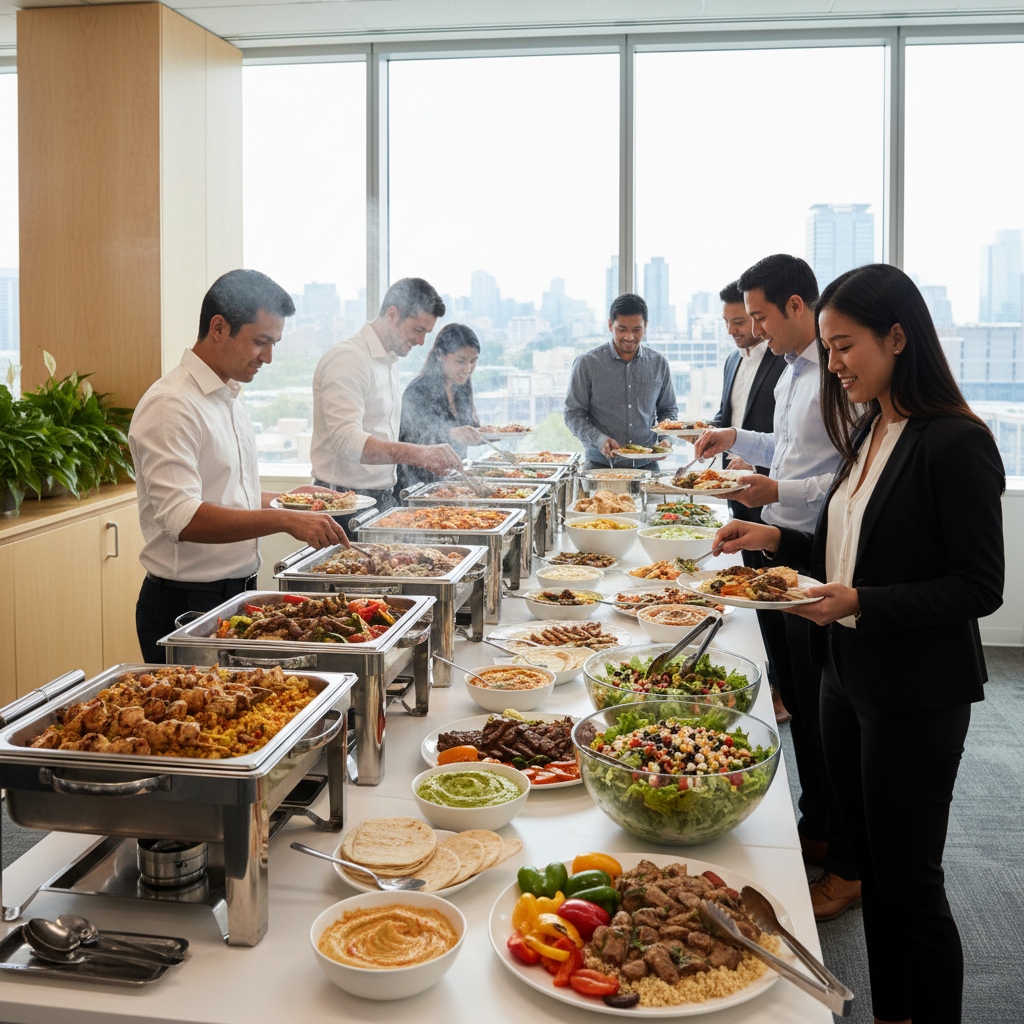
Buffet-style catering is a service format where guests serve themselves from curated stations of hot and cold dishes, sized for smooth flow and consistent portions. At LunchLink in Woodbridge (Unit #23 120 Woodstream Blvd), we use buffet-style catering to feed Toronto-area teams quickly, label for dietary needs, and keep meetings on schedule with minimal setup.
By LunchLink • Last updated: 2026-06-07
Overview and Table of Contents
This complete guide shows how buffet-style catering works for corporate offices—planning, menus, labeling, logistics, and service flow. It’s tailored to Toronto and the GTA with Woodbridge (ON L4L 7Z1) context, so you can choose confidently, move fast on short notice, and deliver an inclusive experience for 10–500+ guests.
Use this guide to align your event goals, menu, and logistics. It’s written for office managers, EAs, HR/People Ops, operations teams, and event planners who need reliable, well-presented meals that respect dietary needs and busy calendars.
• What Is Buffet-Style Catering?
• Why It Matters for Workplaces
• How Buffet Catering Works (Step-by-Step)
• Types and Approaches
• Menu Planning and Dietary Labeling
• Logistics, Setup, and Safety
• Buffet vs. Boxed Lunches
• Best Practices
• Tools and Resources
• Pricing Considerations (No Numbers)
• Case Studies and Examples
• Frequently Asked Questions
• Key Takeaways
• Conclusion and Next Steps
What Is Buffet-Style Catering?
Buffet-style catering is a corporate meal format where hot and cold dishes are presented in stations or lines so guests can serve themselves quickly. It’s ideal for mixed dietary needs, flexible portions, and rapid service—especially when meetings stack up and teams need consistent, labeled options without lengthy wait times.
At LunchLink, buffets are configured for office realities: tight agendas, varied palates, and room constraints. Our team curates Mediterranean, Mexican, Greek, and healthy salad spreads, then labels items for halal, vegan, gluten-free, dairy-free, and nut-free preferences so every team member eats confidently.
• Core components: proteins, starches, vegetables, salads, sauces, and beverages.
• Serviceware: chafing dishes, hotel pans, serving utensils, compostable plates and cutlery.
• Flow design: signage order (proteins first), dual-sided lines, and room for dietary stations.
We’ve supported 850+ events and served 25,000+ employees across Toronto workplaces—buffets remain the fastest, most flexible way to feed 50–200 attendees on a tight schedule.
Why Buffet-Style Catering Matters for Workplaces
Buffets keep meetings on schedule, support inclusion with labeled dietary options, and reduce packaging waste. For busy offices, they enable fast, reliable service with professional presentation—helping boost attendance, engagement, and the overall experience of client meetings and internal events.
When time is tight, a well-designed buffet can move 100 guests through in minutes. Transparent ingredient labeling removes friction for halal, vegan, gluten-free, and allergy-sensitive team members. Presentation signals care, which we’ve found improves event feedback and repeat attendance.
• Speed: Dual-sided lines cut wait times for groups of 50–150.
• Inclusion: Visible labels + separate utensils reduce allergen cross-contact.
• Culture: Chef-curated menus spark conversation and raise perceived value.
• Simplicity: One setup, clear flow, and minimal post-event cleanup.
Teams also appreciate fewer individual packages. Beyond sustainability, less clutter keeps boardrooms tidy and ready for the next session.
How Buffet Catering Works (Step-by-Step)
Successful buffets follow a clear path: set goals, confirm headcount and dietary needs, pick a menu, finalize logistics, schedule delivery, set up the line, and assign light service roles. This sequence keeps food hot, lines moving, and meeting agendas intact.
Plan with intent
• Define the moment: training day, client pitch, all-hands, or celebration.
• Set constraints: timeline, room capacity, elevator access, and load-in path.
• Capture needs: halal, vegan, gluten-free, nut-free, dairy-free, pescatarian.
Choose the menu
• Balanced structure: 1–2 proteins, 2 sides, salad, bread/tortillas, condiments.
• Dietary coverage: include a plant-based protein and at least one gluten-free side.
• Flavor arc: pair bright salads with warm, savory mains to avoid palate fatigue.
Lock logistics
• Delivery window: plan 15–30 minutes of buffer before service.
• Table map: dual-sided line, proteins first, dietary station to the side.
• Utilities: outlets for warmers; trash and compost locations.
Set up and serve
• Safety first: hold hot items at safe temperatures; rotate utensils.
• Flow crew: one person guides traffic; one replenishes; one monitors labels.
• Wrap-up: pack leftovers safely; restore room within 10–15 minutes.
In our experience, a full-size hotel pan typically yields around 18–22 entrée portions, while a rice or salad pan serves many more as a side. Building a simple replenishment plan keeps the line seamless.
Types and Approaches
Corporate buffets vary by format: classic chafing-dish lines, chef-attended stations, build-your-own bars, and hybrid setups with a separate dietary station. Choose based on headcount, room layout, and how interactive you want the meal to feel.
Classic buffet line
• Best for speed: move 50–150 guests through two-sided lines quickly.
• Predictable portions: pre-sized utensils for proteins and sides.
• Low footprint: fits most boardrooms or multi-purpose spaces.
Chef-attended stations
• Experience-forward: carving or taco stations drive engagement.
• Quality control: chef portions sensitive items, reducing waste.
• Great for VIPs: enhances client-facing moments.
Build-your-own bars
• Maximum choice: tacos, bowls, salads with multiple toppings.
• Inclusive: easy to accommodate halal, vegan, and gluten-free needs.
• Fun factor: teams enjoy customizing plates.
Hybrid with dietary station
• Dedicated safety: a separate labeled table for allergens.
• Confidence: reduces cross-contact risk and confusion.
• Clarity: mirrors individually packaged-meal peace of mind.
LunchLink frequently pairs a classic line with a plant-forward build-your-own bar so vegan and pescatarian guests have equal variety alongside halal mains.
Menu Planning and Dietary Labeling
Plan menus around balanced variety and clear labels. Pair 1–2 proteins with complementary sides, add a vibrant salad, and ensure every line includes a plant-based and gluten-free pathway. Label plainly so halal, vegan, and allergy-sensitive guests can eat without worry.
Our chef-curated spreads align with how teams actually eat. For example, Mediterranean buffets often feature grilled chicken, roasted vegetables, lemon-herb rice, Greek salad, and a mezze station. Mexican builds might include adobo chicken, roasted cauliflower, cilantro-lime rice, black beans, warm tortillas, salsas, and a crunchy slaw.
• Dietary clarity: label halal, vegan, gluten-free, nut-free, and dairy-free.
• Portion planning: plan ~4–6 oz protein per person; sides carry the volume.
• Condiments: separate serving spoons; keep dairy-based sauces distinct.
• Salads: dress lightly and keep extra dressing on the side.
We track guest feedback across recurring programs. When there’s at least one plant-forward entrée and one gluten-free starch per line, satisfaction scores trend higher and plate waste drops.
Explore deeper menu structures in our corporate catering guide and see examples of office catering formats that work well for all-hands and training days.
Logistics, Setup, and Safety
Lock delivery windows, table maps, and utilities early. Keep hot foods hot, cold foods cold, and design two-sided lines. Assign a light "flow crew" to guide traffic and replenish—small moves that preserve meeting agendas and safety compliance.
In our experience across 850+ events, the difference between a smooth lunch and a bottleneck is decided before the food arrives. A 15–30 minute buffer lets us stage chafers, confirm labels, and heat-check trays before guests line up.
• Access: confirm elevator size and loading path for carts.
• Table map: proteins → sides → salads → condiments → beverages.
• Safety: maintain safe holding temperatures; swap utensils regularly.
• Cleanup: designate waste and compost zones to reset fast.
Local considerations for Woodbridge
• Plan around neighborhood traffic patterns and lobby security—book delivery windows that avoid peak arrivals and elevator rushes.
• Seasonal timing matters. In winter, allow extra buffer for transport and warm-up; in summer, stage cold stations away from sunlight.
• For Toronto and GTA offices with mixed shifts, consider staggered service times to keep lines short and food at ideal temperature.
For recurring programs, we document layout photos so the next delivery replicates the same winning flow without rework.
Buffet vs. Boxed Lunches
Buffets excel for speed, variety, and reduced packaging. Individually packaged meals shine for controlled portions and maximum allergen separation. Many offices blend formats—buffet for most, individually labeled meals for allergy-sensitive guests.
Factor Buffet-Style Individually Packaged Speed for 50–150 Very fast with dual-sided lines Fast distribution; slower unboxing Dietary control Good with dedicated station Excellent—sealed and labeled Packaging waste Lower Higher Room needs Tables for line(s) Staging space for boxes Experience Interactive and social Personal and tidy
If you’re weighing both, we can advise on a hybrid plan. See how we structure office meals on our corporate catering page and our insights on elevating corporate catering.
Best Practices
Design the line, label clearly, and assign light roles. Keep condiments last, separate allergen utensils, and pre-slice breads and proteins for speed. Post-service, pack leftovers safely and reset the room fast for the next agenda block.
• Flow-first layout: proteins first to anchor portions; beverages last.
• Utensil strategy: serving spoons sized to portion targets.
• Label placement: left-front of each pan; dietary station signage.
• Traffic guide: place one host at the line entrance during the first 5–10 minutes.
• Refill cadence: replenish at one-third remaining to avoid gaps.
• Post-event: seal trays promptly; store cold items in a fridge.
Over dozens of recurring programs, we’ve found a short welcome cue—“Proteins start here, plant-based options to the left”—reduces confusion and keeps the first wave moving efficiently.
Tools and Resources
Use simple planning tools: a headcount and dietary tracker, a table map template, and a service run-of-show. For ongoing programs, standardize menus and layouts so every delivery repeats what works—no reinventing the wheel.
• Headcount + dietary tracker: tally halal, vegan, gluten-free, nut-free, dairy-free, and pescatarian needs.
• Table map template: draw proteins → sides → salads → condiments → beverages with dual-sided flow.
• Run-of-show: 30-minute pre-service setup, 45–60 minutes of service, 10–15 minutes of reset.
• Recurring program playbook: standardize favorite menus and label placements; include room photos.
For format inspiration and menu frameworks, browse our boardroom-to-BBQ guide and our page on halal catering in Toronto to see how we design safe, inclusive lines.
Pricing Considerations (No Numbers)
Budget for headcount swings, dietary coverage, and service style. Variables include menu complexity, hot versus cold items, delivery windows, and equipment needs. Align selections to your event goals to capture value without overspending.
We never publish blanket prices because every office, room, and headcount mix is different. What drives value is fit: the right menu complexity, the correct number of pans, and a service plan that keeps your agenda on track with minimal waste.
• Variables to weigh: menu breadth, number of proteins, seasonal produce, and beverage service.
• Service model: drop-off versus attended stations or hybrid formats.
• Logistics: load-in complexity, elevator access, and line length (single vs. dual-sided).
• Sustainability: compostable wares and waste stations to reduce clean-up time.
Need help matching a format to your goals? Our team advises daily on aligning menu variety, dietary coverage, and room logistics—especially for fast-moving agendas.
Case Studies and Examples
Real programs succeed when menus match the moment and logistics mirror the room. These brief scenarios show how different Toronto teams used buffets to feed large groups quickly while keeping dietary needs front and center.
Training day, downtown Toronto
• Need: 120 attendees across staggered lunch breaks; strict schedule.
• Approach: dual-sided Mediterranean line plus a vegan build-your-own bar.
• Outcome: first wave cleared in ~8 minutes; high marks for clarity and variety.
Client pitch, hybrid team
• Need: polished presentation for 40 with halal and gluten-free requirements.
• Approach: chef-attended taco station for interaction; separate labeled dietary table.
• Outcome: strong feedback on professionalism; minimal post-meal cleanup.
Healthcare all-hands in the GTA
• Need: 200 staff over two seatings; back-to-back agenda.
• Approach: classic buffet with two proteins, two sides, salad, and beverages; replenishment plan.
• Outcome: lines stayed under 6 minutes; positive notes on labeling confidence.
We’ve fed 25,000+ employees and supported 850+ events across industries—from finance and education to healthcare—so we can tailor formats for your exact room and timing.
Plan a buffet that runs itself
Get a quick consult on menu, flow, and dietary coverage. Our coordinators map setups daily for Toronto offices.
Request a planning call and we’ll share a sample table map and run-of-show to match your space.
Frequently Asked Questions
These concise answers cover the most common buffet questions from Toronto offices—timelines, dietary safety, service options, and how buffets compare to individually packaged meals for allergen control.
How far in advance should I book buffet-style catering?
For larger groups, aim for one to two weeks so menus and dietary labels are perfect. We regularly help with short-notice requests, and same-day solutions are often possible when inventory and delivery windows align.
How do you keep buffet food safe and hot?
We stage chafers with fuel or electric warmers, check temperatures at setup, and replenish on cadence. Cold items are held separately. Separate utensils and a designated dietary station help minimize cross-contact risk.
When is a buffet better than boxed lunches?
Choose a buffet for speed, variety, and lower packaging waste—great for 50–150 guests on tight timelines. Pick individually packaged meals for maximum allergen separation or when seating is limited and you want tidy, ready-to-eat portions.
Can you label for halal, vegan, and gluten-free at the same event?
Yes. We design lines so each guest has a clear, safe pathway. Labels identify halal, vegan, gluten-free, nut-free, and dairy-free items. A separate dietary station provides extra confidence for allergy-sensitive guests.
Key Takeaways
Buffet-style catering delivers speed, inclusion, and presentation for busy offices. Design the line, label clearly, and assign light roles. Consider a hybrid with a dedicated dietary station when you need both variety and maximum allergen confidence.
• Buffets move large groups fast with minimal setup and strong presentation.
• Clear labeling and a dietary station increase confidence and satisfaction.
• Dual-sided lines and portion-sized utensils keep flow consistent.
• Hybrid plans blend buffets with individually labeled meals where needed.
Conclusion and Next Steps
Start with goals, headcount, and dietary needs. Pick a balanced menu, map a two-sided line, and schedule a buffer before service. If you’re unsure, a quick consult aligns format, flow, and labels—so your next event runs itself.
When working with Toronto offices, we keep one eye on the agenda and the other on inclusion. That’s the LunchLink difference: chef-curated menus, professional presentation, and labeling designed so every team member eats confidently. Explore formats and menu ideas on our office catering page or ask us to map a buffet for your space.