Catering
Business Event Catering: Buffet or Boxed Meals in 2026
A 2026 guide to business event catering in Toronto & GTA—when to choose buffets or boxed meals, how to plan inclusive menus, and how to streamline logistics.
May 26, 2026 · LunchLink
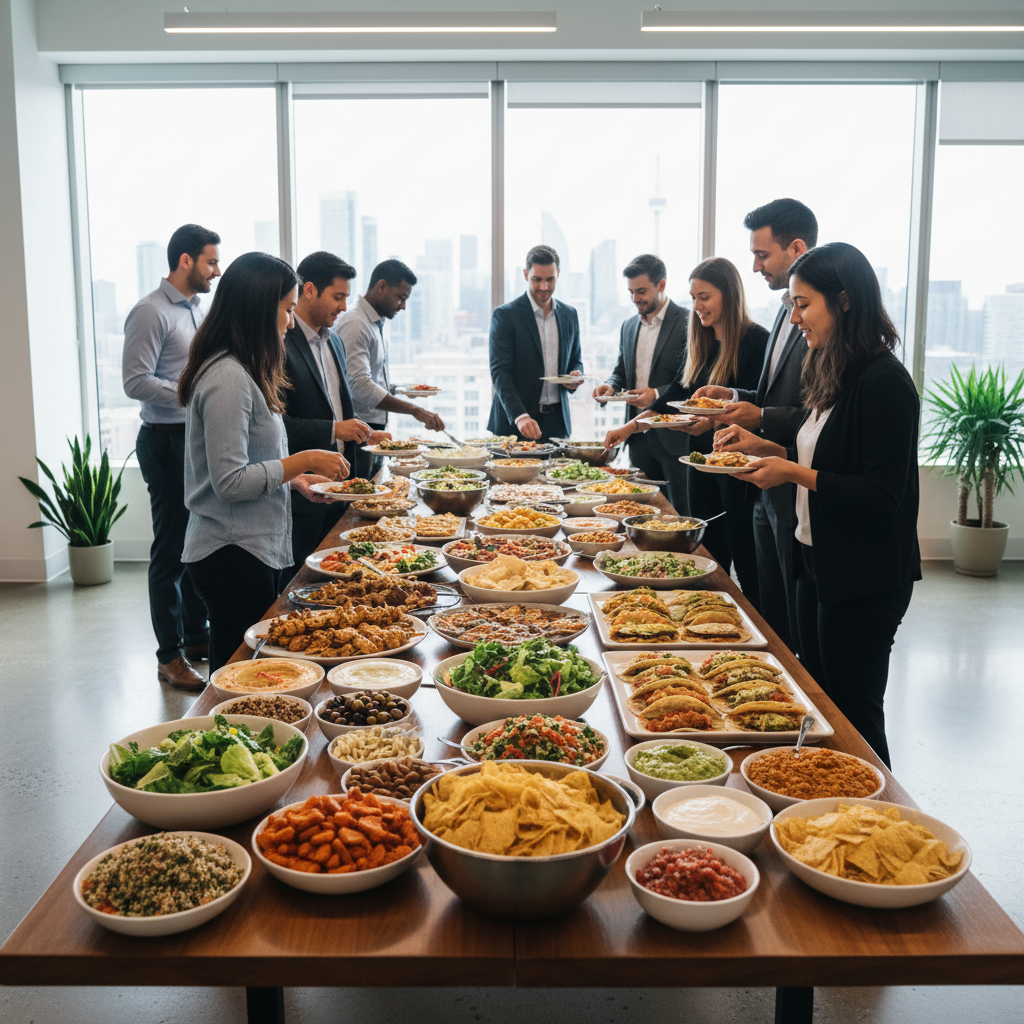
Business event catering is the coordinated planning, preparation, delivery, and service of food and beverages for professional functions. For Toronto and GTA teams, it covers everything from menu design to labeled dietary accommodations. From our Woodbridge hub at Unit #23 120 Woodstream Blvd, LunchLink makes business event catering smooth, inclusive, and on time.
By LunchLink Last updated: 2026-05-26
Above the Fold: Why this guide matters + quick outline
This guide shows how to plan business event catering that’s reliable, inclusive, and stress-free. You’ll learn when to choose buffet versus boxed meals, how to handle dietary needs at scale, ways to streamline logistics, and practical checklists you can use immediately for Toronto and GTA events.
Running an event shouldn’t mean juggling 10 vendors and guessing portions. This complete guide gives you a practical blueprint for smooth office lunches, meetings, town halls, trainings, and conferences—built on LunchLink’s corporate-focused approach.
• What business event catering includes and how it works in corporate settings
• When to choose buffet-style versus individually packaged meals
• How to plan menus teams love: Mexican, Mediterranean, Greek, and healthy salad spreads
• Inclusive dietary coverage with fully labeled meals (halal, vegan, gluten-free, nut-free, dairy-free)
• Step-by-step planning workflows, timelines, and headcount management
• Setup, service, and food safety basics for boardrooms and off-sites
• Tools, templates, and a mid-article checklist you can copy
• Mini case studies from recurring office meal programs and one-time events
Summary
Choose buffet catering for connection, speed of service, and menu variety; choose boxed meals for labeling, dietary precision, and hybrid meetings. Plan around venue constraints, delivery timing, and headcount swing. Use labeled, inclusive menus and a single point of contact to simplify corporate approvals and invoicing.
Here’s the short version: match the format to your goal. Want conversation and community? Buffets shine. Need airtight labeling and easy distribution across floors or hybrid teams? Boxed meals win. Across formats, consistency, diet coverage, and on-time delivery are non-negotiable for corporate settings.
What is business event catering?
Business event catering is food-and-beverage service purpose-built for professional gatherings—meetings, trainings, client events, and conferences. It covers menu design, dietary accommodations, delivery logistics, setup, labeling, and post-event wrap-up, with reliability, professionalism, and food safety adapted to corporate workflows.
In our experience coordinating 850+ events across Toronto workplaces, “corporate-ready” means predictable. Your meals arrive on time, with clear labeling and professional presentation—so executives, HR, and operations teams can focus on attendees, not utensils or table layouts.
• Core components: menu planning, portioning, safe transport, setup, and cleanup.
• Corporate standards: dietary labeling, inclusive options, easy approvals, and one invoice.
• Formats: buffet spreads for connection; individually packaged meals for precision.
• Use cases: board meetings, all-hands, trainings, client pitches, off-sites, and conferences.
Because LunchLink is purpose-built for offices, we emphasize inclusive coverage, vetted Toronto partners, and consistent presentation. That alignment removes common friction—last-minute headcount shifts, complex dietary needs, and distribution across multiple floors or hybrid schedules.
Why business event catering matters for workplaces
Great catering fuels attendance, focus, and culture. Reliable, inclusive meals reduce coordination time, prevent last-minute scrambles, and help everyone eat safely. The result: better engagement, smoother agendas, and fewer operational fires for HR and office teams.
Food is one of the highest-signal moments in an event. When it’s late or mislabeled, you feel it immediately in agenda slippage and attendee satisfaction. When it’s on time, balanced, and clearly labeled, discussion flows, sessions start on time, and teams leave energized.
• Engagement: Meals create natural touchpoints for conversation, peer learning, and client rapport.
• Inclusion: Labeled halal, vegan, gluten-free, nut-free, dairy-free options help every attendee eat confidently.
• Operations: One point of contact and corporate invoicing reduce administrative lift.
• Consistency: Vetted partners and never-frozen proteins keep quality predictable across events.
We’ve found that recurring meal programs yield compounding benefits—predictable delivery windows, familiar setup flow, and attendee trust in the experience. That predictability is why many Toronto offices extend single-event success into weekly or monthly programs.
How business event catering works (end-to-end)
Plan backwards from agenda and venue. Lock headcount bands, choose buffet or boxed format, map dietary needs, and schedule delivery 20–40 minutes before first bite. Ensure labeled setup, serving flow, and safe hot/cold holding, then close out with feedback for your next event.
Here’s the typical corporate flow we run in Toronto offices and venues:
• Discovery: goals, agenda timing, headcount range, venue constraints, and dietary map.
• Menu design: match cuisine to audience and energy curve (e.g., lighter mid-day; hearty evening).
• Format choice: buffet for mingling and variety; boxed for labeling precision and distribution speed.
• Logistics: elevator access, loading windows, room layout, and table count.
• Delivery & setup: arrive early, stage lines, label clearly, and set utensils/serveware.
• Service window: monitor refills, hot/cold holding, and waste streams.
• Wrap-up: pack-down, leftovers plan, and quick feedback loop to refine the next order.
For distribution across floors or hybrid hubs, individually packaged meals move fast and keep labeling front-and-center. For single-room town halls, buffets keep lines moving and spark conversation—provided you plan the table flow and put proteins first, sides second.
Buffet vs. boxed meals: which format fits?
Use buffets when you want variety, speed, and social energy. Use boxed meals when labeling, distribution, and dietary precision matter most. Consider venue layout, agenda timing, and attendee mix. Many events blend formats—buffet mains with a reserve of labeled boxes.
To make this tangible, here’s a quick comparison built from common Toronto office scenarios:
Decision factor Buffet-style catering Individually packaged meals Goal Connection, variety, and quick self-serve Precision labeling, fast distribution, clean desk dining Dietary needs Handled with labeled stations and separate platters Handled box-by-box with visible labels and sealed packaging Hybrid/remote Less ideal for split locations Best for distributing across floors or hubs Setup Tables, chafers, line flow planning Minimal setup; drop, stage, distribute Clean-up Consolidated waste; some pack-down time Individual waste; quick room turn Use cases Town halls, client mixers, training days Executive briefings, multi-floor lunches, workshops
Most corporate agendas benefit from a hybrid approach—buffet mains for the room, a reserve of labeled boxes for strict diets, speakers, or attendees moving between sessions.
Menu styles that work at scale (and how to cover diets)
Pick familiar, crowd-pleasing cuisines with clear components—Mediterranean, Mexican, and Greek excel. Build plates with balanced proteins, grains, and vegetables. Cover halal, vegan, gluten-free, nut-free, dairy-free, and pescatarian needs with distinct, fully labeled items.
From our chef-curated corporate menus, these travel well, plate cleanly, and satisfy mixed audiences:
• Mediterranean: grilled chicken or falafel, herbed rice, roasted vegetables, salads, dips.
• Mexican: seasoned proteins, tortillas, rice/beans, salsas, fresh toppings for customization.
• Greek: souvlaki, lemon potatoes, Greek salad, roasted vegetables, tzatziki-style dips.
• Healthy salads: composed bowls with proteins on the side for easy vegan/omnivore splits.
Dietary inclusion is non-negotiable in corporate environments. Our labeled meals cover halal, vegan, gluten-free, nut-free, dairy-free, and pescatarian choices—so HR and People Ops don’t need to run side spreadsheets or guess ingredients in the moment.
For deeper catering strategy across the city, explore our corporate catering in Toronto guide to choosing cuisines for mixed teams and events.
Planning workflow, timelines, and headcount bands
Lock a headcount band early (e.g., 80–100), map dietary needs, and finalize format two to five business days out. Stage delivery 20–40 minutes before eat time. Keep a 10–15% buffer for last-minute attendees and speaker delays.
Corporate calendars change quickly. The simplest way to prevent stress is a tight planning loop and clear communication with one point of contact.
• T-10 to T-7 business days: announce RSVP window, collect dietary constraints, secure room and tables.
• T-5 to T-3: confirm headcount band, select buffet or boxed, lock menu with labeled coverage.
• T-2 to T-1: confirm delivery window, elevator access, and setup flow; share floor plan if helpful.
• Event day: early delivery, staged lines, clear signage/labels, refill plan, quick cleanup guidance.
For recurring programs, we rotate menus over weeks to maintain variety without repeating items too fast. That rhythm sustains engagement for teams that dine together weekly or more.
Local logistics: Woodbridge and the GTA
Serving Woodbridge and the GTA, we plan routes and delivery windows around neighborhood traffic and ON L4L 7Z1 office hours. Expect punctual drop-offs, labeled setups, and formats tuned to your building’s flow—single-room town halls or multi-floor distributions.
Local knowledge smooths event days. We’ve learned how building access, elevator schedules, and seasonal traffic influence setup and service. That’s why we build realistic buffers and confirm the venue path before we roll.
Local considerations for Woodbridge
• Plan delivery buffers near peak commute windows common to Woodbridge and Toronto offices; stage early for town halls.
• In winter, allow extra time for transport and consider more boxed meals to keep temperatures stable during handoffs.
• For hybrid teams across the GTA, split orders by floor or pod so each group receives labeled meals at the same window.
When you’re coordinating multi-floor deliveries, individually packaged meals are usually the fastest way to keep sessions on time. For single-room gatherings, buffets bring energy and make refills obvious.
Food safety, setup, and service flow
Protect quality with proper hot/cold holding, clean serving utensils, and line flow that prevents bottlenecks. Stage proteins first, sides second, and toppings last. Label allergens clearly and keep strict-diet items on separate platters or in sealed boxes.
Here’s a simple service plan we use in boardrooms and off-sites:
• Table map: proteins closest to the start, build-your-bowl items in the middle, sauces at the end.
• Labeling: visible tags for halal, vegan, gluten-free, nut-free, dairy-free, pescatarian.
• Utensils: separate tongs/spoons for each item; swap during refills.
• Holding: maintain safe hot/cold ranges and avoid temperature danger zones during service.
• Waste: plan waste streams (recycling/compost) and designate a quick clean-up lead.
Buffets benefit from two-sided lines for groups above ~60 to reduce wait time. Boxed meals benefit from alpha-sorting by last name or department to cut distribution time in half.
Best practices we use in Toronto offices
Keep communication tight, label everything, and match cuisine to the energy curve of your agenda. For large groups, create two buffet lines or use boxed meals for distribution speed. Build a post-event feedback loop to improve each round.
• Energy curve: Lighter midday menus for workshops; heartier evening options for post-session networking.
• Hybrid-ready: Maintain a reserve of boxed meals for strict diets, speakers, and late arrivals.
• Clear ownership: One internal coordinator + one vendor point of contact = fewer surprises.
• Room flow: Position beverages away from the main food line to reduce congestion.
• Allergen safety: Separate utensils and platters for top allergens; never mix tongs.
For a fuller playbook on elevating workplace dining, see our narrative on creating culture through meals in office catering across Toronto.
Tools, resources, and templates
Use one point of contact, a shared planning sheet, and a repeatable timeline. Pre-built checklists, dietary collection forms, and seating/line-flow diagrams save hours. When possible, use live delivery tracking and admin dashboards to keep stakeholders aligned.
To make implementation fast for office managers and People Ops, we rely on a few simple tools:
• Dietary intake form: Collect halal/vegan/gluten-free/nut-free/dairy-free needs at RSVP.
• Event run-of-show: A one-pager with venue access, delivery window, and setup map.
• Menu rotation grid: For recurring programs, rotate cuisines to sustain excitement.
• Feedback pulse: Two questions post-event to surface wins and fast fixes.
When you’re ready to expand beyond one-offs, our corporate lunch programs overview explains how we structure recurring deliveries with rotating, chef-curated menus.
Pricing considerations (without numbers)
Focus on value, not line items. Format, headcount, venue access, and dietary complexity influence your quote. Recurring programs benefit from simplified ordering, consolidated invoicing, and predictable delivery windows that reduce hidden coordination costs.
While we don’t publish prices here, we can share the levers that shape investment in corporate contexts:
• Format: Buffet versus individually packaged meals and any hybrid needs.
• Headcount: Final attendee range and contingency buffer for late joiners.
• Venue: Building access, elevator timing, and setup distance to the room.
• Dietary map: Coverage for halal, vegan, gluten-free, nut-free, dairy-free, pescatarian.
• Service window: Staging time, refills, and pack-down support.
If your team is exploring halal-focused events, our halal corporate catering page outlines how we build menus with clear sourcing and confidence for observant diners.
Mini case studies and real-world examples
Recurring programs build predictability; one-time events benefit from hybrid formats. Across 850+ catered events and 25,000+ employees fed, we’ve seen labeled inclusion, early delivery buffers, and clear room flow consistently drive success and high satisfaction.
Here are compact snapshots based on common Toronto scenarios:
• Quarterly town hall (300 attendees): Two-sided buffet lines for speed; reserve 10% sealed boxes for strict diets and speakers; separate beverage station. Outcome: on-time agenda, smooth Q&A, easy pack-down.
• Executive training (40 attendees): Individually packaged lunches sorted by name; Mediterranean + healthy salads; clear allergen labeling. Outcome: fast distribution, zero dietary misses, quick room reset.
• Conference breakout (120 attendees): Buffet mains with a labeled gluten-free/vegan station; traffic split by department. Outcome: short lines, inclusive coverage, positive post-session feedback.
• Weekly program (80–100): Rotating Mexican, Mediterranean, Greek, and salad bowls; simple feedback pulse each week. Outcome: steady engagement, fewer late RSVPs, consistent quality noted by HR.
Organizations across education, healthcare, finance, and professional services favor predictable menus, clear labeling, and one-invoice simplicity. That’s the backbone of our corporate approach.
Service extensions: breakfasts, recurring programs, and healthy options
Extend impact with breakfast service, recurring office meal programs, and healthy builds. Rotating menus keep things fresh, while labeled coverage ensures inclusion. With one point of contact and consolidated invoicing, scaling from one-off to weekly is straightforward.
Breakfasts power early trainings and all-hands. Recurring programs sustain culture and predictability. Healthy builds support wellness initiatives without sacrificing flavor or presentation.
• Breakfasts: Scrambles, yogurts, fruit, and warm breads that hold well for morning sessions.
• Recurring programs: Predictable windows, rotating menus, and a simple feedback loop.
• Healthy options: Protein-forward salads and sides that satisfy without the afternoon slump.
For inspiration, browse our perspective on healthy office catering and how to maintain variety without adding complexity to approvals.
How to order and streamline approvals
Centralize communication with one vendor contact, share your agenda, and confirm headcount bands early. Use labeled menus and a simple run-of-show. For recurring programs, build a rotation calendar and set a standard delivery window your team can trust.
Here’s a straightforward ordering flow our corporate clients use:
• Share your event goals, headcount band, dietary map, and venue constraints.
• Choose format (buffet or boxed) and cuisines that match the agenda’s energy curve.
• Confirm delivery window, access path, and room layout for setup flow.
• Approve the final menu with labeled coverage and a reserve for strict diets.
• Post-event, log feedback and adjust the next menu in your rotation.
For one-off meetings and recurring schedules alike, our corporate catering Toronto page summarizes formats and next steps with a simple contact path.
Plan your next workplace meal with confidence
Tell us your agenda, headcount band, and dietary map. We’ll design a labeled, crowd-pleasing menu and deliver on time—whether you need a sociable buffet or precision boxed meals. One point of contact. One invoice. Consistently great food.
If you’re planning a Woodbridge or Toronto-area event, we’re here to help. From last-minute meetings to recurring office meal programs, LunchLink aligns cuisine, labeling, logistics, and presentation to your goals.
Soft CTA: Share your headcount band and dietary needs. We’ll recommend a format (buffet, boxed, or hybrid) and a right-sized menu rotation—no guesswork required.
Downloadable-style checklists (copy/paste)
Use these cut-and-paste checklists to speed up planning. You’ll collect dietary needs, confirm access and setup, and stage delivery for a stress-free service window. They work for both one-time events and recurring programs across Toronto offices.
Dietary intake (paste into your RSVP)
• Name and department
• Halal / Vegan / Vegetarian / Gluten-free / Nut-free / Dairy-free / Pescatarian
• Allergies (please specify)
• Accessibility or plating needs
Venue + access
• Building access path and elevator timing
• Room location and table count
• Delivery window (arrive by / serve by)
• Waste streams: compost, recycling, landfill
Service-day essentials
• Labels visible for all dietary categories
• Separate utensils for each platter/dish
• Proteins at line start, toppings at the end
• Reserve sealed boxes for strict diets and speakers
Related articles and deeper dives
Explore longer reads on planning, logistics, and culture-building with food. These resources expand on menus, rotations, and event-day execution for corporate teams across Toronto and the GTA.
For a city-wide perspective on strategy and execution, see our narrative deep dives, including the ultimate guide to corporate catering, a creative take from boardroom to BBQ catering, and practical ways to elevate corporate catering for engagement.
Frequently Asked Questions
Boxed meals maximize labeling precision and speed of distribution; buffets maximize variety and social energy. For hybrid teams, mix both. Plan labeled coverage for all major diets and keep a small reserve of sealed boxes for speakers and late arrivals.
What’s the fastest way to serve 100 people during a one-hour town hall?
Create two-sided buffet lines and place beverages separately to reduce congestion. Keep a reserve of labeled boxed meals for strict diets and speakers. Stage delivery 20–40 minutes before the serve time so the line starts moving right on schedule.
How do we handle multiple floors or hybrid hubs?
Individually packaged meals are best for multi-floor distribution. Sort boxes by name or department, and deliver to each floor within the same window. For in-room leaders, keep a smaller buffet to encourage connection for those on site.
What dietary categories should always be covered for corporate events?
Cover halal, vegan, vegetarian, gluten-free, nut-free, dairy-free, and pescatarian. Use clear labels and separate utensils. For allergens, keep dedicated platters or sealed boxes to prevent cross-contact during service.
How early should delivery arrive before a meeting starts?
Aim for a 20–40 minute buffer before the first bite. That gives time to set tables, stage lines, place labels, and resolve any last-minute room changes before attendees walk in.
Key takeaways
Match the format to your goal, label for inclusion, and plan delivery buffers. Use buffets for social energy and boxed meals for precision and distribution. Keep a small reserve of sealed boxes for strict diets and speakers, and build a quick feedback loop post-event.
• Buffet = connection and speed; Boxed = precision and hybrid-friendly.
• Labeling and utensil discipline prevent dietary misses.
• Delivery buffers protect agendas and reduce stress.
• Recurring programs compound predictability and engagement.
Conclusion
Successful business event catering is inclusive, reliable, and aligned to the agenda. Choose the format that serves your goal, label for safety, and plan service flow. With one point of contact and clear timelines, you’ll turn meals into a seamless part of your event experience.
Whether you’re planning a one-time meeting or a recurring program, LunchLink’s corporate-first approach keeps logistics simple and the food consistently great. Ready to explore menu options for your next event?
Next step: Start with your headcount band and dietary map, then review our corporate catering Toronto overview for fast-format recommendations.