Catering
Corporate Catering: Feed Teams Better in 2026, Fast
A 2026 complete guide to catering corporate programs in Toronto. Plan menus, labeling, logistics, and KPIs so office meals run on time and teams stay engaged.
June 4, 2026 · LunchLink
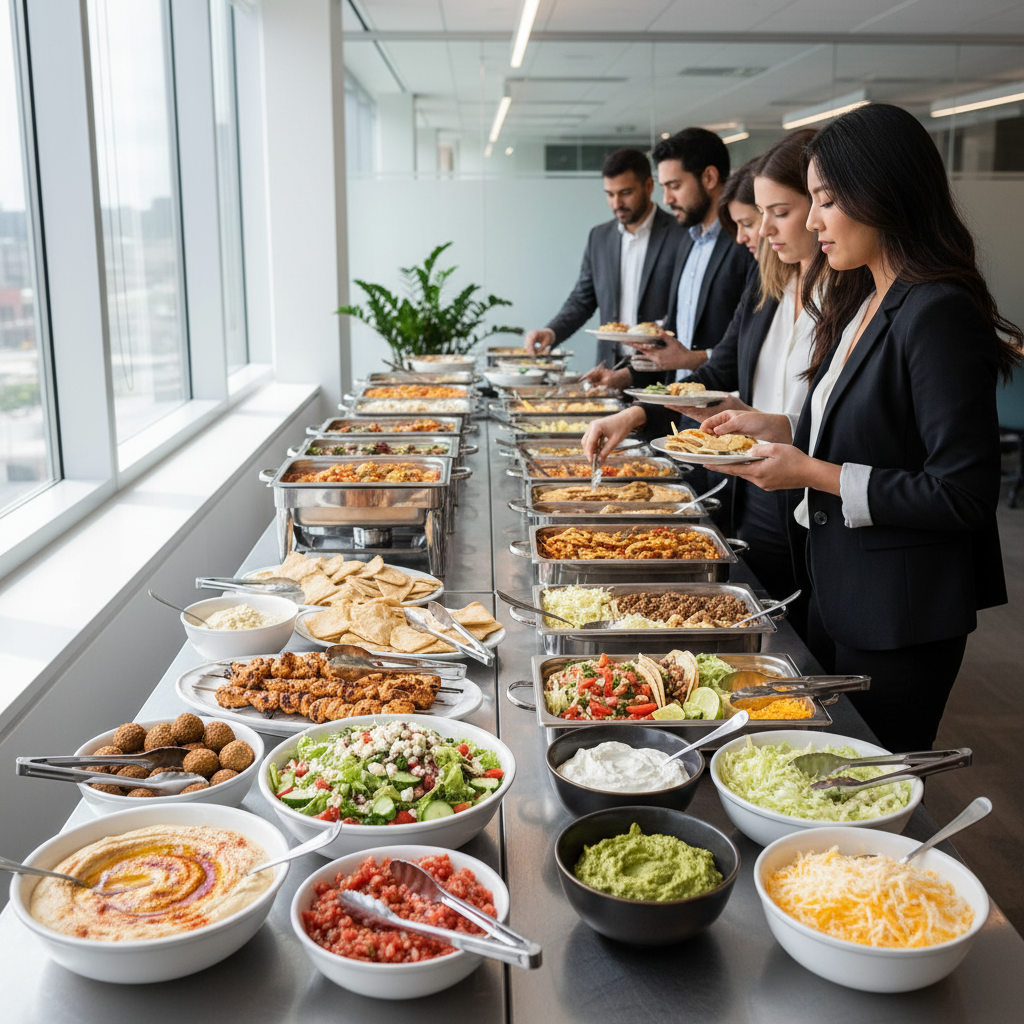
Corporate catering is the professional planning, preparation, and delivery of meals for workplaces and events. It fuels productivity, supports wellness, and simplifies logistics for teams of 10–500+. From our Woodbridge hub at Unit #23 120 Woodstream Blvd (ON L4L 7Z1), LunchLink coordinates chef-curated menus and reliable delivery across Toronto and the GTA—ideal for teams searching for catering corporate guidance.
By LunchLink • Last updated: 2026-06-04
Above the Fold: Hook & Table of Contents
Corporate catering should be effortless, inclusive, and on time. Use this complete guide to plan smarter office meals—individually packaged or buffet-style—that fit headcounts from 10 to 500+, support dietary needs, and arrive exactly when your agenda requires. We include best practices, tools, checklists, and real examples.
• What is corporate catering?
• Quick summary
• Why corporate catering matters
• How corporate catering works
• Types and formats
• Menu planning by event
• Best practices
• Tools and resources
• KPIs to measure success
• Case studies and examples
• Budgeting and planning factors
• Frequently asked questions
• Conclusion
What Is Corporate Catering?
Corporate catering is a workplace-focused food service that plans, prepares, and delivers meals for offices, meetings, and events. Top providers offer inclusive options (halal, vegan, gluten-free), flexible formats (boxed or buffet), and reliable delivery windows that match your agenda—so nobody misses lunch or the keynote.
In plain terms, catering corporate refers to organizing food for business groups with professional standards. For Toronto teams, that means curated menus, transparent labels, and service formats that scale from 10 to 500+ guests. LunchLink coordinates chef-crafted meals across the GTA, eliminating fragmented vendor management.
We design menus to match how people actually work: short breaks, staggered arrivals, quick transitions between sessions, and mix-and-match diets. Whether you need 25 individually packaged lunches for a training or a 300-person buffet for an all-hands, our goal is dependable timing and presentation every time.
Quick Summary
Use corporate catering to increase meeting attendance, shorten breaks, and improve team satisfaction. Choose a provider that documents allergens, supports last-minute headcount changes, and delivers on time. Favor menus with 3+ protein options and clear labeling to keep lines moving and reduce waste.
• When to use: Weekly office lunches, client meetings, all-hands, training, workshops, and conferences.
• Formats: Individually packaged meals, buffet-style spreads, and recurring meal programs.
• Dietary coverage: Halal, vegan, vegetarian, gluten-free, nut-free, dairy-free, and pescatarian options.
• Scale: 10–500+ attendees with labeled meals and consolidated invoicing.
• Speed: Same-day and last-minute support when the agenda shifts.
Hungry for a deeper dive? Our corporate catering overview breaks down formats and cuisines popular with Toronto offices, and our office catering page explains how we stage deliveries for buildings across the GTA.
Why Corporate Catering Matters
Good food changes outcomes. Teams show up, stay engaged, and transition faster when meals are well-timed and inclusive. In Woodbridge and the ON L4L 7Z1 metro, corporate catering also avoids weather and traffic delays by consolidating deliveries and staggering service to match local commute patterns.
We’ve catered 850+ events and served 25,000+ employees with a reported 98% client satisfaction—signals that consistency, labeling, and timing reduce friction at scale. Consistency matters when you need 120 boxed lunches labeled and separated by dietary profile. Meals that arrive 10 minutes early keep agendas on time; even a 15-minute delay can derail two sessions.
• Attendance impact: Providing lunch can lift participation for trainings and all-hands by double-digit percentages based on our recurring program data.
• Throughput gains: Two identical buffet lines can cut queue times by about 50% for groups over 120.
• Risk reduction: Clear allergen labels on every box reduce last-minute scrambles and help safety-conscious teams eat with confidence.
Food is also a culture lever. Recurring programs (weekly or monthly) create rituals that improve attendance and reduce the logistical burden on office managers. Choose providers who can flex headcounts by 10–20% within 24 hours, maintain quality, and document allergens clearly. That combination reduces risk and keeps teams energized.
How Corporate Catering Works
Plan your event by locking timing, headcount range, and dietary needs first. Select a menu and format (boxed or buffet), confirm labeling, share delivery instructions, and align on a 10–15 minute arrival buffer. Great partners send confirmations, name-based labels, and deliver on temperature—ready to serve.
• Define the occasion: meeting, training, client pitch, all-hands, or conference.
• Estimate headcount: set a floor/ceiling (e.g., 80–100) to manage late RSVPs.
• Capture dietary needs: halal, vegan, gluten-free, nut-free, dairy-free, pescatarian.
• Pick format: individually packaged or buffet-style; consider room size and agenda timing.
• Choose menu: aim for 3+ proteins and 2+ sides; include a hearty vegetarian baseline.
• Document logistics: loading dock, elevator access, floor number, and contact on arrival.
• Confirm delivery window: set a 10–15 minute early buffer for setup and last checks.
• Review labels: ensure every box or pan shows allergens and diet profile.
Format Best for Labeling Allergy control Setup time Waste control Individually packaged Breakouts, trainings, client meetings (10–150) Name-based + allergens High (sealed boxes) Low (5–10 minutes) Predictable portions Buffet-style All-hands, celebrations, conferences (50–500+) Pan labels + icons Moderate (serving utensils) Moderate (10–20 minutes) Flexible portions Recurring program Weekly office lunches (25–200) Standardized each week High (repeat patterns) Low (routines set) Data-driven ordering
Local considerations for Woodbridge
• Account for winter weather buffers between November–March; add 10–15 minutes to delivery windows for morning events.
• For holiday peak weeks, book menus 7–10 days ahead to lock variety and dietary coverage.
• When meetings span lunch-and-learn blocks, plan a protein refresh at the 60–75 minute mark to keep energy high.
For more operational detail, see our corporate lunch catering page where we outline building access tips and arrival buffers for downtown towers.
Types/Methods/Approaches
Choose the format that fits your agenda. Boxed meals speed distribution and protect allergens. Buffets create variety and social energy. Recurring programs build culture through consistent rituals. Layer in cuisine themes—Mexican, Mediterranean, Greek, and healthy salads—to keep menus fresh month over month.
Individually packaged meals
• Faster distribution: 100 boxes can be handed out in 8–12 minutes with name labels.
• Allergy safety: sealed containers reduce cross-contact risk at scale.
• Hybrid work friendly: easy to save for late arrivals or remote pickups.
Teams ordering individually packaged meals often pair them with staggered break times. In our experience, this avoids the post-lunch lull because people eat within a 10–15 minute window instead of waiting in a long line.
Buffet-style catering
• Flexible portions for mixed appetites; lines move when proteins are pre-sliced.
• Encourages social interaction—use two serving lines for groups above 120 to keep waits under 7 minutes.
• Great for themed days (Mediterranean, Mexican, Greek) with 3+ proteins and 2 salads.
Buffets work well for all-hands gatherings and celebrations. We recommend placing beverages at a separate station to reduce congestion and adding a second set of utensils to sustain throughput after the first 50 guests.
Breakfast, snacks, and beverages
• Breakfast boosts punctuality for morning trainings; plan hot items to arrive 10 minutes early.
• Snacks at the 90-minute mark improve focus during workshops or town halls.
• Hydration stations and coffee keep lines shorter at peak times.
Breakfast catering is a quiet productivity tool. When meetings start at 9:00 a.m., serving by 8:50 a.m. captures early arrivals and reduces late entry interruptions by a noticeable margin.
Dietary accommodations
• Cover halal, vegan, vegetarian, gluten-free, nut-free, dairy-free, and pescatarian needs.
• Use plain-language labels with allergen icons on every box or pan.
• Set up a dedicated pickup point for allergen-sensitive meals to avoid line jostling.
If you regularly host clients, consistent dietary coverage is a trust signal. Catering corporate programs that standardize labels reduce risk and keep hosts focused on conversation rather than meal distribution.
Menu Planning by Event Type
Match menus to moments. Client meetings favor tidy boxed meals; trainings need hearty options that hold heat; all-hands benefit from dual-line buffets. Rotate Mediterranean, Mexican, and Greek to sustain interest, and anchor each menu with a vegetarian baseline plus two protein choices.
Client meetings (8–24 attendees)
• Name-labeled boxes with a mix of proteins plus one pescatarian option.
• Light sides (salads, fruit) to maintain energy; deliver 10 minutes ahead.
• Keep beverages separate to avoid clutter around the presentation area.
Example: a Greek bowl set with vegetarian falafel, chicken souvlaki, and a pescatarian option maintains professionalism while covering common preferences.
Trainings and workshops (25–120 attendees)
• Individually packaged meals distributed by name to cut handout time to 10–12 minutes.
• Plan a snack refresh at the 90-minute mark to sustain focus.
• Use clear signage for dietary pickup points to keep participants moving.
We often schedule a protein “top-up” at the 60–75 minute mark for half-day trainings. It’s a small move that noticeably improves afternoon engagement.
All-hands and celebrations (120–500+ attendees)
• Dual-line buffet with 3 proteins, 2 sides, and a no-dairy salad.
• Pre-slice proteins to maintain sub-7-minute wait times.
• Place dessert and beverages at separate tables to optimize flow.
For large gatherings, we recommend a short welcome message while lines open; it sets tone and uses those initial minutes productively.
Best Practices
Set your agenda first, then build the meal plan around timing. Keep lines short by offering 3 proteins, 2 sides, and clear labels. Reserve 10–15 minutes for setup, and designate an onsite contact. Confirm dietary counts 24 hours prior, and photograph table layout for repeatability.
Labeling and food safety
• Always label name, diet profile, and key allergens on every box.
• Keep hot foods above safe holding temperatures and cold items chilled.
• Use separate utensils for major allergens to minimize cross-contact.
Labels are your safety net. They reduce distribution friction, prevent mix-ups, and reassure guests with food allergies that they can dine confidently.
Logistics that save time
• Provide loading instructions (dock, elevator, suite) on the order.
• Schedule delivery 10–15 minutes early for setup and table staging.
• For 150+ guests, stage two lines with identical menus to cut wait times by half.
We maintain a pre-arrival checklist for every delivery: access, contact, table count, and a simple sketch of the layout. That tiny habit pays off in minutes saved at scale.
Inclusive menu planning
• Guarantee a hearty vegetarian baseline; add pescatarian options for variety.
• Offer a no-dairy salad and a nut-free dessert to cover common needs.
• Rotate cuisines weekly to keep engagement high during recurring programs.
For more menu inspiration, browse our halal-friendly catering overview and our guide to planning efficient office meals.
Need a hand planning next week’s lunch? Our team builds labeled menus, coordinates delivery, and manages recurring schedules with one invoice. We simplify catering corporate programs for offices across Toronto and the GTA.
Tools/Resources
You don’t need more vendors—you need better workflow. Use a single contact for quotes, labeled menus, delivery tracking, and consolidated invoicing. Save a reusable checklist, standardize dietary data collection, and adopt recurring schedules for predictable operations across quarters.
• Ordering checklist: date, headcount floor/ceiling, dietary counts, room access, onsite contact, arrival buffer.
• Labeling standard: name, diet profile, allergens, utensil set, and pickup table.
• Recurring cadence: set weekly or biweekly rotations with alternating cuisines.
• Data-friendly ops: track attendance and popular dishes to reduce waste 10–15% quarter over quarter.
• Future-ready tech: watch for individual ordering and live tracking to streamline hybrid schedules.
Looking for a deeper strategy dive? Our team shares frameworks in the ultimate corporate catering guide and a playbook to elevate office meal programs.
KPIs to Measure Success
Treat food as an operational program. Track attendance, wait times, leftover volume, feedback scores, and distribution time. If lines average under 7 minutes and leftovers drop 10–15% over a quarter, your plan is working. Use simple forms to capture ratings after each event.
• Attendance rate: compare RSVPs vs. actuals across 4–8 weeks.
• Queue time: sample three points during service; aim under 7 minutes.
• Leftovers: estimate by pan or box count; target a 10–15% reduction over time.
• Distribution speed: time-to-serve for boxed sets; 100 boxes in 8–12 minutes is achievable with name labels.
• Satisfaction: simple 1–5 rating with a comment box; watch for cuisine fatigue.
We’ve found that a light quarterly review yields better outcomes than ad hoc tweaks. Small adjustments—like moving beverages to a separate station—often shave minutes off peak congestion.
Case Studies/Examples
Real-world outcomes show the value. Across 850+ events and 25,000+ meals, labeled boxes and timed buffets keep sessions on schedule and teams happy. Expect faster distribution, fewer missed meals, and smoother transitions when agendas, menus, and delivery windows are aligned.
• Training day, 95 guests: Individually packaged Mediterranean bowls with halal, vegan, and gluten-free sets. Distribution finished in ~10 minutes; breakout sessions started on time.
• All-hands, 320 attendees: Dual-line buffet with 3 proteins and 2 salads. Wait times stayed under 7 minutes; post-lunch Q&A retention improved.
• Recurring Fridays, 80–110 staff: Rotating Mexican/Greek/Salad menus. Waste down ~12% after tracking patterns over 8 weeks.
• Client pitch, 18 people: Name-labeled boxes with pescatarian and dairy-free options. Setup completed in 5 minutes; meeting flow stayed uninterrupted.
For more examples, see how we bridge formats in our boardroom-to-bbq guide for warm-weather events.
Budgeting and Planning Factors (No Pricing)
Budgeting for corporate catering is about fit, not figures. Align cuisine, format, and frequency to your goals. Consolidate vendors, standardize labeling, and favor menus that travel well. Reserve flexibility for 10–20% headcount swings, and document portions to reduce waste over time.
• Event goals: training punctuality, client experience, culture-building, or conference throughput.
• Format impact: boxed meals tighten timing; buffets stretch variety and social energy.
• Dietary coverage: inclusive menus reduce last-minute scrambling and make guests feel seen.
• Logistics: access rules, elevator timing, and room distance affect setup speed.
• Frequency: recurring programs create predictability and operational savings in the long run.
When planning catering corporate programs for a quarter, map holidays and peak project weeks first. That calendar clarity helps you pre-select cuisines and hold slots with your provider.
Frequently Asked Questions
How far in advance should we place a corporate order?
Aim for 3–5 business days for large groups, though last-minute and same-day support is often possible. Share headcount floors/ceilings, dietary counts, and building access details early so your provider can lock timing and menu variety.
What information do you need to label meals correctly?
Provide attendee names (if boxing), dietary profiles (halal, vegan, gluten-free, etc.), and known allergens. Request plain-language labels on every box or pan and a separate pickup point for allergen-sensitive meals.
Is buffet or individually packaged better for offices?
Neither is universally better. Boxed meals speed distribution and protect allergens; buffets add variety and social energy. Choose based on headcount, room size, dietary mix, and agenda timing. Many teams mix both across a quarter.
Can you support dietary restrictions across large groups?
Yes—comprehensive coverage is essential. Plan counts for halal, vegan, vegetarian, gluten-free, nut-free, dairy-free, and pescatarian meals. Use clear labels and separate utensils to minimize cross-contact risk at buffets.
Conclusion
Corporate catering works best when meals match your agenda and your people. Set timing first, choose formats that fit the room, and insist on inclusive labels. With a single point of contact and predictable routines, your teams eat well—and your meetings run on time.
Serving Toronto and the GTA from Woodbridge, LunchLink makes catering corporate simple for offices of 10–500+. Ready to plan? We’ll build a rotating menu and delivery plan that fits your calendar and your culture.
Key takeaways
• Start with timing, headcount floors/ceilings, and dietary counts—everything else follows.
• Keep service moving with 3 proteins, 2 sides, and separate beverage stations.
• Standardize labels to enable fast, safe distribution and reduce risk.
• Adopt recurring rhythms to lower leftovers by 10–15% over a quarter.
Next step: Explore our corporate catering services and schedule a quick consult. Prefer a deeper read? Start with our office catering overview.