Catering
Corporate Event Catering: Make Lunch Easy in 2026
Plan catering for company events with formats, labeling, and logistics that work. LunchLink serves Toronto and the GTA with inclusive, on-time corporate meals.
May 31, 2026 · LunchLink
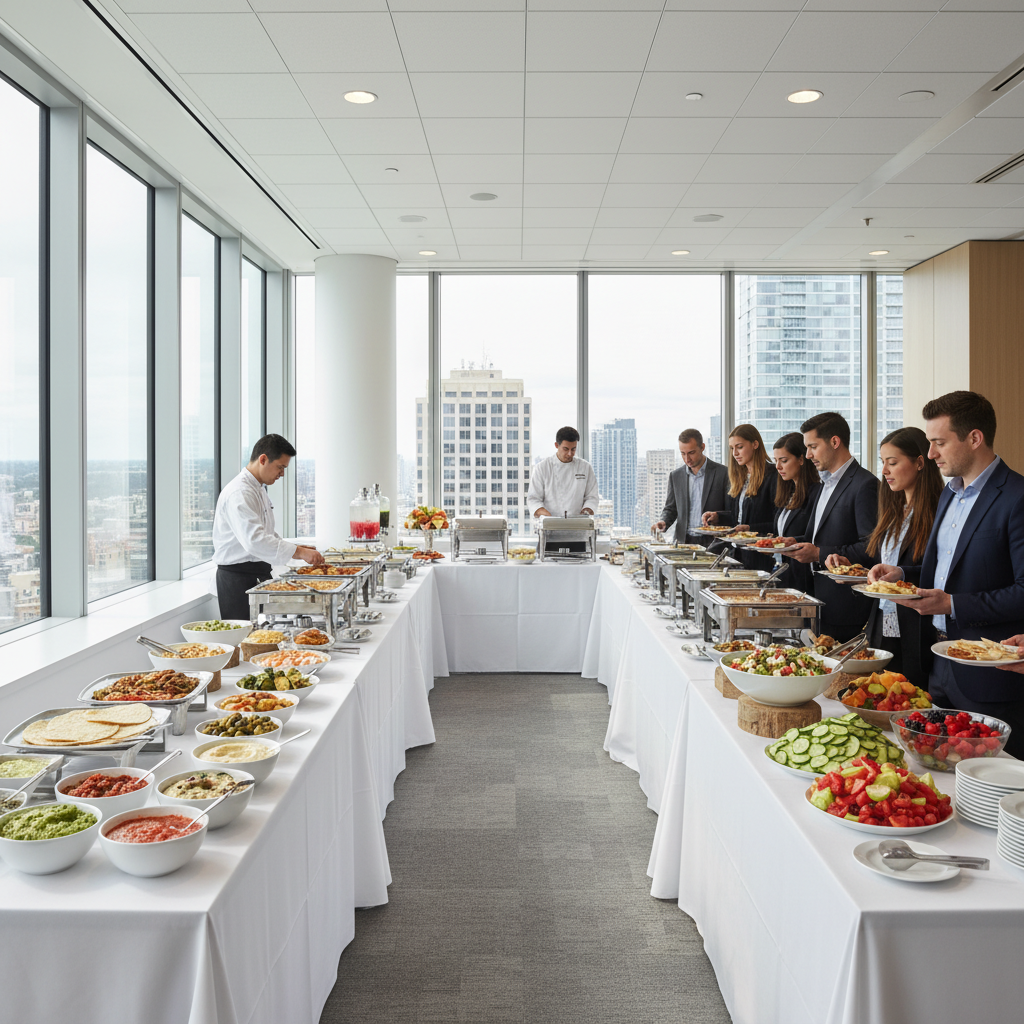
Catering for company events is the end-to-end planning and delivery of meals for workplace gatherings—client meetings, town halls, trainings, and celebrations. From our Woodbridge hub at Unit #23 120 Woodstream Blvd, LunchLink organizes chef-curated menus, labeled dietary accommodations, and on-time delivery across Toronto and the GTA so teams can focus on the agenda.
By LunchLink • Last updated: May 31, 2026
Quick Start: Plan Company Event Catering
Plan corporate catering by clarifying headcount, dietary needs, service style (boxed or buffet), delivery window, and venue logistics. Lock these five details first, then select a balanced menu and confirm labeling and setup. This simple framework keeps your event on time, inclusive, and stress-free.
Here’s the fast path we use every day for Toronto offices. Lock the event basics, choose the right format, and communicate dietary needs early. Then let our operations team coordinate routing, staging, and presentation, so your agenda stays on track.
At a Glance
• What you’ll learn: formats, menu planning, timelines, labeling, and allergen-safe service for company events.
• Who it’s for: office managers, EAs, HR/People Ops, and event planners coordinating 10–500+ attendees across the GTA.
• How LunchLink helps: chef-curated menus, fully labeled meals, reliable delivery, corporate invoicing, and recurring meal programs.
Table of Contents
• What is catering for company events?
• Why catering matters for company events
• How corporate event catering works
• Catering formats and when to use them
• Menu planning best practices
• Tools and resources
• Case studies and examples
• FAQ
• Conclusion and next steps
What Is Catering for Company Events?
Catering for company events is a managed food service that plans, prepares, labels, and delivers meals for workplace gatherings. It covers menu design, dietary accommodations, logistics, and presentation so attendees eat safely and on time without disrupting your agenda.
In plain terms, you define the audience and goals, and your caterer handles the food experience end to end. At LunchLink, that means inclusive menus (halal, vegan, gluten-free, nut-free, dairy-free), clear labels, and delivery timing that matches your run of show.
Local considerations for Woodbridge
• Rush windows: For morning meetings, plan earlier drop-offs to avoid commuter delays between Woodbridge and downtown cores.
• Seasonality: Winter weather can tighten routing. Build a 15–20 minute buffer into delivery windows for larger drop-offs.
• Neighborhood nuance: Many offices have loading restrictions. Share building access notes upfront to streamline staging.
Our team operates daily across Toronto and the GTA, coordinating access notes, elevators, and security desks so setup stays effortless. For offices seeking halal lunch coverage or recurring meal programs, explore our corporate catering in Toronto page for options.
Why Catering Matters for Company Events
Great catering improves turnout, keeps sessions on schedule, and supports inclusion. When meals are timely, varied, and clearly labeled, attendees participate more, breaks run on time, and everyone—regardless of dietary needs—can eat confidently.
Food sets the tone. In our experience across 850+ events and 25,000+ employees fed, meals that are balanced, fresh, and easy to navigate reduce late returns and side trips. Labeled meals also remove guesswork for guests with allergies or religious dietary needs, which builds trust.
• Operational impact: Serving on time keeps agendas intact, especially for trainings and town halls.
• Inclusion signal: Covering vegan, halal, and gluten-free needs shows care for every team member.
• Brand touchpoint: Professional presentation reinforces your culture during client or board sessions.
Want a deeper dive into planning for boardrooms and offsites? See our internal playbook highlights in the ultimate corporate catering guide.
How Corporate Event Catering Works
Corporate catering follows a repeatable workflow: define scope, capture dietary needs, select format, lock delivery window, confirm labeling and staging, and perform a pre-event check. Clear steps reduce risk and keep your meeting running smoothly.
Step-by-step workflow
• Confirm the event profile: date, headcount range, meeting type, and service times.
• Gather dietary needs: halal, vegan, vegetarian, gluten-free, nut-free, dairy-free, and allergies.
• Choose service style: boxed lunches or buffet-style setups based on space and flow.
• Balance the menu: include protein variety, at least one hearty plant-forward option, and fresh sides.
• Set the delivery window: allow 15 minutes for staging; big events may need 20–30.
• Finalize labeling: individual labels for boxed meals; tent cards for buffet components.
• Run a 24-hour check: verify headcount, building access, elevator timing, and table availability.
We handle vendor coordination and routing, then stage with professional presentation. For recurring programs, we rotate cuisines weekly to prevent menu fatigue while keeping allergen safety consistent across deliveries.
Simple planning ratios
• Plan 20–30% vegetarian coverage for mixed teams; increase to 40% if data suggests.
• Reserve 10–15% of portions as gluten-free or dairy-free when needs are unknown.
• For appetizers, 1.5–2 pieces per person per 30 minutes avoids shortages during receptions.
Catering Formats and When to Use Them
Choose boxed meals for tight agendas, remote-friendly logistics, and strict allergen control. Choose buffet-style for community, variety, and flexible portions. Hybrid formats—buffet mains with a labeled special-diets table—work well for 50–150 guests.
Format determines flow. Boxed meals shine for trainings and working sessions; buffets create social energy for celebrations and town halls. Hybrid layouts combine speed with choice, keeping dietary accommodations clear and separate when needed.
Format Best for Strengths Watch-outs Individually Packaged Trainings, offsites, hybrid meetings Fast service, clear labeling, easy cleanup Less communal feel; ensure variety per box Buffet-Style Celebrations, town halls, larger gatherings Choice, portion flexibility, visual impact Needs space and line management Hybrid Mixed dietary needs, 50–150 attendees Choice plus speed; special-diets table Requires deliberate layout and signage
Explore our office catering options for both buffet spreads and boxed sets, or review halal coverage and labeled meals on our halal corporate catering page.
Menu Planning Best Practices
Design menus that balance flavor, nutrition, and inclusivity. Mix proteins, offer a hearty plant-forward choice, include fresh produce, and match sides to the event’s pace. Always surface allergens on labels and tent cards for confident dining.
Build balanced variety
• Global rotation: alternate Mexican, Mediterranean, and Greek profiles to keep interest high.
• Plant-forward anchor: add a satisfying vegan or vegetarian entrée that appeals to all diners.
• Fresh sides: pair entrées with salads, roasted vegetables, and seasonal fruit.
Inclusive labeling that works
• Use clear badges like Vegan, Halal, Gluten-Free, Nut-Free, and Dairy-Free on each item.
• Place allergen tent cards at buffet components to prevent cross-contact.
• Color cues help, but plain-language labels remain essential for accuracy.
We keep menu planning simple for company events by offering fully labeled options and balanced sets on our corporate lunch catering page, with individually packaged or buffet formats depending on your room and agenda.
Proportions and timing
• Schedule 45–60 minutes for lunch service in agendas with speaker segments.
• Allow 20–30 minutes for breakfast service; pastries and fruit can open as guests arrive.
• For late-afternoon town halls, add protein-forward snacks to stabilize energy.
Tools and Resources
Use simple tools: a headcount tracker, a dietary matrix, building access notes, and a menu rotation calendar. For recurring programs, standardize a three- to six-week rotation and one consolidated invoice to reduce administrative load.
We streamline office catering with one point of contact and corporate invoicing. Our upcoming app will add individual ordering, live delivery tracking, dietary filters, and admin dashboards—ideal for teams running weekly lunches or daily programs across locations.
• Templates: attendee roster with dietary flags; load-in notes with elevator timings and staging tables.
• Rotation calendar: alternate cuisines weekly to minimize menu fatigue while honoring dietary coverage.
• Program ops: one invoice per cycle, recurring slots, and 24-hour headcount flex where applicable.
To see how we frame recurring office meal programs, review our boardroom-to-BBQ guide with checklists for on-site flows.
Case Studies and Examples
Real teams get real results when catering is predictable, inclusive, and well-presented. With 850+ events delivered and a reported 98% satisfaction rate, we’ve seen agendas run tighter and participation improve when meals align with timing, labeling, and dietary needs.
Training day, 120 attendees (hybrid format)
• Challenge: Working lunch without interrupting sessions; strict nut-free environment.
• Solution: Individually packaged grain bowls (vegan, halal chicken, pescatarian), clear ingredient labels, fruit add-ons.
• Outcome: Service completed in under 12 minutes per room; zero allergy incidents reported.
Quarterly town hall, 300 attendees (buffet)
• Challenge: Limited lobby space for lines; wide dietary spread.
• Solution: Two mirrored buffet lines, a separate special-diets table, and clear tent cards.
• Outcome: Full service within a 30-minute break; high engagement sustained post-meal.
Client roundtables, 40 attendees (boxed)
• Challenge: Keep conversation continuous; avoid messy foods.
• Solution: Compact boxed sets with cutlery, napkins, and sealed dressings; pescatarian and vegan options included.
• Outcome: No service disruption; positive client feedback on presentation and clarity.
For more on event types—from breakfast briefings to all-hands—browse our elevate your corporate catering article for additional planning grids and menu ideas.
Frequently Asked Questions
These quick answers cover the most common planning questions: lead times, dietary coverage, labeling, and format selection. Skim for clarity, then share details with your coordinator to finalize your event.
How far in advance should I book catering for company events?
Lock dates as early as you can. For standard lunches, a few business days helps with menu rotation and routing. For larger town halls or multiple room drops, provide headcount estimates and access notes one week out, then finalize details 24 hours before delivery.
What’s the safest format when I have many dietary restrictions?
Individually packaged meals make labeling straightforward and reduce cross-contact. For buffets, create a separate special-diets table and use clear tent cards and serving utensils. Always confirm allergens in advance and communicate them to the catering team.
How do I decide between boxed and buffet?
Use boxed meals for trainings and tightly timed sessions. Choose buffets for celebrations and when you want variety and a social feel. Hybrid setups—buffet mains plus a labeled special-diets table—work well for mid-sized groups.
Can LunchLink support recurring office meal programs?
Yes. We manage rotating menus across vetted Toronto partners, consolidate invoicing, and maintain consistent labeling standards. Weekly or daily deliveries can be scheduled with 24-hour headcount flexibility where available.
Do you handle breakfast catering for early meetings?
We do. Breakfast spreads and individually packaged options are available with fruit, pastries, protein-forward items, and hot drinks. Aim for a 20–30 minute service window prior to your kickoff so the meeting starts on time.
Conclusion and Next Steps
Define basics, choose the right format, label clearly, and stage efficiently. With a repeatable plan, catering for company events becomes predictable—and your meetings run on time with everyone included.
Here are the key takeaways and next steps if you’re planning your next office meal across Toronto and the GTA.
Key takeaways
• Lock event profile and dietary needs early; it drives format and menu decisions.
• Boxed meals = speed and clarity; buffets = choice and connection; hybrid = both.
• Labels and tent cards turn inclusivity into action for halal, vegan, and allergy coverage.
• Staging and timing matter—aim for 15–30 minutes to set and line-manage.
Action steps
• Share your headcount and dietary matrix via our corporate catering page.
• Pick a rotation starter (Mexican, Mediterranean, or Greek) and select a plant-forward anchor.
• Decide on boxed, buffet, or hybrid; we’ll handle routing, staging, and presentation.
Need a hand? Our coordinators can finalize your plan in a quick call and confirm labeling and access notes. Explore office catering options or review halal-friendly menus now.