Catering
Corporate Event Catering: Serve Better Food in 2026
Plan catering for corporate events in Toronto & the GTA with inclusive menus, labeling, logistics, and checklists. LunchLink’s 2026 guide shows how.
May 29, 2026 · LunchLink
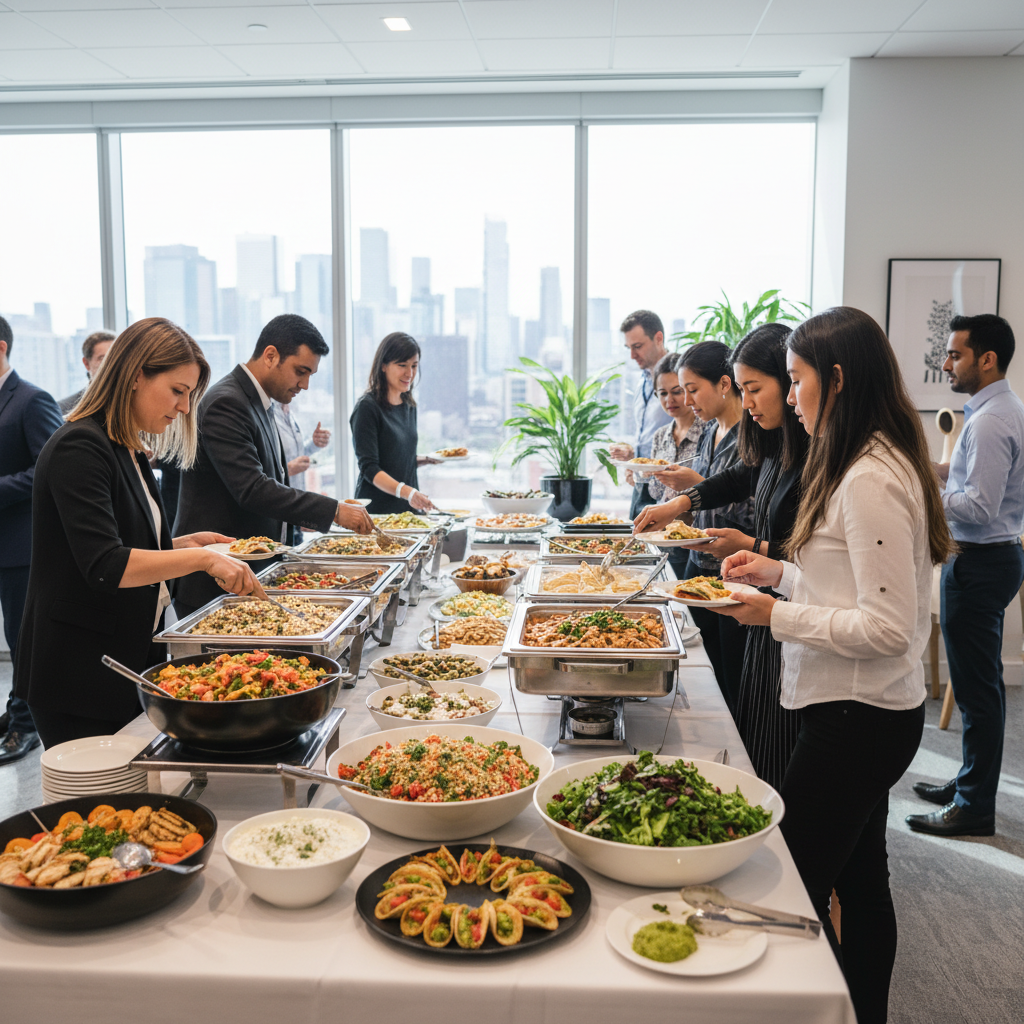
Catering for corporate events is the coordinated planning, preparation, labeling, delivery, and setup of professionally prepared food for meetings and company gatherings. It centralizes menus, dietary coverage, and logistics so teams can focus on outcomes. From Woodbridge at Unit #23 120 Woodstream Blvd, LunchLink delivers chef-inspired office meals across Toronto and the GTA with inclusive options and reliable timing.
By LunchLink • Last updated: May 29, 2026
At a Glance: This Complete Guide
Use this end-to-end guide to plan catering for corporate events with confidence. You’ll learn definitions, benefits, logistics, menu design, and proven playbooks—plus tools, checklists, and Toronto-based examples drawn from LunchLink’s 850+ events and 25,000+ meals served to teams across the GTA.
Here’s what you’ll find inside this playbook-style article designed for office managers, EAs, HR teams, and event planners.
• What “corporate event catering” includes and why it’s not just restaurant delivery
• How catering supports engagement, inclusion, and on-time agendas
• Step-by-step process from headcount to handoff (with timing cues)
• Service styles compared: individually packaged, buffet, and hybrid
• Menu planning for halal, vegan, gluten-free, nut-free, dairy-free, and pescatarian diners
• Operations checklists, room flow, and delivery logistics that cut lines
• Case studies from Toronto workplaces and a planning timeline you can copy
Quick navigation
• What is corporate event catering?
• Why it matters for engagement
• How the process works
• Service styles and when to use each
• Menu planning and dietary coverage
• Delivery and logistics
• Budgeting considerations (no numbers)
• Best practices for planners
• Tools and resources
• Case studies and examples
• Timeline and checklists
• Service style comparison
• FAQ
• Conclusion + next steps
What Is Catering for Corporate Events?
Catering for corporate events covers menu planning, prep, inclusive labeling, delivery, and setup for workplace gatherings. It’s built for business needs—tight agendas, varied diets, and professional presentation—so meetings run on time and attendees eat safely.
Unlike casual takeout, corporate catering is a coordinated service. It bundles culinary design, dietary controls, dependable timing, and a polished setup into one workflow. In practice, that means fewer vendors to manage and fewer risks during high-stakes agendas like client demos or all-hands meetings.
• Scope: Menus, labeling, servingware, utensils, delivery, staging, and clean handoff.
• Common use cases: Client briefings, training days, town halls, board sessions, conferences, and milestone celebrations.
• Formats: Individually packaged meals, buffet-style spreads, or hybrid service.
• Audience size: Flexible for 10–500+ attendees; timing windows often run 30–60 minutes.
LunchLink focuses on globally inspired, workplace-friendly menus—Mexican, Mediterranean, Greek, and hearty salads—coordinated across vetted Toronto partners. Our team’s corporate-first operations, labeling standards, and reliable delivery windows are designed to protect your agenda from the first bite to final slide.
For a deeper dive into office-focused options, see our corporate catering in Toronto hub with examples by team size and agenda cadence.
Why Corporate Event Catering Matters
Corporate catering lifts attendance, focus, and inclusion. In Woodbridge and across ON L4L 7Z1, reliable meals keep sessions on schedule, reduce mid-meeting exits, and help every attendee—regardless of dietary need—feel considered and safe.
Food sets the tone. When meals arrive on time, labeled clearly, and aligned with the agenda, you remove friction that derails workshops and briefings. In our experience across 850+ events, well-staged lunch waves shorten return-to-seat time by several minutes per attendee—a big gain in a 60-minute slot.
• Engagement: Timely, balanced meals stabilize afternoon energy and support interactive segments.
• Inclusion: Clear labels reduce food anxiety; sealed boxes improve confidence for allergy-sensitive diners.
• Brand reputation: Professional presentation signals care to clients and candidates during on-sites.
• Operational simplicity: One point of contact and consolidated invoicing reduce admin time across recurring programs.
We’ve found that groups with explicit dietary signage and visible stationing (e.g., vegan on the left, halal-friendly proteins centered) ask fewer questions and move through lines 20–30% faster. That flow translates directly into more minutes for content and collaboration.
Explore practical menu framing that supports inclusion in our office catering overview, built for meeting-heavy teams.
How Corporate Event Catering Works
Start with headcount and dietary mapping, then select your service style and menu. Confirm access logistics and delivery timing. On event day, your caterer stages servingware, labels everything, and hands off cleanly so you can focus on facilitation, not food lines.
Here’s a clear sequence you can reuse across events, from 12-person board reviews to 400-person town halls.
• Define the event: State objectives, agenda cadence, venue constraints, and estimated headcount.
• Capture diets: Collect halal, vegan, vegetarian, gluten-free, nut-free, dairy-free, and pescatarian needs in RSVPs.
• Choose the format: Individually packaged meals, buffet-style spreads, or a hybrid for mixed groups.
• Select menus: Balance proteins, grains, and fresh produce to stabilize energy for multi-hour sessions.
• Lock logistics: Delivery window, load-in path, elevators, room layout, and onsite point of contact.
• Execute: On-time delivery, labeled items, and quality checks; hold-back trays prevent visible shortfalls.
LunchLink centralizes these steps with corporate-friendly operations. We coordinate vetted partners, provide inclusive labeling, and scale from small meetings to multi-hundred-person gatherings without sacrificing timing or presentation. For recurring programs, standardizing your cadence often recovers hours of admin time each month.
See how recurring setups work in our corporate lunch programs guide with rotating cuisines and predictable drop-off windows.
Types of Corporate Catering (And When to Use Each)
Match your service style to the agenda and room. Individually packaged meals are fastest and safest for strict diets; buffets maximize variety and social energy; hybrid setups blend both when audiences and goals are mixed.
Service style influences flow, timing, and satisfaction. The right choice minimizes lines, protects dietary needs, and supports your event’s objectives—training efficiency, client experience, or team connection.
Individually packaged meals
• Best for: Tight schedules, limited table space, and allergy-sensitive groups.
• Strengths: Label clarity, precise headcount control, minimal lines, easy reseating in under five minutes.
• Example: An 80-person training day with halal, vegan, and gluten-free boxes. Attendees grab their labeled meals in under three minutes and return to seats for a timed exercise.
Buffet-style spreads
• Best for: Social connection, flexible portions, and culinary variety across cuisines.
• Strengths: Shared experience, easy seconds, and lower packaging footprint when space allows.
• Example: A quarterly town hall with Mediterranean mains, roasted vegetables, and hearty salads. Two lines serve 300+ attendees in 12–15 minutes with clear stationing.
Hybrid service
• Best for: Mixed preferences, strict diets alongside flexible eaters, and agendas with networking time.
• Strengths: Combines safety and speed with variety and connection.
• Example: A client summit offering labeled vegan/halal boxes next to a compact buffet. Result: inclusive options with a premium feel for stakeholders.
Curious how to deploy these formats by team size? Our low-friction office catering tips outline simple flow tricks that shave minutes off service.
Menu Planning and Dietary Accommodations
Design inclusive menus by mapping dietary needs first, then selecting balanced entrées and sides with plain-language labels. Provide at least one entrée per major diet, and use cross-contact controls during prep and packing to protect attendees.
In diverse workplaces, dietary trust is table stakes. The fastest way to build it is with transparent labeling and predictable options. We recommend aligning each service with clear coverage across halal, vegan, vegetarian, gluten-free, nut-free, dairy-free, and pescatarian categories.
Build an inclusive base
• Map needs early: Add dietary fields to RSVPs and consolidate the list 7–10 days out.
• Cover categories: Ensure every major diet has at least one satisfying entrée and side.
• Balance plates: Pair proteins with fiber-rich grains and produce; meetings longer than two hours benefit from slow-burn carbs.
Operational safeguards
• Label clarity: Use plain-language allergens and diet tags on every box or platter.
• Cross-contact controls: Separate tools, surfaces, fryers, and packing lines for flagged items.
• Redundancy: Keep a 5–10% buffer of vegetarian and gluten-free portions for late adds and walk-ins.
LunchLink’s partners use never-frozen meats and market-fresh produce. For halal and allergy-sensitive groups, our halal corporate catering guide outlines how we separate prep workflows and maintain sealed packaging through delivery.
Want more menu inspiration by cuisine? See our external write-up on planning variety without chaos in this ultimate corporate catering guide.
Logistics, Delivery, and Operations
Plan backward from “forks up.” Confirm access, table depth, and elevator timing. Reliable caterers arrive 15–30 minutes before service, label all items, stage servingware, and provide text updates so you’re never guessing where lunch stands.
Great food needs great flow. A few small decisions often unlock double-digit time savings at the doors of your buffet or box stations.
• Room layout: 24–36 inches of table depth per buffet line reduces collisions; two lines serve 200+ guests in 12–18 minutes.
• Line pacing: Place salads and sides first to moderate portions and keep mains moving.
• Wayfinding: Simple color cues on lids and station tags route diners quickly without needing staff at every turn.
• Staggered waves: For groups over 150, release teams in 2–3 waves to shorten lines and protect agenda cadence.
• Post-event: Hold-back trays prevent visible shortfalls. Compostables and tidy breakdown keep rooms meeting-ready.
To standardize logistics across programs, LunchLink is introducing an app with live delivery tracking, dietary filters, admin dashboards, and easy reordering. For teams running weekly meetings, these controls reduce calendar Tetris and increase predictability for hundreds of attendees each month.
For a logistics-first perspective on room flow and line speed, we also share external scenarios in our piece on elevating corporate catering.
Budgeting and Pricing Considerations (No Numbers)
Build value-focused plans by aligning service style to goals, headcount volatility, and dietary complexity. Add buffers for late RSVPs and remember: labeling, reliability, and presentation safeguard meeting outcomes and stakeholder confidence.
Budgeting for business meals is about tradeoffs that serve your agenda, not chasing a bottom number. Consider the variables that actually move the needle for your event’s success.
• Headcount volatility: Individually packaged meals match attendance precisely; buffets absorb minor swings with ease.
• Dietary complexity: More accommodations increase planning time and require stronger labeling discipline.
• Agenda design: Working sessions prefer boxes for speed; networking and celebrations benefit from buffets.
• Venue realities: Freight elevators, load-in paths, and table inventory influence setup staffing and timing.
• Sustainability choices: Reusables lower waste but need retrieval; compostables simplify breakdown.
Need a quick sanity check on format vs. goals? Our service overview on office catering in Toronto maps common agendas to the service style that fits best.
Best Practices for Event Planners
Start with attendee data, lock logistics early, and over-communicate dietary coverage. Use labeled stations, clear flow, and a small overage to protect against last-minute changes and keep lines moving.
In fast-moving corporate environments, great planning protects minutes—and minutes protect outcomes. These practices work reliably across industries from finance to healthcare.
• Gather inputs: Final headcount, room layout, agenda cadence, and dietary list 5–7 days out.
• Match the format: Boxes for timing and safety; buffets for connection and flexible appetites.
• Stage the room: Aim for two-sided lines when space permits; avoid bottlenecks at entrances.
• Tag the food: Simple icons and allergen tags reduce questions and speed selection.
• Assign roles: One runner, one point person, and a backup for escalations during service windows.
• Document learnings: Capture portions, return-to-seat time, and feedback to refine the next event.
We’ve documented field-tested frameworks from town halls to backyard BBQs in this external planning guide on boardroom-to-BBQ catering.
Tools and Resources
Use standardized checklists, RSVP forms with dietary fields, and room diagrams to cut planning time. Pair these with a vetted corporate caterer that offers labeling, invoicing, and flexible formats for mixed audiences.
Templates speed decisions and make outcomes repeatable. Below are simple building blocks we use with Toronto teams running weekly or quarterly events.
• Run-of-show checklist with timing and role assignments.
• RSVP form fields covering diets, allergies, building access, and elevator timing.
• Room layout diagrams for two-sided buffets versus box pickup stations.
• Dietary coverage policy with examples of plain-language labels.
• Post-event debrief template tracking pickup time, waste notes, and next-iteration updates.
If you’re formalizing a recurring program, compare this section with our Toronto corporate catering hub to align your internal playbook with proven external patterns.
Case Studies and Examples
Real-world programs show how service style supports results. From training intensives to executive briefings, labeled meals and dependable logistics protect timelines and attendee trust across industries.
These anonymized snapshots illustrate how different formats and menus can drive specific outcomes for office teams around the GTA. Each includes attendee counts, service windows, and the operational move that made the biggest difference.
• Training intensive (120 people, 45-minute lunch): Individually packaged Mexican and Mediterranean bowls with halal and gluten-free coverage. Result: sub-five-minute pickup for most attendees, high afternoon focus, and near-zero waste.
• Quarterly town hall (350 people, two lines): Buffet featuring Greek mains, roasted vegetables, and salad bar. Result: smooth two-line flow in 12–15 minutes, strong networking energy, fast breakdown under 20 minutes.
• Client pitch series (30–45 people, rotating rooms): Hybrid service with labeled vegan and halal plates next to a compact buffet. Result: inclusive options and premium presentation for stakeholders, efficient resets between sessions.
• Board retreat (24 leaders, offsite venue): Individually packaged breakfasts and lunches with sealed beverages. Result: minimal interruptions; smooth transitions between agenda blocks.
• Healthcare workshop (160 clinicians): Buffet with heavy salad focus and pescatarian mains. Result: balanced plates and consistent return-to-seat within 10 minutes.
Across these programs, the common threads are clear labels, predictable drop-offs, and formats that respect the agenda’s pacing. Those patterns drive satisfaction, which is why LunchLink maintains a 98% client satisfaction rating across programs of every size.
Planning Timeline and Checklists
A simple timeline aligns teams: confirm goals and headcount early, lock menu and access details mid-way, and stage the room the day of. Debrief afterward to improve. Reuse this sequence for meetings from 10 to 500+ people.
Use this cadence to keep milestones visible and reduce last-minute churn. The same outline works whether you’re feeding 20 analysts in a boardroom or 400 engineers at a town hall.
WhenWhat to finalizeOwner 3–4 weeks outGoals, venue, rough headcount, dietary surveyEA/Planner 10–14 days outService style, draft menus, access notesPlanner + Caterer 5–7 days outLabeling plan, table layout, servingwareCaterer 48 hours outFinal headcount, delivery window, point of contactPlanner Event dayStaging, signage, flow control, hold-back traysOnsite Lead Post-eventDebrief, waste notes, next-iteration updatesPlanner + Caterer
Local considerations for Woodbridge
• Account for regional commute patterns when choosing delivery windows so morning briefings and lunch starts remain on schedule.
• Winter and shoulder seasons can affect load-in and elevator timing—pad your schedule and plan an indoor staging area.
• Many offices host hybrid teams—stock a labeled box buffer for drop-ins and a compact buffet for onsite staff.
Service Style Comparison
Boxes prioritize speed and safety for strict diets; buffets maximize variety and connection. A hybrid blends both—ideal for mixed audiences, tight agendas, and venues with variable space.
Service styleStrengthsConsider if… Individually packagedFast pickup, label clarity, precise countsYou have strict diets, tight timing, or limited space Buffet-styleVariety, social energy, easy secondsYou prioritize networking and flexible portions HybridSafety + variety, broad appealYour audience mixes strict diets with flexible eaters
Frequently Asked Questions
These quick answers help coordinators lock decisions and keep agendas tight without missing key dietary or logistics details.
How far in advance should I book corporate catering?
Two to three weeks helps secure preferred menus and setup windows. For routine meetings, set a recurring cadence so your team gets consistent timing and variety without reinventing the wheel each week.
What if our headcount changes last minute?
Choose a partner that supports 24-hour headcount flexibility and build a small buffer of vegetarian and gluten-free portions. Hybrid setups also absorb modest swings without visible shortfalls or long lines.
How do you handle dietary restrictions safely?
We label every item, separate prep lines for flagged allergens, and seal boxes. Clear signage at stations directs guests quickly and reduces cross-contact risk during busy service windows.
Is breakfast catering different from lunch service?
Yes. Breakfast favors protein-forward options, hot beverages, and tighter setup windows before early sessions. Boxed assortments work well for trainings; buffets fit longer morning briefings with networking.
Conclusion and Next Steps
Great corporate catering aligns food, flow, and inclusion. When menus, labeling, and logistics click, your agenda wins—and so does attendee trust. Standardize the pieces that work and reuse them across every meeting.
When you match service style to goals, map diets early, and design smart room flow, you reclaim minutes that matter. The outcome is simple: better sessions, happier teams, and stronger brand moments.
Key takeaways
• Start with attendee data and dietary mapping; plan for 5–10% buffers.
• Match service style to agenda cadence and venue realities.
• Use labels and line design to cut pickup time by several minutes per person.
• Debrief and document to improve satisfaction across recurring programs.
Action steps
• Review your next agenda and choose individually packaged, buffet, or hybrid service.
• Draft an RSVP with dietary fields and building access notes.
• Sketch a simple room diagram with stationing and wave releases.
• Align with a Toronto-focused partner who can scale from 10 to 500+ attendees.
Let’s map your event: Our team in Woodbridge coordinates menus, labeling, and delivery windows across the GTA so you can run the room. Book a quick planning consult on our corporate catering page.