Catering
Corporate Lunch Catering Across the GTA: Get Better Meals in 2026
Your complete catering GTA guide: formats, labeling, logistics, and inclusive menus for Toronto and Woodbridge offices. Plan reliable, on-time, safe corporate meals.
July 5, 2026 · Yash Patel
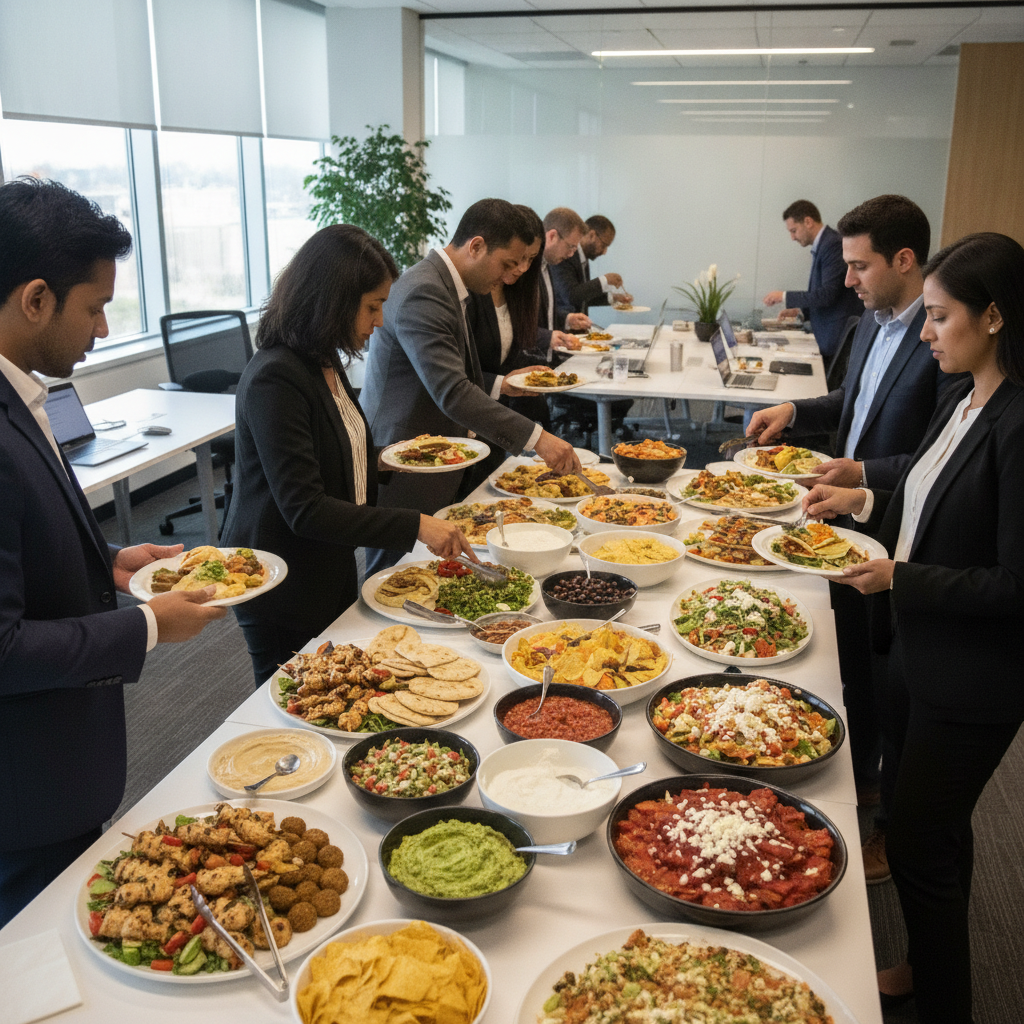
Catering in the GTA is the coordinated planning, preparation, and delivery of meals for workplaces and events across the Greater Toronto Area. It covers menu design, logistics, labeling, and on‑site setup so teams in Woodbridge and beyond eat well on schedule. Strong catering programs boost attendance, morale, and meeting productivity.
By Yash Patel · Last updated: July 5, 2026
Above-Fold: Why this guide and how to use it
This practical guide shows GTA office leaders how to plan corporate catering that’s safe, inclusive, and consistently on time. You’ll learn formats, headcount math, labeling standards, and delivery logistics—plus real examples from LunchLink’s Toronto network—so your next meeting, training, or town hall runs smoother with better meals.
Here’s the thing: getting lunch right changes the whole day. Hungry attendees disengage; well-fed teams focus and stay longer. In our experience, meetings that include thoughtful meals see fewer mid-session exits and stronger survey scores.
• What you’ll learn • How corporate catering works across the GTA (end-to-end)
• When to choose buffet vs individually packaged meals
• How to handle halal, vegan, gluten-free, nut-free, and more—safely
• Delivery windows, receiving, and setup that keep sessions on time
• How to launch recurring office meal programs with variety
• Why this matters now • Hybrid schedules make attendance unpredictable—labeling and flexibility reduce waste
• Food safety, allergens, and inclusivity require clear standards and checklists
• Leaders use food to elevate culture, recruiting, and client experience
Want a deeper playbook on Toronto office lunches? See our comprehensive corporate catering guide for planning frameworks and templates.
At a Glance: Summary
Catering GTA success hinges on four pillars: inclusive menus, reliable logistics, clear labeling, and feedback loops. Choose the right format per event, communicate headcounts 24 hours out, label 100% of items, and debrief after delivery. This loop steadily improves quality, variety, and on-time performance.
In short, match the format to the moment, the menu to your people, and logistics to your building. Then measure and improve. That’s the playbook.
• Formats that work • Buffet-style for collaboration and speed
• Individually packaged for dietary safety and spaced seating
• Breakfast spreads for early kickoffs and all-hands
• Recurring programs for reliable variety week over week
• Operational keys • Delivery window: 15–30 minutes before service time
• Setup: 10–20 minutes depending on format
• Labeling: 100% of hot mains and sides, clear allergen flags
• Leftover safety: refrigerate within 2 hours of service end
What is catering in the GTA?
Catering in the GTA refers to professional meal planning, preparation, delivery, and setup for workplaces and events across the Greater Toronto Area. It includes inclusive menu design, portion planning, labeling, and on‑site logistics that accommodate headcounts from 10 to 500+ while meeting dietary and timing requirements.
In practice, that means your team receives chef-prepared, workplace-appropriate food—Mexican bowls, Mediterranean mezze, Greek platters, healthy salads—arriving hot or chilled, labeled, and ready to serve. With LunchLink, this spans corporate lunches, trainings, client meetings, conferences, and office celebrations across Toronto and Woodbridge.
Scale matters. We routinely see group sizes range 10–50 for department meetings, 80–150 for town halls, and 300–500+ for campus events. Menu format and delivery plan should flex with these sizes.
Why GTA catering matters for workplaces
Great catering improves attendance, engagement, and brand perception. Clear labeling and inclusive choices make dining safe for every employee, while reliable delivery protects your agenda. Consistency over time strengthens culture, retention, and the client experience during high-stakes meetings.
Food is a trust signal. When meals show up labeled and on time, people feel considered. Over hundreds of events we’ve coordinated, teams report higher satisfaction when dietary needs are visible and respected. Practical outcomes follow: fewer late returns from lunch, smoother Q&A sessions, and more time on the actual agenda.
• Inclusion and safety • Cover halal, vegan, gluten-free, nut-free, dairy-free, and pescatarian options
• Keep allergen cross-contact controls clear; use separate utensils
• Offer at least two vegetarian mains for groups of 30+
• Attendance and timing • Deliver 15–30 minutes before service to absorb elevator delays
• Place beverages first to cut early congestion by ~20%
• Use two serving lines once headcount exceeds 60
• Perception and brand • Professional presentation and clean setups reflect your standards
• Consistent quality earns executive buy-in for future programs
• Labeled meals signal care for individual needs
What most people don’t realize: menu predictability and rotating variety are not opposites. With a clear rotation plan, you can deliver both familiarity and novelty week to week.
How GTA corporate catering works (end-to-end)
Successful GTA catering follows a clear sequence: confirm goals and headcount, choose a format, finalize menus and labeling, schedule the delivery window, prepare the room, serve, and debrief. Each step has owner, timing, and a checklist that prevents last‑minute friction.
Here’s a simple operating model we use with office managers, EAs, HR, and event planners.
• Define the event and constraints—purpose, agenda, service time, room, access. Note elevator timing and loading docks. Typical lunch service spans 45–60 minutes between 11:30 a.m. and 1:30 p.m.
• Estimate headcount with buffers—invitees, likely attendance, dietary breakdown. Many offices see 8–12% variance day-of; plan portions accordingly.
• Choose format—buffet for speed and collaboration, individually packaged for dietary clarity, or hybrids for mixed settings.
• Finalize menu with dietary coverage—ensure 100% labeled items, with at least one halal and one vegan main for 25+ attendees.
• Confirm logistics—delivery window set 15–30 minutes before service; assign a receiver with phone on. Reserve a staging area.
• Room prep and setup—tables, power, linens if needed. Aim for two lines at 60+ guests; chafing setups take 10–15 minutes.
• Service and traffic flow—position plates at both ends, utensils mid-line, beverages off to the side. This reduces bottlenecks by ~25%.
• Closeout and safety—pack leftovers, refrigerate within 2 hours, document feedback within 24 hours.
Local considerations for Woodbridge
• Account for midday parking and lobby traffic. Build a 10-minute buffer for elevators during busy lunch windows.
• Winter weather can slow vans. Choose a delivery window on the earlier side November–March, especially for large groups.
• Some buildings require vendor sign-in. Share reception protocols with your caterer one business day before delivery.
For a deeper walkthrough of logistics and roles, explore our corporate catering Toronto overview which details who should own each step inside your team.
Formats and approaches: buffet, boxed, breakfast, and programs
Choose buffet-style for speed and collaboration, individually packaged for strict dietary separation, breakfast for early sessions, and recurring programs for predictable variety. Hybrid setups mix boxed mains with shared sides to balance safety, speed, and cost control for groups from 10 to 500+.
Each format solves a different problem. The right pick depends on agenda, room layout, dietary mix, and the need for speed versus separation. Here’s a quick comparison to guide choices.
Format Best for Portion guidance Labeling Setup time Buffet-style Town halls, trainings, 40–200 guests 1 main + 2–3 sides; add second protein at 60+ Menu tent per dish with allergens 10–15 minutes Individually packaged Boardrooms, client meetings, spaced seating 1 labeled box per person + 10% spare Label on every box, dietary callouts 5–10 minutes Breakfast All-hands, standups, early sessions Mix proteins + fruit + complex carbs Allergen and pork/gelatin notices 10–12 minutes Recurring program Weekly office lunches, 20–150 guests Rotating cuisines; predictable staples Printed/QR menu + box labels 10–15 minutes
• Menu examples that travel well • Mediterranean mezze with grilled chicken, falafel, herbed rice, and salads
• Mexican bowl bars with proteins, salsas, and roasted vegetables
• Greek platters with souvlaki, lemon potatoes, village salad, and pita
• Healthy salad kits with grains, proteins, and toppers separately boxed
• When to go hybrid • Boxed mains for dietary clarity + communal salads and fruit for speed
• Shared desserts and beverages to minimize line time
• Two pickup points for 60+ attendees reduces wait time by ~30%
Need hands-on help matching format to event goals? Our boardroom-to-BBQ guide maps formats to common corporate scenarios with checklists.
Best practices for catering GTA orders
Lock your headcount 24 hours prior, cover all major diets, label 100% of items, schedule delivery 15–30 minutes before service, and assign a receiver. Use feedback within 24 hours to improve variety, timing, and portioning for the next event.
These practices turn one-off wins into repeatable success across departments and dates.
Planning and communication
• Send a two-question RSVP: attending Y/N, dietary notes; this nets clearer counts
• Expect 8–12% day-of changes; build 10% spare for boxed formats
• Share building protocols (parking, loading, sign-in) by noon the prior business day
Food safety and labeling
• Label every entrée and side; separate serving utensils by diet (e.g., halal vs general)
• Keep hot items hot in chafers; refrigerate leftovers within 2 hours
• For nut-free events, remove any nut-based desserts from the order entirely
Room flow and setup
• Place beverages at a separate station; it reduces line time by ~20%
• Put plates at both ends of a buffet to double throughput
• Open a second line at 60+ attendees; use clear signage at room entry
For menu building ideas and presentation tips, skim our elevate your catering article with plating patterns we’ve tested in Toronto offices.
Tools and resources GTA teams use
Standardize catering with simple tools: a rotating menu calendar, a 24-hour headcount check, a labeled-allergen checklist, and a single intake form for orders. LunchLink augments this with corporate invoicing and an upcoming app for individual ordering and live delivery tracking.
Repeatability beats heroics. A few shared templates keep stakeholders aligned and timelines predictable.
• Templates and trackers • Rotating menu calendar with cuisine themes week to week
• Headcount and diet tracker that rolls up vegetarian, vegan, halal, GF, nut-free
• Delivery/receiving checklist: contact, dock/elevator notes, room number, table count
• Operations stack • One point of contact and corporate invoicing via LunchLink
• Dietary labeling protocol shared with admins and reception
• Feedback form sent within 24 hours after each event
If you’re planning a quarterly cadence across departments, our office catering overview outlines how to scale from 20 to 150 covers without overwhelming reception or facilities.
Prefer a hands-on walkthrough? Book a 15-minute planning chat and we’ll map formats, dietary coverage, and delivery windows to your next event timeline. We’ll also share a sample rotation for recurring lunches.
Explore halal-safe menu structures in our halal corporate catering overview.
Real-world GTA catering examples
From boardrooms to campus-wide town halls, LunchLink coordinates inclusive, labeled meals for 10–500+ across the GTA. These brief scenarios show formats, timing, and labeling in action—so you can model what works for your team and building constraints.
These snapshots are anonymized but reflect common Toronto and Woodbridge use cases we handle weekly.
1) Product all-hands, 120 attendees, hybrid seating
• Format: Buffet with two lines; beverages at side station
• Menu: Mediterranean (grilled chicken, falafel, herbed rice, salads)
• Timing: Delivery 25 minutes early; setup in 12 minutes
• Labeling: Tents for each dish; vegetarian and halal utensils separated
• Outcome: Served everyone in 18 minutes; Q&A started on time
2) Client demos in a boardroom, 18 attendees
• Format: Individually packaged meals with name-grouped trays
• Menu: Greek and healthy salads split; 2 pescatarian boxes
• Timing: Delivery 20 minutes early; no on-table chafers required
• Labeling: Every box flagged for diet; nuts excluded entirely
• Outcome: No line, no cross-contact; presentation stayed photo-ready
3) Quarterly training day, 85 attendees
• Format: Hybrid—boxed mains with shared salads and fruit
• Menu: Mexican bowl bar with vegan and gluten-free bases
• Timing: Delivery 30 minutes early; two pickup points
• Labeling: Box labels + table menu card for sides
• Outcome: Faster flow; attendees returned to sessions in under 25 minutes
4) Multi-site recurring lunches, 60–100 weekly
• Format: Recurring program with rotating cuisines
• Menu: Mediterranean, Mexican, Greek, and healthy salad cycles
• Timing: Fixed weekday slot; delivery window tightened to 15 minutes
• Labeling: Standardized protocol across sites; 100% coverage
• Outcome: Predictable variety and consistent satisfaction across offices
For more inspiration, preview our lunch catering options and map them to your calendar of events.
Frequently Asked Questions
Plan for a 15–30 minute delivery window before service, label 100% of items for allergens and diets, and choose a format based on agenda and room flow. Below are concise answers to the questions GTA office leaders ask most.
What’s the best catering format for a mixed-diet team?
Individually packaged meals offer the clearest separation for halal, vegan, and gluten-free diners. For groups over 50, a hybrid works well: boxed mains for dietary clarity with shared salads, fruit, and beverages to speed lines and create a communal feel.
How far in advance should I confirm headcount?
Lock numbers 24 hours before service and include a 5–10% buffer for no-shows or add-ons. A simple RSVP that captures attendance and dietary notes improves accuracy and reduces last-minute stress for admins and reception.
How do you keep hot items safe until serving?
Schedule delivery 15–30 minutes before service, stage near the room, and use chafers or insulated carriers for hot items. Serve promptly and refrigerate leftovers within two hours of service end to maintain quality and safety.
Can we rotate cuisines without repeating too often?
Yes. Plan a 4–6 week rotation that alternates Mediterranean, Mexican, Greek, and salad-forward menus. Keep one familiar staple each week while varying proteins and sides. Feedback after each event helps tune variety without sacrificing predictability.
Conclusion and next steps
Catering GTA programs succeed when you pair inclusive menus with reliable logistics and clear labeling. Pick the right format per event, confirm headcounts 24 hours out, deliver a bit early, and gather feedback. Repeat this loop and quality rises with every meeting.
Here’s how to act on this today.
Key takeaways
• Match the format to the agenda and room flow
• Label 100% of items; separate utensils by diet
• Deliver 15–30 minutes early; assign a receiver
• Debrief within 24 hours to improve the next order
Action steps
• Pick your format using the comparison table above
• Draft a 4–6 week rotation of cuisines with one weekly staple
• Share building protocols and a receiving contact with your caterer
• Document feedback and update the rotation after each event
Ready to plan your next office lunch? Review our corporate catering overview and full Toronto guide, then map a pilot month for your team in Woodbridge.
Related guides and where to go next
If you manage recurring meals, build a rotation and refine it monthly. For client-facing meetings, default to individually packaged meals. For all-hands, choose buffet or hybrid. The resources linked throughout this guide will help you operationalize each choice.
Next, skim our lunch catering options and earmark two formats that fit your calendar. Keep a standing 10-minute debrief on the books after every delivery—small improvements compound fast.