Catering
Catering Menu: Pick Meals Guests Love in 2026
Build a catering menu that teams love. Balance plates, label for diets, and choose buffet vs boxes for Woodbridge and Toronto office events in 2026.
July 4, 2026 · LunchLink
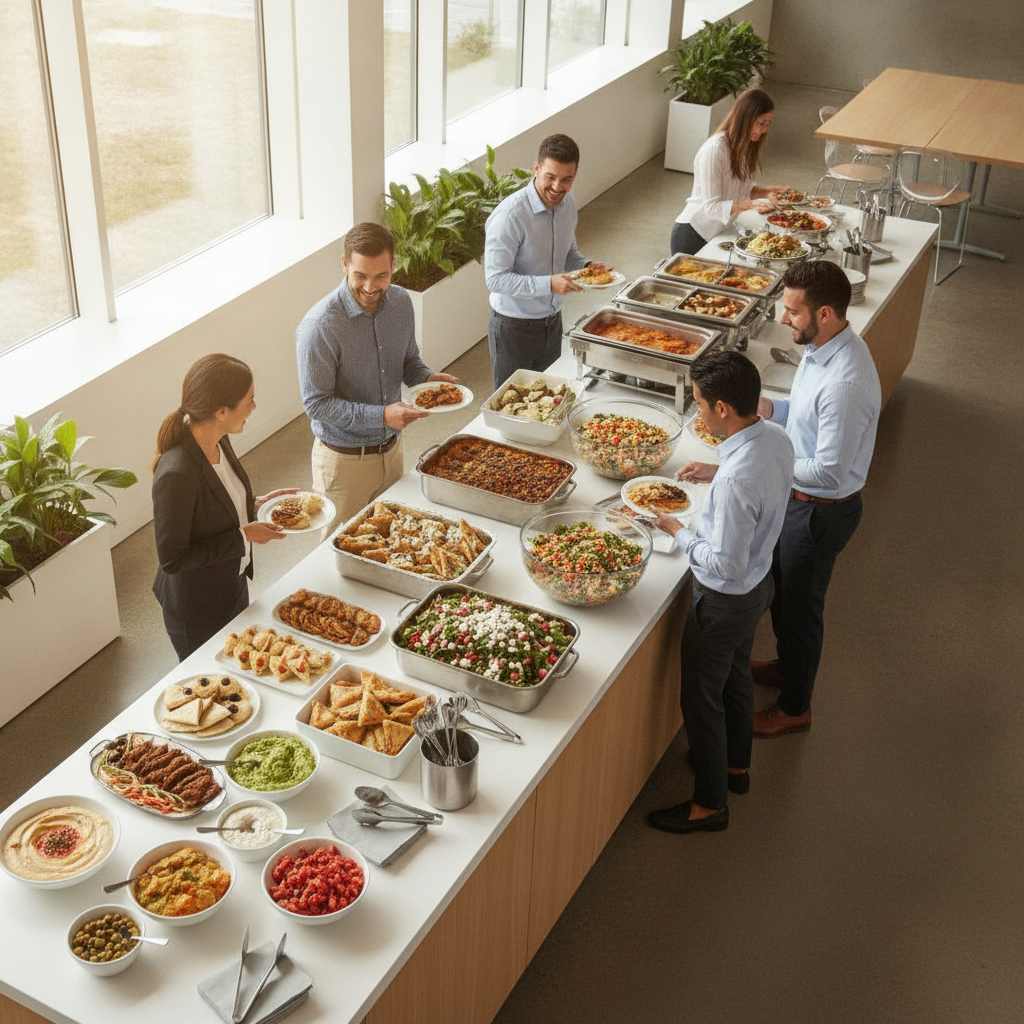
A catering menu is the curated set of dishes and service formats you choose for an event. For Woodbridge offices, the right catering menu balances flavor, nutrition, and logistics so every attendee eats safely and on time. LunchLink’s chef-curated menus make this simple with labeled meals and corporate-friendly delivery.
By LunchLink · Last updated: July 4, 2026
Summary
Plan your catering menu by matching event goals to service style, locking in dietary accommodations, and building a balanced plate. Choose between buffet or individually packaged meals, confirm headcounts 24 hours out, and label everything. For offices, rotate global cuisines to keep engagement high across recurring lunches.
This at-a-glance section outlines how to select a crowd-pleasing catering menu for corporate lunches, meetings, and events. You’ll see how LunchLink supports dietary needs (halal, vegan, gluten-free, nut-free, dairy-free), when to use buffet vs boxes, and what to prepare for breakfast, lunch, and all-day programs.
• Match service format to your schedule: buffet for collaboration; boxes for zero-mess meetings.
• Plan for 10–500+ guests with clear labeling and dietary filters.
• Set a final headcount 24 hours prior; add 5–10% buffer for last-minute attendees.
• Rotate cuisines weekly to sustain participation and avoid menu fatigue.
• Document allergens and restrictions for risk management and HR compliance.
What is a catering menu?
A catering menu is a structured selection of dishes, portions, and service formats tailored to your event’s guests, timing, and constraints. In corporate settings, it includes labeled dietary accommodations, scalable logistics, and a rotation of cuisines that keep teams engaged while meeting HR, wellness, and safety expectations.
Think of your catering menu as both a culinary plan and an operational playbook. It decides how food looks, how it moves, and how fast teams can eat. In our experience coordinating 850+ corporate events for 25,000+ employees, the best menus combine variety, clear labeling, and smooth delivery windows.
• Scope: Entrees, sides, salads, beverages, desserts, and any grab-and-go items.
• Service styles: Buffet, individually packaged, family-style platters, or hybrids.
• Timing: Breakfast, lunch, or all-day conferences with staggered drops.
• Logistics: Preferred setup, floor access, elevator timing, and cleanup plan.
• Compliance: Allergen notation and cross-contact prevention measures.
Why the right catering menu matters
The right catering menu drives participation, protects food-allergic employees, and keeps meetings on schedule. When dishes are labeled, balanced, and easy to serve, you’ll see higher attendance, fewer last-minute requests, and a smoother agenda—especially in time-boxed sessions like board updates or training.
Menus send signals. A thoughtful selection says you value time and inclusion. In hybrid workplaces, we’ve seen participation jump when menus feature global comfort foods and recognizable dietary tags. When 100% of dishes are labeled, attendees decide in seconds, which shortens lines and keeps 30–60 minute agendas intact.
• Participation impact: Global flavors typically raise sign-up rates 10–20% week to week.
• Time savings: Pre-portioned items reduce serving time by 25–35% in tight agendas.
• Safety: Clear allergen flags reduce “can I eat this?” questions by 80%+.
• Wellness: Balanced macronutrients (protein + fiber + color) avoid the 2 p.m. slump.
We support HR/People Ops with fully labeled meals and inclusive options (halal, vegan, gluten-free, nut-free, dairy-free), so every person can eat confidently. That’s a big reason clients report a 98% satisfaction rate with LunchLink’s corporate programs.
How a corporate catering menu works
A corporate catering menu aligns event goals with service format, portions, and timing. Lock cuisine and dietary coverage first, confirm your headcount 24 hours prior, then schedule precise drop windows. Reliable vendors label every item, bring the right serveware, and tidy the space within the booked timeframe.
Start by clarifying the event goal: team-building lunch, client pitch, or training day. For each objective, we map dishes and service styles to desired behaviors. For example, buffets encourage mingling and cross-team chatter; individually packaged meals are ideal for note-heavy sessions where laptops fill every seat.
• Set objectives: Collaboration, focus, or celebration.
• Pick cuisine: Mediterranean, Mexican, Greek, or healthy salad builds keep variety high.
• Confirm diets: Capture halal, vegan, gluten-free, nut-free, dairy-free, and pescatarian needs.
• Choose format: Buffet, boxes, or mixed layouts for different rooms.
• Portion plan: Aim 1.0–1.25 mains per person; add 15–20% vegetarian coverage.
• Timing: Reserve 15 minutes for setup; 30–45 minutes for service; 10 minutes for wrap.
• Labeling: Ingredient and allergen tags on each item; color cues reduce line dwell.
Operationally, we recommend finalizing the headcount by noon the day before, then holding 5–10% flex meals for late RSVPs. For recurring programs, rotate cuisines weekly and repeat popular anchors about every 4–6 weeks to prevent menu fatigue.
Types of catering menus and service formats
Corporate catering menus typically use buffet lines for collaboration, individually packaged meals for fast, tidy service, or hybrid stations for mixed agendas. Breakfast builds, boxed lunches, and dietary-specific sets (halal, vegan, gluten-free) ensure coverage. Rotate cuisines biweekly to keep engagement above 80% participation.
Buffet-style spreads
• Best for: Team-building lunches, celebrations, and open networking.
• Flow: Two-sided lines move 30–40 guests every 10 minutes; add a salad table to split traffic.
• Menu examples: Mediterranean bowls with grilled chicken, falafel, lemon rice, Greek salad, and tzatziki; Mexican trays with chicken tinga, roasted veggies, rice, beans, salsa, and tortillas.
• Pro tip: Place proteins first to set portions, then carbs and greens. This keeps balance on the plate.
Individually packaged meals
• Best for: Client meetings, workshops, and rooms without ample table space.
• Speed: Handout time drops to ~15 seconds per person; a 50-person room distributes in 12–15 minutes.
• Menu examples: Greek chicken grain bowls, vegan roasted vegetable quinoa, gluten-free burrito bowls, and dairy-free salad kits.
• Safety: Labeled lids eliminate guesswork and cross-contact on shared utensils.
Breakfast catering builds
• Best for: Morning training, all-hands, and quarterly business reviews.
• Composition: 40–50% protein-forward options (egg bites, frittatas, yogurts), 30–40% complex carbs (granola, whole-grain breads), and 10–20% fruit.
• Beverages: Plan 1.25 hot beverages per person for the first hour; taper thereafter.
Boxed lunches
• Best for: On-the-go teams, site visits, or back-to-back meetings.
• Contents: Main, side, fresh fruit, and a sealed utensil kit; napkins inside reduce table mess.
• Participation: Uptake holds above 80% when 3–4 entree varieties are offered.
Dietary-specific coverage
• Halal meals: Keep at least the requested count plus 1–2 extra; store separately to avoid mix-ups. See our halal corporate catering tips.
• Vegan/vegetarian: Baseline 15–20% of total; increase to 25–30% for wellness-focused teams.
• Gluten-free and nut-free: Dedicate a clean zone and utensils; label lids and trays visibly.
Rotating menus for recurring programs
• Cadence: Weekly rotation with no repeat for 4–6 weeks sustains novelty.
• Balance: Alternate warm and cold builds seasonally to match appetite and office HVAC realities.
• Feedback: Pulse surveys after week 2 and 5 catch early trends; keep top performers in the mix.
Choosing your service format Format Best for Strengths Watch-outs Buffet Collaboration, celebrations High variety, social energy, fast refills Utensil sharing; needs more floor space Individually packaged Focused meetings, training Speed, cleanliness, clear labeling Less spontaneous mixing across teams Hybrid Conference breakouts Flexibility; targeted coverage More planning across rooms
Local considerations for Woodbridge
• Weather swings affect appetite: plan more warm entrees in colder months and add hearty salads in warmer weeks to keep satisfaction above 90%.
• Traffic buffers: schedule 15–30 extra minutes for lunch drops during peak midday congestion to protect your agenda start time.
• Building access: coordinate elevator bookings and loading protocols early; reserve a staging area for quick, tidy setups.
Best practices for menu planning
Design your catering menu with a simple playbook: balance plates, label everything, and build in time buffers. Offer 3–4 entree choices, cover core diets, and confirm final counts 24 hours prior. For recurring programs, rotate cuisines weekly and analyze participation to keep satisfaction near 95–98%.
• Balance the plate: Target ~40% vegetables, ~30% lean proteins, and ~30% complex carbs to avoid energy dips.
• Right-size variety: Three to four entrees cover most tastes without decision fatigue.
• Hold-back meals: Keep 5–10% extras for walk-ins and late RSVPs; store separate for fast distribution.
• Label to the lid: Put dietary tags on the most visible surface; it speeds lines by 30%+.
• Utensil strategy: One tong per tray to reduce cross-contact; swap every 20–30 minutes on long events.
• Room flow: Two-sided buffets move guests 2x faster; place beverages at the end to declutter line starts.
• Feedback loop: Track selection rates; retire items that fall below 60% uptake across three runs.
When working with clients in Woodbridge and the GTA, we’ve found warm bowls (Mediterranean, Mexican) and build-your-own salad bars consistently outperform cold sandwiches by 15–25% in satisfaction surveys. That’s why our office catering approach emphasizes balanced, colorful builds.
Need a second set of eyes? Share your headcount, room setup, and dietary mix. We’ll propose a labeled catering menu, delivery window, and service format in one plan—optimized for your agenda.
Tools and resources for easier planning
Use a simple stack: a headcount tracker, a dietary matrix, and a rotation calendar. Add checklists for building access and serveware. For deeper planning, tap LunchLink’s corporate catering guide, halal catering primer, and operational playbooks tailored to Toronto and GTA offices.
• Headcount tracker: Maintain RSVP status, late adds, and dietary notes; lock 24 hours out.
• Dietary matrix: Map entrees to halal, vegan, gluten-free, nut-free, dairy-free, and pescatarian.
• Rotation calendar: Plan a six-week arc of Mediterranean, Mexican, Greek, and healthy salad builds.
• Operational checklists: Elevator bookings, loading area, utensils, and table layouts.
• Deeper reading: See our corporate catering guide for a full playbook.
• Specialized coverage: Our halal catering primer outlines sourcing and labeling best practices.
• Inspiration: Explore ideas to elevate your corporate catering without complicating service.
Case studies and real-world examples
Effective menus start with the agenda. Here are real scenarios where a tailored catering menu improved participation, protected dietary needs, and saved time. The common thread: clear labeling, right-sized variety, and logistics planned to the minute for Toronto and GTA offices.
Weekly team lunch, hybrid attendance
A Woodbridge tech office hosted a 60-person weekly lunch. We rotated Mediterranean bowls, Greek platters, and Mexican trays on a six-week arc. Participation stabilized above 85% after week two. Labeled vegan and gluten-free options averaged 20% of selections, matching employee preferences.
• Format: Two-sided buffet with a separate salad bar increased flow by 40%.
• Timing: Setup completed in 12 minutes; tear-down in 8 minutes post-service.
• Outcome: Fewer late returns to afternoon meetings; energy remained high.
Client pitch, high-focus meeting
A downtown finance team needed zero-mess service for a 90-minute pitch block. We recommended individually packaged bowls with utensil kits inside. Distribution for 24 attendees took 6 minutes. No mid-meeting breaks were needed; the agenda finished 10 minutes early.
• Format: Individually packaged, labeled lids with dietary icons.
• Mix: 4 entrees; 25% vegetarian; 15% gluten-free; 10% dairy-free.
• Outcome: Cleaner table surfaces, faster start after service, and zero food-allergy escalations.
All-day training, staggered drops
For a 120-person training day, we scheduled breakfast and lunch drops with a mid-afternoon snack. Hot beverages targeted 1.25 per person for the first hour. Lunch used a hybrid: boxed gluten-free meals plus a buffet for everyone else. Lines stayed under 5 minutes.
• Format: Breakfast buffet + hybrid lunch + sealed snack kits.
• Logistics: Two separate buffet lines and a beverage station at the end.
• Outcome: On-time sessions with high satisfaction; trainers noted better afternoon focus.
Frequently Asked Questions
Great menus are simple, inclusive, and on time. These answers cover headcounts, lead times, dietary coverage, and whether to pick buffet versus boxed meals. Use them as a quick checklist when planning your next office lunch in Woodbridge or anywhere in the GTA.
How many entree choices should I offer?
Offer 3–4 entrees. That covers core preferences without creating decision fatigue. Include at least one vegetarian or vegan option and one gluten-free option. For groups over 75, consider adding a fifth rotating feature to keep engagement high.
When should I pick buffet vs individually packaged meals?
Choose buffet for networking, collaboration, and celebrations. Pick individually packaged meals for tight agendas, small rooms, or when you need spotless tables. Hybrids work well for conferences with different room setups and dietary requirements.
How far in advance should I finalize headcount?
Lock your headcount 24 hours before service. Hold 5–10% extra meals or portions for late RSVPs. For recurring programs, review attendance trends monthly and adjust your baseline by 5–15% as patterns stabilize.
What’s the simplest way to handle dietary restrictions?
Capture restrictions during RSVP, label every item clearly, and dedicate utensils for allergen-free trays. Keep halal and gluten-free meals separate for quick identification. Communicate the plan to attendees so they know where to go first.
Key Takeaways
Keep your catering menu simple, labeled, and aligned to the agenda. Cover core diets, choose the right service format, and rotate cuisines. Finalize counts 24 hours prior and hold extras. With this playbook, you’ll boost participation and keep meetings on schedule.
• Balance plates and label everything for fast, safe service.
• Buffet for collaboration; boxes for speed and cleanliness.
• Rotate global cuisines to prevent menu fatigue.
• Confirm headcounts with a small buffer for late RSVPs.
• Use checklists for access, utensils, and room flow.
Related Articles
Looking to go deeper? Explore comprehensive planning guides, halal coverage primers, and strategies to elevate corporate catering experiences across Toronto and the GTA. These topics build on the same playbook used for high‑satisfaction office meal programs.
• Ultimate guide to planning corporate catering for busy teams
• How to elevate buffet presentation without slowing service
• Halal catering in corporate settings: sourcing and labeling
• Designing six-week rotation calendars that sustain engagement
Conclusion
An effective catering menu is inclusive, operationally sound, and agenda-friendly. When you balance plates, label clearly, and choose the right service format, your event runs on time and everyone eats confidently. That’s the backbone of memorable, productive office meals.
Here’s the thing: food is both fuel and culture. A well-built menu does more than feed people—it supports timing, mood, and outcomes. If you want a ready-to-run plan for Woodbridge or the broader GTA, our team can map your next six weeks with rotating, labeled menus and on-time drops.
Explore our services: corporate catering, office catering, and corporate lunch delivery designed for busy teams.