Catering
Catering Rates: Know Your Price Per Person in 2026
Plan smarter with catering rates per person: what drives per-guest pricing, portions, and service formats for Woodbridge offices—without surprises.
July 1, 2026 · LunchLink
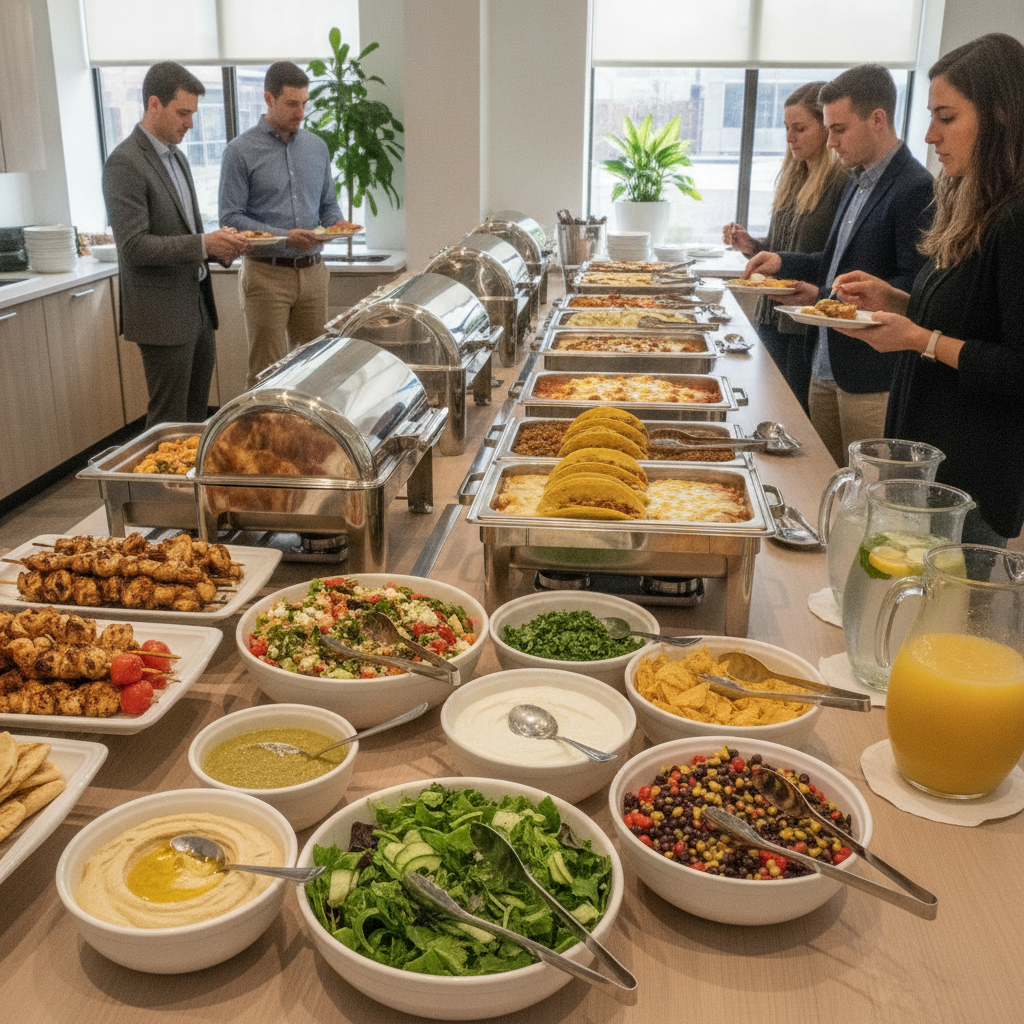
Catering rates per person are the per-guest charges that bundle food, packaging, staffing, and logistics into a single, comparable metric. For Woodbridge corporate lunches and events, the per-person rate reflects menu style, portions, dietary coverage, and service level. Understanding these drivers helps you forecast headcount confidently, reduce waste, and deliver a consistent guest experience.
By LunchLink • Last updated: July 1, 2026
Overview and Table of Contents
This guide explains how catering rates per person are structured for corporate events. You’ll learn what drives per-guest pricing, how menu and service choices affect value, and practical steps to estimate portions, align stakeholders, and avoid last‑minute surprises.
In plain language, we unpack how per-guest planning works for office lunches, meetings, conferences, and recurring meal programs across the GTA—grounded in LunchLink’s corporate catering operations.
• What “per person” really includes for corporate catering
• Why per‑guest planning reduces waste and admin time
• How service formats change the rate calculus
• Portioning frameworks that scale from 10 to 500+ guests
• Dietary accommodations without derailing operations
• Tools, checklists, and a no‑numbers estimation workflow
• Mini case studies from Woodbridge and the GTA
Jump to:
• What is a per‑person rate?
• Why it matters
• How it works
• Formats and rate impact
• Portions and headcount
• Dietary coverage
• Tools and resources
• Case studies
• FAQ
• Key takeaways
What are catering rates per person?
A per‑person catering rate is a bundled, per‑guest metric that covers menu items, packaging or buffetware, dietary labeling, staffing, and delivery logistics. It standardizes planning across headcounts, so corporate teams can compare options, accommodate restrictions, and forecast confidently without piecing together line‑item costs.
Think of it as a single, planning‑friendly unit: one guest, one portion, one experience. The practical upside is clarity. Office managers, EAs, and People Ops can approve headcounts and menu styles faster when the variables are framed per person instead of as scattered components.
• What’s typically inside: core entrée(s), sides, greens, sauces, packaging/buffetware, labels, and logistics handling.
• Why it helps: consistent expectations for portion sizes, dietary coverage, and timing across teams and dates.
• Where it applies: one‑off meetings, client events, conferences, or ongoing office catering.
In our experience managing 850+ events and feeding 25,000+ employees across the GTA, per‑person framing reduces back‑and‑forth, keeps labels consistent, and supports inclusive dining—especially when you need halal, vegan, gluten‑free, nut‑free, or dairy‑free menus at the same table.
Why per‑person rates matter for corporate teams
Per‑person planning aligns budgets, portions, and dietary needs to real headcounts. It cuts waste, speeds approvals, and reduces admin time through standardized portions and labels—vital when feeding 10–500+ guests on tight timelines.
When a calendar is stacked with training days, client demos, and all‑hands, small miscalculations multiply. A per‑guest framework keeps portions predictable, labels accurate, and timing achievable—so your meeting starts on time and your team eats well.
• Less waste, more predictability: pre‑set portioning helps you right‑size food to RSVPs.
• Faster sign‑offs: stakeholders compare options by value and fit, not line items.
• Smoother ops: standardized dietary labeling for halal and other needs eliminates guesswork.
• Scales up: works for boardroom meals or multi‑room conferences with 10–500+ attendees.
LunchLink’s corporate‑friendly operations—one point of contact, consolidated invoicing, and vetted partners—were built for this. On busy weeks, teams lean on flexible headcount windows and consistent labeling to keep meetings moving.
How per‑person catering works end‑to‑end
Per‑person catering starts with headcount and dietary mapping, then locks menu style, portions, and delivery windows. Clear labels, setup instructions, and a single point of contact keep the service on schedule—whether it’s buffet or individually packaged meals.
Here’s the practical, no‑numbers workflow our corporate clients use to plan confidently.
Step‑by‑step workflow
• Define headcount bands: map must‑feed attendees, likely attendees, and a buffer (for drop‑ins).
• Capture dietary needs: halal, vegan, vegetarian, gluten‑free, nut‑free, dairy‑free, and other allergies.
• Choose service style: buffet‑style corporate catering or individually packaged meals.
• Select menu families: Mediterranean, Mexican, Greek, healthy salads, breakfast, or mixed cuisines.
• Set time and flow: meeting agenda, break windows, and delivery window to match food quality.
• Confirm labeling: clear labels at dish‑level (buffet) or on each package (individual).
• Finalize logistics: access instructions, elevators, loading zones, and any security sign‑ins.
• Communicate headcount lock: align stakeholders on when guest counts “freeze.”
• Delivery and setup: ensure serving utensils, chafers as needed, and traffic flow around tables.
• Post‑event review: capture attendance variance and favorites to tune the next order.
Process table: service style signals
Service style Portion control Dietary clarity Speed to serve Waste risk Best for Buffet‑style Moderate (self‑serve) High (dish labels) Fast for large groups Low–moderate (depends on RSVPs) Town halls, trainings Individually packaged High (1:1 portions) Very high (package labels) Fast grab‑and‑go Low (tight matching) Workshops, client demos Breakfast platters Moderate Medium–high Very fast Low Morning standups Boxed lunches High Very high Fast Low Offsites, buses
Corporate teams in Woodbridge often juggle tight delivery windows and mixed dietary needs. A labeled, individually packaged menu can move an entire 60‑person workshop from “late start” risk to “on‑time, no‑stress” service in under five minutes.
Types of catering and how they influence per‑person rates
Service format changes how value is delivered per guest. Buffets favor variety and speed for larger groups; individually packaged meals maximize labeling accuracy; breakfast builds convenience and punctuality; boxed lunches add portability. Choose the style that matches agenda, venue flow, and dietary complexity.
Different formats carry different operational realities. Here’s how to match them to your event’s goals, without talking dollars.
Buffet‑style catering
• Strengths: high variety, efficient for 50–500+, easy refills, great for mixed eating speeds.
• Labeling: clear tent cards at dish level; include allergens and dietary icons.
• Use case: town halls, learning days, multi‑room setups.
• LunchLink tip: Pair a hearty protein with at least two plant‑forward sides to satisfy diverse palates.
Individually packaged meals
• Strengths: airtight portion control, package‑level labels, and fast distribution.
• Labeling: each box marked (e.g., halal, vegan, gluten‑free); zero guesswork.
• Use case: workshops, client demos, distributed seating.
• LunchLink tip: Lock counts for each dietary segment 24 hours before delivery.
Breakfast catering
• Strengths: punctuality, quick service, energizes morning agendas.
• Menu moves: balanced proteins and complex carbs; include yogurt or dairy‑free equivalents.
• Use case: standups, quarterly kickoffs, early trainings.
• Explore: our corporate catering overview for AM options.
Boxed lunches
• Strengths: portable, tidy, reliable for travel days or offsites.
• Labeling: very high clarity; guests grab their exact diet match.
• Use case: buses, field teams, multi‑location events.
• Plan ahead: order a small cushion of omnivore boxes for last‑minute walk‑ins.
Looking for menu inspiration? Our ultimate corporate catering guide covers cuisine ideas that travel well and earn high satisfaction in office settings.
Portion sizes, menu mix, and headcount planning
Right‑sizing portions starts with headcount certainty, then balances proteins, grains, and greens. Use buffers for walk‑ins, plan 1:1 labeled portions for restricted diets, and let past attendance and waste data inform final quantities.
Portioning is as much people math as menu math. The goal is consistent satiety without over‑ordering.
• Headcount bands: must‑feed, likely, and buffer segments reduce risk.
• Dietary mapping: label 100% of restricted‑diet meals; don’t rely on buffet signs alone.
• Menu balance: a protein anchor, vegetable sides, and a fresh green—plus a plant‑based entrée.
• Beverages: include still/sparkling water; rotate coffee/tea for AM or brainstorming sessions.
• Data loop: record attendance vs. RSVP and note top dishes to refine future orders.
Sample planning framework
Scenario Approach Operational benefit Workshop, 60 guests, mixed diets Individually packaged mains + labeled salads Fast distribution; zero diet mix‑ups Town hall, 150 guests Buffet with two proteins + two plant‑forward sides High throughput; easy seconds for latecomers Executive board lunch, 12 guests Individual meals with chef‑curated variety Premium presentation; airtight portions
We routinely serve flexible group sizes from 10 to 500+. The pattern that wins: lock labeled meals for restricted diets, then size buffet or omnivore boxes to the remaining RSVP band with a small cushion.
Dietary accommodations without derailing your per‑person plan
Bake inclusivity into the plan. Capture restrictions early, label every special meal 1:1, and use clear dish cards on buffets. This prevents cross‑contamination, protects time, and ensures every guest eats confidently.
Inclusive dining is a core LunchLink promise. Fully labeled meals and vetted partners support halal, vegan, vegetarian, gluten‑free, nut‑free, dairy‑free, and pescatarian requirements across the same program.
• Central intake: one intake form for all restrictions avoids email gaps.
• Labeling protocol: match guest names to packages when needed; otherwise label by diet type.
• Buffet signs: list allergens and diet icons; place signs before the first serving utensil.
• Separation: place restricted items at a separate station to reduce cross‑contact risk.
• Communication: send a pre‑event note telling guests how to find their labeled meals.
We’ve found that clear pre‑communication and visible labeling reduce on‑site questions by more than half—freeing coordinators to focus on the agenda.
Pricing signals that shape per‑person rates (without numbers)
Per‑guest rates reflect menu complexity, service format, packaging, dietary coverage, delivery timing, and venue logistics. Optimize these signals—not price points—to align value with goals and keep operations smooth.
While we never discuss pricing here, these value signals are the real levers corporate teams can tune:
• Menu complexity: number of entrées, sides, and specialty items.
• Service format: buffet vs. individually packaged vs. boxed vs. breakfast.
• Packaging: eco‑friendly containers, buffetware, and serving utensils.
• Dietary coverage: volume of special meals and labeling requirements.
• Timing: same‑day needs vs. planned cadence; delivery windows and building access.
• Venue logistics: elevators, security, distance from loading areas.
• Program type: one‑off event vs. recurring office meal program.
In Woodbridge, we often balance tight lobby security and limited freight windows by pre‑sorting labeled boxes by department. That single move can shave several minutes off distribution per floor.
Tools, templates, and resources to estimate per‑person needs
Use a simple, repeatable toolkit: a headcount banding sheet, a dietary intake form, a menu‑mix planner, and a delivery logistics checklist. Reuse it monthly so estimates get sharper with every event.
Here’s the framework LunchLink clients reuse for predictable planning and smooth approvals.
Reusable toolkit
• Headcount banding sheet: must‑feed, likely, buffer; compare RSVP to attendance.
• Dietary intake form: capture restrictions in one place; set a cutoff time.
• Menu‑mix planner: proteins, plant‑forward entrées, sides, greens, beverages.
• Labeling protocol: decide between name‑labeled vs. diet‑type labeling.
• Delivery checklist: access notes, elevators, loading zones, contact person, and phone.
• Post‑event debrief: 10‑minute recap on portions, favorites, and leftovers.
SCU: a complete mini‑workflow
To estimate per‑person needs without numbers: band headcount; map diets; pick format; set delivery window; finalize labels. After service, log attendance variance and dish popularity. Repeat this loop and watch accuracy rise across quarters.
For cuisine ideas that maintain quality in transit, explore our corporate catering overview and office catering guide.
Get a planning walkthrough. If you manage recurring meals or complex diets, our team can map a per‑person framework for your calendar and headcount cadence.
See how teams elevate catering operations and then reach out for a tailored planning session.
Case studies and real‑world examples
Per‑person planning pays off in punctuality, clarity, and satisfaction. These Woodbridge‑area scenarios show how format, labeling, and headcount banding turn moving pieces into predictable service—without discussing price.
Workshop day, 65 attendees, mixed diets
• Challenge: three breakout rooms, staggered lunch windows, six diet categories.
• Approach: individually packaged meals labeled by diet type; omnivore cushion.
• Outcome: distribution done in under five minutes; near‑zero waste noted.
Town hall, 180 attendees, single room
• Challenge: narrow window between sessions; limited table space.
• Approach: buffet with two proteins, two plant‑forward sides, and clear dish signs.
• Outcome: line moved smoothly; seconds available for latecomers.
Executive client lunch, 14 guests
• Challenge: premium expectations; several precise restrictions.
• Approach: individually packaged mains with chef‑curated variety; name labels.
• Outcome: elevated presentation; total clarity for restricted diets.
We’ve applied this playbook across 850+ events with a 98% client satisfaction rate—evidence that consistent labeling and format selection drive real‑world outcomes.
Local considerations for Woodbridge
Plan for building access windows, traffic timing, and seasonal menu fit. Woodbridge offices benefit from labeled individual meals for multi‑floor distribution and hearty winter menus that travel well in colder months.
Local considerations for Woodbridge
• Account for peak traffic when setting delivery windows; a 15‑minute buffer protects your agenda.
• Lean into warming, travel‑friendly menus in colder months; choose crisp salads and lighter fare in summer.
• For multi‑floor offices, pre‑sort labeled boxes by team; it speeds distribution at the elevator bank.
For more planning context, see our boardroom‑to‑BBQ planning guide covering indoor and outdoor setups.
Frequently Asked Questions
These quick answers clarify how per‑person planning works for corporate catering—covering formats, diets, and recurring programs. For custom scenarios, our team can map a plan to your headcount cadence and meeting calendar.
How do I choose between buffet and individually packaged meals?
Match the format to your agenda and diet mix. Buffets are fast for large groups and showcase variety, while individually packaged meals maximize labeling accuracy and portion control. For mixed diets and tight schedules, labeled packages often move fastest with the least confusion.
What’s the best way to handle multiple dietary restrictions?
Centralize intake with one form, lock counts before the cutoff, and label every restricted meal 1:1. Use clear dish cards on buffets and separate restricted items to reduce cross‑contact. Pre‑event communication tells guests how to find their labeled meals quickly.
Can I apply this per‑person approach to recurring meal programs?
Yes. Reuse the same toolkit monthly: band headcount, collect diets, pick formats, and lock labels. Record attendance vs. RSVP and favorite dishes. Over a quarter, accuracy improves and service friction drops—especially with rotating menus for variety.
When should I finalize headcount and labels?
Set a clear cutoff in calendar invites so teams know when counts “freeze.” Lock restricted‑diet labels 24 hours before delivery when possible. Keep a small cushion of omnivore meals for last‑minute attendees.
Key takeaways and next steps
Use per‑person planning to standardize portions, labels, and logistics. Pick the service style that matches your agenda, and reuse a simple toolkit to refine accuracy over time. That’s how teams scale from 10 to 500+ without stress.
• Standardize on per‑guest planning: one guest, one portion, one clear label.
• Match format to flow: buffets for speed and variety; individual boxes for labeling clarity.
• Build an intake pipeline: one form, clear cutoff, and a labeled‑meal protocol.
• Close the loop: log attendance variance and favorites to sharpen future events.
Ready to map this to your calendar? Explore corporate catering options and our office catering guide. When you’re set, we’ll help you plan a stress‑free rollout in Woodbridge and across the GTA.