Catering
Catering for Corporate Events: Plan Smarter in 2026
Catering services for corporate events—your 2026 guide for Toronto and the GTA. Plan menus, formats, labeling, and logistics with LunchLink in Woodbridge.
June 1, 2026 · LunchLink
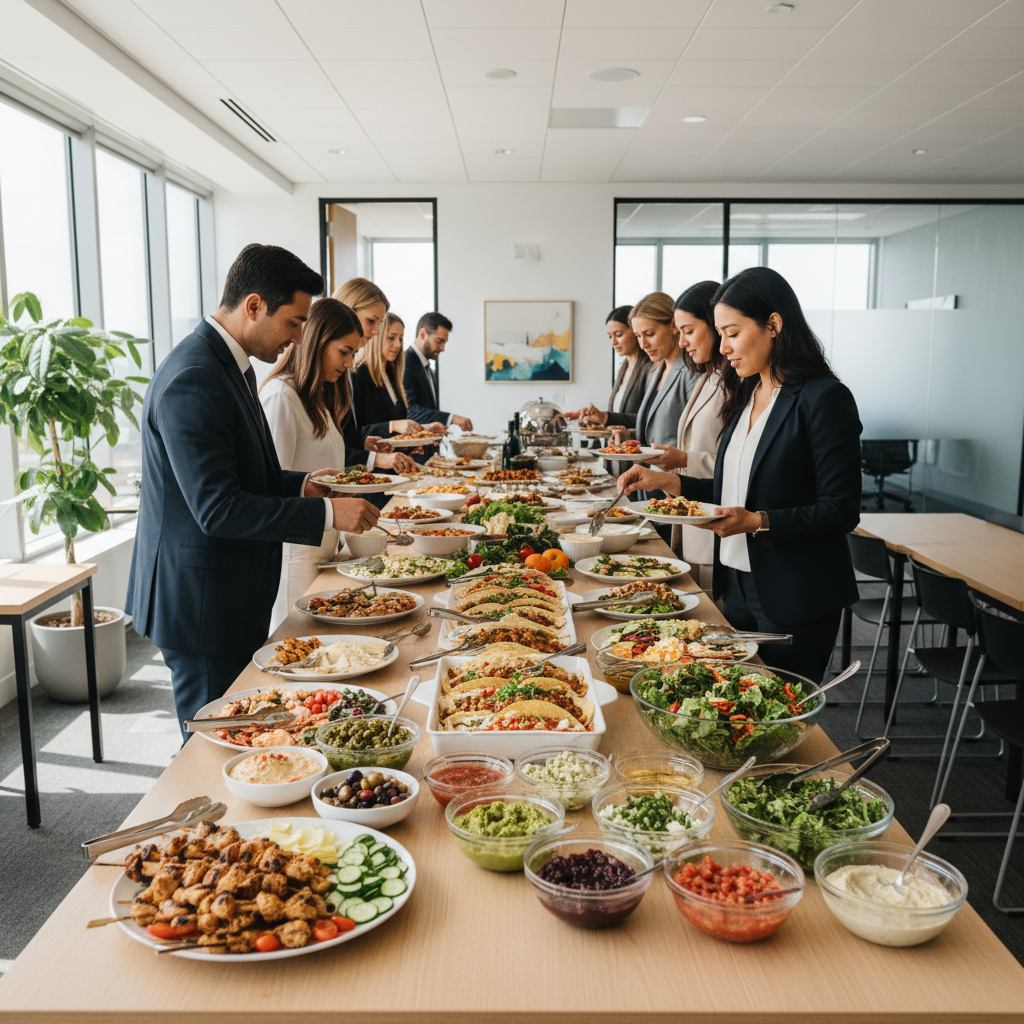
Catering services for corporate events are professional food and beverage programs tailored to meetings, conferences, and office gatherings. They cover menu design, safe dietary accommodations, logistics, and service formats that fit agendas. From LunchLink’s Woodbridge hub at Unit #23 120 Woodstream Blvd, we organize chef-curated meals across Toronto and the GTA so teams can focus on the work, not the food.
By LunchLink • Last updated: 2026-06-01
At a Glance
Corporate catering works best when menus, logistics, and dietary needs are aligned to the agenda. Decide the format (boxed or buffet), confirm headcount and restrictions, schedule delivery with buffer time, and label every item. A clear run-of-show, one point of contact, and simple invoicing keep events smooth.
This complete guide distills how LunchLink plans, cooks, and delivers meals that impress without disrupting your agenda. You’ll find practical steps, checklists, examples, and insider tips drawn from 850+ catered events and 25,000+ employees served across Toronto workplaces.
• What catering for corporate events includes (and what it doesn’t)
• How to choose the right format: individually packaged vs. buffet
• Menu playbooks for breakfast, lunch, and receptions
• Inclusive dining: halal, vegan, gluten-free, nut-free, dairy-free
• Turnkey logistics, labeling, and setup that save time
• Recurring meal programs for reliable cadence and variety
What Are Catering Services for Corporate Events?
Catering services for corporate events are end-to-end food programs designed for business settings. They combine menu planning, preparation, safe packaging, delivery, and setup to support meetings, trainings, client sessions, and conferences. The focus is professional presentation, inclusive options, predictable timing, and minimal disruption to work.
In our experience, clarity beats complexity. Corporate teams don’t want “restaurant chaos” in their boardrooms. They want food that arrives hot, labeled, and on time. That’s why we build menus around predictable portions, dietary transparency, and room layouts that keep traffic moving.
Scope your event in minutes
• Occasion and agenda: workshop, client pitch, all-hands, training, or celebration.
• Service window: breakfast, lunch, afternoon, or evening reception.
• Format: individually packaged meals (zero setup) or buffet-style spreads (shared experience).
• Headcount confidence: initial estimate plus expected variance.
• Dietary matrix: halal, vegan, vegetarian, gluten-free, nut-free, dairy-free, pescatarian.
LunchLink’s team curates Mexican, Mediterranean, Greek, and salad-forward menus that play well in meeting rooms: easy to portion, clean to eat, and balanced for all-day energy. Transparent labeling supports allergens and restrictions so every employee eats with confidence.
Why Corporate Catering Matters for Workplaces
Well-planned catering enhances attendance, focus, and inclusion. When meals are on time, clearly labeled, and genuinely tasty, meetings start on schedule, teams avoid mid-session exits, and employees with dietary needs feel respected. The result is smoother agendas, higher satisfaction, and a more inclusive culture.
Food influences behavior. Well-fed teams engage longer and collaborate better. Across 850+ LunchLink events, we’ve seen punctual starts increase when meals land 10–15 minutes before the agenda and rooms are staged for flow. Inclusive menus reduce last-minute scrambles, saving coordinators time and stress.
Benefits you can bank on
• Predictable timing: Meetings start on time when catering arrives before attendees.
• Inclusive dining: Labeled halal, vegan, gluten-free, nut-free, dairy-free meals mean fewer accommodation requests.
• Professional image: Chef-curated presentation elevates client and executive meetings.
• Cleaner spaces: Individually packaged meals reduce crumbs and congestion.
• Administrative ease: One point of contact and corporate invoicing simplify approvals.
We’ve also found that rotating global flavors (for example, alternating Mediterranean with Mexican) keeps participation high in recurring programs. Variety matters—especially for weekly sessions.
How Corporate Catering Works (Step by Step)
Plan backward from the agenda. Confirm headcount and dietary needs, choose the service format, finalize your menu, and schedule delivery with cushion time. On event day, stage serving zones, label everything, and assign a point person. Afterward, document wins and tweaks for the next event.
Here’s our standard playbook for meetings, trainings, and client events across the GTA. It scales from 10 to 500+ guests without overcomplicating your workflow.
• Discovery: Define the occasion, agenda timing, headcount range, and restrictions.
• Format selection: Choose individually packaged meals (speed and cleanliness) or buffet-style (shared experience).
• Menu curation: Align proteins, sides, and salads with energy needs and utensil simplicity.
• Labeling plan: Build a clear labeling and signage scheme to cover allergens and preferences.
• Logistics confirmation: Delivery window, floor access, elevators, and room maps.
• Run-of-show: Who receives delivery, who stages food, when breaks occur.
• Day-of execution: Final placements, temperature checks, quick waste plan.
• Post-event notes: Capture attendance delta, favorites, and improvements.
Stage Owner Key Actions Pro Tip Discovery Event lead Agenda, headcount, dietary list Ask about late joiners and remote guests Format Event lead Select boxed or buffet Boxed = speed; buffet = social Menu LunchLink Curate balanced options Mix global flavors for interest Labeling LunchLink Allergen and diet flags Use bold, high-contrast labels Logistics LunchLink + Facilities Delivery time, access, layout Build a 10–15 min buffer Execution LunchLink Set, stage, temperature hold Prioritize traffic flow lanes Review Event lead Feedback, attendance delta Note top dishes for next time
Need a walkthrough? Our corporate catering overview explains formats, labeling, and delivery windows in more depth for Toronto teams.
Formats That Fit Your Agenda
Pick a format that matches the room and schedule. Individually packaged meals speed distribution and reduce mess, while buffet-style spreads create a shared experience and can be more flexible for dietary variety. For fast-moving agendas, boxed meals win; for celebrations, buffets shine.
Individually packaged meals
• Zero setup: Hand out and eat—ideal for short breaks and training rooms.
• Cleaner spaces: Less congestion and fewer crumbs on laptops.
• Label transparency: Each box clearly identifies dietary flags.
• Great for: Workshops, exams, off-sites with tight timelines.
Explore ready-to-go options through our corporate lunch catering page—built for speed without sacrificing flavor.
Buffet-style catering
• Shared experience: Encourages conversation and celebration.
• Flexible portions: Guests build plates to taste and appetite.
• Menu breadth: Easy to accommodate multiple restrictions at once.
• Great for: Town halls, client receptions, milestone events.
For buffet ideas, our office catering guide covers room flow, serving zones, and menu rotations that keep lines short and plates colorful.
Menu Design for Energy and Inclusion
Design menus for clarity, balance, and inclusion. Offer at least one halal protein, a vegan main, and gluten-free options; pair with fiber-rich salads and clean carbs. Keep sauces on the side, use utensils that match the food, and label items with allergens and dietary tags.
We curate globally inspired menus that present well in boardrooms and photograph nicely for employer branding. Mediterranean bowls, Greek platters, and Mexican spreads remain top performers because they’re flavorful, colorful, and naturally adaptable to multiple diets.
Winning menu patterns
• Mediterranean: Lemon chicken, falafel, herbed rice, fattoush, tahini on the side.
• Mexican: Chicken tinga, roasted veggies, cilantro-lime rice, black beans, pico.
• Greek: Chicken souvlaki, grilled halloumi, roasted potatoes, Greek salad.
• Salad-forward: Protein-topped bowls with grains, greens, and dressings on the side.
If halal matters to your team, see our halal corporate catering page for how we separate prep, label clearly, and design parallel options for mixed-diet groups.
Local Logistics: Woodbridge and the GTA
From Woodbridge (ON L4L 7Z1), we stage and dispatch meals across the GTA with time buffers for downtown traffic. Neighborhood pickups and deliveries are coordinated from our Woodbridge base, so exec briefings in Toronto and trainings in North York can run on time, even on busy weekdays.
Local nuance matters. Construction schedules, elevator bookings, and loading zones can make or break service windows. Our coordinators sanity-check floor access and delivery paths ahead of time, then build a 10–15 minute buffer to protect your agenda.
Local considerations for Woodbridge
• Plan a delivery buffer for GTA traffic patterns, especially during morning and late-afternoon peaks.
• For winter events, schedule a few extra minutes for staging coats and boots before lines form.
• Confirm building access rules early—dock doors, elevator reservations, or security sign-ins can add time.
To align all parts, we share a one-pager with your facilities team—staging maps, table counts, and allergen label placement. It prevents surprises on the day.
Breakfast, Lunch, and Reception Playbooks
Match the menu to the moment. Breakfast favors protein and fruit with minimal crumbs; lunch needs balanced bowls and handhelds; receptions call for bite-size items and neat sauces. Keep beverages simple and self-serve to avoid bottlenecks.
Breakfast patterns
• Protein first: Egg-based mains and Greek yogurt increase staying power.
• Lower crumb load: Mini wraps and bowls protect keyboards and carpets.
• Warm + fresh: Combine hot items with fresh fruit for color and energy.
Lunch patterns
• Balanced bowls: Protein, grains, greens, plus a crunchy topping.
• Handhelds + sides: Wraps or pita with hearty salads keep lines moving.
• Dressings aside: Preserve texture; enable dietary control.
Reception patterns
• Bite-size and neat: Skewers, sliders, and stuffed mini pitas prevent spills.
• Ambient-safe: Items that hold well at room temp reduce waste.
• Clear labeling: Cocktail hours still need dietary transparency.
For small gatherings, our small events catering tips walk through room setups that scale from 10 to 60 guests without extra staffing.
Food Safety and Labeling Standards
Safety starts with sourcing and ends with labeled packaging. Separate prep for allergens, temperature control in transit, and clear dietary tags are essential. Labeled, sealed containers and clean serving tools reduce risk and keep lines efficient.
We emphasize never-frozen meats, fresh produce, and clear separation for allergens during prep and packing. On arrival, labeled zones and dedicated utensils maintain safety and speed. These are small steps that produce outsized peace of mind for coordinators and attendees alike.
For broader menu-idea context, see this overview of corporate catering menu options covering formats common to Greater Toronto events.
Recurring Office Meal Programs
Recurring programs deliver reliable cadence and variety. Set a weekly or monthly rhythm, rotate global menus, and document feedback. One invoice and one contact reduce admin overhead while employees enjoy predictable, inclusive meals.
Recurring office meals make vendor management easier. We rotate Mediterranean, Mexican, Greek, and salad-forward menus so nothing feels repetitive. Labeled dietary coverage and headcount flexibility help HR and Ops scale events up or down without friction.
To map out a weekly rhythm, start with our office catering framework and layer in a quarterly review with your team to track favorites and requests.
Tools, Templates, and Resources
Use simple tools that match how your team works. A one-page event brief, a dietary matrix, and a room-staging checklist cover 90% of risks. For recurring programs, add usage notes and a quarterly review to keep variety high and waste low.
Plug-and-play templates
• Event brief: occasion, date/time, agenda beats, delivery window, contacts.
• Dietary matrix: list by attendee; tag halal, vegan, gluten-free, nut-free, dairy-free, pescatarian.
• Room checklist: tables, waste plan, serving tools, signage, and line flow.
Helpful LunchLink pages
• High-level primer on corporate catering in Toronto
• Format ideas in our boardroom-to-bbq guide
• Inclusive planning via halal corporate catering
For broader perspectives on planning playbooks outside our site, you can review third-party roundups of menu formats and service considerations that align to GTA expectations.
Case Studies and Real-World Examples
Great corporate catering balances logistics with inclusion. We’ve supported finance, healthcare, education, and professional services teams by rotating menus, labeling thoroughly, and coordinating building access. The common thread: predictable delivery windows and clear points of contact.
Finance: executive briefings
A downtown finance team hosted monthly analyst briefings. We used individually packaged Mediterranean bowls with halal and gluten-free variants and delivered 15 minutes early to keep starts punctual. Attendance consistency improved as menus rotated without sacrificing familiar favorites.
Healthcare: trainings and all-hands
For hospital trainings, we used salad-forward lunches with vegan mains and nut-free prep, plus clear allergy signage. Individually packaged meals minimized congestion in lecture halls and protected tight turnaround times between sessions.
Education: student + staff sessions
University workshops required buffet-style service to encourage networking. We staged dual lines to reduce wait times, added clear labels for halal and vegetarian options, and used room maps to keep lines away from A/V setups.
Professional services: client meetings
For client-facing meetings, Greek platters and mixed-protein options created an elevated, colorful presentation. Sauce-on-the-side preserved textures, and compact utensil sets kept tables tidy for note-taking.
Best Practices Checklist
Protect your agenda with buffers, labeling, and clear roles. Build a dietary matrix, confirm building access, schedule delivery early, and keep sauces separate. Assign a point person, capture quick feedback, and document learnings for next time.
• Create a simple, shareable event brief with contacts and timing.
• Lock in a dietary matrix and communicate it once—no guesswork day-of.
• Stage lines to avoid bottlenecks at doors or A/V tables.
• Label everything; mirror labels on the table and the lids.
• Hold hot foods safely; keep greens crisp by dressing at service.
• Schedule a 10–15 minute buffer before the meeting start.
• Capture headcount deltas and favorites in a quick post-event note.
Let’s Plan Your Next Event
If you’re planning a Toronto-area meeting or conference, we can help with menus, labeling, and logistics. Share your agenda and headcount, and we’ll curate inclusive options and coordinate delivery windows that protect your schedule.
Have a date on the calendar? Explore our corporate catering options or tap our office catering framework to shape your brief. Prefer small-group ideas? Visit small-events catering to get inspired.
Frequently Asked Questions
These quick answers cover timelines, formats, labeling, and headcount changes for corporate catering. For detailed planning, share your agenda and dietary matrix and we’ll respond with a tailored game plan for your team.
How far in advance should I book corporate catering?
Aim to lock menus 5–7 business days before your event when possible. For urgent needs, we often coordinate last-minute options across our vetted Toronto partners. The key is sharing headcount and dietary details quickly so we can align portions, labels, and delivery windows.
Should I choose individually packaged meals or buffet-style?
Pick individually packaged meals for tight agendas and training rooms; choose buffet-style for networking and celebrations. Boxed meals maximize speed and cleanliness, while buffets promote interaction and can handle broader dietary variety in one setup.
How do you handle dietary restrictions and allergens?
We use a dietary matrix to map needs, then curate parallel mains (for example, halal and vegan options). We separate prep for allergens, keep sauces on the side, and label every item. On-site, we stage clear zones and dedicated utensils to maintain safety and speed.
Can you support recurring office meal programs?
Yes. We set a weekly or monthly cadence, rotate global menus to maintain interest, and capture feedback after each service. One point of contact and consolidated invoicing reduce admin time while employees enjoy predictable, inclusive meals.
Key Takeaways
Plan from the agenda backward, choose the right format, label thoroughly, and build buffers into your schedule. With inclusive menus and clean logistics, corporate catering becomes a true productivity enabler—not a distraction.
• Decide format (boxed vs. buffet) based on timing and space.
• Use a dietary matrix and label everything for inclusion and speed.
• Schedule delivery with a 10–15 minute buffer for on-time starts.
• Rotate menus to keep recurring programs fresh and engaging.
• Document learnings so each event gets easier.
Next step: If you’re in Toronto or the GTA, share your agenda and headcount. We’ll propose a menu lineup and delivery plan from our Woodbridge base that protects your timeline and delights your team.