Catering
What Is Chef Catering? Save Time on Office Meals 2026
Chef-led catering brings restaurant-quality menus and corporate logistics to Woodbridge offices. Learn formats, labeling, and a step-by-step ordering checklist.
July 3, 2026 · LunchLink
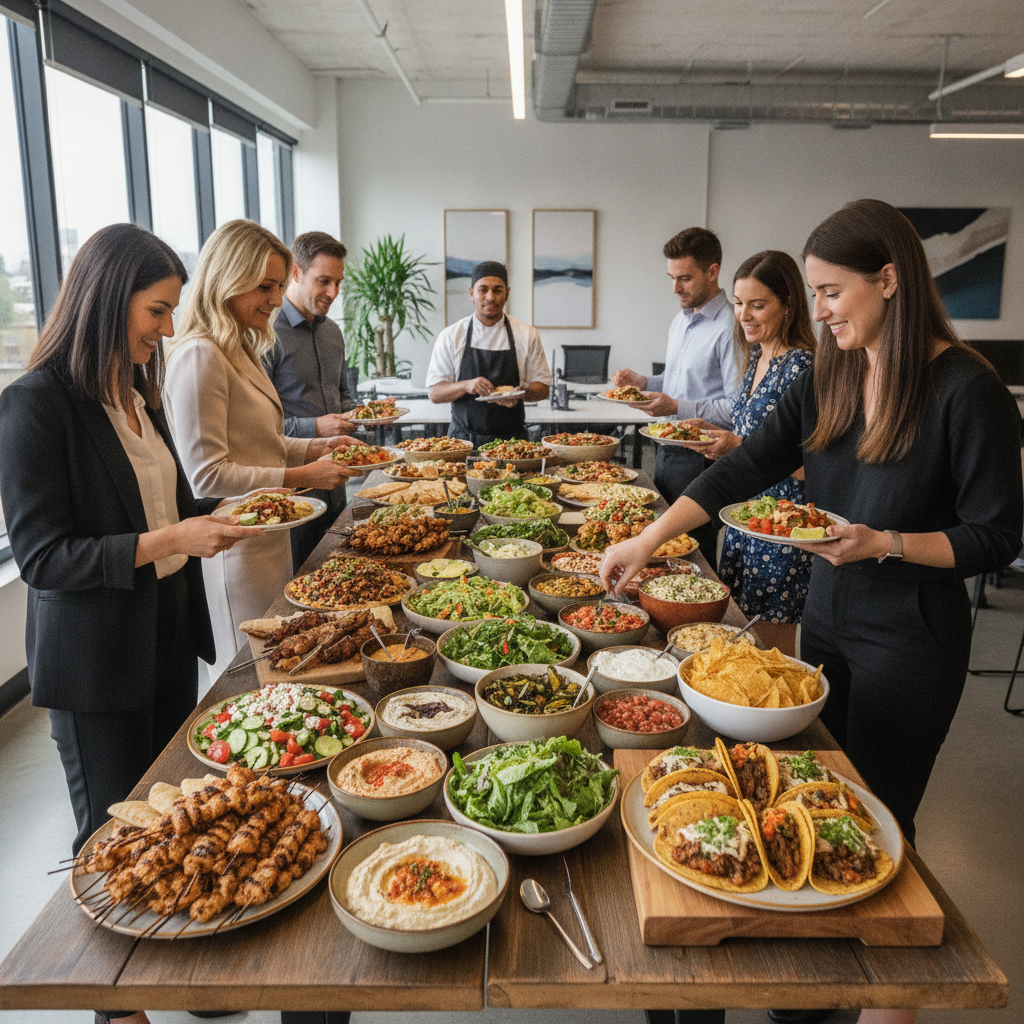
Chef catering is professional, chef-led menu planning and preparation for events and workplaces, delivered ready to serve with consistent quality. It blends restaurant-level cooking with corporate logistics so offices in Woodbridge can offer inclusive, reliable meals without managing vendors themselves. The result: better food, safer labeling, and less admin for busy teams.
By LunchLink • Last updated: 2026-07-03
At a Glance
Chef catering brings chef-curated meals to offices with the reliability, labeling, and logistics companies need. Expect globally inspired menus, dietary-safe packaging, and on-time delivery. This guide explains what chef-led catering is, how it works for offices, best practices, tools, examples, and a step-by-step process to order with confidence.
Use this guide to plan chef-led office meals that are inclusive, efficient, and consistently excellent. You’ll find definitions, benefits, a simple ordering workflow, common service formats, and real examples from Toronto workplaces.
• What chef-led catering means for corporate teams
• When to choose individually packaged meals vs. buffet
• How to align menus with dietary needs and wellness goals
• Step-by-step ordering and delivery checklist
• Operational tips tailored to Woodbridge offices
What Is Chef Catering?
Chef catering is a chef-driven approach to corporate catering where menus are designed by culinary professionals, prepared in commercial kitchens, and delivered with workplace-ready packaging and labeling. It elevates office meals through better recipes, safer accommodations, and predictable logistics suitable for meetings and recurring programs.
Instead of ad-hoc takeout, chef catering organizes globally inspired, workplace-ready menus with clear dietary labels. For LunchLink clients, that means Mediterranean, Mexican, Greek, and healthy salad options designed for meetings, trainings, and recurring office programs across the GTA.
• Culinary leadership: Menus are curated by chefs for balance, flavor, and nutrition.
• Workplace packaging: Individually packaged or buffet-style, always labeled for easy distribution.
• Dietary confidence: Halal, vegan, vegetarian, gluten-free, nut-free, dairy-free, and pescatarian options.
• Corporate logistics: On-time delivery windows, simple invoicing, and headcount flexibility.
Chef catering shines for offices because it merges restaurant-level food with corporate-friendly process. LunchLink’s vetted Toronto partners deliver consistency for group sizes from small huddles to 500+ employees, with labeling that makes distribution fast and safe.
Why Chef-Led Catering Matters for Offices
Chef-led catering improves participation, safety, and experience at workplace events. Teams eat confidently when meals are labeled and inclusive, and organizers save hours on vendor wrangling. Companies benefit from higher meeting satisfaction, stronger culture, and easier coordination across recurring schedules.
When food works, meetings run better. Inclusive meals reduce friction—no side conversations about who can’t eat what, and no last-minute scrambles. LunchLink reports 850+ events catered and 25,000+ employees fed across Toronto workplaces, reflecting demand for chef-guided, reliable programs with clear labeling and on-time drop-offs.
• Participation: Inclusive options encourage everyone to join lunch-and-learns and all-hands.
• Safety: Clear ingredient labels minimize mix-ups for allergy-sensitive teammates.
• Professionalism: Chef-created menus elevate client meetings and executive sessions.
• Consistency: Recurring programs stay fresh with rotating, chef-built menus.
Chef catering also helps HR and People Ops connect wellness, inclusion, and recognition. Balanced menus support energy levels during long workshops, and the simple, labeled packaging keeps distribution under five minutes for most departments.
How Chef Catering Works (Step-by-Step)
Chef catering follows a clear flow: gather headcount and dietary needs, select a chef-curated menu, choose packaging (individual or buffet), confirm delivery window, and receive labeled meals on time. A single coordinator manages logistics, invoicing, and adjustments for a smooth, repeatable experience.
Here’s the operational playbook we use with Toronto-area offices—effective for one-off events and recurring programs alike.
• Scope the meal: Event type, time, headcount range, and service style (individual vs. buffet).
• Collect dietary needs: Compile halal, vegan, vegetarian, gluten-free, nut-free, dairy-free, and pescatarian counts.
• Pick a chef-led menu: Mediterranean bowls, Greek platters, Mexican spreads, or salads built for balance.
• Lock delivery window: Set an arrival time with buffer for setup or quick distribution.
• Confirm labeling: Ensure each item or tray is clearly labeled for stress-free handout.
• Finalize logistics: Building access notes, elevator timing, loading areas, and point of contact.
• Receive and serve: Meals arrive hot or chilled as required—no setup needed for individual packaging.
• Post-event pulse check: Gather feedback to refine menus and plan the next rotation.
LunchLink streamlines repeatability with one invoice, one point of contact, and rotating chef menus. Many offices pair this with recurring delivery schedules to remove weekly admin from HR and office managers.
Service Formats: Individual Meals vs. Buffet-Style
Chef catering typically offers two formats: individually packaged meals for speed and safety, and buffet-style spreads for collaboration and variety. Individual packaging simplifies distribution and labeling; buffets encourage interaction and allow custom portions. Choose based on agenda, space, and dietary complexity.
Both formats are workplace-ready. Individually packaged meals work well for trainings with back-to-back sessions; buffets fit celebrations, client mixers, and town halls. LunchLink supports both, with Mediterranean, Mexican, Greek, and hearty salad options tailored to meetings.
Comparison at a Glance
Format Best For Strengths Considerations Individually Packaged Trainings, workshops, staggered schedules Fast handout, clear labels, minimal cleanup Less on-site customization Buffet-Style All-hands, celebrations, client mixers Flexible portions, communal feel, menu range Requires serving space and utensils
For offices that rotate both styles, recurring programs keep variety high and simplify approvals. Chef catering supports this with planned menus and predictable delivery windows.
Menu Building: Chef-Curated Options That Work
The best chef catering menus balance flavor, nutrition, and dietary inclusion. Build around proteins, grains, vegetables, and sauces; offer at least one halal protein and one vegan entrée; and label all allergens. Rotating cuisines keeps engagement high across recurring schedules.
LunchLink’s chef partners emphasize globally inspired options designed for offices:
• Mediterranean bowls: Grilled chicken or falafel, lemony grains, roasted veggies, and herb sauces.
• Greek platters: Souvlaki, salads, dips, and warm pitas for mix-and-match plates.
• Mexican spreads: Seasoned proteins, rice, beans, salsa trios, and fresh toppings.
• Hearty salads: Protein-forward salads with whole grains and crisp greens for workshop energy.
Chef catering thrives on clarity and choice. We recommend tracking popular items per team, then rotating cuisines weekly. In our experience, variety plus labeling drives the highest participation in Toronto offices.
Dietary Accommodations and Labeling
Chef catering should cover major dietary needs—halal, vegan, vegetarian, gluten-free, nut-free, dairy-free, and pescatarian—and label meals or trays clearly. Safe labeling reduces risk, speeds distribution, and makes events more inclusive for allergy-sensitive team members.
LunchLink’s promise: fully labeled meals so every teammate can eat confidently. Clear labels also help organizers distribute meals in under five minutes for most groups, keeping meetings on schedule.
• Halal coverage: Ensure at least one halal protein in every menu rotation. See our halal corporate catering guidance.
• Gluten-aware trays: Keep gluten-free items separate and well marked.
• Common allergens: Highlight nuts, dairy, soy, and sesame where relevant.
• Vegan and vegetarian: Offer complete entrées, not just sides.
Labeling isn’t just a courtesy—it’s operational speed. With chef catering, distribution stays organized even when headcounts change late in the game.
Best Practices for Ordering Chef Catering
Start with the agenda, then match service style and menu to timing. Gather dietary counts early, confirm delivery windows, and plan for a 10–15 minute buffer. Use recurring schedules for frequent events and keep a rotating menu calendar to maintain interest.
• Anchor to the agenda: Short meetings favor individual meals; longer sessions welcome a buffet break.
• Plan handoff speed: Labeled boxes hand out fast; buffets need serving flow and utensils.
• Rotate cuisines: Alternate Mediterranean, Mexican, Greek, and salads to prevent menu fatigue.
• Stagger arrival: For multi-floor offices, consider two delivery drops.
• Confirm building access: Elevators, loading areas, and security desk instructions save minutes.
Local considerations for Woodbridge
• Plan deliveries around local commute windows to avoid lobby congestion at peak times.
• During winter and rainy seasons, allow extra buffer for safe transport and warming needs.
• For hybrid schedules, confirm on-site headcount 24 hours before to right-size portions.
Make reordering simple by saving your preferred menus and delivery notes. Chef catering becomes even more efficient once the basics are documented for your office.
Tools and Resources That Make It Easy
Chef catering runs best with clear menu catalogs, dietary filters, delivery tracking, and consolidated invoicing. Centralizing these tools saves organizers hours each month and reduces the risk of mistakes during busy event weeks.
LunchLink streamlines operations for Toronto workplaces with one point of contact and corporate invoicing. A forthcoming app will add individual ordering, live delivery tracking, dietary filters, admin dashboards, and easy reordering for recurring programs—ideal for HR and Ops teams managing multiple locations.
• Menu planning hub: Save past orders and rotate chef menus on a cadence.
• Dietary filters: Build menus that cover halal, vegan, gluten-free, nut-free, and dairy-free needs.
• Tracking and notes: Log arrival windows, access instructions, and preferred setups.
• Consolidated invoicing: Keep procurement simple across teams and buildings.
For service selection and menu ideas, see our corporate catering overview and office catering guide for Toronto teams.
Use Cases and Mini Case Studies
Chef catering fits meetings, trainings, client sessions, town halls, and recurring lunches. Rotating menus, safe labels, and reliable delivery keep events smooth. Below are real-world scenarios drawn from Toronto workplaces to illustrate practical choices and outcomes.
Training Day, Hybrid Team
• Need: Staggered sessions with little time between.
• Approach: Individually packaged Mediterranean bowls with halal and vegan coverage.
• Outcome: Distribution in under five minutes per session; strong attendance for all modules.
Client Pitch Lunch
• Need: Polished presentation and easy dietary accommodation.
• Approach: Greek platters with labeled allergens and gluten-aware sides.
• Outcome: Elevated experience; lunch service stayed silent and seamless during discussions.
Monthly All-Hands
• Need: 150–300 attendees with varied preferences.
• Approach: Buffet-style Mexican spread, vegan entrées, and halal proteins; clear signage at tray level.
• Outcome: Smooth flow across serving lines; higher satisfaction on post-event survey.
Across these examples, the common thread is chef-curated planning plus operational clarity. LunchLink’s network has supported 850+ events for Toronto institutions and brands, with a reported 98% satisfaction score on internal feedback.
Process Checklist: From Idea to Empty Plates
Use a simple checklist: define the event goal, confirm headcount and dietary needs, choose a chef menu, select service format, set delivery window and access notes, verify labeling, and plan cleanup. Afterward, capture feedback and save notes to improve the next order.
• Event type and timing
• Headcount range with buffer
• Dietary counts (halal, vegan, gluten-free, nut-free, dairy-free)
• Menu selection and rotation plan
• Service format (individual vs. buffet)
• Delivery window and building access notes
• Labeling confirmation and serving utensils (if buffet)
• Feedback capture and reorder date
For more planning ideas, see our comprehensive corporate catering guide for Toronto offices.
When to Choose Chef Catering vs. Ad‑Hoc Takeout
Choose chef catering when you need reliable labeling, inclusive menus, coordinated delivery, and professional presentation. Use ad-hoc takeout for very small, informal gatherings. For recurring programs, chef-led services save time and build consistency across teams and locations.
• Chef catering fits: Client meetings, trainings, town halls, leadership off-sites, and recurring lunches.
• Ad-hoc takeout fits: Casual team treats or very small groups without dietary complexities.
• Hybrid plans: Combine formats based on session goals and space.
In our experience with Toronto offices, the tipping point is predictability and inclusion. Once teams need clear dietary coverage or repeatability, chef catering wins on quality and time saved.
Frequently Asked Questions
These concise answers address common questions about chef-led corporate catering, from service formats and dietary coverage to lead times and recurring programs. Use them to fine-tune your next order and standardize expectations with stakeholders.
What does chef catering include for offices?
Chef catering includes chef-curated menus, clear dietary labeling, workplace-ready packaging, reliable delivery windows, and corporate-friendly coordination like consolidated invoicing. Menus can be individually packaged or buffet-style, with inclusive options such as halal, vegan, gluten-free, nut-free, and dairy-free.
How far in advance should I book?
Book as soon as your agenda is set. For routine meetings, lock a recurring schedule. For last-minute needs, chef-led partners often accommodate same-day requests, but confirming headcount and dietary counts early ensures the best menu coverage and on-time service.
What’s better—individual meals or buffet?
Choose individual meals for speed, labeling clarity, and back-to-back sessions. Choose buffet-style for community feel and flexible portions. Many offices alternate both across the month to match agendas and keep menus interesting for teams.
Can chef catering handle strict allergies?
Yes—when menus are planned with allergy awareness and items are clearly labeled. Request separate trays for gluten-free or nut-free items, verify ingredient lists in advance, and ensure labeled packaging for fast, safe distribution at the event.
Key Takeaways
Chef catering delivers chef-curated menus with corporate-ready logistics and inclusive labeling. It’s ideal for recurring programs and important meetings. Choose the right format, plan around the agenda, and document preferences to make every re-order faster and more consistent.
• Chef-led planning improves quality, inclusion, and event experience.
• Labeling and packaging speed up safe distribution.
• Rotate cuisines to maintain interest across recurring meals.
• Lock delivery windows and access notes for reliability.
• Use consolidated invoicing to simplify procurement.
Conclusion
Chef catering is the smarter path for offices that value quality, inclusion, and predictability. With chef-crafted menus, clear labels, and reliable delivery, teams focus on the meeting—not the meal. Start with one event, document what worked, and grow into a rotating program.
If you’re planning meals for a Woodbridge or Toronto office, explore our office catering services and corporate catering options. For event-specific ideas, see the elevated corporate catering playbook.
Need a hand? Share your headcount and dietary needs, and we’ll recommend a chef-led menu and delivery window that fits your agenda—no guesswork.