Catering
Christmas Day Catering: Keep Guests Happy All Day 2026
Plan inclusive, on-time Christmas Day catering in Toronto and the GTA. Menus, labeling, and logistics—built from LunchLink’s playbook for stress-free holiday meals.
May 28, 2026 · LunchLink
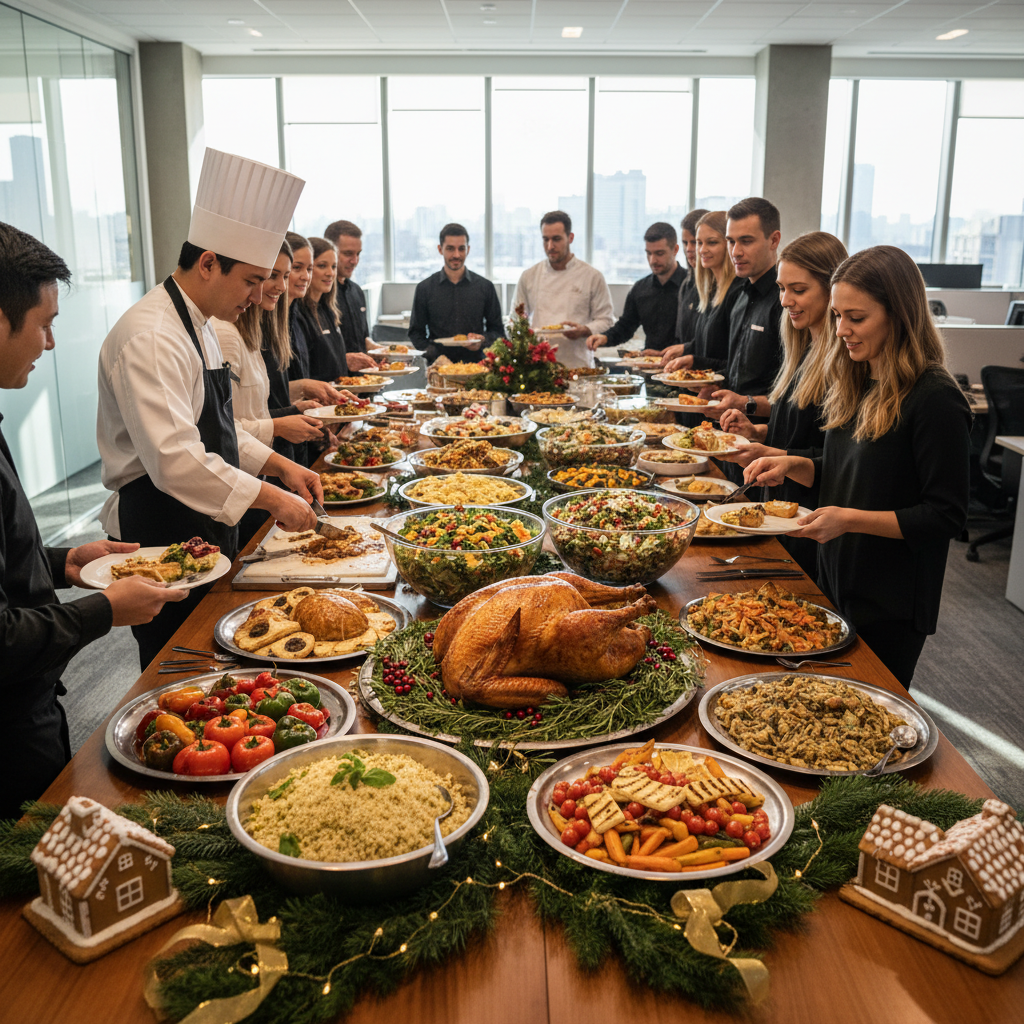
Christmas Day catering is the professional planning, cooking, and delivery of holiday meals for December 25, tailored to your schedule, headcount, and dietary needs. From our Woodbridge hub at Unit #23 120 Woodstream Blvd, LunchLink coordinates chef-curated menus and reliable delivery across Toronto and the GTA so your team celebrates without kitchen stress.
By LunchLink • Last updated: May 28, 2026
Above the Fold: Why This Guide Matters
Use this guide to plan Christmas Day catering that runs on time, satisfies every diet, and looks impressive on camera. You’ll get step-by-step timelines, buffet vs. boxed meal guidance, portioning rules of thumb, and Woodbridge-to-GTA delivery tips based on LunchLink’s real corporate catering playbook.
Holiday service windows are tight, guest expectations are high, and dietary needs are non‑negotiable. This complete guide blends practical checklists with expert tactics we use daily for corporate lunches, client events, and all‑hands celebrations.
• Clear timelines for ordering, confirmation, and day‑of setup
• Buffet vs. individually packaged meals: when each shines
• Inclusive planning (halal, vegan, gluten‑free, nut‑free, dairy‑free)
• Portioning and menu math for appetizers, mains, and desserts
• Delivery logistics across Toronto and the GTA on December 25
• Actionable checklists and a printable run‑of‑show
Quick Summary
Book Christmas Day catering early, lock headcount with a buffer, choose buffet or boxed based on space and flow, and label every item. For GTA delivery, schedule earlier windows and assign one onsite point of contact. Use inclusive menus so every guest eats safely and confidently.
Here’s the bottom line: a strong plan beats last‑minute scrambling. We’ve coordinated 850+ corporate events, fed 25,000+ employees, and maintained a 98% satisfaction rate by following the same playbook you’ll find below.
What Is Christmas Day Catering?
Christmas Day catering is a full‑service meal solution for December 25 that covers menu planning, cooking, labeling, delivery, and setup. It’s built to handle varied diets and tight timelines so hosts can focus on guests instead of kitchen logistics and cleanup.
At LunchLink, that means chef‑curated menus (Mediterranean, Mexican, Greek, healthy salad bowls), individually packaged or buffet‑style formats, and corporate‑friendly operations like single‑invoice billing and transparent labeling.
• Scope: Menu design, cooking, delivery, setup, and optional staffing
• Formats: Individually packaged meals or buffet spreads
• Dietary coverage: Halal, vegan, gluten‑free, nut‑free, dairy‑free, pescatarian
• Ordering: One‑time events or recurring programs for multi‑day office closures
Christmas Day amplifies the stakes: fewer backup vendors, complex building access, and winter weather. A reliable partner keeps service smooth when everything else is closed.
Why Christmas Day Catering Matters
Well‑executed Christmas Day catering strengthens culture, includes every guest, and keeps the schedule on track. Food is the heartbeat of a holiday gathering; when it’s late, unlabeled, or limited, the whole day feels off.
We see this every season. Teams with inclusive, on‑time meals report better attendance, stronger morale, and smoother agendas. When labeling is precise and meals are varied, you avoid allergen risks and reduce food waste.
• Culture & morale: Festive, well‑presented food is a proven engagement driver.
• Safety & trust: Full ingredient labels lower anxiety for restricted diets.
• Operational ease: A single point of contact and consolidated invoicing save hours.
• Predictability: Time‑stamped delivery and a run‑sheet create calm for hosts.
For hybrid workplaces, food also nudges in‑office attendance. A high‑value meal on a key holiday builds goodwill that lasts into January.
How Christmas Day Catering Works (End‑to‑End)
The process: confirm goals and headcount, choose your format (boxed or buffet), select a balanced menu, schedule delivery, and assign an onsite lead. Add a run‑of‑show with timestamps so setup, serving, and cleanup each have a clear owner.
Planning milestones
• T‑21 to T‑14 days: Gather RSVPs; capture dietary needs and building access rules.
• T‑10 days: Lock your format (boxed vs. buffet) and note serving locations.
• T‑7 days: Finalize headcount with a 5–10% buffer for last‑minute guests.
• T‑3 days: Share labeled seating charts or pickup zones for boxed meals.
• Event day: Receive delivery, stage trays, set signage, and brief greeters.
Menu and portioning rules of thumb
• Appetizers: Plan 1.5–2 pieces per person per hour for standing receptions.
• Mains: Aim for a protein (6–8 oz), two sides, and a vegetarian/vegan entrée.
• Salads: One hearty base plus a lighter option fits most crowds.
• Desserts: Two small portions per guest keep lines moving and plates tidy.
We document this plan in a one‑page run‑sheet that lists contacts, access details, timestamps, and photos of the final table layout—an easy handoff for volunteers or building staff.
Buffet vs. Individually Packaged: Which Format Wins?
Use a buffet when you have serving space, visual impact goals, and mixed appetites. Choose individually packaged meals when you need speed, strict labeling, or easy distribution across multiple rooms or floors.
Both formats can be festive and inclusive. Your space, headcount, and staffing decide the winner. Here’s a quick comparison.
Factor Buffet‑Style Individually Packaged Speed of service Fast for large groups with multiple lines Fast for distributed teams; no line needed Dietary clarity Requires clear signage and staff guidance Highest clarity with labels on each box Presentation High visual impact; centerpiece effect Clean, uniform look; easy portion control Space demands Needs staging tables and flow control Minimal; carts or stations on each floor Waste control Great with attentive replenishing Excellent; right‑sized portions per guest
In our experience, mixed‑format wins for complex buildings: boxed entrées with a small, beautifully styled dessert and salad buffet.
Winning Christmas Menus for Diverse Teams
Build a Christmas menu around one main theme plus inclusive alternates. Pair a classic roast entrée with Mediterranean sides, fresh salads, and at least one vegan entrée. Label every dish with allergens and dietary tags for stress‑free self‑service.
Menu frameworks that work
• Mediterranean Feast: Roast chicken or turkey, lemon potatoes, herbed rice, roasted vegetables, Greek salad, hummus, and pita.
• Mexican Comfort: Adobo chicken, veggie fajitas, rice and beans, corn salad, pico de gallo, warm tortillas.
• Greek Holiday: Herb‑roasted proteins, spanakopita, village salad, grilled vegetables, tzatziki.
• Plant‑Forward Bowl Bar: Quinoa, roasted squash, chickpeas, greens, pickled veg, tahini or cilantro‑lime dressings.
Dietary coverage checklist
• Offer a halal protein and a vegan entrée by default.
• Keep at least one gluten‑free side (rice or potatoes).
• Separate nut‑containing items; post a clear sign.
• Use distinct serving utensils for each allergen category.
These frameworks mirror LunchLink’s curated menus and can be delivered boxed or buffet‑style with fully labeled components.
Local Logistics: Woodbridge (ON L4L 7Z1) to the GTA
For Woodbridge and ON L4L 7Z1, schedule Christmas Day deliveries earlier, confirm building access, and plan for winter buffers. Use a single onsite contact to meet drivers, manage elevators, and stage food quickly for Toronto and GTA guests.
Holiday road conditions and closed loading docks can add minutes you didn’t budget. We stage insulated carriers, route multi‑stop drops, and share live ETAs so hosts aren’t guessing while guests arrive.
Local considerations for Woodbridge
• Confirm if your building’s loading areas and elevators operate on reduced holiday hours.
• Account for snow and slush—choose packaging that maintains heat during longer unloads.
• Arrange a lobby liaison to escort deliveries and speed badge checks for drivers.
Small planning moves—like reserving a staging table by the entrance—save 10–15 minutes and keep the program on schedule.
Best Practices We Use for Holiday Events
Label everything, over‑communicate timelines, and build redundancy into transport. Assign a floor captain, map garbage and recycling, and photograph the final setup so anyone can help maintain the look and flow.
Labeling and food safety
• Use clear tags for allergens and diets: halal, vegan, gluten‑free, nut‑free, dairy‑free.
• Separate serving lines for special diets to reduce cross‑contact.
• Keep hot foods above safe holding temperatures with insulated carriers.
Flow and guest experience
• Stage beverages and salads first to reduce congestion at the mains.
• Open two lines for 60+ guests; mirror the menu on both sides of the table.
• Use a ".5 serving" prompt for guests who want to sample everything without waste.
Day‑of operations
• Print a one‑page run‑sheet with timestamped tasks and contacts.
• Assign restocking to a single person to keep the table polished.
• Place trash and recycling where guests naturally exit the line.
These habits keep lines moving and the table camera‑ready throughout the event—especially useful when leadership remarks or gift exchanges are scheduled.
Tools, Templates, and Resources
Use a simple toolkit: RSVP tracker, dietary log, run‑sheet template, table map, and a labeling key. Pair that with a dependable vendor playbook and you’ll reduce last‑minute questions by half.
• RSVP + Dietary Tracker: Spreadsheet with required fields (name, diet, pickup location).
• Run‑Sheet Template: Timestamps for delivery, setup, line open, remarks, dessert.
• Table Map: Sketch of where each tray, utensil, and sign goes.
• Labeling Key: Consistent tags for allergens and diets.
• Vendor Playbook: Access rules, parking notes, elevator codes, and contacts.
Want a done‑for‑you route? See how we streamline office meals on our corporate catering overview and our office catering services.
Case Examples (What Works on December 25)
Three real‑world patterns consistently deliver great Christmas Day outcomes: a mixed‑format hybrid, a floor‑by‑floor boxed drop, and a staged buffet with two synchronized lines. Each suits a different building and schedule.
Hybrid elegance for 120 guests
• Format: Individually boxed entrées + small dessert buffet.
• Menu: Lemon‑herb chicken, vegan grain bowl, Greek salad, roasted vegetables, mini baklava.
• Outcome: Lines stayed under 6 minutes; zero allergen incidents.
Distributed delivery for multi‑floor teams
• Format: Boxed meals labeled by department and floor.
• Menu: Turkey and roasted vegetables; vegan quinoa‑squash bowl.
• Outcome: 8 drop‑points; everyone ate within 10 minutes of arrival.
Showpiece buffet for executive hosting
• Format: Two mirrored lines with warmers and carved proteins.
• Menu: Roast turkey, herbed potatoes, Mediterranean vegetables, seasonal salads.
• Outcome: High visual impact; perfect for speeches and photos.
These are the same frameworks we run for office parties and client receptions across Toronto and the GTA—adaptable to indoor courtyards, boardrooms, and lobbies.
Ordering Christmas Day Catering with LunchLink
Choose your format, share headcount and diets, confirm delivery window, and we’ll coordinate the rest—menu curation, labeling, transport, and day‑of setup notes. One point of contact, one invoice, and live status updates.
Our core services map neatly to holiday needs:
• Corporate Catering for showpiece buffets and executive hosting.
• Office Catering for boxed meals and distributed drops.
• Halal and inclusive menus on our halal corporate catering page.
• Recurring office meal programs to cover office closures around the holidays.
We operate across the GTA with vetted partners, never‑frozen meats, and fully labeled meals, so every team member can dine with confidence.
Your 10‑Point Christmas Day Catering Checklist
Confirm headcount with a 5–10% buffer, capture diets, pick a format, build a balanced menu, and schedule an early delivery window. Label everything, assign roles, and document a one‑page run‑sheet with timestamps.
• Pick a planning lead and a backup.
• Collect RSVPs, diets, and room assignments.
• Decide buffet vs. individually packaged meals.
• Choose a main theme and inclusive alternates.
• Map the table and traffic flow.
• Book delivery with access instructions and a contact.
• Prepare signage and labeling.
• Print the run‑sheet and share it with stakeholders.
• Stage beverages and salads first; open two lines for 60+ guests.
• Assign replenishing and cleanliness to one person.
Print this list and stick it near the staging table for a calm, repeatable process.
Frequently Asked Questions
Get quick answers about formats, dietary needs, timeline, and delivery windows for Christmas Day catering in the GTA. These are the questions corporate planners ask us most in December.
What’s better for Christmas Day: buffet or boxed meals?
Buffets look spectacular and work well when you have space and staff to guide flow. Individually packaged meals are best for fast service, strict labeling, and multi‑floor distribution. Many teams combine both: boxed entrées plus a small dessert and salad buffet.
How do you handle halal, vegan, and gluten‑free guests?
We include inclusive entrées by default and label all items clearly. Halal proteins, plant‑based mains, and gluten‑free sides are planned into the menu so guests don’t need special accommodations at the table.
When should I finalize headcount?
Aim to confirm numbers 7–10 days out with a small buffer for late RSVPs. Share updates again 72 hours before delivery so labeling and routing reflect the latest seating and access details.
Can you deliver to multiple floors or buildings on December 25?
Yes. We coordinate multi‑stop routes and staggered drop‑offs, then share delivery ETAs with your onsite lead. Boxed meals with clear labels and pickup zones keep service quick across multiple floors.
Key Takeaways and Next Steps
Lock logistics early, include everyone with labeled options, and choose the format that matches your space. When in doubt, mix boxed entrées with a compact buffet and assign one onsite lead to keep lines moving and the table photo‑ready.
• Key takeaways: Label everything, over‑communicate timing, and plan for weather buffers.
• Action: Outline your format and menu today, then request a holiday delivery window.
• Next step: Explore our corporate catering and office catering pages to get started.
Need a hand? We’ll plan the menu, label every item, and coordinate a smooth Christmas Day delivery. Share your headcount and diets, and we’ll build the run‑sheet with you.
See our planning approach to understand how we keep large groups on schedule.