Catering
Company Lunch Catering: Feed Teams Better in 2026
Plan company lunch catering with formats, menus, labeling, and logistics. Learn boxed vs. buffet, manage dietary needs, and run recurring programs with ease.
June 18, 2026 · LunchLink
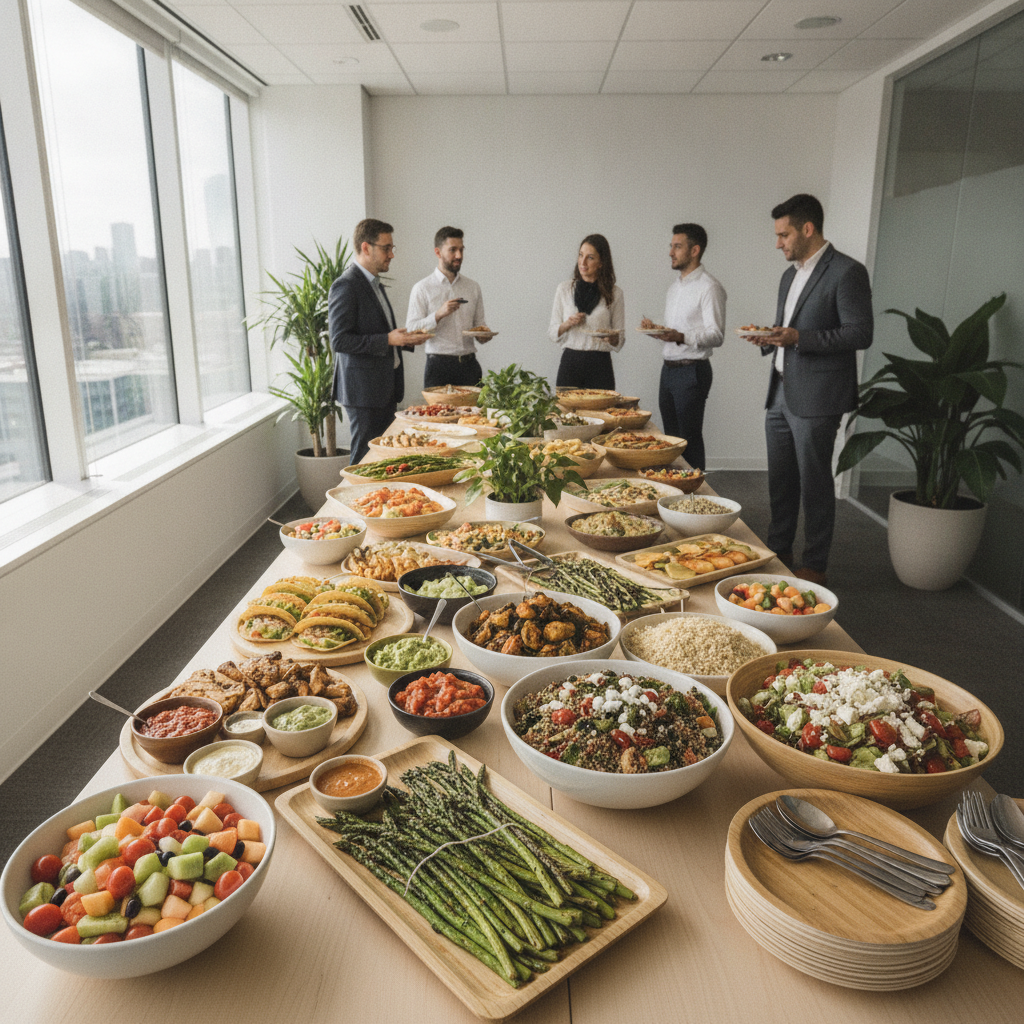
Company lunch catering is the professional coordination and delivery of complete meals for workplace teams, meetings, and events. It includes menu planning, dietary accommodations, safe packaging, and on-time logistics. From our Woodbridge base at Unit #23 120 Woodstream Blvd, LunchLink streamlines office lunches across Toronto and the GTA so every teammate eats confidently.
By LunchLink • Last updated: June 18, 2026
Overview and Table of Contents
Use this complete guide to plan company lunch catering with confidence. You’ll learn what it is, how it works, which formats to choose, and how to handle dietary needs, labeling, delivery, and recurring programs. We include checklists, a comparison table, local tips for Woodbridge, and real examples from LunchLink.
Many teams juggle headcounts, preferences, and timelines. This guide shows a simpler path. Expect practical steps, ready-to-use templates, and insider operations tips drawn from 850+ events catered and 25,000+ employees fed with a 98% satisfaction rate.
• What is company lunch catering?
• Why company lunch catering matters
• How company lunch catering works
• Catering formats and menus
• Best practices and checklists
• Tools and resources
• Case studies and examples
• Local planning for Woodbridge teams
• Frequently asked questions
• Conclusion and next steps
What is company lunch catering?
Company lunch catering is a managed meal service for workplaces. It covers menu curation, dietary accommodations, labeled packaging, delivery coordination, and post-event support. The goal is to feed teams of 10–500+ safely and consistently, reduce admin time, and enhance culture during meetings, trainings, and client sessions.
In practice, this means a single partner plans, prepares, and delivers chef-crafted meals on your schedule. For Toronto offices, LunchLink curates globally inspired options—Mexican, Mediterranean, Greek, and healthy salad menus—offered as individually packaged meals or buffet-style spreads.
• Core components: menu planning, portioning, labeling, delivery windows, setup guidance, and disposal.
• Team sizes: flexible for 10–500+ headcount with 24-hour adjustments when needed.
• Dietary coverage: halal, vegan, vegetarian, gluten-free, nut-free, dairy-free, and pescatarian.
• Formats: individually packaged meals for speed and safety, or buffet-style for collaboration and variety.
• Operations: one point of contact, corporate invoicing, and recurring scheduling to save time.
Here’s the thing: most lunch mishaps happen in the handoffs—late drivers, unclear labels, or missing vegetarian options. Centralizing responsibilities through a vetted partner removes guesswork and protects your meeting agenda.
Why company lunch catering matters
Organized lunch catering boosts attendance, shortens breaks, and supports inclusion. It also reduces last-minute scrambling for HR and office managers. When meals are well-labeled, on time, and universally tasty, meetings start faster and morale rises across departments.
Teams feel valued when meals reflect real dietary needs. We’ve seen participation jump when halal, gluten-free, and vegan options are visible and safe. LunchLink’s labeled packaging and transparent ingredients help allergy-sensitive teammates eat with confidence—an essential factor for healthcare and finance clients that host frequent trainings.
• Time saved: centralizing supplier, menus, delivery, and invoicing cuts admin work across People Ops.
• Culture impact: shared meals create organic conversation; leaders can leverage this for onboarding and client rapport.
• Consistency: a rotating menu solves “menu fatigue,” improving engagement in recurring programs.
• Reliability: same-day or last-minute coverage protects high-stakes meetings from food emergencies.
• Scale: logistics that handle 10–500+ attendees help conferences and all-hands run smoothly.
In our experience, labeled meals reduce “where’s mine?” confusion by a wide margin, and managers report smoother starts to agenda-driven sessions. When every box is clearly marked, you avoid 10 minutes of seat swapping and side conversations.
How company lunch catering works
The process is simple: choose a format, share headcount and dietary needs, finalize delivery window and menu, then confirm a labeled packing plan. A reliable partner coordinates kitchens, drivers, and timing, then documents delivery and follow-up so you can focus on the meeting.
LunchLink streamlines this with one point of contact, rotating menus across vetted Toronto partners, and corporate invoicing. The flow below is typical for offices running weekly meals or one-time events with 50–200 attendees.
• Discovery: goals, headcount (10–500+), schedule cadence, and dietary restrictions.
• Menu curation: pick a cuisine set (e.g., Mediterranean bowls, Mexican platters, Greek salads) that cycles weekly.
• Labeling plan: finalize allergens, protein tags, and color-coded stickers for quick sorting.
• Delivery window: designate building protocols, elevator timing, and room access.
• Confirmation: lock the order with 24-hour headcount flexibility for real-world changes.
• Execution: kitchens prep never-frozen proteins; drivers track routes; staff stage buffets or drop boxes.
• Wrap-up: feedback, photo proof of delivery, and next-week adjustments in one thread.
Step Owner Key Decision Outcome Discovery Office Manager + LunchLink Goals, headcount, dietary Clear requirements Menu Curation LunchLink Cuisine rotation Balanced variety Labeling Plan LunchLink Allergen tags Safe sorting Delivery Window Office + Driver Arrival timing On-time setup Execution LunchLink Packaging format Smooth service
Tip: assign a single “food captain” per floor. One point person speeds building access and keeps hot food hot.
Catering formats and menus
Pick a format that matches your meeting goals. Individually packaged meals speed distribution and highlight dietary tags. Buffet-style spreads encourage collaboration and variety. Rotating menus across Mexican, Mediterranean, Greek, and salad-forward options prevent fatigue in recurring programs.
LunchLink offers both formats, plus recurring office meal programs with predictable delivery windows and admin-friendly invoicing. Below are common use cases and practical menu ideas that have worked well for 50–150-person trainings and client events.
Individually packaged meals
• Best for: trainings with tight agendas, multi-room deliveries, compliance-heavy teams.
• Strengths: fastest handoff; every box labeled (protein, allergens); simple cleanup.
• Popular sets: • Mediterranean bowls with chicken, falafel, or salmon; tahini or lemon-herb dressing.
• Mexican bowls with adobo chicken, roasted veggies, or steak; cilantro-lime rice and pico.
• Greek salads with grilled proteins; sides like roasted potatoes and hummus.
• Dietary coverage: halal, vegan, gluten-free, nut-free, dairy-free options clearly tagged.
Buffet-style catering
• Best for: collaboration days, town halls, and longer social lunches.
• Strengths: visual appeal, portion flexibility, easy seconds for hungry teams.
• Popular spreads: • Taco bars with multiple proteins, tortillas, salsas, and roasted vegetables.
• Mediterranean mezze with shawarma, falafel, tabbouleh, hummus, and warm pitas.
• Greek platters with souvlaki, spanakopita, Greek salad, and lemon potatoes.
• Allergens: clear buffet signage for gluten, nuts, dairy, and shellfish.
Recurring office meal programs
• Cadence: daily, weekly, or biweekly; rotate cuisines to sustain excitement.
• Admin wins: one invoice, one contact thread, photo proofs, and feedback loops.
• Flexibility: 24-hour headcount changes and program-wide dietary preferences saved.
We’ve found that variety across 3–4 cuisines per month keeps engagement high while simplifying vendor management. It also reduces repetitive allergens, which is helpful for teams with multiple sensitivities.
Best practices and checklists
Great catering is 80% preparation. Define headcount, dietary coverage, and arrival windows. Label every item, stage the room, and designate a food captain. After the meal, collect feedback, note leftovers, and update your rotation to keep engagement strong.
Pre-event planning checklist
• Confirm date, time, and room, including elevator and access instructions.
• Gather dietary needs (halal, vegan, gluten-free, nut-free, dairy-free, pescatarian).
• Pick format (boxed vs. buffet) and menu rotation for repeat events.
• Lock headcount with 24-hour flexibility to reduce waste.
• Decide labeling (protein, allergens, color tags) to speed handoffs.
• Designate a food captain for access and driver coordination.
Day-of execution checklist
• Stage tables with space for hot items, salads, and beverages.
• Place waste and compost bins where they’re easy to find.
• Ensure handwashing or sanitizer nearby for buffet service.
• Lay out utensils and napkins before food arrives.
• Use signage with allergens for buffets; boxes should have clear labels.
• Keep time buffer (10–15 minutes) before the meeting starts.
Post-event improvements
• Collect 3 quick data points: favorites, portions, and any misses.
• Record leftovers to right-size portions next time.
• Refresh menu rotation to avoid repeats within two weeks.
• Note special requests for VIPs or recurring attendees.
For deeper menu strategy, see our guide to corporate catering variety and how we maintain consistency with vetted partners in our elevate catering playbook.
Tools and resources
Rely on a central hub for menus, headcounts, and feedback. Use shared spreadsheets, team surveys, and a single contact thread. LunchLink’s upcoming app will add individual ordering, live tracking, dietary filters, and easy reordering for recurring programs.
• Central tracker: one sheet for dates, cuisines, headcounts, dietary tags, and feedback.
• Dietary intake form: keep a running list of restrictions for teams of 10–500+.
• Room logistics: elevator notes, access times, and contact details for security.
• Vendor policy: confirm labeling standards and photo proof-of-delivery.
If you’re standardizing across multiple offices, our corporate catering overview explains how one invoice and one contact simplify multi-site rollouts.
Case studies and examples
Real-world outcomes show the value. With rotating menus, labeled meals, and reliable delivery, teams start meetings on time and report higher satisfaction. Here are three short scenarios based on our work across Toronto offices and institutions.
Healthcare training day (120 attendees)
• Challenge: back-to-back sessions with strict dietary protocols.
• Solution: individually packaged Mediterranean bowls (halal and gluten-free options), color-coded labels, staggered drop-offs.
• Result: zero delays; attendees sorted meals in under 5 minutes; strong feedback on clarity.
Finance all-hands (260 attendees)
• Challenge: menu fatigue from repeating vendors and slow buffet lines.
• Solution: buffet-style taco bars and Greek platters; separate vegetarian table to relieve congestion.
• Result: faster flow; execs cited better cross-team mingling during lunch break.
University lab onboarding (60 attendees)
• Challenge: frequent allergies and rotating orientations.
• Solution: recurring program with Greek salads, pescatarian options, and nut-free labeling.
• Result: predictable setup; fewer last-minute changes; strong satisfaction trends.
These patterns hold across many of the 850+ events we’ve supported. When labeling, timing, and variety are standardized, friction drops and engagement climbs.
Local planning for Woodbridge teams
For Woodbridge and the ON L4L 7Z1 area, plan deliveries with building access timing and elevator availability in mind. Schedule a 10–15-minute buffer before meetings, and choose individually packaged meals when multiple rooms or floors are involved to speed distribution and minimize disruption.
Because LunchLink stages operations from Woodbridge, we coordinate predictable windows for nearby offices and downtown Toronto alike. That proximity helps with last-minute requests and protects agendas for tight training blocks.
Local considerations for Woodbridge
• Bundle deliveries for multi-floor drop-offs; individually packaged meals keep meetings moving.
• Account for seasonal traffic; add a buffer during winter weather or major city events.
• Share building protocols in advance; clear instructions speed lobby access and elevator timing.
Looking to align with your hybrid schedule? Our office catering guide covers cadence planning for variable on-site days and how to keep menus fresh without overcomplicating operations.
Format comparison: boxed vs. buffet vs. recurring
Choose boxed for speed and dietary clarity, buffet for social connection and visual impact, and recurring programs for consistency and admin simplicity. The right choice depends on your agenda, headcount, and room setup. Use this table to decide quickly.
Format Best For Strengths Watchouts Individually Packaged Tight agendas; multi-room drops Fast handoff; clear labels; simple cleanup Less visual impact; fixed portions Buffet-Style Town halls; collaboration days Great variety; flexible portions Needs space; longer lines if unlabeled Recurring Program Weekly or monthly meals One invoice; rotating menus; feedback loop Requires menu planning discipline
Not sure which format fits a mixed remote/on-site day? Many HR teams run boxed lunches for training blocks and switch to buffets for culture days or client meetups.
Plan your next company lunch with LunchLink
Need a reliable partner for your next office lunch? LunchLink coordinates chef-crafted menus, labeling, and logistics across Toronto and the GTA. Share your headcount and dietary needs once, and we’ll design a rotating program that runs on autopilot.
Explore our corporate lunch catering options or review our halal-friendly coverage for diverse teams. Prefer a quick primer? Skim the lunch catering overview for formats and menu ideas.
Food safety, labeling, and allergens
Clear labels and transparent ingredients are non-negotiable. Group meals should identify proteins and top allergens on every box and buffet sign. Centralizing dietary data and repeating it on orders reduces risk and helps every teammate eat safely and confidently.
• Label precisely: protein name plus allergen tags at minimum; use color stickers for speed.
• Separate stations: stage vegetarian and allergy-friendly items away from shared utensils.
• Documentation: keep a living sheet of team restrictions and share it with your vendor each cycle.
• Transport: maintain safe temps with insulated carriers and fast elevator access.
For an introduction to menu planning frameworks, see our boardroom-to-BBQ guide with practical staging layouts and utensil plans.
Delivery and logistics
Great food still fails without great logistics. Define arrival windows, access routes, and room staging. Designate a food captain, and add a 10–15-minute buffer before sessions start. With large headcounts, use multiple drop points and floor captains to reduce congestion.
• Windows: align arrival 15–20 minutes before lunch to allow staging.
• Access: share loading dock or lobby instructions with names and numbers.
• Distribution: create A/B drop zones; label boxes by floor or department.
• Proof: request photo proof-of-delivery and driver name for quick reference.
When meetings run on tight timelines, individually packaged meals consistently cut handoff time—especially across multiple rooms and specialized trainings.
Workplace wellness and engagement
Balanced, inclusive meals support wellness initiatives and boost engagement. Rotating cuisines, clear portions, and allergen transparency help teammates eat well and return to sessions energized. Consistency across weekly programs builds trust and participation.
• Nutrition variety: mix proteins and plant-forward sides to support focus.
• Engagement: culture days and themed menus create conversation starters.
• Trust: visible labeling reassures allergy-sensitive teammates.
Our rotating schedules often include Mediterranean bowls one week, taco bars the next, and Greek platters after—keeping menus exciting without reinventing the wheel.
Key takeaways
Plan meals like a project: align goals, format, and logistics. Label clearly, rotate menus, and collect feedback. Choose boxed for speed, buffet for connection, and recurring programs for simplicity. One partner, one invoice, and one plan reduce friction and raise team satisfaction.
• Boxed = speed and clarity; Buffet = connection and variety; Recurring = simplicity.
• Label every item; separate allergen-sensitive stations.
• Use a food captain and pre-stage the room.
• Rotate 3–4 cuisines per month to sustain interest.
• Document feedback to refine portions and menus.
Frequently Asked Questions
These quick answers address the most common buyer questions about company lunch catering—formats, timing, dietary coverage, and how to start a recurring program without heavy admin work or menu fatigue.
What’s the fastest format for distributing meals across multiple rooms?
Individually packaged meals are fastest because each box is labeled for protein and allergens. You can pre-sort by floor or department and hand off quickly without buffet lines or utensil sharing.
How do we handle dietary restrictions safely for large groups?
Centralize restrictions in one sheet and share it on every order. Label each box clearly, separate allergen-sensitive stations, and include visible signage for buffets. This helps every teammate eat confidently and reduces risk.
What menu rotation works best for recurring office meals?
Cycle 3–4 cuisines per month—such as Mediterranean bowls, taco bars, Greek platters, and salad-forward options. This mix prevents menu fatigue, supports varied nutrition, and streamlines operations with predictable patterns.
How far in advance should we finalize headcount?
Lock headcount with a 24-hour flexibility window. This keeps waste low while allowing for last-minute attendee changes common to hybrid schedules and training days.
Conclusion and next steps
Treat company lunch catering like a repeatable playbook. Decide the format, nail labeling, and standardize logistics. Then rotate menus and capture feedback. A single partner coordinating menus, delivery, and invoicing turns lunch from a scramble into a strategic asset.
• Clarify goals and constraints for each meeting.
• Pick the format that fits the agenda (boxed, buffet, or recurring).
• Document dietary needs and labeling standards once.
• Pre-stage rooms and assign food captains.
• Review feedback and adjust the rotation.
Ready to plan your next lunch? Explore office catering options, see our corporate catering overview, or confirm inclusive coverage in our halal-friendly guide. We’ll coordinate the details—menus, labels, and logistics—so you can focus on the agenda.