Catering
Corporate Box Lunches: Feed Teams Well in 2026
Your 2026 guide to corporate box lunches in Woodbridge: what they are, why they work, how to order, label, and distribute, plus menu ideas and best practices.
June 24, 2026 · LunchLink
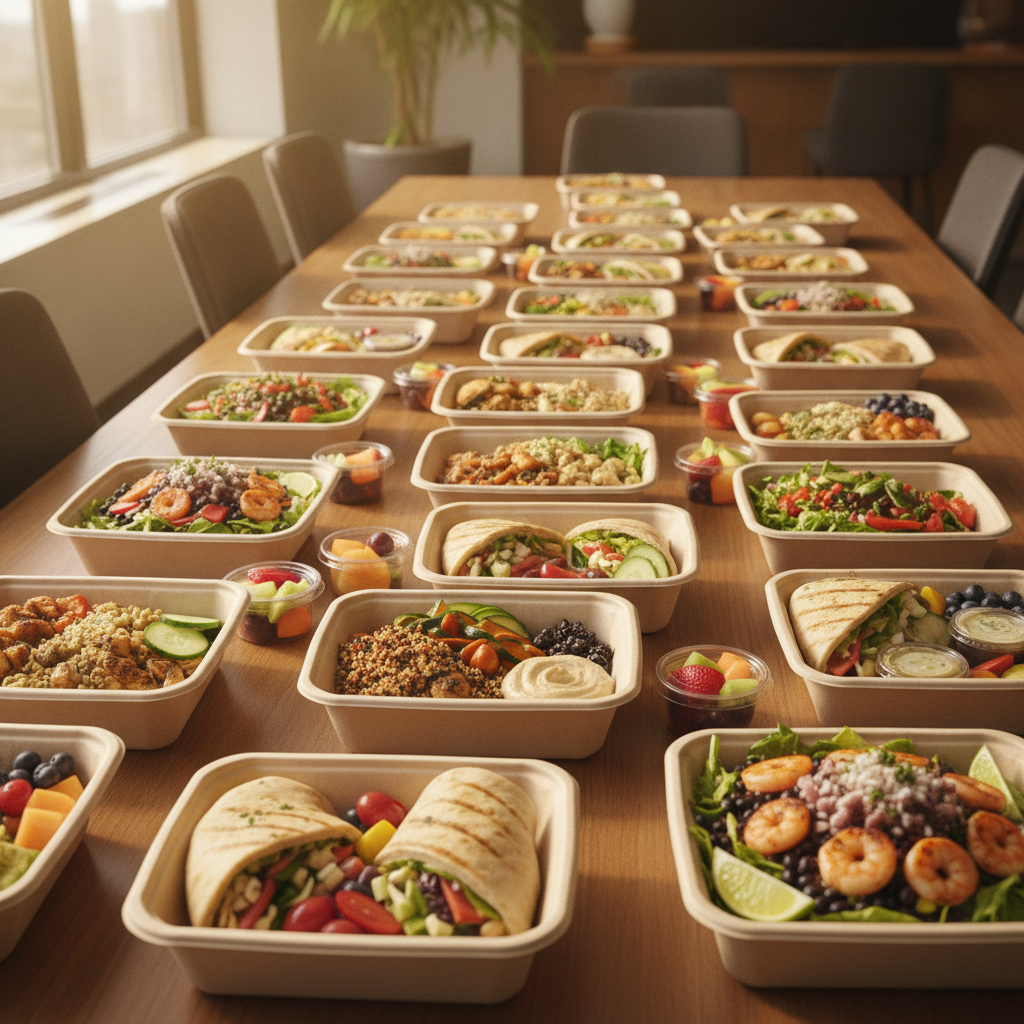
Corporate box lunches are individually packaged meals for meetings and events that simplify distribution, support food safety, and keep agendas on time. For Woodbridge offices, they make ordering and labeled dietary accommodations easy for HR, EAs, and office managers while ensuring everyone gets a fresh, balanced meal without buffet lines.
By LunchLink Editorial Team · Visit LunchLink · Last updated: 2026-06-24
Above the Fold: Why Teams Choose Boxed Lunches + What You’ll Learn
Teams choose boxed lunches to serve many people quickly, cleanly, and safely. Boxes travel well, label clearly for dietary needs, and eliminate setup time. For busy offices, they reduce friction: fewer shared utensils, easy headcount control, and predictable portions that keep meetings and workshops running on schedule.
You’re organizing a working session, a client pitch, or a town hall. You need food that’s reliable, inclusive, and easy to hand out in minutes. This complete guide shows how corporate box lunches work in real offices and how LunchLink supports seamless planning from order to clean-up.
• What corporate box lunches are and when to choose them
• How to order, label, and distribute boxes for 10–500+ guests
• Menu ideas across Mediterranean, Greek, and Mexican flavors
• Allergen-safe, halal, vegan, and gluten-free considerations
• Setup, handoff, and post-event best practices
• Tools, checklists, and a planning timeline you can use today
At a Glance: Quick Summary
Corporate box lunches are the fastest way to feed a mixed-diet office without chaos. Expect sealed meals, clear labels, and streamlined handoff. LunchLink coordinates chef-curated menus, inclusive options, and on-time delivery so Woodbridge teams eat well and return to the agenda energized.
In plain terms, box lunches replace the buffet with sealed, labeled, and portioned meals. They speed up distribution, help you respect dietary needs, and reduce cleanup. For recurring programs or one-off meetings, a well-planned boxed format protects productivity and your brand experience.
What Are Corporate Box Lunches?
Corporate box lunches are individually packaged, chef-prepared meals designed for fast, hygienic distribution at meetings and events. They arrive sealed, labeled for dietary needs, and portioned, helping organizers serve groups efficiently while keeping the focus on the agenda.
Think of corporate box lunches as portable, portion-controlled meals built for busy office schedules. Instead of building plates at a buffet, guests pick up a sealed box that matches their dietary profile—vegan, halal, gluten-free, nut-free, and more. This format keeps lines short and meetings on track.
Core elements
• Individually packaged: Sealed boxes or clamshells maintain freshness and reduce cross-contact risk.
• Clear labeling: Meal names and dietary notes help guests self-select confidently.
• Balanced builds: Proteins, grains, vegetables, and add-ons designed to satisfy without a post-lunch slump.
• Distribution-ready: Boxes stack neatly, travel well, and hand out in seconds.
In our experience coordinating 850+ office events across Toronto and the GTA, boxed formats work especially well for all-hands, workshops, and client sessions where timing and cleanliness matter. When you need zero-fuss handoff and guaranteed variety, boxes shine.
Why Corporate Box Lunches Matter for Workplace Culture and Operations
Boxed lunches protect meeting time, include every eater, and reinforce your brand’s care for people. With sealed, labeled meals, you serve faster, reduce allergens risks, and keep energy high—key drivers of employee experience and client perception.
Food impacts how people feel at work. When you offer inclusive, well-labeled meals, you remove friction for employees with allergies or religious requirements and show that details matter. That’s one reason LunchLink prioritizes fully labeled options and never-frozen meats sourced from vetted partners.
Operational wins you can bank on
• Time control: Boxes hand out quickly so meetings resume on time.
• Inclusive by design: Vegan, halal, gluten-free, nut-free, and dairy-free options prevent awkward workarounds.
• Cleaner rooms: Minimal servingware and fewer touchpoints simplify cleanup.
• Predictability: Portioning reduces waste and last-minute scrambles.
We’ve seen offices move from chaotic buffets to calm, labeled boxes and immediately save 10–15 minutes per meeting segment just in distribution time. Scaled across recurring programs, those minutes return real productivity to teams.
How Boxed Lunch Catering Works (From Quote to Hand-Off)
Successful boxed lunch programs follow a simple flow: define headcount and diets, select chef-curated menus, confirm logistics, receive on-time delivery, and distribute sealed, labeled meals. LunchLink coordinates each step so Woodbridge teams can focus on the meeting, not the meal.
Here’s a reliable blueprint you can reuse for one-off meetings or recurring programs. It maps to how we run operations for corporate offices and event teams in the GTA.
Step-by-step workflow
• Confirm the basics: Date, delivery window, building access, room location, and headcount bands (e.g., 25, 50, 100).
• Capture dietary needs: Identify halal, vegan, vegetarian, gluten-free, nut-free, and dairy-free counts early.
• Select menus: Pull from Mediterranean bowls, Greek wraps, Mexican salads, or healthy salad builds.
• Choose format: All boxed, or mix of boxed and a small platter for sides.
• Finalize labeling: Name, protein, and dietary flags on each box; add color stickers if helpful.
• Delivery and handoff: Courier arrives, boxes go to staging area by meeting room, then distribution by attendee list or dietary zone.
• Wrap-up: Collect compostables and recycling; note feedback for the next order.
Local considerations for Woodbridge
• Plan delivery buffers around peak office arrival and lunch hours to keep agendas tight.
• During winter or heavy rain, request insulated carriers to protect temperature and texture.
• For multi-floor offices, stage boxes on each floor by department to speed distribution.
To streamline reorders, many clients activate recurring schedules with rotating cuisines. That keeps menus fresh, simplifies approvals, and ensures consistent quality across dates.
Types of Corporate Box Lunches (Cuisines, Formats, and Dietary Coverage)
The best boxed lunch programs balance variety with clarity. Offer 2–4 cuisine styles, clear protein choices, and labeled dietary coverage. Mediterranean bowls, Greek wraps, and Mexican salads are versatile anchors that travel well and fit most preferences.
Variety prevents menu fatigue, but too many options slow sign-off. We recommend a focused matrix: a few cuisines, each with 2–3 proteins and a strong vegetarian or vegan build, all labeled with allergens and dietary tags.
Cuisine anchors that work in offices
• Mediterranean bowls: Grains or greens with grilled chicken or falafel, bright vegetables, olives, lemon, and tahini.
• Greek wraps: Pitas or flatbreads with chicken souvlaki, veggie fillings, and crisp salads on the side.
• Mexican salads: Greens with seasoned proteins, beans, corn, salsa, and lime—bold, customizable, and travel-friendly.
• Healthy salad builds: Power greens with grains, roasted veggies, and a clean dressing.
Dietary accommodations
• Halal-friendly proteins prepared and packed with care.
• Vegan and vegetarian options centered on legumes, grains, and bright produce.
• Gluten-free and nut-free builds with clear separation and labeling.
• Dairy-free versions with vinaigrettes and plant-based spreads.
LunchLink’s partner network is vetted for consistent standards across cuisines, and teams appreciate the clarity that fully labeled meals bring to the room. For recurring schedules, rotating two cuisines each week can maintain engagement without creating decision fatigue.
Best Practices for Planning, Labeling, and Distribution
Start with headcount bands and a diet-safe menu matrix. Use visible labels on every box, pre-stage by meeting room, and assign one coordinator to hand out meals. These steps cut handoff time, reduce waste, and keep meetings focused.
Great experiences come from great process. Here’s the practical playbook we use with HR teams, executive assistants, and People Ops leaders when box lunches are on the agenda.
Planning and ordering
• Set headcount bands: Approve at 10–20 person increments so small changes don’t derail orders.
• Collect diets early: Capture halal, vegan, gluten-free, nut-free, and dairy-free needs on the invite.
• Lock the matrix: Choose 2–4 core builds and stick to them for clarity.
Labeling and packaging
• Label every box: Meal name, protein, and dietary flags. Use color stickers for quick visual sort.
• Separate by diet: Stage boxes in groups (halal, vegan, gluten-free, etc.) to prevent mix-ups.
• Right forks, right lids: Include correct utensils and napkins inside each box to reduce touchpoints.
Distribution and room flow
• Staging tables: Place by doorways to avoid traffic jams near the presenter’s area.
• Call zones: Hand out by dietary zone or department so lines keep moving.
• Scan the room: Keep a few extra mixed-diet boxes for late arrivals.
These routines seem small, but together they create a smoother experience for guests and organizers. Over dozens of Woodbridge deliveries, we’ve seen these habits turn lunch from a pinch point into a morale boost.
Boxed Lunches vs. Buffet vs. Family-Style: What’s Best When?
Choose boxed lunches for speed, labeling, and clean handoffs; buffets for interactive variety; and family-style for collaborative team meals. Match the format to agenda time, room size, and dietary complexity to protect experience and outcomes.
Use this comparison to pick the right approach for your next meeting or event.
Format When it’s best Strengths Watch-outs Boxed lunches Tight agendas, mixed diets, limited space Fast handoff, clear labels, portion control Less interactive, fewer build-your-own options Buffet Longer lunches, large rooms, social events Wide variety, guests customize plates Lines form, more shared utensils and surfaces Family-style Team bonding, workshops, collaborative culture Shared experience, pass-and-serve ease Tr stickier for allergens; needs table space
Still unsure? Our corporate catering overview compares service formats and helps teams map food service to meeting goals.
Tools, Checklists, and Resources You Can Borrow
Standardize success with a reusable toolkit: a diet-safe menu matrix, a headcount banding sheet, a labeling template, and a delivery brief for building access. Small artifacts reduce risk and make reorders a breeze.
Templates and routines help keep operations calm when schedules are busy. Use these lightweight tools with any boxed lunch partner.
Reusable toolkit
• Diet-safe menu matrix: Two cuisines × three proteins × one vegan build with clear allergens.
• Headcount bands sheet: Pre-approved ranges so you can move faster as RSVPs shift.
• Labeling template: Meal name, protein, icons for halal/vegan/GF/nut-free/dairy-free.
• Delivery brief: Access notes, elevators, loading areas, and room locations.
• Feedback loop: After each event, capture wins and fixes in one place.
If you’re building a broader program, our office lunch catering guide outlines recurring schedules and approval workflows that keep variety high and admin time low.
Real-World Examples: How Woodbridge and GTA Teams Use Boxed Lunches
Boxed lunches thrive when timing is tight or diets are complex. Woodbridge offices use them for client presentations, training days, and all-hands meetings because labeled, sealed meals move fast and keep rooms clean and focused.
Here are a few patterns we see every week across the GTA. They highlight the small choices that create big wins for organizers.
Client pitch, 35 attendees
• Format: Mediterranean bowls with halal chicken and vegan falafel; all boxes clearly labeled.
• Flow: Boxes staged by the door; team distributed in under five minutes.
• Outcome: No dietary issues; meeting returned to content on time with high energy.
Department training, 120 attendees
• Format: Greek wraps, Mexican salads, and a small platter of fruit cups.
• Flow: Labeled by diet and department; extra boxes reserved for late arrivals.
• Outcome: Smooth distribution across two floors; minimal cleanup and zero mix-ups.
Recurring Friday lunch, 60–90 attendees
• Format: Two rotating cuisines weekly with vegan and gluten-free guarantees.
• Flow: Standing order with headcount bands; feedback loop updates the matrix monthly.
• Outcome: Consistent satisfaction; organizers save admin time while teams enjoy variety.
Across 25,000+ employees served, we’ve learned that clear labels, smart staging, and a tight menu matrix do most of the work. That’s the heartbeat of a stress-free boxed lunch.
Menu Ideas, Pairings, and Smart Add-Ons
Anchor on portable, flavorful builds and add sides that travel well. Pair Mediterranean bowls with citrus fruit, Greek wraps with crisp salads, and Mexican salads with chips-and-salsa cups for crunch. Keep beverages simple and plentiful.
Small additions elevate experience without slowing handoff. Here are combinations teams love.
Winning combinations
• Mediterranean bowl + citrus fruit cup: Bright flavors and balanced macros.
• Greek wrap + crunchy salad: Fresh textures with a clean vinaigrette.
• Mexican salad + chips-and-salsa cup: Satisfying crunch that still travels well.
• Healthy salad + protein add-on: Keeps plant-forward eaters and flexitarians happy.
To avoid delays, pre-portion sauces and dressings inside boxes. Where possible, seal utensils and napkins within each package to keep the room tidy and traffic minimal.
Setup, Logistics, and Food Safety Basics
Plan staging near the meeting room, maintain safe holding temperatures, and reduce shared-touch items. Sealed, labeled boxes reduce cross-contact risk and speed service. Assign one coordinator to direct flow and answer quick questions.
Food safety and flow go hand in hand. While LunchLink manages temperature control and holding during delivery, you can strengthen the last mile inside the office with a few simple steps.
Office-side basics
• Choose staging areas: Near entrances, away from projectors and cables.
• Temperature and timing: Coordinate delivery close to start time for peak freshness.
• Hygiene helpers: Keep hand sanitizer near pickup and small trash bins for quick clean-up.
For multi-room events, assign a point person per room. That single move tends to eliminate crowding and cut handoff time dramatically.
Ordering Corporate Box Lunches with LunchLink
LunchLink curates chef-made, diet-inclusive box lunches, labels every meal, and delivers on time across the GTA. Whether it’s a one-off meeting or a recurring program, you get a single point of contact and corporate-friendly invoicing.
We purpose-built operations for offices: labeled meals, flexible group sizes, vetted partners, and reliable delivery windows. Explore our corporate lunch catering options, or dive into our healthy office lunch ideas to map menus to your culture and wellness goals.
Soft CTA: Planning a meeting in Woodbridge? Share headcount bands and dietary needs, and we’ll design a labeled box lunch plan that runs like clockwork.
Prefer a deeper dive first? Read our ultimate corporate catering guide for a broader view on formats and planning.
Frequently Asked Questions
Most box lunch questions center on diets, distribution speed, and what travels well. These concise answers cover what organizers ask before they confirm a meeting or recurring schedule.
What should I include in a corporate box lunch?
Include a balanced main (bowl, wrap, or salad), sealed utensils and napkin, and a side that travels well like fruit or chips. Label the meal name and dietary flags so guests can self-select quickly and safely.
How do I handle multiple dietary restrictions?
Collect needs on the invite, lock a simple menu matrix (e.g., halal chicken, vegan, gluten-free), and stage boxes by dietary zone. Clear labels on every box and a few extra mixed-diet meals prevent most issues.
Are boxed lunches better than a buffet for meetings?
If timing and cleanliness are priorities, yes. Boxed lunches eliminate long lines, reduce shared-touch items, and make it easy to get everyone fed and back on agenda. Buffets suit longer, more social events with extra space.
How far in advance should I order?
Confirm headcount bands and dietary needs as early as possible, then finalize menus a few days out. For recurring programs, set a standing schedule and rotate cuisines to keep variety high.
What travels best in a box lunch?
Bowls, wraps, and hearty salads travel best. Choose sturdy greens, grains, and proteins, with dressings or salsas portioned inside each box. Avoid items that rely on delicate textures or assembly at the table.
Conclusion and Next Steps
Corporate box lunches keep meetings moving, include every eater, and send a clear signal that you care about experience and safety. With LunchLink, you get chef-curated menus, reliable delivery, and fully labeled meals that make distribution a breeze.
When expectations are high and time is short, boxed lunches are the calm, practical choice. If you want the flexibility of buffets on other days, keep both in your toolkit and match format to agenda. That’s how strong food programs run week after week.
Key takeaways
• Use a tight menu matrix with labeled dietary coverage.
• Stage boxes by room and dietary zone to reduce lines.
• Rotate cuisines to maintain interest across recurring dates.
• Capture feedback and adjust monthly for continuous wins.
Ready to plan your next meeting? Explore office lunch catering options or learn how we align food service to agendas in our planning guide. Prefer a quick start? Share headcount bands and dietary needs, and we’ll recommend a boxed plan that fits.