Catering
Corporate Breakfast Orders: Get Fresh Food on Time 2026
Plan corporate breakfast catering in Toronto with inclusive menus, clear labels, and on-time delivery. Practical steps, checklists, and GTA-specific tips.
June 15, 2026 · LunchLink
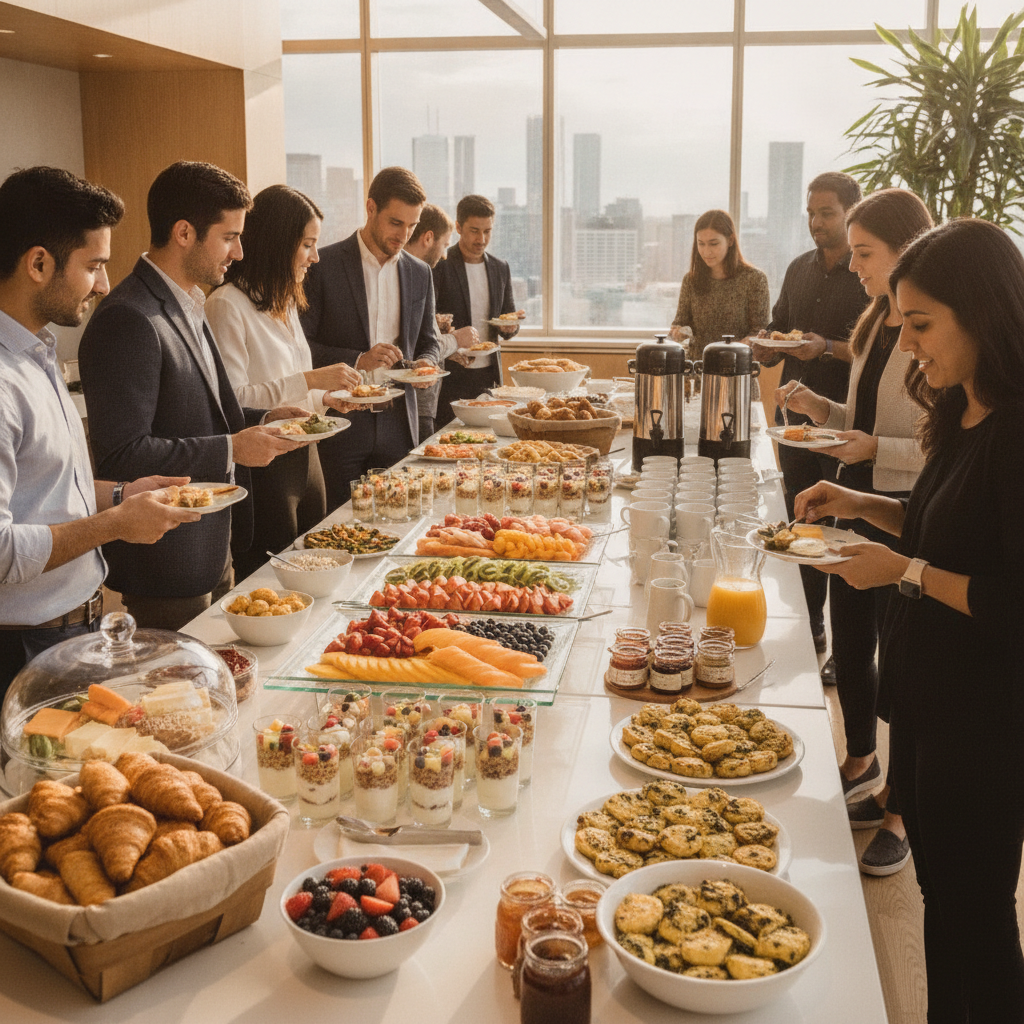
Corporate breakfast catering is the end-to-end planning and delivery of morning meals for teams and clients, optimized for on-time service, dietary inclusion, and professional presentation. From our Woodbridge base at Unit #23 120 Woodstream Blvd, LunchLink coordinates fresh, labeled breakfasts across Toronto and the GTA so your meeting starts sharp and everyone eats confidently.
By LunchLink • Last updated: 2026-06-15
Above-Fold: Hook, Promise, and Table of Contents
Plan corporate breakfasts that arrive hot, labeled, and on time. This guide shows you exactly how Toronto offices use breakfast catering to boost attendance, simplify logistics, and respect every dietary need—complete with menus, timelines, checklists, and real LunchLink workflows you can copy and use tomorrow morning.
Morning meetings are won or lost on logistics. We make the first 30 minutes of your day predictable—with menus that fuel focus, labels that remove guesswork, and delivery timing that hits your agenda.
• What corporate breakfast catering includes—and what it doesn’t
• Why breakfast drives attendance, energy, and culture
• How ordering works step by step, from headcount to clean-up
• Menu formats (buffet vs. individually packaged) and when to use each
• Allergen safety, dietary labeling, and inclusive planning
• Woodbridge-specific tips and seasonal timing
• Templates, timelines, and a ready-to-use checklist
Quick Summary
Book breakfast 3–5 business days ahead when possible, lock headcount 24 hours out, and choose a menu that mirrors your meeting format. Use clearly labeled, diet-friendly items and schedule delivery 20–30 minutes before start. LunchLink manages 10–500+ guests, with vetted partners and a 98% satisfaction record.
We’ve catered 850+ events for Toronto workplaces and served 25,000+ employees. Those numbers matter because breakfast runs on timing and details—exactly what our corporate process is built to manage.
• Typical breakfast delivery window: 7:00–10:00 a.m., scheduled to your agenda
• Supported headcount range: 10–500+ with labeled dietary coverage
• Common formats: continental, hot breakfast, healthy bowls, and boxed options
• Two service styles: individually packaged meals or buffet-style spreads
What Is Corporate Breakfast Catering?
Corporate breakfast catering is a business-focused meal service that delivers hot or continental breakfasts to offices and events. It prioritizes punctuality, dietary labeling, and professional presentation so meetings start smoothly and every guest feels included and safe.
In practice, it’s not just food—it’s a workflow. You’ll align headcount, agenda timing, and dietary needs; choose a format; and schedule a delivery that lands before the first slide or stand-up. LunchLink handles this through a single point of contact and corporate invoicing.
• Core components: menu curation, dietary labeling, temperature-safe transport, on-time arrival, tidy setups, and clear post-event wrap-up instructions.
• Who uses it: office managers, EAs, HR/People Ops, operations, and event planners running meetings, trainings, and client briefings.
• Scale: from 10-person stand-ups to 300+ town halls; we regularly coordinate 10–500+ guests across the GTA.
• Coverage: halal, vegan, vegetarian, gluten-free, dairy-free, nut-free, and pescatarian—every meal safely labeled.
Because breakfast precedes the workday, precision matters. Our vetted Toronto partner network and never-frozen proteins keep quality consistent, while labeled packaging ensures quick, confident self-service.
Why Corporate Breakfast Catering Matters for Teams
Serving breakfast increases on-time attendance, reduces mid-meeting exits, and sets a positive tone. It signals respect for people’s mornings, supports wellness goals, and creates shared moments that strengthen culture—especially during early trainings, quarterly reviews, and client briefings.
When breakfast is planned well, your first hour becomes your most productive. Fewer late arrivals, fewer food-related interruptions, and better energy for focused work.
• Attendance and punctuality: Food draws teams in before start time, reducing the “coffee line delay.”
• Energy and focus: Balanced offerings—protein, complex carbs, and fruit—stabilize attention through the first 90 minutes.
• Inclusion: Labeled halal, vegan, and allergen-safe options help every attendee eat with confidence.
• Brand moments: Well-presented spreads elevate executive briefings and client meetings.
We’ve seen this across 850+ catered events: simple changes—like placing fruit and yogurts near the coffee station—reduce crowding and keep sessions moving. Consistency builds trust, and trust builds attendance.
How Corporate Breakfast Catering Works (Step-by-Step)
Great breakfasts follow a repeatable playbook: confirm goals and headcount, pick a menu format, capture dietary needs, schedule delivery 20–30 minutes before start, and set a tidy flow. LunchLink manages timing, labeling, and logistics while you run the agenda.
Planning workflow
• Confirm the meeting goal and flow. Briefing, training, or client pitch? This informs menu type and seating.
• Set headcount bands. We manage 10–500+ attendees; lock a final number 24 hours before service.
• Collect dietary needs. Halal, vegan, vegetarian, gluten-free, nut-free, dairy-free, and pescatarian preferences.
• Choose service style. Individually packaged for speed and compliance; buffet-style for communal energy and choice.
• Schedule delivery. Land 20–30 minutes pre-start for setup and temperature checks.
• Finalize presentation. Table layout, signage, trash/recycling plans, and leftovers policy.
Timing and logistics
• Delivery window: 7:00–10:00 a.m. across Toronto and the GTA.
• Arrival buffer: 20–30 minutes before attendees arrive.
• Drop-off vs. attended: Many breakfasts need no on-site staff; others benefit from quick setup support.
• Documentation: Clear allergen labels and menu cards; single invoice for corporate accounting.
Local considerations for Woodbridge
• Plan earlier drop-offs for winter mornings when traffic into Toronto corridors can pad transit times. We schedule buffers accordingly.
• Avoid late-season long weekends by locking headcounts midweek. Attendance spreads out across hybrid schedules.
• For neighborhood stand-ups, individually packaged breakfasts speed distribution and minimize conference room cleanup.
Service Formats and When to Use Them
Choose individually packaged meals for fast, compliant distribution and clear labeling. Choose buffet-style for variety and collaboration. Continental works for short briefings; hot breakfasts suit half-day trainings. Match the format to your agenda and room flow.
Both formats can be fully inclusive. Every tray and box can carry a clear diet/allergen label so people don’t guess. Here’s a quick comparison to decide fast.
Format Best for Lead time Setup Notes Individually packaged Stand-ups, trainings, multi-room offices 1–5 business days Minimal; fast distribution Clear dietary labels; portable; low contact Buffet-style Executive briefings, client meetings 2–7 business days Light setup; signage helps High perceived value; communal energy Continental Short meetings under 60 minutes 1–3 business days Simple; mostly cold Pastries, fruit, yogurt; light and quick Hot breakfast Half-day workshops/trainings 2–7 business days Chafers or hot boxes Egg bakes, potatoes, breakfast proteins
• We support both individually packaged and buffet-style across 10–500+ attendees.
• Healthy builds—like yogurt parfaits, fruit, and grain bowls—pair well with either format.
Menus That Work for Mornings (With Inclusive Options)
Balanced morning menus combine protein, produce, and smart carbs. Pair fruit and yogurts with egg bakes or breakfast bowls; provide pastry for those who want it, and label halal, vegan, gluten-free, and dairy-free items clearly so selection is stress-free.
• Continental set: assorted pastries, fresh fruit, Greek yogurt, granola, and dairy-free alternatives.
• Hot breakfast: mini frittatas or baked eggs, herbed breakfast potatoes, turkey or chicken breakfast protein options.
• Healthy bowls: yogurt parfaits, chia cups, overnight oats, and seasonal fruit with nut-free toppings.
• Globally inspired: Mediterranean egg bakes, Greek sides, and fresh-pressed juices to match your culture calendar.
• Individually packaged boxes: pre-labeled meals that map to halal, vegan, and gluten-free requirements.
We’re known for chef-curated menus designed for workplaces. Never-frozen meats and locally sourced ingredients help breakfasts taste like a catered experience, not a compromise.
Dietary Labeling and Allergen Safety
Label every item and box with its diet profile and top allergens. This speeds service, prevents cross-selection, and builds trust. LunchLink meals are fully labeled across halal, vegan, vegetarian, gluten-free, dairy-free, nut-free, and pescatarian needs.
Labels are your “second host.” They answer the question before it’s asked, keep lines moving, and reduce one-off interruptions to the meeting lead.
• Collect needs early: add a one-line question to your calendar invite.
• Map coverage: hit halal, vegan, and gluten-free as a baseline; expand with dairy-free and nut-free when needed.
• Separate surfaces: place allergen-free zones and use distinct utensils for buffet service.
• Color or icon codes: simple visual cues reduce decision time for guests.
We document dietary coverage in your order confirmation and apply the same profile on labels and menu cards so everything matches visually.
Food Safety and Temperature Control
Breakfast must arrive within safe temperature ranges and stay there. Hot items travel in insulated carriers and are transferred to hot-holding; cold items ship in chilled containers. A short arrival buffer enables quick setup and a final temperature check before guests begin.
Morning operations run tight. We schedule a 20–30 minute buffer before the meeting to set hot boxes or chafers, place cold items, and walk the table so service is intuitive.
• Insulated transport: hot boxes and chilled carriers maintain temperature from kitchen to conference room.
• Fast staging: table plan and utensils ready so food isn’t waiting on layout.
• Clear signage: label allergens and diet profiles; indicate hot items first to decongest the line.
• Single contact: one LunchLink coordinator shares the driver’s ETA and on-arrival contact.
The Ordering Process with LunchLink
Ordering is simple: share your headcount and dietary needs, pick a format, set the delivery window, and approve your confirmation. LunchLink handles menu curation, labeling, and delivery—then provides one corporate invoice and post-event notes.
• Start the brief. Agenda, headcount band (e.g., 25–40), and must-cover diets.
• Menu selection. We recommend builds that fit your flow and room.
• Confirmation. You get a clear spec with labeled counts and drop window.
• Delivery and setup. Driver ETA and coordinator phone shared in advance.
• Wrap and feedback. Notes on what to repeat or tweak for next time.
Prefer to explore first? See our corporate catering overview and our corporate lunch options for format inspiration you can port to mornings.
Woodbridge and GTA Context: Timing, Travel, and Lead Times
In Woodbridge (ON L4L 7Z1), plan breakfast drops with traffic buffers for Toronto-bound corridors. Morning windows between 7:30 and 9:30 a.m. work best. Lock headcount 24 hours before service to keep labeling accurate and distribution fast.
Local traffic patterns and weather matter in the GTA. We’ll advise realistic windows during your confirmation so you can relax about timing and focus on content.
• Winter: build extra drive time; opt for individually packaged meals to reduce post-meeting cleanup.
• Summer Fridays: many teams shift earlier; schedule for 7:30–8:00 a.m. to keep the rest of the day free.
• Hybrid peaks: Tuesdays–Thursdays tend to run heaviest; secure your window early.
Best Practices for Flawless Breakfast Events
Clarify goals, plan the flow, label for inclusion, and schedule a 20–30 minute buffer. Keep coffee close, utensils closer, and trash/recycling obvious. Assign one point of contact so decisions are quick and the meeting starts on time.
• Agenda-first planning: food supports content—place service near the door for easy entrance and exit.
• Line management: coffee at the end of the table reduces bottlenecks; fruit and yogurt near it prevent crowding.
• Allergen lanes: create a clearly marked safe zone with dedicated utensils.
• Room reset: keep wipes and trash bags on hand; return to working mode in under five minutes.
Our team brings presentation standards designed for boardrooms and huddle spaces alike. Small details—matching tongs, clean risers, tidy cords—change how the first 10 minutes feel.
Tools and Resources You Can Use
Use simple tools: a headcount tracker, a dietary collection prompt, a room flow sketch, and a delivery ETA contact. LunchLink adds one invoice, labeled menus, and—soon—an app with individual ordering, live tracking, filters, and dashboards.
• Headcount tracker: maintain a 24-hour lock and a “+/-” buffer for walk-ins.
• Dietary prompt: add “Any dietary needs? (halal, vegan, GF, DF, nut-free)” to your invite.
• Room flow sketch: draw a fast table map; place plates first, coffee last.
• Vendor contact sheet: your LunchLink coordinator and driver ETA.
Explore breakfast menu ideas on our catering best practices blog and see how we translate them into labeled, ready-to-serve morning formats.
Case Studies and Real-World Examples
Across 850+ events and 25,000+ meals served, we’ve learned that small choices—clear labels, smart layout, realistic windows—make the biggest difference. Here are quick snapshots you can copy for your next morning meeting.
• Hybrid stand-up (45 minutes, 28 attendees): Individually packaged boxes (vegan, halal, gluten-free labeled) and coffee after plates. Result: everyone seated within 6 minutes and cameras on by minute 8.
• Client briefing (12 guests): Compact buffet with mini frittatas, fruit, and yogurts; utensils mirrored on both ends. Result: quiet flow and an “on-time start” for a high-stakes deck.
• Town hall (160 employees): Staggered delivery to two rooms; consistent signage pack. Result: fast service without line pileups; many positive Slack mentions.
• Training day (60 participants): Hot breakfast first, pastries second; coffee last. Result: smooth first session and no mid-block exits for refills.
Every scenario above relies on the same core moves: inclusive menus, on-time arrival, and a room layout that anticipates human behavior.
Checklist and 48-Hour Timeline
Use this 48-hour playbook: collect headcount and diets, confirm the menu and window, stage the room, and keep a 20–30 minute arrival buffer. After service, reset the space and record notes for next time.
48 hours before
• Lock headcount bands and known dietary requirements.
• Choose format (boxed vs. buffet) and continental vs. hot mix.
• Confirm drop window aligned to agenda start.
24 hours before
• Finalize labeled counts and attendee list changes.
• Share building access details and elevator notes.
• Print/prepare any internal signage you want next to our labels.
Morning of
• Stage tables and clear pathways; place trash and recycling.
• Receive delivery 20–30 minutes ahead; quick temperature and label check.
• Start meeting on time; reset room within five minutes after.
FAQ: Corporate Breakfast Catering
You’ll find fast, direct answers to the most common breakfast catering questions below. Each response focuses on timing, inclusion, and practical steps so you can plan with confidence and start your meeting on time.
How far in advance should I order breakfast catering?
Place orders 3–5 business days in advance when possible, and lock final headcount 24 hours before service. For high-demand Tuesdays–Thursdays, secure your preferred delivery window earlier. We also accommodate last-minute needs whenever operationally feasible.
What breakfast format is best for short meetings?
For sessions under 60 minutes, a continental setup or individually packaged boxes work best. They distribute quickly, require minimal setup, and keep people seated on time. Add a few hot items for workshops or trainings that run longer.
How do you handle allergens and dietary restrictions?
We label every meal and tray with diet and allergen information and plan safe zones for gluten-free, dairy-free, and nut-free items. Halal and vegan coverage is standard. Share needs in your brief, and we’ll map counts to labels in your confirmation.
Do I need on-site staff for breakfast?
Most breakfasts are smooth as drop-off with a quick setup. For large headcounts or executive briefings, a short attended setup can help with layout, labeling placement, and line management. We’ll recommend the right approach during planning.
Related reading for deeper planning
Build your plan with practical guides on formats, labeling, and office-friendly menus. Use these resources to refine your meeting flow, choose the right service style, and scale breakfasts across recurring programs without adding admin burden.
See our best practices for corporate catering for layout, signage, and service flow ideas you can reuse at breakfast. When you’re ready to explore menu styles, browse our halal-friendly catering overview and corporate catering page to align formats with your goals.
For broader office planning, our corporate lunch options showcase how labeled, inclusive service scales to midday events—the same playbook works in the morning with lighter builds.
Plan a breakfast in 10 minutes. Share your headcount band and meeting window, and we’ll draft a labeled menu with timing and room-flow notes. One email, one invoice, on-time delivery.
Key Takeaways
Successful corporate breakfasts run on timing, labeling, and layout. Lock headcount 24 hours ahead, deliver 20–30 minutes early, label everything, and match format to your agenda. Repeat the playbook to scale from 10-person stand-ups to 300+ town halls.
• Plan around the meeting, not the menu—food should speed the start, not slow it.
• Labels are non-negotiable for inclusion and efficiency.
• Individually packaged boxes are fastest; buffets elevate client-facing sessions.
• One coordinator and one invoice keep it corporate-simple.
Ready to explore menus and lock a window? Review our catering best practices and then share your meeting brief—we’ll take it from there.