Catering
Corporate Catering: Make Office Lunches Easy in 2026
A corporate catering service plans, labels, and delivers inclusive office meals across Toronto and the GTA. This guide shows formats, logistics, and best practices.
May 27, 2026 · Yash Patel
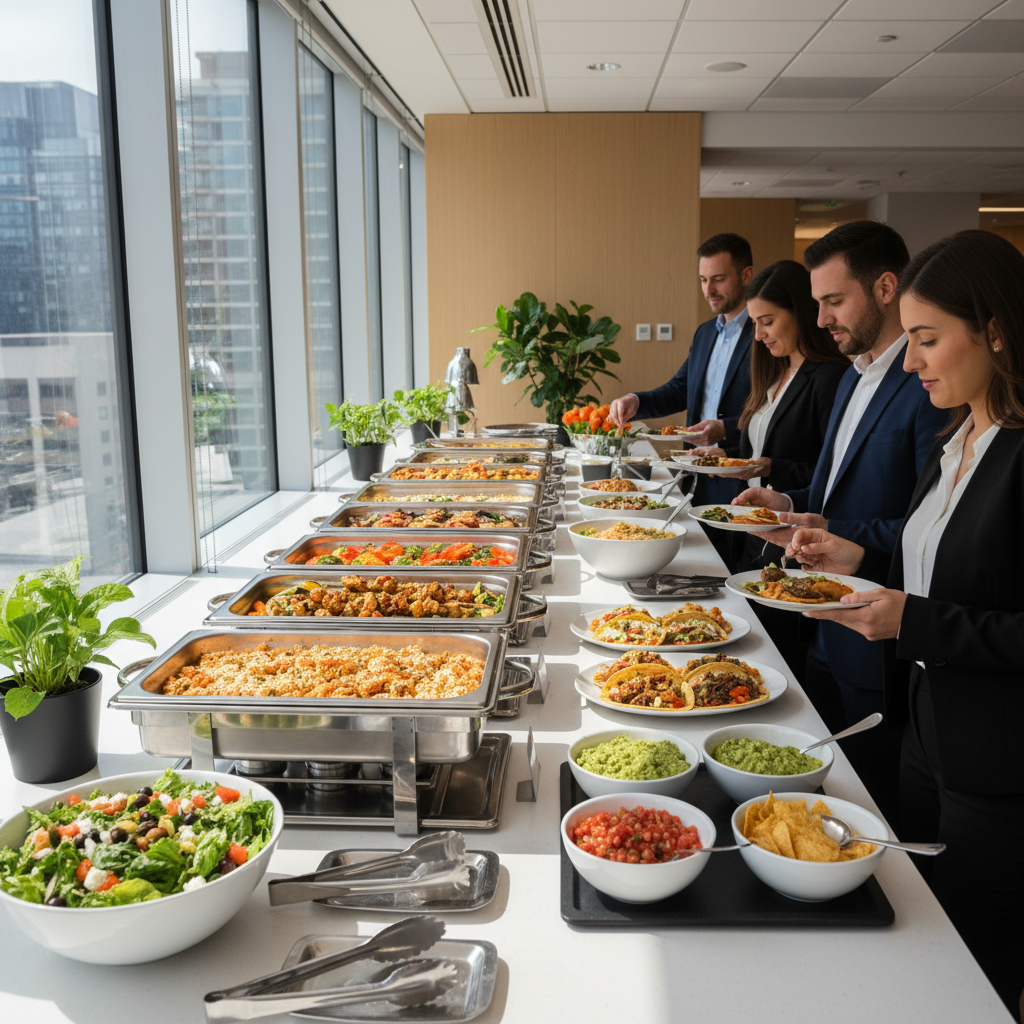
A corporate catering service is the end-to-end planning, preparation, labeling, and delivery of meals designed for workplaces. From LunchLink’s Woodbridge base at Unit #23 120 Woodstream Blvd (ON L4L 7Z1), our corporate catering service coordinates chef-curated menus and reliable logistics across Toronto and the GTA so your team focuses on work, not food.
By Yash Patel — Last updated: May 27, 2026
Quick Summary
Corporate catering streamlines office meals by handling menu planning, inclusive dietary accommodations, and on-time delivery. The best partners combine chef-crafted menus, fully labeled options, and corporate-friendly operations like invoicing, headcount flexibility, and tracking, so your meeting starts on time and every guest eats confidently.
Before we dive deep, here is what this complete guide covers and who it helps.
• What you will learn: definitions, benefits, formats, logistics, and best practices.
• Who this helps: office managers, executive assistants, HR/People Ops, operations, and event planners.
• When to use it: recurring lunches, trainings, client meetings, conferences, town halls, and celebrations.
• How LunchLink fits: chef-curated menus, inclusive labeling, vetted Toronto partners, and dependable delivery.
For a Toronto-first view of options and operations, see our overview of corporate catering in Toronto and how it differs from one-off restaurant delivery.
What Is a Corporate Catering Service?
A corporate catering service plans, prepares, labels, and delivers meals tailored to offices and business events. It covers menu design, dietary accommodations, transport, and simple setup guidance, aiming for safe, consistent dining that supports productivity and culture without overloading internal teams.
Think of it as an outsourced culinary department built for meetings. Instead of juggling multiple restaurants, menus, and couriers, you work with one expert partner orchestrating meals for groups of 10–500+. That includes capturing dietary needs in advance, packaging appropriately, and labeling every meal so people can choose quickly and safely.
Labeling is not just a nice-to-have; it is a safety layer. In office settings, the same principle prevents confusion, keeps lines moving, and reduces interruption during tight agendas.
LunchLink focuses on corporate environments: individually packaged meals for trainings and client rooms, buffet-style catering for all-hands, and recurring office meal programs that rotate cuisines. Those formats are designed to travel well, plate cleanly, and reset rooms with minimal fuss.
To understand which service style fits your space, explore our practical office catering guide with tips by room type and headcount.
Why Corporate Catering Matters for Teams
Well-run office meals improve attendance, focus, and morale. When food shows up on time, clearly labeled, and aligned to dietary needs, meetings start on schedule and engagement increases—especially for trainings, client sessions, and all-hands events that demand energy and attention.
Food fuels outcomes. When teams do not scramble for lunch, people return engaged and on time. Programs that include halal, vegan, gluten-free, nut-free, dairy-free, and pescatarian options increase participation because more employees feel seen and safe. Clear labeling eliminates guesswork at the table and reduces one-off side requests that delay service.
Worksite wellness has measurable impact. Nutrition is one lever among many, but in offices it is a visible one that can be scheduled precisely around your agenda.
• Engagement and attendance: Catering for mandatory trainings consistently improves on-time arrival and session completion in our programs.
• Time savings: One consolidated order and invoice replace dozens of ad-hoc meals—huge for executive assistants and office managers.
• Inclusivity: Labeled meals help employees with allergies or preferences dine confidently, minimizing risk and rework.
• Culture lift: Rotating, chef-crafted menus build anticipation and break the monotony of desk dining.
LunchLink has delivered 850+ catered events for organizations in healthcare, education, finance, and professional services, feeding 25,000+ employees with a reported 98% satisfaction rate. We see smoother agendas, fewer mid-session exits, and better turnout on hybrid “anchor” days when the meal plan is consistent and inclusive. If you are browsing options, our office lunch catering overview maps formats to common meeting types.
How a Corporate Catering Service Works (Step-by-Step)
Great partners handle discovery, menu curation, labeling, delivery, and follow-up. You submit headcount and dietary needs, approve a menu, and receive an on-time drop-off with simple setup guidance. Post-event feedback tunes future orders and recurring schedules.
Here is a field-tested process we run for Toronto-area offices to keep meals on track across tight agendas and shifting headcounts.
• Discovery: Share date, headcount (10–500+), location, timing, and dietary mix. Flag room constraints (no open flames, limited tables, etc.).
• Menu curation: Choose individually packaged meals or buffet-style spreads; rotate Mediterranean, Mexican, Greek, and hearty salads for variety and nutrition.
• Confirmation: Finalize quantities with 24-hour headcount flexibility to handle late sign-ups or cancellations.
• Production: Chef teams prepare fresh, never-frozen proteins and vibrant sides designed for travel and presentation.
• Labeling: Each item is clearly labeled to support safe, confident dining and faster lines.
• Delivery: Drop-off arrives within the requested window; minimal setup required with a simple room flow.
• Documentation: One invoice and a dietary summary streamline admin and post-event reporting.
• Feedback: Collect quick ratings to fine-tune portions, favorites, and rotations.
Operational tweaks deliver outsized returns. For example, two identical buffet lines for 100+ guests can cut wait times dramatically. Staggering pick-up by department protects schedules. We share sample room diagrams and timelines in our corporate lunch catering guide.
Types of Corporate Catering (Formats & Menus)
Popular formats include individually packaged meals, buffet-style spreads, and recurring meal programs. Menus commonly span Mediterranean, Mexican, Greek, and fresh salads—balanced for flavor, nutrition, and broad appeal. Choose formats based on headcount, venue, and how fast you need the room to reset.
There is no single right answer. The ideal format depends on your space, agenda, and audience. Below are the core formats we recommend for Toronto workplaces, paired with menu styles that travel well and please broad groups.
Formats
• Individually packaged meals: Best for trainings, exams, and boardrooms; low-mess and highly controllable for allergies. Keeps rooms tidy when you need a quick reset.
• Buffet-style catering: Ideal for all-hands or celebrations; efficient for 50–500+ when space allows; encourages variety and mingling.
• Recurring office meal programs: Set-and-forget cadence with rotating cuisines; one invoice simplifies reconciliation and planning.
Menus
• Mediterranean: Grilled proteins, roasted vegetables, hummus, grains, and bright salads fit most preferences and travel cleanly.
• Mexican: Build-your-own bowls or tacos with salsas, proteins, and fresh toppings keep lines moving while offering choice.
• Greek: Skewers, salads, roasted potatoes, and office-friendly classics that plate neatly.
• Healthy salad options: Hearty greens, grains, proteins, and dressings on the side to protect texture.
Format comparison at a glance
FormatBest forProsConsiderations Individually packagedTrainings, exams, client roomsAllergy control, tidy, quick setupMore packaging, less communal feel Buffet-styleAll-hands, celebrationsFast service for 50–500+, varietyNeeds space and light supervision Recurring programWeekly team lunchesPredictable cadence, simple adminRotate cuisines to avoid fatigue Need help matching format to room constraints and headcount? Our deep-dive on choosing formats by headcount explains how to keep service fast and predictable.
Best Practices for Corporate Catering
Lock logistics early, label for safety, and rotate menus. The winning playbook is simple: capture dietary needs, choose the right format, create a service flow, buffer delivery, and close the loop with feedback. Recurring programs benefit from semester-style rotations and clear internal comms.
After hundreds of programs in the GTA, we have seen small process improvements deliver major wins. Here is a practical checklist your team can reuse.
• Capture dietary needs up front: Ask about halal, vegan, gluten-free, nut-free, dairy-free, and pescatarian preferences.
• Choose the right format: Packaged meals for tight rooms; buffet for open spaces and larger groups.
• Plan the flow: Stagger pickup or set two buffet lines for 100+ guests to cut wait times.
• Buffer delivery: Schedule arrival before the session starts; confirm access (elevators, loading, security).
• Label everything: Keep allergens and dietary types unmistakable; it is faster and safer.
• Rotate cuisines: Alternate Mediterranean, Mexican, Greek, and salad builds to sustain interest.
• Feedback loop: Quick post-meal surveys tune portions and favorites over time.
Compliance matters behind the scenes. Your catering partner handles the regulatory details; your team benefits from consistent handling practices that protect attendees and schedules.
Ready to plan with precision? Our operations-first planning playbook includes sample run-of-show timelines and setup diagrams tailored to common meeting types.
Need a hand planning your next office meal? Book a quick consult and we will map menu, format, and delivery timing around your agenda. Whether it is 10 or 500+, the plan makes the meal.
Tools and Resources for Office Meal Programs
Use simple templates for headcounts, allergen tracking, and room setup. Pair them with a partner that offers individual ordering, delivery visibility, and admin dashboards to cut busywork and surface team preferences over time.
A lightweight toolkit scales from one-off meetings to weekly programs. These elements keep operations predictable and transparent.
• Allergen matrix: Track each attendee’s restrictions and match to meal labels to speed selection.
• Headcount tracker: Keep sign-ups open until 24 hours before service; plan a small buffer for walk-ins.
• Delivery plan: Note loading, elevator use, and meeting-room drop points to avoid delays.
• Feedback form: Capture ratings for flavor, portions, packaging, and punctuality.
• Upcoming tech: LunchLink’s app will enable individual ordering, live delivery tracking, and admin dashboards—ideal for recurring programs that need visibility.
If you are exploring office-wide options, our boardroom-to-BBQ guide covers cadence planning, menu rotations, and communications that keep attendance strong.
Corporate Catering Service in Woodbridge and the GTA
Based in Woodbridge (ON L4L 7Z1), LunchLink supports offices across Toronto and the GTA with reliable delivery and inclusive menus. Locally coordinated routes and vetted partners keep meals on time, while labeled options ensure everyone—from halal to gluten-free—eats confidently.
From our Woodbridge hub, we route meals across Toronto on realistic timelines that match meeting starts. That local knowledge matters on peak commuter mornings and during downtown events with tight building access. Leveraging vetted partners protects consistency across cuisines and formats—key when you are serving 100+ people on a firm schedule.
Local considerations for Woodbridge
• Build in travel buffers for peak commuter times between Woodbridge and downtown Toronto to protect start times.
• Plan seasonal menus for hot summers and cold winters so textures stay enjoyable after transit.
• For hybrid teams, schedule recurring lunches on anchor days to maximize turnout and reduce food waste.
Coordinating a series across different neighborhoods? Our primer on corporate lunch catering explains how to switch formats without losing consistency.
Case Studies and Real-World Examples
Consistent, labeled meals lift participation and reduce meeting delays. Organizations across education, healthcare, finance, and tech see smoother agendas when food is planned with dietary coverage, room flow, and fast cleanup in mind.
Below are representative scenarios we have delivered across 850+ catered events around the GTA. Each example highlights the operational constraint and the service decision that solved it.
• Healthcare workshop (120 guests): Individually packaged Mediterranean bowls with halal and gluten-free coverage minimized allergen risk and trash during continuing education sessions. Service between modules kept breaks on schedule.
• University staff summit (300 guests): Buffet-style Mexican with two identical lines and staggered dismissal served everyone in under 25 minutes. Clear signage helped attendees self-navigate and reduced crowding.
• Bank town hall (450 guests): A recurring program with rotating menus and single-invoice operations simplified quarterly events. Pre-labeled stations reduced congestion at popular proteins.
• Professional services training (40 attendees): Individually packaged salads and grain bowls protected laptop-heavy rooms and kept cleanup to one recycling bag.
• Tech client roadshow (multi-site, 5 stops): A standardized buffet plan with shared pack lists and diagrammed setups delivered consistent experiences in very different rooms and buildings.
For more examples tied to meeting formats and room types, scan our comprehensive corporate catering guide built around Toronto offices.
Risk Management and Compliance Essentials
Food safety, allergen control, and building access are the main operational risks for office meals. Mitigate them with labeled packaging, separated components, temperature control, and pre-cleared delivery routes and docks. A short risk checklist keeps events predictable and protects attendees.
• Allergen controls: Separate prep and serving utensils; label every item; list common allergens plainly.
• Temperature hold: Use insulated carriers and chafing gear as needed; confirm access to power if warmers are required.
• Access planning: Share building protocols (security, loading, elevators) so couriers reach rooms on time.
• Waste setup: Stage recycling and compost stations near exits to shorten room resets between sessions.
• Documentation: Keep a one-page service plan with contacts, timing, and room diagrams at the front desk.
Measurement and Continuous Improvement
Simple metrics—attendance, on-time start, leftover rate, and post-meal ratings—reveal what to adjust. Share a 60-second survey after each service and review monthly. Over a quarter, you will see clear patterns in portions, favorites, and logistics that inform the next rotation.
• Attendance vs. RSVP: Track actuals; aim to reduce the gap with reminder emails and clear dish previews.
• Leftover rate: A small buffer is smart; consistent overage suggests a portion or comms tweak.
• Punctuality: Note actual drop time vs. target; adjust building access notes or buffers.
• Ratings: Ask about taste, portions, packaging, and speed; tag high performers for repeats.
Recurring programs in Toronto offices often stabilize by week three: people know where food is, which lines move faster, and how to sort waste. Documenting these rhythms keeps turnover from resetting your hard-won predictability.
Pricing Factors and Budget Planning (No Dollar Amounts)
Budget planning for catering centers on headcount, format, menu complexity, dietary accommodations, delivery timing, and service extras. Align these variables to your event goals and confirm quantities with a 24-hour window to manage last-minute changes and protect food quality.
We do not publish numbers in guides because scope varies, but these levers consistently shape outcomes. The right plan prevents waste and protects the agenda.
• Headcount: Know your must-serve number and a small buffer for late registrants.
• Format: Packaged meals vs. buffet logistics, equipment, and packaging considerations.
• Menu complexity: Number of proteins, sides, and build-your-own components across cuisines.
• Dietary coverage: Halal, vegan, gluten-free, nut-free, dairy-free, and pescatarian options; clear labeling supports safe choices.
• Timing & distance: Rush windows, elevator or loading access, and route planning for reliability.
• Service extras: Chafing gear, onsite helpers, or break-down support when rooms must reset quickly.
Ultimately, the plan makes the meal. A consistent cadence, clear labeling, and a short feedback loop will keep your program tasty and on time month after month. For Toronto-specific examples, see our overview of corporate catering across the GTA.
Frequently Asked Questions
Here are clear answers to common buying questions covering lead times, dietary needs, and day-of delivery. Each response is concise so you can decide quickly and plan with confidence.
How far in advance should we book a corporate catering service?
Lock menus a few business days ahead when possible, but same-day and last-minute orders are often feasible for standard formats. Confirm headcount 24 hours prior to balance freshness, portioning, and inclusive dietary coverage.
What dietary restrictions can you accommodate?
Comprehensive coverage includes halal, vegan, gluten-free, nut-free, dairy-free, and pescatarian options. Labeled packaging and separated components help attendees choose safely and quickly.
Which format is best for an all-day training?
Individually packaged meals keep rooms tidy and minimize cleanup between modules. They are easy to distribute, offer strong allergen control, and reduce crowding when time and space are limited.
Can we set a recurring office meal program?
Yes. Set a weekly cadence, rotate cuisines, and share a short feedback form after each service. One consolidated invoice and a predictable delivery window keep the program easy to manage.
Do you support halal corporate catering for Toronto offices?
Yes. We coordinate halal-friendly menus with clear labeling and separated components. Review options in our dedicated overview of halal corporate catering for workplaces across the GTA.
Key Takeaways and Next Steps
Choose the right format, capture dietary needs, and plan delivery buffers. Pair those basics with rotating menus and a trusted corporate catering service to keep office meals inclusive, on time, and uncomplicated week after week.
• Match format to room constraints and agenda length.
• Label thoroughly so every guest can choose quickly and safely.
• Rotate cuisines to prevent menu fatigue and lift morale.
• Measure leftovers, punctuality, and ratings to improve over time.
Planning a delivery from Woodbridge into downtown or across the GTA? We are here to help with menus, labeling, and logistics you can count on.