Catering
Corporate Lunch Catering: Feed Teams Well in 2026
Toronto-focused guide to corporate lunch catering—formats, dietary coverage, timelines, and recurring programs—so your office meals run smoothly and inclusively.
June 23, 2026 · Yash Patel
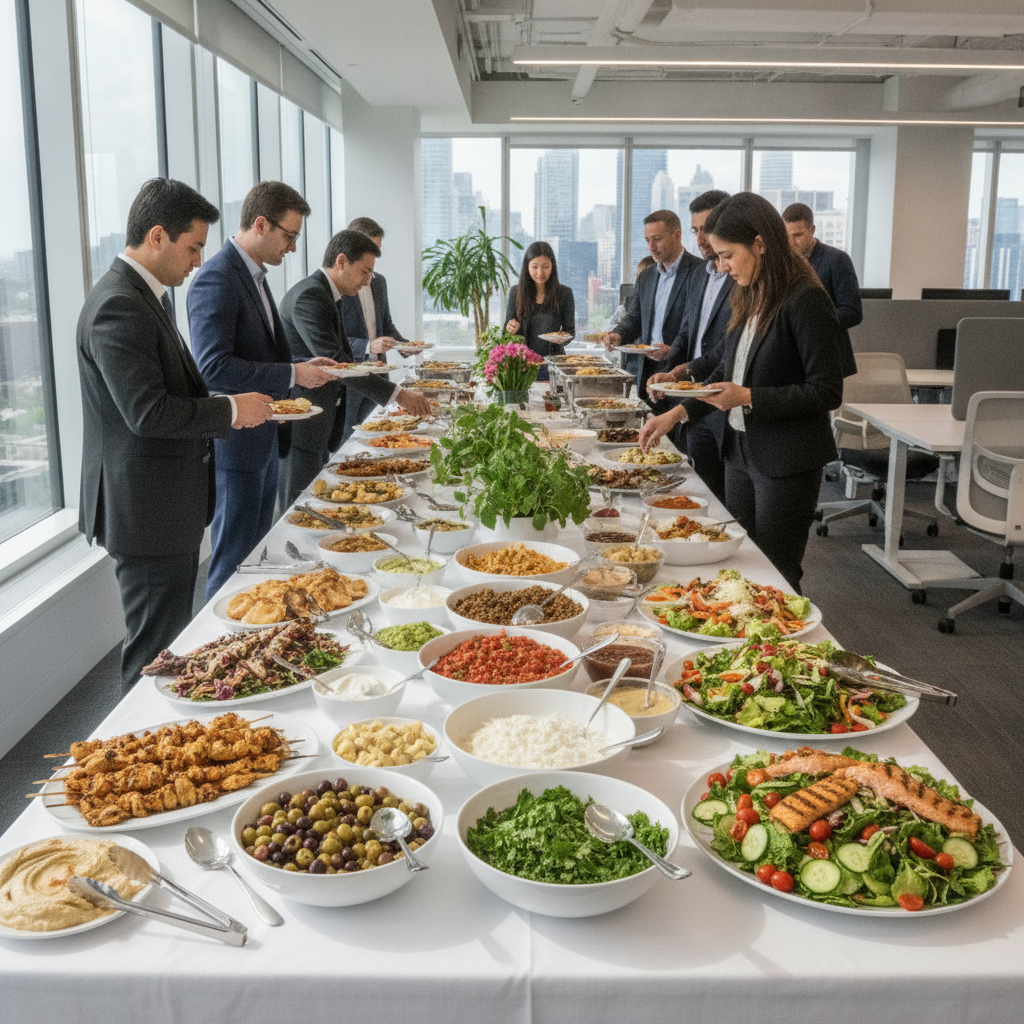
Corporate lunch catering in Toronto is the organized preparation and delivery of workplace meals for meetings and team events. It covers menu planning, dietary accommodations, service style, and logistics for on-time drop-off. Done well, it boosts engagement, supports wellness, and streamlines operations for offices across Woodbridge and the GTA.
By Yash Patel — LunchLink Last updated: 2026-06-23
Above-Fold: Why this guide matters + what you’ll find
This guide shows Toronto teams how to plan corporate lunch catering that’s inclusive, reliable, and easy to manage. You’ll learn service styles, ordering steps, labeling and dietary coverage, timing, and quality checks—plus how LunchLink makes recurring programs effortless for groups from 10 to 500+.
Here’s the thing: office meals can either energize your team or drain your day. We wrote this complete guide to make your next order simpler, safer, and more delightful—without extra admin work.
• Practical steps to scope, order, and stage lunch like a pro
• Inclusive menu planning for halal, vegan, gluten-free, nut-free, and more
• When to choose individually packaged meals vs. buffet-style spreads
• How recurring office meal programs reduce admin for HR and Ops
• Delivery timing, food safety handoff, and labeling standards
• Real examples from LunchLink clients across Toronto and the GTA
Prefer a quick start? Explore our corporate catering services or our office catering hub for fast ordering help.
Quick Summary
Plan corporate lunch catering by confirming headcount and dietary needs, picking a service style, and scheduling delivery 20–30 minutes before eating. Use clear, labeled menus and assign a point person for handoff. For repeat events, set a rotating menu and a single invoicing workflow.
• Core decision points: headcount, dietary mix, service style, delivery window
• Popular cuisines: Mediterranean, Mexican, Greek, and hearty salads
• Dietary coverage: halal, vegan, gluten-free, nut-free, dairy-free, pescatarian
• Order formats: individually packaged meals or buffet-style catering
• Programs: recurring office meal plans with rotating menus
Local considerations for Woodbridge
• Account for mid-day traffic when choosing your delivery window; aim for arrival 20–30 minutes before your planned lunch in Woodbridge offices.
• Winter conditions can add a few minutes to handoffs; ask for insulated carriers and confirm hot/cold separation on arrival.
• For recurring programs, keep a simple team profile (dietary mix and popular cuisines) so your weekly menu rotates without repeating too soon.
What is corporate lunch catering?
Corporate lunch catering is a workplace-focused service that plans, cooks, and delivers mid-day meals for meetings, trainings, and team events. It includes dietary accommodations, professional presentation, labeled packaging, and reliable drop-off to keep employees fed, focused, and safe.
At LunchLink, “corporate” means purpose-built for offices. Menus are chef-curated, ingredients are fresh, and meals are labeled so every team member can eat confidently. Service scales from 10 to 500+ guests without sacrificing consistency.
• Service scope: menu planning, prep, delivery, and setup guidance
• Formats: individually packaged meals or buffet-style spreads
• Coverage: halal, vegan, gluten-free, nut-free, dairy-free, pescatarian
• Use cases: client meetings, all-hands, trainings, town halls, offsites
In our experience serving Toronto workplaces, labeled meals and clear menu notes reduce confusion at pickup tables and speed up distribution for hungry teams.
Why corporate lunch catering matters for Toronto teams
A well-run office lunch lifts morale, keeps meetings on schedule, and supports inclusive culture. When food arrives on time, labeled, and matched to dietary needs, you protect productivity and show care for every attendee—without overloading your admins.
Food is a culture signal. Thoughtful menus invite participation, help hybrid teams connect, and keep long workshops on track. For People Ops and EAs, a repeatable process prevents last‑minute scrambles and reduces vendor management.
• Engagement: shared meals improve attendance and post-meeting energy
• Inclusion: fully labeled, inclusive options make participation easy
• Reliability: on-time handoff anchors agendas and speaker timings
• Admin relief: one invoice and a single point of contact
LunchLink reports 850+ events delivered across the GTA with a 98% client satisfaction rate and 25,000+ employees fed—evidence that consistent standards and clear operations pay off for teams and planners alike.
How corporate lunch catering works (step-by-step)
Scope headcount and dietary needs, choose a service style, lock your delivery window, and confirm labeled menus. On the day, your caterer stages the handoff, you verify heat/cold integrity, and then distribute. For programs, repeat with a rotating menu and centralized invoicing.
Step 1: Gather basics in 5 minutes
• Headcount by dietary group (omnivore, halal, vegan, gluten-free, nut-free, dairy-free)
• Meeting format and room constraints (buffet table vs. boxed pickup)
• Ideal arrival time (plan 20–30 minutes before eating)
• Any on-site policies (security check-in, loading rules, elevator timing)
Tip: keep a shared “team profile” doc with recurring preferences. It saves time on every order and avoids repeats for weekly programs.
Step 2: Pick your service style
• Individually packaged meals: fastest distribution, precise dietary coverage
• Buffet-style catering: communal, flexible portions, strong visual impact
• Hybrid: core buffet with a reserve of labeled individual meals for special diets
Not sure which fits? Our corporate lunch catering page outlines when to choose boxed vs. buffet for different team sizes and rooms.
Step 3: Confirm the menu and labeling
• Choose balanced mains and sides (protein + grain + greens + vegetarian/vegan anchors)
• Request clear labeling on every item, including allergens and diet tags
• Ensure halal and vegetarian items are sealed and separated in transit
We prioritize never-frozen meats and locally sourced produce, then label each meal so attendees never need to guess what’s safe for them.
Step 4: Coordinate delivery logistics
• Confirm the delivery dock or lobby handoff and a phone contact for the day
• Ask for insulated carriers and hot/cold separation for quality on arrival
• Stage tables by diet or course to keep the line moving
Our operations team aligns delivery with your agenda. For midtown or downtown runs, we buffer traffic patterns so food arrives ready to serve.
Step 5: Run the distribution
• Open buffet 5–10 minutes before the break to avoid crowding
• For boxed meals, place signs for each diet category at pickup tables
• Keep a few extra vegetarian/vegan boxes as a universal fallback
When working with clients in Woodbridge, we’ve found a short “what’s where” announcement removes uncertainty and speeds up first plates.
Service styles and cuisine options
Choose individually packaged meals for speed and precision, buffet-style for communal dining and flexibility, or a hybrid for mixed needs. Anchor menus with Mediterranean, Mexican, and Greek favorites, plus hearty salads and vegetarian mains that travel and hold well.
LunchLink curates globally inspired menus designed for office settings. We balance flavor variety with items that stay fresh during transit and hold heat properly through the meeting start.
• Individually packaged: labeled boxes, minimal contact, easy cleanup
• Buffet-style: elevated presentation, shared experience, flexible portions
• Breakfast builds: pastry boards, egg bakes, yogurt parfaits, fruit
• Popular cuisines: Mediterranean, Mexican, Greek, and salad-forward plates
• Diet coverage baked in: halal, vegan, gluten-free, nut-free, dairy-free
Ready to map your menu? Browse our healthy catering ideas for salad-forward sets and balanced mains that still feel generous.
Dietary accommodations and labeling (make it inclusive)
Build inclusion into your lunch by collecting dietary needs early and labeling every item. Separate halal and vegetarian boxes, clearly mark allergens, and keep a few reserve meals. The result: confident dining, fewer questions, and smoother distribution.
Inclusive catering isn’t a nice-to-have—it’s non‑negotiable for modern teams. Our fully labeled meals cover halal, vegan, gluten-free, nut-free, dairy-free, and pescatarian diners so no one has to opt out or “eat around” allergens.
• Collect needs upfront: a one‑line survey in the calendar invite works
• Label everything: dish name, dietary tags, and key allergens
• Segregate in transit: seal and pack special-diet boxes separately
• Keep reserves: a few extra vegan/vegetarian meals save the day
If your team requires halal coverage, our halal corporate catering details sourcing, separation, and labeling practices to maintain integrity from kitchen to conference room.
Recurring office meal programs (set it and forget it)
Recurring meal programs standardize quality, simplify admin, and keep variety fresh with rotating menus. You’ll get a single point of contact, consolidated invoicing, and predictable delivery windows that fit your weekly schedule.
For weekly or biweekly lunches, a program eliminates friction. LunchLink coordinates rotating menus across vetted Toronto partners, tracks attendance trends, and keeps a cadence that teams look forward to.
• Operational rhythm: fixed delivery window, consistent handoff process
• Menu rotation: stagger cuisines and proteins to avoid repeats
• Admin relief: one invoice, one point of contact, simple reorders
• Scales up or down: built‑in headcount flexibility for 10–500+ guests
Many Toronto companies start with a 4–6 week rotation. We monitor feedback and adjust portions and picks so meals stay exciting and on brand for your culture.
Breakfast and morning meetings
Breakfast catering sets the tone for early sessions. Combine protein-forward items with fresh fruit, pastries, and coffee. Aim for an arrival buffer to stage trays, then open service as attendees arrive to ease into the agenda.
Morning meetings move quickly. We design breakfast sets that travel cleanly and plate beautifully, from yogurt parfait bars to egg bakes and Mediterranean-inspired protein boards. Explore our office catering options if you’re planning back-to-back sessions.
• Protein first: egg bakes, smoked fish, or plant-forward proteins
• Fresh items: seasonal fruit and greens add lift
• Easy carbs: pastries and breads for quick fuel
• Drinks: coffee, tea, juice, and chilled water
Planning timelines and delivery windows
Lock a delivery window 20–30 minutes before the first bite, then stage tables by diet or course. For dense corridors, add a small buffer so service starts on time. Assign one on-site contact to manage handoff and quality checks.
In busy Toronto cores, elevator waits and lobby sign-ins can shift handoffs by a few minutes. We coordinate with your front desk and security, then route drivers accordingly. A single on-site contact keeps things simple.
• Lead time: share headcount and dietary mix as early as possible
• Arrival buffer: target 20–30 minutes before your break
• Table plan: label sections for faster pickup and fewer questions
Choosing your format: a quick comparison
Individually packaged meals maximize precision and speed; buffet-style maximizes experience and flexibility. Hybrid setups pair a core buffet with a reserve of labeled boxes for special diets. Match the format to your room, agenda, and dietary mix.
Format Best for Strengths Considerations Individually packaged Large teams with many dietary needs Fast distribution; precise coverage; minimal contact More packaging; visual impact is lower than buffet Buffet-style Communal meetings and client events Elevated look; flexible portions; easy refills Needs staging space; clear allergen signage is key Hybrid Mixed dietary profiles and limited space Experience + precision; covers edge cases Plan both buffet and labeled reserve boxes Recurring program Weekly or biweekly office lunches Predictable delivery, rotating menus, one invoice Set a rotation to avoid repeats
Best practices and checklists
Keep a reusable checklist: attendees and diets, room and tables, menu and labels, handoff and quality checks, and cleanup plan. Repeating this flow reduces errors, speeds up service, and delivers a consistent experience every time.
• Before you order: headcount by diet; agenda timing; room constraints
• Menu planning: balance proteins, grains, and greens; confirm vegan/halal
• Labels: dish name + key allergens + clear diet tags
• Handoff: one contact; delivery window; dock/lobby details
• Distribution: stage by diet; signs; quick “what’s where” note
• Cleanup: compost and recycling plan; reserve containers
Want a hand? Our Toronto catering guide expands on staging diagrams and flow tips for different room setups.
Tools and resources for planners
Standardize your process with a simple toolkit: a team dietary profile, a one-page order brief, a delivery-day checklist, and a rotation calendar. These artifacts keep knowledge in the team and make handoffs painless.
• Dietary profile: capture recurring needs; update quarterly
• Order brief: event name, headcount by diet, service style, arrival window
• Delivery-day checklist: dock/lobby, contact info, table plan, signage
• Rotation calendar: 4–6 week cuisine cadence to keep variety
• Centralized invoicing: one vendor record; organized GL codes
We’re rolling out an app with individual ordering, live tracking, dietary filters, admin dashboards, and easy reorders—designed specifically for Toronto workplaces that run frequent lunches.
Case studies and real-world examples
Corporate lunch programs thrive when operations are consistent. Real examples show how labeled meals, smart rotation, and reliable handoffs drive satisfaction. The patterns repeat: clear inputs, strong menus, and punctual delivery produce predictable outcomes.
Weekly sales all-hands (Toronto)
A professional services firm needed 120 lunches weekly with mixed diets (halal, vegetarian, gluten-free). We implemented individually packaged meals with bold diet tags and a 6‑week rotation of Mediterranean, Mexican, and Greek menus. Result: faster distribution and near-zero confusion at pickup tables.
Client summit with breakout rooms (GTA)
For a 200-person summit, we staged a hybrid format: a central buffet for omnivores plus labeled reserves for special diets. Coordinated drop-offs across two floors started service on time after keynotes. The visual impact of the buffet impressed visiting clients while everyone’s diet was covered.
Training days with early starts (Woodbridge)
Operations teams ran back-to-back trainings beginning at 8:30 a.m. We paired a protein-forward breakfast with boxed lunches. Drivers checked in at reception and used insulated carriers to maintain temperature integrity. Attendees moved from breakfast to sessions smoothly—no mid-morning drop in energy.
Need a hand planning? Our team manages rotating menus, labeling, and delivery windows for busy offices. Start with our corporate catering services and we’ll map an easy plan for your team.
Frequently Asked Questions
Most planners succeed by confirming diets upfront, choosing a format that fits the room, and staging pickup areas clearly. Here are concise answers to common questions about timing, formats, dietary coverage, and recurring programs for Toronto offices.
How far in advance should I book corporate lunch catering in Toronto?
Share headcount and dietary needs as early as you can. For recurring programs, set a weekly window. For one-off meetings, aim to lock details a few days ahead. Same-day options can work in a pinch when menus and diets are straightforward.
What’s better for mixed dietary needs: boxed meals or a buffet?
Individually packaged meals offer the most precise coverage and fastest pickup. Buffets provide a shared experience and flexible portions. Many teams choose a hybrid—buffet for most, with labeled reserve boxes for halal, vegan, or gluten-free guests.
How do you handle halal and allergy considerations?
We collect needs upfront, source appropriately, and label every item. Halal and vegetarian boxes are sealed and separated in transit. At pickup, we stage tables by diet and keep a few reserve meals so every attendee eats confidently.
Can you support recurring office meal programs?
Yes. We coordinate rotating menus, fixed delivery windows, and consolidated invoicing. Most teams run 4–6 week rotations to keep variety high and administration low. Adjustments are easy as headcounts fluctuate.
Conclusion and next steps
Great corporate lunches come from clear inputs, thoughtful menus, and reliable handoffs. Standardize your process once, and every subsequent order gets easier. If you’re ready to streamline recurring meals, LunchLink can run the playbook for you.
• Confirm headcount and dietary mix early
• Choose individually packaged, buffet, or hybrid based on room and agenda
• Schedule delivery 20–30 minutes before eating
• Label everything; stage by diet for fast pickup
• For weekly lunches, set a rotation and centralize invoicing
Next step: Plan your next office meal with our corporate catering team. Book a friendly consult in Woodbridge and get a rotating menu that fits your culture and schedule.