Catering
Gourmet Catering: Impress Guests & Save Time in 2026
A complete guide to gourmet catering for Woodbridge offices—formats, labeling, timelines, and real examples—so every guest eats well and meetings run on time.
June 29, 2026 · LunchLink
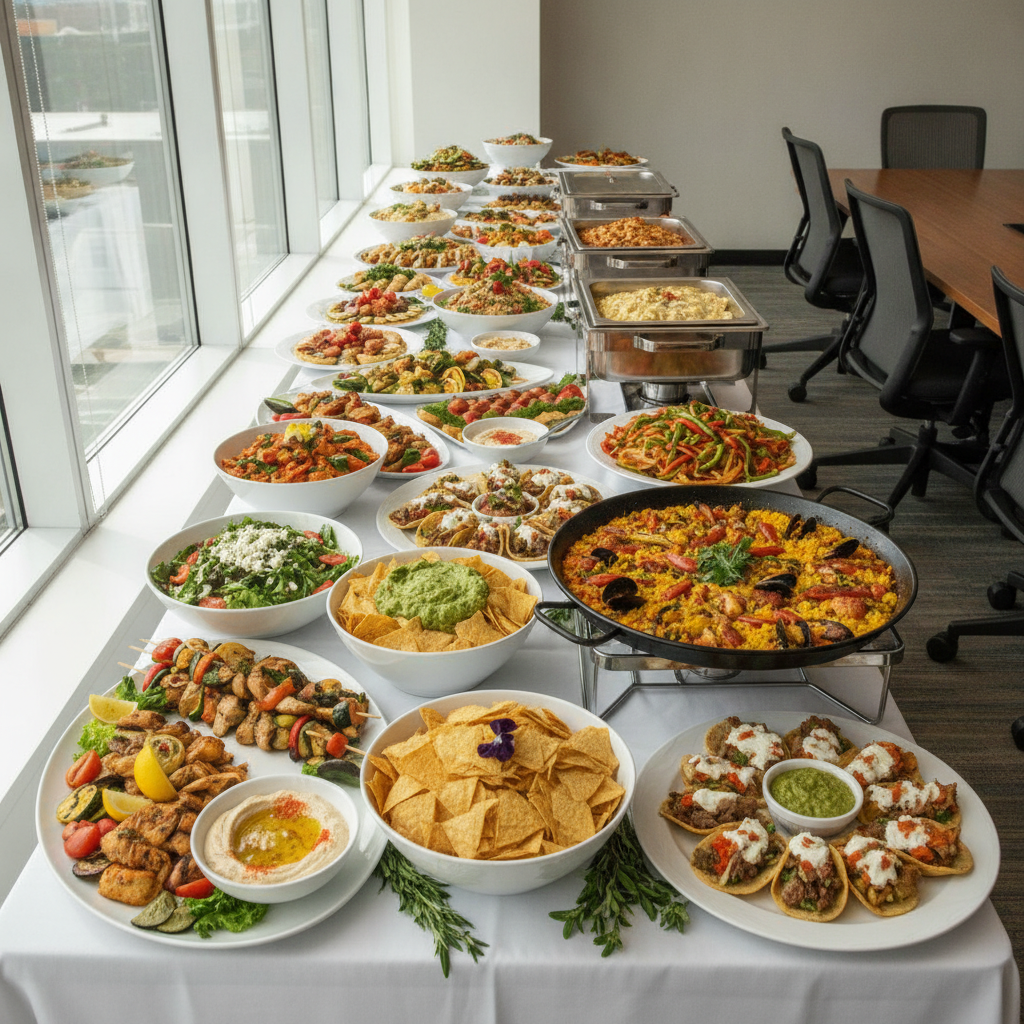
Gourmet catering is chef-led menu planning and premium preparation designed to deliver restaurant-level flavor, presentation, and service at events and in workplaces. For Woodbridge offices, it means inclusive, well-labeled meals that arrive on time, look polished, and keep teams energized—without the hassle of coordinating multiple vendors or last-minute pickups.
By LunchLink • Last updated: 2026-06-29
Quick Summary
Gourmet catering elevates office meals with chef-curated menus, premium ingredients, and professional presentation. It saves coordinators time through streamlined ordering, reliable delivery, dietary labeling, and formats that fit any meeting—from individually packaged lunches to buffet spreads—so every guest eats confidently and the agenda stays on track.
Here’s what you’ll learn and be able to act on right away:
• Understand what “gourmet” means in a corporate setting (quality, inclusivity, and reliability)
• Plan service formats that match meetings of 10–500+ guests
• Build a rotating program that sustains culture and wellness
• Use labeling and allergen workflows that keep teams safe
• Apply a simple timeline that works even for last-minute orders
• Trusted volume: 850+ events catered and 25,000+ employees fed across the GTA with a 98% client satisfaction rate
• Operational coverage: one point of contact, corporate invoicing, and same-day capability for unexpected meetings
• Dietary inclusivity: halal, vegan, gluten-free, nut-free, dairy-free, pescatarian—always clearly labeled
• What is gourmet catering?
• Why gourmet catering matters for workplaces
• How gourmet catering works with LunchLink
• Service types and approaches
• Best practices and planning steps
• Tools, templates, and resources
• Mini case studies and examples
• FAQ
What Is Gourmet Catering?
Gourmet catering is premium, chef-driven food service that brings restaurant-quality menus, ingredients, and presentation to offices and events. In practice, it pairs flavor and variety with strict dietary labeling, reliable delivery, and formats that fit the agenda—making it ideal for boardrooms, town halls, trainings, and client meetings.
In corporate environments, “gourmet” isn’t just white tablecloths. It’s culinary care paired with operational discipline. That includes inclusive menu design, transparent labeling, and punctual service so the meeting cadence never slips.
• Chef-curated menus: Mediterranean, Mexican, Greek, and healthy salad options crafted for balanced, satisfying meals.
• Inclusive choices: Halal, vegan, gluten-free, nut-free, dairy-free, and pescatarian options—clearly labeled so everyone eats confidently.
• Workplace-ready formats: Individually packaged meals for speed and hygiene, or buffet-style spreads for collaborative gatherings.
• Operational reliability: On-time delivery windows, last-minute and same-day capability, and corporate invoicing.
We’ve found that when lunch looks and tastes elevated, attendance ticks up and discussion runs longer—simple signals that food is quietly doing its job. And because labeling is consistent, you spend less time troubleshooting and more time facilitating.
Why Gourmet Catering Matters for Workplaces
Gourmet catering improves participation, retention, and meeting flow by removing friction around food. Teams show up on time, dietary needs are covered, and leaders get a dependable schedule anchor that supports collaboration, wellness, and brand perception in every bite.
Great food changes behavior. When menus are inclusive and visually polished, people arrive early, stay engaged, and feel looked after. In hybrid workplaces, meals often act like a magnet—drawing teams in on key collaboration days.
• Culture and connection: Shared meals nudge cross-functional conversations and celebrate wins; variety prevents “menu fatigue.”
• Wellness and focus: Balanced options reduce the afternoon slump and support dietary goals without calling attention to restrictions.
• Brand signaling: Gourmet presentation reflects your standards to clients, recruits, and executives.
• Time savings: One coordinator can serve 10–500+ guests with a single order, consolidated invoice, and predictable delivery window.
Our Woodbridge clients often move from ad‑hoc takeout to a recurring plan once they see the impact: steadier attendance, fewer Slack pings about “what’s for lunch,” and measurable time back for office managers and EAs.
How Gourmet Catering Works with LunchLink
LunchLink handles end-to-end logistics: menu curation, dietary labeling, reliable delivery, and corporate-friendly admin. Choose individually packaged meals or buffet-style spreads, set headcount and timing, and we execute—covering last-minute needs, rotating menus, and consolidated invoicing for simple operations.
Here’s the typical flow our corporate clients follow—and why it works even on short notice.
• Define the event: Meeting type, room constraints, and guest count (we support flexible headcounts and 10–500+ attendees).
• Pick formats: Individually packaged meals for speed and hygiene, or buffet-style presentations for team-building and longer agendas.
• Select cuisines: Mediterranean for balance, Mexican for bold flavors, Greek for crowd-pleasers, or healthy salad sets for focus sessions.
• Confirm dietary coverage: We label every meal and provide halal, vegan, gluten-free, nut-free, dairy-free, and pescatarian options.
• Lock delivery window: We’re built for punctuality and can accommodate last-minute and same-day needs when the calendar shifts.
• Receive and serve: No setup required for personal meals; buffet layouts include professional presentation and serveware.
• Admin and reorders: Corporate invoicing, one point of contact, and simple reordering for recurring programs.
Across 850+ events and 25,000+ meals served, this framework allows busy coordinators to turn “we need lunch tomorrow” into a reliable plan—without sacrificing taste, safety, or presentation.
Service Types and Approaches
Choose formats based on agenda, room flow, and guest profile. Individually packaged meals prioritize speed and hygiene; buffet-style spreads foster connection and variety; recurring programs maintain culture with rotating menus and predictable operations—all with consistent labeling and punctual delivery.
Primary formats you can mix and match
• Individually packaged: Best for tight timelines, trainings, and hot-desk floors. Zero setup, minimal cleanup, and fast distribution.
• Buffet-style: Suits all-hands, client visits, or celebrations. Encourages conversation and offers broader variety per guest.
• Recurring meal programs: Weekly or biweekly rhythm with rotating cuisines and one consolidated invoice keeps variety high with less effort.
Compare your options at a glance
Format Best For Strengths Considerations Individually packaged Trainings, rapid lunches, hygiene-sensitive teams Fast service; labeled meals; portion control Less family-style interaction; storage space for boxes Buffet-style All-hands, client meetings, celebrations Conversation-friendly; wide variety; elegant presentation Requires table space; serving flow management Recurring program Culture days, hybrid schedules, ongoing wellness Predictability; one invoice; rotating menus Plan cadence and dietary mix in advance
Not sure which way to go? Our team will map your meeting flow and recommend an exact setup. See our boardroom-to-BBQ guide for layout inspiration and service tips that fit your space.
Best Practices and Planning Steps
Lock the agenda, select a format, and decide dietary coverage early. Use a headcount buffer, label everything, and confirm delivery staging. This simple playbook protects the schedule, keeps guests safe, and prevents bottlenecks—especially on hybrid collaboration days.
Seven steps that keep meetings on track
• Clarify the event goal: Training, client pitch, town hall, or celebration. This drives cuisine, portions, and setup.
• Choose format: Package individually for speed or buffet for interaction; map how guests will move through the room.
• Right-size portions: Balance proteins, grains, and produce; include plant-forward options alongside classics.
• Dial in dietary coverage: Confirm halal, vegan, gluten-free, nut-free, dairy-free, and pescatarian counts; label clearly.
• Set delivery window: Align with agenda breaks; stage serving tables or drop points to prevent crowding.
• Plan cleanup: Have bins ready; for buffets, dedicate a side table for returns and utensils.
• Capture feedback: Short post-lunch survey; rotate cuisines to avoid fatigue and inform the next order.
Local considerations for Woodbridge
• Account for traffic windows when scheduling lunch drops; mid-mornings often yield the smoothest arrivals for downtown-bound teams.
• Seasonal menus land better: lighter Mediterranean sets in summer; heartier trays in winter for office comfort and warmth.
• Hybrid weeks vary—anchor “in-office” days with a recurring meal to drive attendance and reduce last-minute scrambling.
Prefer a turnkey approach? Our corporate lunch catering workflow standardizes ordering, delivery, and labeling so meetings stay on schedule—no surprises, no missing utensils.
Tools, Templates, and Resources
Use a one-page brief, a dietary roll-up, and a delivery plan to run flawless meals. LunchLink adds a single point of contact, corporate invoicing, and soon an app with individual ordering, live tracking, dietary filters, and admin dashboards.
Documents we share with coordinators
• Event brief template: Date, headcount, room constraints, agenda timing, and A/V notes—so service matches the flow.
• Dietary roll-up: Summarizes halal, vegan, gluten-free, nut-free, dairy-free, and pescatarian counts with menu pairings.
• Delivery and staging plan: Where to place trays, utensils, and beverages to keep lines moving and floors clean.
Self-serve knowledge
• Explore low-effort office catering ideas that still feel gourmet.
• Browse our elevated presentation tips for buffets and boardrooms.
• Plan seasonal menus using our space and layout guide.
Need a quick recommendation? Share your headcount and timing, and we’ll suggest a proven setup in minutes. Start with our office lunch catering page to outline goals and dietary needs.
Mini Case Studies and Examples
Across 850+ events and 25,000+ meals, we’ve seen gourmet catering raise attendance, simplify logistics, and improve guest satisfaction. These real-world snapshots show how formats, labeling, and delivery timing combine to produce on-time, inclusive, and memorable experiences.
Leadership offsite, hybrid team
• Context: One-day strategy offsite with 40 leaders; mixed dietary needs; tight agenda.
• Approach: Individually packaged Mediterranean bowls; labeled halal/vegan/GF sets; beverages staged separately.
• Outcome: Lunch served in 7 minutes; zero dietary escalations; 100% on-time afternoon sessions.
Client demo day, brand-forward
• Context: 55-person product demos with VIP clients; visual polish critical.
• Approach: Buffet-style Greek spread with elevated garnish and serveware; plant-forward sides for balance.
• Outcome: Longer dwell time at displays; positive feedback on presentation and variety.
Recurring “in-office Wednesday”
• Context: Hybrid team anchoring collaboration around a mid-week lunch; 120+ guests.
• Approach: Rotating cuisines (Mexican, Mediterranean, healthy salads); consolidated invoicing; feedback loop each month.
• Outcome: Higher attendance on anchor days; sustained satisfaction across dietary groups.
Want to see how a recurring rhythm could look in your space? Explore office catering setups that keep variety high without extra admin.
Frequently Asked Questions
Gourmet office catering centers on quality, inclusivity, and reliability. Below are quick answers to the questions coordinators ask most often—from lead times and dietary labeling to the formats that work best for different meetings in Woodbridge and across the GTA.
What makes catering “gourmet” for offices?
Chef-curated menus, premium ingredients, and professional presentation set gourmet apart. In workplaces, it also means inclusive dietary options, clear labeling, punctual delivery, and service formats matched to meeting flow so meals enhance the agenda instead of interrupting it.
How do you handle dietary restrictions safely?
We confirm counts for halal, vegan, gluten-free, nut-free, dairy-free, and pescatarian needs up front. Every meal is labeled consistently, and items are separated during packing and delivery. This reduces cross-contact risk and lets guests find the right meal quickly.
Which format is best for a tight schedule?
Individually packaged meals are the fastest—there’s no setup and queues move quickly. For culture moments or client meetings, a buffet creates conversation and showcases variety. We often mix both: boxed mains with a small shared salad or dessert bar.
Can you support last-minute or same-day orders?
Yes. Our operations are built to accommodate shifting calendars. Share headcount and timing, and we’ll confirm the best available menus. Clear labeling and standardized workflows help us maintain quality even on compressed timelines.
Key Takeaways
Gourmet catering is about dependable excellence: standout flavor, inclusive labeling, and punctual delivery that makes meetings run smoother. Pick the right format for your agenda, plan a dietary roll-up, and lock your delivery window—the rest becomes repeatable.
• Gourmet meals work when culinary care meets operational discipline.
• Labeling and inclusive menus protect guests and save time.
• Formats should mirror the meeting’s flow and space.
• Recurring programs sustain culture with less administrative lift.
Ready to map your next event? Start here: a deeper corporate catering guide and our Toronto corporate catering overview will help you pick the perfect menu and format.
For a broader view of planning and presentation in professional settings, see these perspectives: a comprehensive office catering overview, this complete corporate catering guide, and a focused Toronto corporate catering page.