Catering
Halal Catering: Serve Safe Meals Guests Will Love in 2026
Plan halal catering with confidence. LunchLink’s Toronto guide covers sourcing, labeling, buffet vs boxed, and logistics—built for inclusive corporate meals.
June 8, 2026 · LunchLink
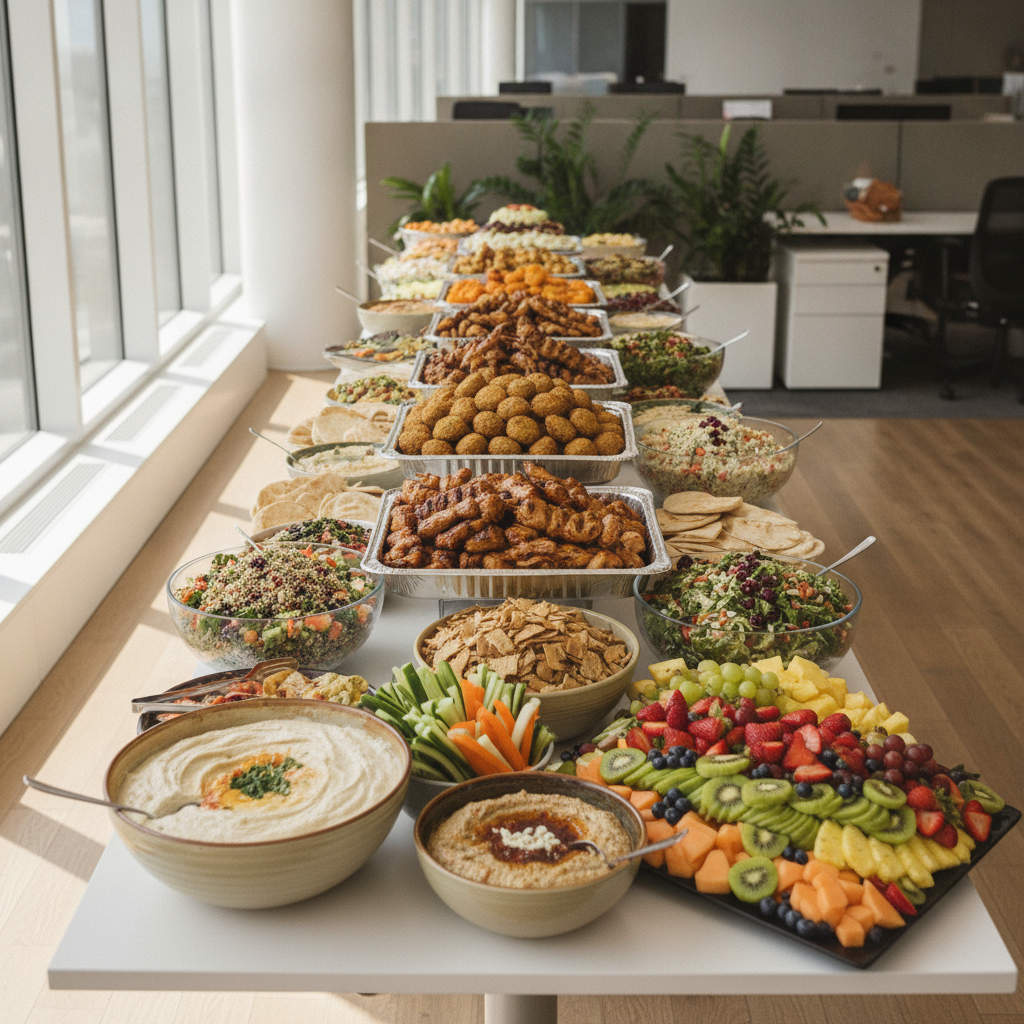
Halal catering is the professional preparation and service of food that follows Islamic dietary laws, from approved ingredients to certified handling. For teams in Toronto and the GTA, LunchLink in Woodbridge (Unit #23 120 Woodstream Blvd) delivers halal-friendly office meals—boxed or buffet—so every guest eats confidently and safely.
By LunchLink — Last updated: 2026-06-08
Overview: what you’ll learn
This complete guide explains what halal catering is, why it matters at work, and how to plan inclusive menus without stress. You’ll see step-by-step workflows, buffet versus boxed comparisons, labeling and cross-contact controls, real corporate examples, and resources you can use for your next Toronto-area meeting or event.
Great office meals are inclusive, organized, and on time. This guide shows how to deliver all three—without slowing your day.
• What halal catering means in plain language
• How to plan halal-inclusive menus for offices
• Buffet vs individually packaged: when each wins
• Allergy management, labeling, and safe service
• Ordering workflow, delivery windows, and setup
• Local tips for Woodbridge, Toronto, and the GTA
• Real examples from corporate lunches and town halls
• What Is Halal Catering?
• Why Halal Catering Matters at Work
• How Halal Catering Works with LunchLink
• Types and Approaches
• Best Practices
• Tools and Resources
• Case Studies and Examples
• Frequently Asked Questions
• Conclusion and Next Steps
What is halal catering?
Halal catering refers to meals prepared, handled, and served in alignment with Islamic dietary laws (halal). It covers compliant ingredients, verified suppliers, separation from non-halal items, and clear labeling. In corporate settings, halal-friendly service builds trust, reduces risk, and ensures every team member can dine with confidence.
At its core, halal is about both ingredients and process. Ingredients must be permissible (e.g., no pork, no alcohol in cooking), and proteins should be sourced from halal-certified suppliers. Processes matter too: preparation areas, utensils, and serving lines must avoid cross-contact with non-halal foods.
Key elements in plain language
• Halal-approved proteins: Chicken and beef from halal-certified suppliers; no pork or pork by-products.
• No alcohol: Sauces and marinades exclude alcohol-derived ingredients.
• Clear separation: Dedicated utensils and trays reduce cross-contact risk on buffets.
• Transparent labeling: Each dish is labeled for halal status and common allergens.
• Supplier verification: Vendors confirm halal sourcing and handling before menus are approved.
In our experience supporting corporate teams, the most successful halal catering programs pair compliant sourcing with crystal-clear labels. Teams relax when they can see exactly what’s safe, right on the tray or the box.
Why halal catering matters for workplaces
Halal-friendly catering signals respect, safety, and inclusion. At work, it boosts attendance at food events, improves satisfaction scores, and reduces last-minute scramble. For Toronto teams, it also aligns with common dietary needs across large, diverse groups—especially at recurring lunches and town halls.
Food brings people together, but only if everyone can participate. When meals are planned with halal guests in mind, you avoid on-the-spot workarounds, reduce waste, and set a reliable standard for future events.
Business outcomes you can expect
• Higher participation: When guests trust the food, RSVP rates climb and leftovers drop.
• Fewer last-minute requests: A clear halal plan reduces frantic calls on event day.
• Consistent experience at scale: LunchLink serves groups from 10 to 500+ with labeled meals and reliable delivery windows.
• Better wellness signals: Balanced menus with proteins, whole grains, and vegetables support energy and focus.
• Documented standards: Reusable menus, supplier notes, and labeling templates speed up the next order.
LunchLink reports 850+ events catered and 25,000+ employees fed across Toronto-area workplaces, with a 98% client satisfaction rate. Those programs work because planning, sourcing, and presentation are standardized—without losing menu variety.
How halal catering works with LunchLink
LunchLink curates halal-friendly menus, verifies suppliers, labels meals, and delivers on time. You choose buffet or individually packaged boxes, share headcounts and dietary needs, and confirm a delivery window. We handle logistics across Toronto and the GTA so your team can eat together—safely and on schedule.
Our operations are built for corporate schedules. That means a single point of contact, flexible groups (10–500+), and simple corporate invoicing. Here’s the workflow most offices prefer.
Step-by-step ordering workflow
• Share your event basics: date, headcount, venue, halal needs, and any vegan/vegetarian/gluten-free guests.
• Pick your format: buffet-style spread or individually packaged meals with labels.
• Review curated menus: Mexican, Mediterranean, Greek, and salad-forward options with halal proteins.
• Approve logistics: drop-off window, access details, and serving equipment needs.
• Delivery & setup: trays and utensils arrive organized; boxes arrive alphabetized when requested.
• Post-event notes: save a winning menu for reorders; adjust portions for next time.
For recurring office meal programs, we rotate menus, track preferences, and maintain dietary notes so repeat lunches stay fresh and safe without extra effort from your team.
Explore our corporate programs in the corporate catering hub and see day-to-day options on the office catering page. If healthy, salad-forward menus suit your culture, visit our healthy catering options for more ideas.
Types, methods, and approaches
Choose between buffet-style service and individually packaged boxes based on space, schedule, and cross-contact risk. Buffets are fast for large crowds; boxes are best for strict dietary control and labeling. Many workplaces mix formats—buffet mains with a reserved stack of labeled boxes.
Common service formats
• Buffet-style: Fast service for 50–500 guests; use separate utensils and signage for halal items and common allergens.
• Individually packaged: Best for precise labeling and dietary separation; easy headcount control for 10–200.
• Hybrid: Buffet entrées plus a reserved set of halal-only and allergy-friendly boxes for strict needs.
Buffet vs boxed: quick comparison
Factor Buffet Individually Packaged Speed Fast for large groups; short lines with multiple stations Slower distribution; simple for meetings with seats Labeling Tray-level labels and icons Box-level labels with names and ingredients Cross-contact risk Lowered with clear separation and utensils Minimal when boxes remain sealed until service Waste Flexible portions reduce unopened leftovers Easier headcount control; potential extra packaging Space Needs staging tables and flow planning Works in tighter rooms; hand out or self-serve Best for Town halls, trainings, all-hands Boardrooms, client meetings, workshops
Not sure which way to go? Tell us your headcount and room layout. We’ll recommend the fastest, safest plan and build a labeled menu to match.
Best practices for halal-friendly office meals
Start with verified halal proteins, then reduce cross-contact with separate utensils and signage. Label every item, confirm common allergens, and plan line flow. For strict needs, add a batch of sealed, individually labeled boxes—especially for high-traffic meetings and mixed-diet teams.
Checklist you can use
• Supplier verification: Confirm halal sourcing for chicken and beef; document vendors.
• Separate serviceware: Use distinct tongs and trays for halal items.
• Clear labeling: Mark halal status and allergens on trays or boxes.
• Line flow: Place halal-first stations at the start to avoid crossover.
• Reserved boxes: Keep sealed, name-labeled boxes for strict diets.
• Menu balance: Include vegetables, whole grains, and fruit to sustain energy.
• Dessert diligence: Avoid alcohol-based extracts; label nuts and dairy.
These practices scale smoothly from 10-person stand-ups to 300-person town halls. For inspiration, explore curated options in our ultimate corporate catering guide and ideas in our elevate your catering article.
Local considerations for Woodbridge
• For Woodbridge and ON L4L 7Z1 offices, plan delivery buffers around peak building traffic to keep buffets hot and lines short.
• Holiday periods see surges in team events. Lock menu choices early, then adjust headcounts within the final 24 hours.
• For mixed Toronto-area teams, combine halal mains with vegan and gluten-free sides so every guest has at least two safe choices.
Tools and resources
Use repeatable templates, supplier checklists, and labeling standards to simplify planning. Keep a living menu library, maintain dietary notes, and document delivery instructions. These lightweight tools reduce errors across recurring lunches and help new coordinators get up to speed fast.
Templates and checklists
• Menu library: Save winning halal menus with photos and headcounts for easy reorders.
• Dietary roster: Maintain a private list of team allergens and preferences (opt-in only).
• Labeling standard: Define icons for halal, vegan, gluten-free, nut-free, and dairy-free.
• Delivery notes: Building access, room location, and table layout for buffets.
For general event planning context, review these practical guides to menu planning and Middle Eastern-friendly service approaches from regional venues: halal menu planning tips and regional service considerations. Then tailor your checklists to your own office and culture.
When you’re ready to formalize an internal playbook, our corporate lunch overview pairs well with the office catering page for day-to-day needs.
Case studies and examples
Successful halal-inclusive events use simple guardrails: verified proteins, labeled items, and clear line flow. Here are real-world scenarios—boardrooms to town halls—showing how format, menu, and setup come together for safe, satisfying meals.
Financial town hall (300 guests, hybrid setup)
• Format: Halal-first buffet stations plus 40 sealed, labeled boxes.
• Menu: Mediterranean chicken skewers, falafel, lemon rice, Greek salad, hummus, pita, and fruit.
• Controls: Separate utensils; tray labels for halal and allergens; reserved boxes for strict needs.
• Outcome: Short lines, 95% pickup within 25 minutes, minimal leftovers.
Healthcare training day (120 guests, boxed)
• Format: Individually packaged halal chicken shawarma bowls; vegan and gluten-free variants.
• Menu: Spiced chicken, seasoned rice, chopped salad, tahini; vegan chickpea bowls for plant-based guests.
• Controls: Name-labeled boxes; separate staging for allergens; clear ingredient lists.
• Outcome: Fast handout, clean room, easy headcount tracking.
University faculty meeting (60 guests, buffet)
• Format: One buffet line with halal proteins and vegetarian mains up front.
• Menu: Greek lemon chicken, spanakopita, village salad, roasted vegetables, and yogurt dip alternatives.
• Controls: Halal-first layout; separate tongs; signage for dairy and gluten.
• Outcome: Full participation; quick teardown; menu saved for reuse.
Want more menu inspiration? See our healthy catering options and broader corporate catering hub for format ideas you can mix and match.
Frequently asked questions
These quick answers cover sourcing, cross-contact, mixed-diet menus, and packaging. For specifics about your team, share headcount, dietary needs, and timing—then we’ll recommend the safest format and a menu that fits your space and schedule.
What makes a catered menu halal-friendly?
Halal-friendly menus use proteins from verified halal suppliers, avoid alcohol in cooking, and prevent cross-contact during prep and service. Clear tray or box labels help guests confirm ingredients and allergens at a glance.
How do you prevent cross-contact on buffets?
We separate halal items with dedicated utensils and signage, place strict-diet options first in line, and provide sealed, individually labeled boxes for guests who need extra control. This reduces utensil sharing and keeps sensitive items protected.
Can we combine halal with vegan and gluten-free needs?
Yes. We design menus so every guest has at least two safe choices. Halal proteins pair with vegan mains and gluten-free sides, and all items are labeled clearly. For strict needs, we add sealed boxes with name labels.
Do you offer individually labeled boxes for large groups?
Absolutely. Individually packaged meals scale well from 10 to 200 guests and help with distribution in meeting rooms. Boxes include ingredient notes and can be alphabetized to speed pickup.
Conclusion and next steps
Halal catering succeeds when sourcing, labeling, and line flow work together. Pick the right format for your space, verify proteins, and reserve boxes for strict needs. With a repeatable playbook, inclusive meals become the easiest part of your meeting plan.
• Key takeaways: verify proteins, label clearly, plan line flow, and add sealed boxes for strict needs.
• Action steps: share headcounts and timing, choose buffet or boxes, and confirm delivery access.
• Where to start: Explore our office catering page and corporate catering hub. For halal specifics, see our halal corporate overview.
Ready to plan? Tell us your date, headcount, and dietary mix. We’ll recommend a halal-friendly menu and delivery window for your workspace in Woodbridge or anywhere in Toronto.