Catering
Halal Food Catering: Make Work Lunches Easy in 2026
Plan halal food catering in Toronto with confidence. Learn standards, labeling, formats, and logistics—plus real examples from LunchLink’s GTA programs.
June 17, 2026 · Yash Patel
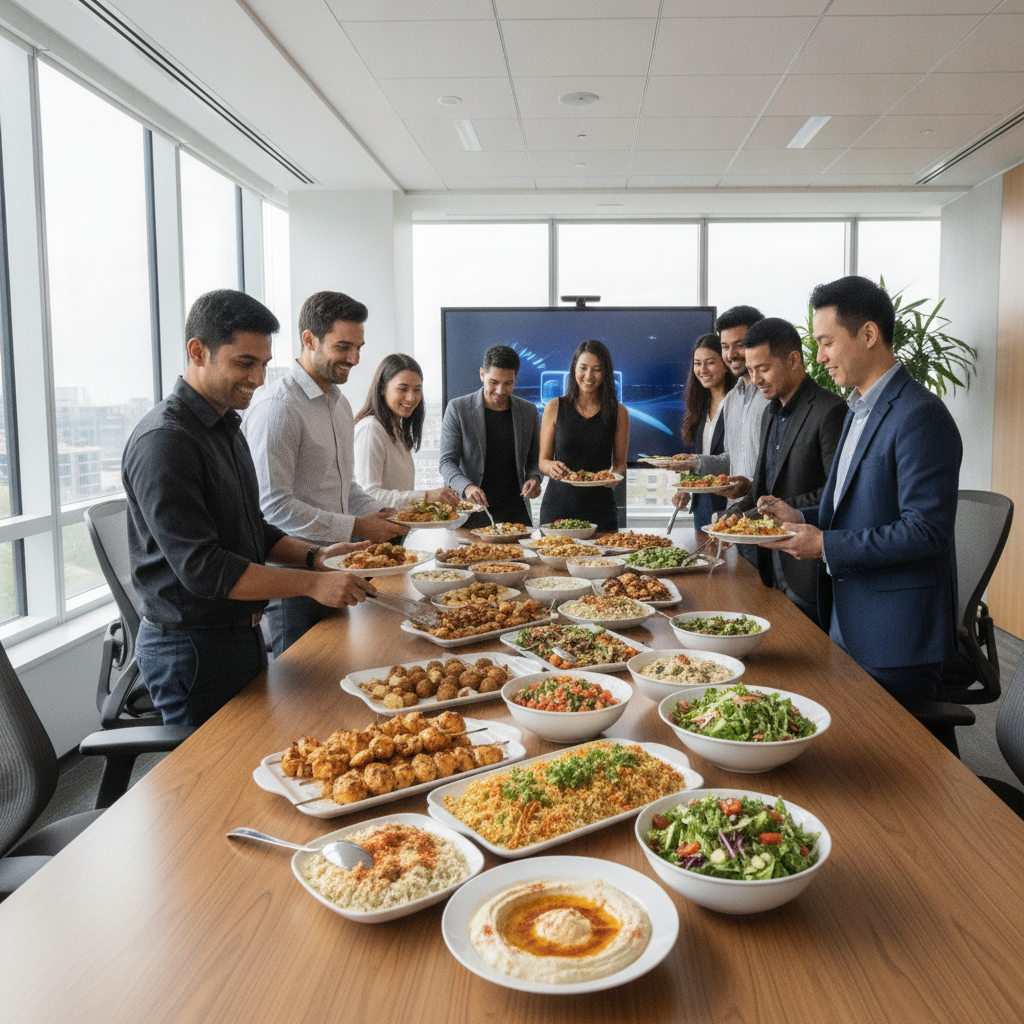
Halal food catering in Toronto is the professional preparation and delivery of meals that meet Islamic dietary standards for office lunches, meetings, and events. It requires certified suppliers, segregated prep, and clear labeling so everyone eats with confidence. From our Woodbridge hub at Unit #23 120 Woodstream Blvd, LunchLink coordinates inclusive meals that teams trust.
By LunchLink Editorial Team • Last updated: 2026-06-17
Overview
This complete guide explains what halal catering involves, why it matters for Toronto workplaces, and how to plan inclusive menus without stress. You’ll learn step-by-step ordering, buffet versus boxed meal trade-offs, labeling best practices, and real-life examples from LunchLink’s corporate programs across the GTA.
Many office managers and People Ops leaders juggle allergies, faith-based needs, and tight timelines. This guide shows how to run reliable, halal-friendly office meals that are safe, varied, and easy to order through LunchLink.
• What halal catering actually requires
• How to design inclusive menus for 10–500+ guests
• When to choose buffet, boxed, or hybrid formats
• Labeling, cross-contact prevention, and traceability
• Toronto-specific logistics and vendor coordination
What is halal food catering?
Halal catering is the end-to-end preparation, handling, and service of food that meets Islamic dietary law. It involves halal-certified proteins, segregated equipment, and transparent labeling. For workplaces, the goal is simple: every guest can select a meal that’s both compliant and clearly identified.
In practice, halal food catering covers sourcing, kitchen prep, packing, transport, and final service. Documentation and labels reduce uncertainty. LunchLink partners with vetted Toronto kitchens and provides fully labeled meals—halal, vegan, gluten-free, nut-free, dairy-free—so coordinators don’t guess under pressure.
Key elements of halal compliance
• Halal-certified proteins: Verified suppliers and traceable packaging at receiving.
• Segregated prep areas: No cross-contact with non-halal or alcohol-based ingredients.
• Dedicated utensils: Color-coded tools and labeled containers for clarity.
• Clear meal labels: Each item marked for halal status and common allergens.
• Chain of custody: Documentation from procurement through delivery.
These controls are most effective when they’re standardized across vendors. LunchLink coordinates that consistency while keeping menus globally inspired—Mediterranean, Middle Eastern, Mexican, Greek, and healthy salads—designed for professional settings.
Why halal catering matters for Toronto workplaces
Inclusive meals build trust, reduce risk, and boost attendance at office events. In Woodbridge (ON L4L 7Z1) and across the GTA, halal-aware catering helps teams feel respected. Clear labels, safe prep, and menu variety turn food from a stress point into a culture-building moment.
We see the same pattern across finance, healthcare, education, and professional services: food sets the tone. When meals are inclusive and labeled, coordinators avoid last-minute scrambles, and attendance improves—especially for recurring programs. LunchLink has supported 850+ events and fed 25,000+ employees with a 98% satisfaction rate, driven by reliable logistics and consistent presentation.
Local considerations for Woodbridge
• Plan for mixed preferences: halal mains plus vegan and gluten-free sides ensure broad coverage without duplicate menus.
• Account for rush periods around major holidays; finalize counts early and keep 24-hour flexibility for headcount shifts.
• Leverage recurring schedules to lock predictable delivery windows across the western GTA, reducing day-of surprises.
Halal catering is also about optics. Transparent labels and organized buffets show care. Individually packaged meals reduce friction in tight agendas and protect against cross-contact in boardrooms.
How halal office catering works (end-to-end)
Successful halal catering follows a clear flow: define headcount and needs, select compliant menus, confirm labeling, schedule delivery, and brief onsite leads. With LunchLink, that process is standardized, documented, and repeatable for events from 10 to 500+ guests.
Step-by-step workflow
• Scope and goals: Meeting, training, all-hands? Set headcount bands (e.g., ±10%) and dietary mix.
• Menu selection: Choose halal proteins plus vegan, dairy-free, and gluten-free complements.
• Packaging format: Decide between buffet, boxed, or hybrid based on agenda and space.
• Labeling plan: Confirm labels for halal status and top allergens on every item.
• Delivery window: Align arrival 20–45 minutes before serve time; note building access rules.
• Onsite setup or drop: No-setup drop-offs for meetings; staffed buffets for larger events.
• Post-event feedback: Capture preferences to fine-tune future orders and rotation.
LunchLink simplifies this sequence with one point of contact, corporate invoicing, and partners trained on halal-friendly SOPs. For recurring programs, we rotate menus weekly while keeping staples people love.
What about last-minute needs?
• Rapid menu locks: Choose proven halal sets that travel well and label cleanly.
• Reliable delivery: Use standardized arrival buffers to absorb traffic variability.
• Headcount agility: Adjust portions within 24 hours when attendance shifts.
Teams value predictability. Consistency in portions, trays, and labels removes friction for executive assistants and office managers juggling tight schedules.
Formats, menus, and sample builds
Choose the format that fits your agenda: buffet for connection, boxed for speed, or hybrid for balance. Pair halal mains with inclusive sides. Mediterranean and Middle Eastern sets perform well in offices because they’re flavorful, travel-ready, and label clearly.
Popular format choices
• Buffet-style: Best for social lunches and town halls; visible variety drives satisfaction.
• Individually packaged: Ideal for workshops and boardrooms; reduces cross-contact risk.
• Hybrid: Boxed mains with shared salads and fruit; speeds service while keeping choice.
Sample halal-friendly menu builds
• Mediterranean buffet: Grilled chicken skewers (halal), falafel, hummus, tabbouleh, rice pilaf, roasted vegetables, garden salad, pita; labeled dressings on the side.
• Middle Eastern boxed set: Halal chicken shawarma bowl, lemon-tahini dressing, cucumber-tomato salad, roasted chickpeas; vegan falafel bowl alternative.
• Greek-meets-healthy hybrid: Halal souvlaki boxes plus shared Greek salad, quinoa tabbouleh, and seasonal fruit.
These formats balance speed, safety, and experience. For 10–40 guests in workshops, boxed wins. For 60–200 at town halls, staffed buffet lines maintain flow and presentation. For 250–500+, hybrid prevents bottlenecks and protects dietary lines.
Buffet vs. Boxed vs. Hybrid for Halal Office Meals Format Works Best When Pros Halal Considerations Buffet Social events, open time Variety, visual appeal Dedicated halal line and utensils; clear signage Boxed Tight agendas, training Fast service, portion control Labels on each box; separate halal/dietary stacks Hybrid Large groups, mixed needs Balance of speed and choice Boxes for mains; shared sides labeled and separated
Menu variety matters. Rotating proteins and sides keeps engagement high across multi-week programs while honoring dietary boundaries every time.
Best practices for halal, allergy-safe corporate meals
Treat halal as part of a broader safety system: labeled meals, segregated prep, and clear service cues. Build simple checklists that teams follow every time. When processes are visible and repeatable, coordinators can host events confidently and at scale.
Labeling and traceability
• Every item labeled: Halal status plus top allergens; dressings and sauces labeled separately.
• Packaging color-coding: Use distinct stickers or box colors to separate halal and non-halal items.
• Master sheet: Include a one-page map of SKUs, counts, and dietary flags in each delivery.
Cross-contact prevention
• Dedicated utensils: Tongs and serving spoons assigned per tray; backups provided.
• Split lines: Set a clearly marked halal line in buffets; avoid shared boards or platters.
• Sealed boxes: Keep boxed meals sealed until distribution to maintain integrity.
People and flow
• Role clarity: One onsite lead confirms labels and directs traffic; one runner replenishes.
• Signage and spacing: Place dietary flags at eye level; keep lines moving in one direction.
• Feedback loop: Capture what ran out early and what over-performed for next time.
LunchLink’s fully labeled meals and vetted partners standardize these steps. That’s how we’ve delivered 98% satisfaction across 850+ events while supporting headcounts from 10 to 500+ without setup drama.
Tools and resources you can use
Use lightweight tools: a headcount calculator, dietary intake form, and a simple labeling checklist. LunchLink pairs these with one point of contact and corporate invoicing, so planning stays organized even when schedules change.
Simple planning toolkit
• Dietary intake form: Capture halal, vegan, gluten-free, nut-free, dairy-free, and other notes in one pass.
• Headcount bands: Plan for ±10% variance; keep a small buffer of vegetarian options.
• Rotation calendar: Alternate cuisines weekly (Mediterranean, Mexican, Greek, healthy bowls).
• Allergen map: One-pager listing allergens by SKU; post it beside the buffet.
For inspiration on Middle Eastern events and context, regional venues often share useful guidance that complements corporate requirements; see this perspective on Middle Eastern halal catering. For creative lunch variety, browse Toronto corporate lunch ideas for flavor pairings that travel well.
LunchLink services that help
• One coordinator for all orders with corporate catering across the GTA.
• Labeled, inclusive menus through office catering built for meetings and trainings.
• Reliable lunch delivery programs that rotate weekly without admin burden.
• Healthy and halal-friendly sets via healthy catering partners.
• Direct support for halal corporate catering requests and standards.
We’re also investing in an app with individual ordering, dietary filters, and live tracking to further simplify recurring programs.
Free planning consult: Share your headcount and dietary mix. We’ll propose a halal-friendly menu rotation and labeling plan that fits your calendar—no heavy lift for your team.
Start your halal-friendly plan
Mini case studies: What works in the GTA
Real programs succeed with simple, repeatable rules: locked menus, visible labels, and predictable delivery windows. These snapshots show how GTA teams balanced halal requirements with other dietary needs while keeping events on schedule.
Finance all-hands, downtown Toronto (220 guests)
• Format: Hybrid—boxed halal mains, shared salads, fruit platters.
• Reason: Tight opening remarks followed by networking; boxes sped service.
• Outcome: 12-minute distribution; clear halal stacks and vegan alternates prevented mix-ups.
We used a two-line system with visible signage and a replenishment runner. Feedback highlighted the clarity of labels and consistent portions.
Healthcare training day, midtown (85 guests)
• Format: Boxed lunch sets with halal chicken bowls and vegan falafel bowls.
• Reason: Classroom constraints; quick service between sessions.
• Outcome: Every attendee received a labeled meal; zero cross-contact incidents reported.
In health settings, sealed boxes and posted allergen maps reduce anxiety for coordinators and attendees alike.
Tech product sprint, Etobicoke (45 guests, 3 days)
• Format: Rotating menus—Mediterranean day, Mexican day, Healthy bowls day.
• Reason: Prevent menu fatigue during multi-day sessions.
• Outcome: High attendance each day; organizers requested the same rotation next quarter.
Multi-day runs benefit from a rotation calendar and pre-labeled stacks for halal, vegan, and gluten-free options.
Frequently Asked Questions
Here are direct answers to the most common workplace questions about halal catering in Toronto—covering verification, cross-contact, and menu choice. Each response is concise so coordinators can act quickly.
How do I verify that meals are halal?
Ask for supplier documentation and confirm halal status on packaging at receiving. Use segregated prep and serving lines, and require visible labels on all trays and boxes. LunchLink coordinates vetted Toronto partners and provides fully labeled meals for traceability.
What format is best—buffet or boxed?
For quick agendas or training rooms, individually packaged meals reduce confusion and speed distribution. For socials or town halls, buffets encourage connection and visible variety. Hybrid formats combine boxed mains with shared sides for large groups.
How can I accommodate halal and other dietary needs together?
Plan an inclusive base menu with halal proteins plus vegan and gluten-free alternatives. Label every item, separate serving tools, and post an allergen map. LunchLink’s labeled meals make it easy to manage mixed dietary needs at one event.
What should I brief building security or reception on?
Confirm delivery window, loading access, elevator routes, and any sign-in requirements. Share a contact number and the event room location. A smooth handoff protects food temperature and keeps meetings on schedule.
Can I set and forget a recurring halal lunch program?
Yes. Set a weekly or biweekly cadence, define headcount bands, and rotate cuisines. LunchLink manages menu variety, labeling, and delivery windows while giving you a single invoice and one point of contact.
Conclusion and next steps
Halal food catering works best when it’s simple, standardized, and documented. Choose the right format for your agenda, label everything, and rely on vetted partners. That’s how Toronto teams host inclusive events that start on time and end with positive feedback.
Key takeaways
• Halal catering is a system—certified sourcing, segregated prep, clear labels, and traceability.
• Pick buffet, boxed, or hybrid based on time, space, and headcount.
• Inclusive menus combine halal mains with vegan and gluten-free options.
• One coordinator and a simple checklist reduce day-of stress.
• Recurring programs stay fresh with weekly rotations and consistent delivery windows.
Ready to simplify halal office meals? Explore our halal corporate catering options or set up office catering built for meetings and workshops. If you’re planning a broader program, this perspective on elevating corporate catering outlines how to scale variety without sacrificing safety. Book a discovery call near Woodbridge to get started.