Catering
Live Stations: Make Office Meals Feel Fresh in 2026
A complete guide to live station catering for Toronto offices—what it is, why it works, planning steps, menu ideas, labeling, safety, staffing, and GTA-ready tips.
June 6, 2026 · LunchLink
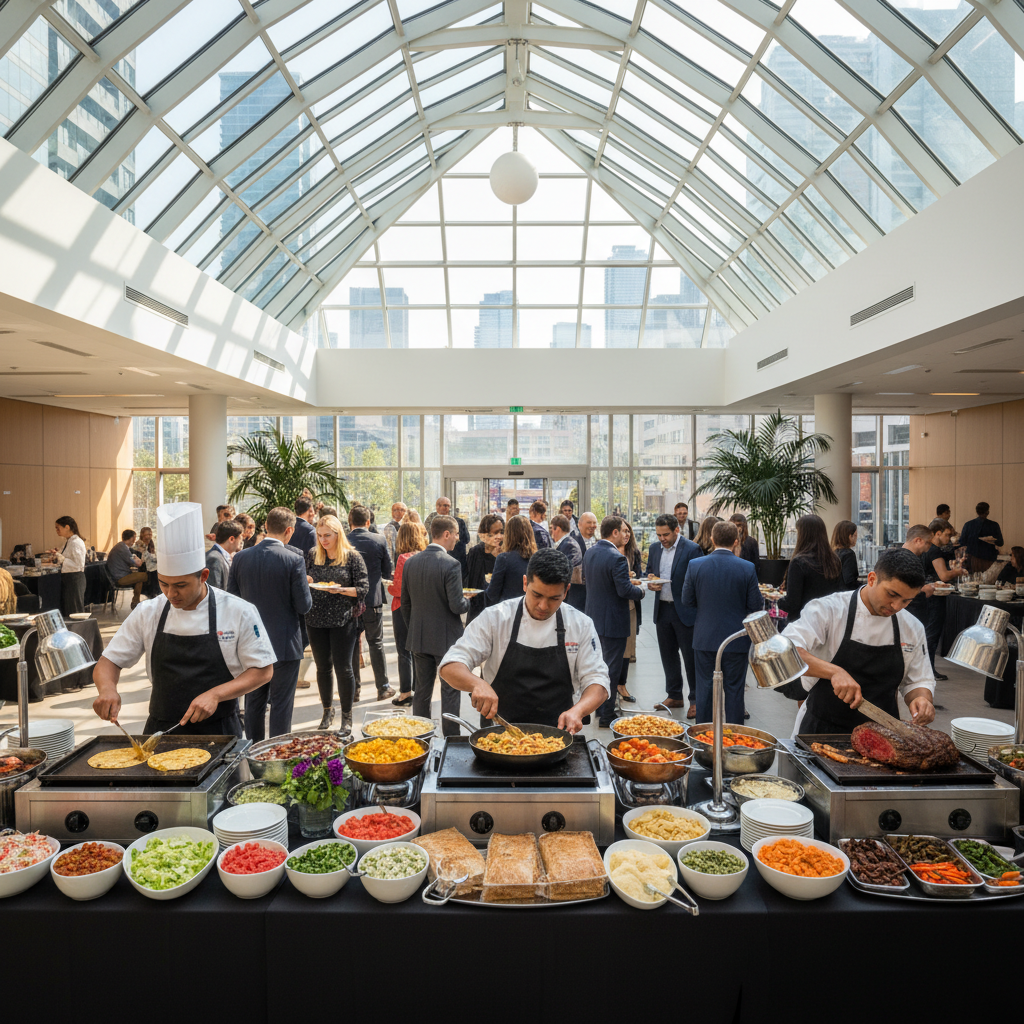
Live station catering is a service format where chefs cook or finish dishes on-site to order, creating made-to-measure meals and an engaging experience. From our Woodbridge hub at Unit #23 120 Woodstream Blvd, LunchLink brings live stations to Toronto offices to boost attendance, celebrate culture, and deliver fresh, labeled meals safely at scale.
By LunchLink • Corporate catering for Toronto and the GTA Last updated: 2026-06-06
Summary and table of contents
Live stations make office meals feel fresh by letting chefs finish dishes on-site for each guest. This guide explains what they are, why they work for workplaces, how to plan them step by step, smart menu ideas, inclusion and safety, staffing, and real office examples tailored to Toronto and the GTA.
Here’s what you’ll learn and how to navigate quickly.
• What live station catering means for offices and events
• Benefits for HR, EAs, and operations teams
• How to plan: room, power, flows, staffing, timelines
• Popular station types: Mexican, Mediterranean, Greek, wellness bowls, and more
• Dietary inclusion: halal, vegan, gluten-free, nut-free, dairy-free
• Safety, labeling, and service standards for workplaces
• Staffing, tools, and vendor coordination
• Planning considerations (without pricing)
• Mini case studies from Toronto workplaces
• FAQ to make decisions faster
What is live station catering?
Live station catering is a service style where chefs prepare or finish dishes on-site and to order, so each person gets a fresh plate and a personalized experience. For workplaces, it blends speed and engagement while supporting labeled, inclusive options that help teams eat confidently and safely.
In corporate settings, a “station” is a compact kitchen action point—griddle, sauté, carving, or assembly—staffed by a chef who cooks or assembles in view of guests. It’s immersive, scalable, and ideal for brand moments or culture days.
• Made-to-order freshness: Food is cooked or finished on demand for peak texture and flavor.
• Customization for inclusion: Clear signage and chef interaction help guests with halal, vegan, gluten-free, nut-free, dairy-free, and pescatarian needs.
• Throughput at scale: With the right count of burners and staff, lines move briskly, even for 100–300 employees.
• Experience value: Sights, aromas, and chef interaction turn lunch into a memorable team moment.
LunchLink coordinates chef-curated stations across Mexican, Mediterranean, Greek, and healthy salad concepts, alongside office catering and corporate catering in Toronto for one-time and recurring programs.
Why live stations matter for workplaces
Live stations increase turnout, energize culture events, and support inclusive dining. They pair chef interaction with clear labeling, so guests choose confidently. For HR and operations, stations can be planned to fit tight rooms, tight schedules, and varying headcounts while maintaining presentation standards.
When hybrid schedules compete for attention, food that feels special helps. Teams respond to freshness, action, and choice. Stations turn a routine lunch into a micro-experience—without slowing service when designed well.
• Culture and attendance: Chef-led action, aromas, and customization boost participation for town halls and client days.
• Confidence for dietary needs: Labeled ingredients and direct chef Q&A reduce guesswork for halal, vegan, gluten-free, nut-free, or dairy-free diets.
• Operational fit: Modular setups work in boardrooms, atriums, or training spaces with minimal disruption.
• Service consistency: LunchLink brings vetted Toronto partners and playbooks so the experience is repeatable across events.
Our team has coordinated 850+ events and served 25,000+ employees with a reported 98% client satisfaction rating—data points that shape our live station templates for offices across the GTA.
How live station catering works (step by step)
A successful live station event starts with space and power checks, then locks menu flow, staffing, and schedules. On the day, stations arrive staged, chefs cook to order, and lines move by design. After service, the team breaks down and restores the room within your timeline.
Planning timeline
• 2–4 weeks out: Lock date, venue room, headcount range, dietary needs, menu theme, station mix, and invoicing preferences.
• 7–10 days out: Confirm floor plan, power availability, tables, rentals, and final headcount window.
• 48–72 hours out: Finalize labeled menu components and service schedule; share guest comms.
• Event day: Staggered arrival, staging, safety checks, timed opening, paced service, and coordinated tear-down.
Room and flow design
• Flow first: Position stations to avoid cross-traffic. Keep 6–8 feet between stations; leave clear ingress/egress.
• Queue lanes: Use stanchions or natural wayfinding to shape short, fast-moving lines.
• Dietary clarity: Place labeling and allergy notes at eye level, mirrored on digital menus or table tents.
• Chef vantage: Ensure chefs can see the queue and communicate portioning to speed service.
Comparison: live stations vs. buffet vs. boxed
Format Best for Service level Flow Pros Watch-outs Live stations Culture days, client events, town halls On-site chefs Multiple queues Fresh, interactive, customizable Needs power/space; chef staffing Buffet Large all-hands, training Attendant optional Single or double line Efficient, broad variety Less individualized Boxed/individually packaged Breakouts, workshops, off-sites No service team Grab-and-go Fast, portable, easy labeling Lower theater
Live stations often pair well with a small buffet or a rack of clearly labeled boxed salads for guests who prefer zero wait—something we plan frequently for hybrid headcounts.
Types of live stations for offices
Choose 2–4 station styles that balance flavor, speed, and inclusion. Popular office picks include tacos, pasta toss, shawarma-style Mediterranean, Greek bowls, wellness salad bars, and breakfast action stations. Pair a showpiece hot station with a fast assembly station to keep lines short.
Global flavors employees love
• Mexican taco grill: Hand-warmed tortillas, adobo chicken, roasted vegetables, fresh salsas. Great aroma and speed.
• Mediterranean shawarma-style: Carved chicken or roasted cauliflower, saffron rice, cucumber-tomato salad, tahini.
• Greek build-a-bowl: Lemon-herb chicken or chickpeas, Greek salad, olives, feta, oregano vinaigrette.
• Italian pasta toss: Chef sautés garlic, herbs, and tomatoes; add protein/veg; finish with basil and olive oil.
• Wellness salad bar: Greens + grains with proteins, roasted veg, sprouted seeds, and dairy-free dressings.
• Breakfast skillet: Scrambled eggs, sautéed veg, chicken sausage; pair with parfaits and pastry minis.
• Poke-inspired bowls: Marinated proteins or tofu, rice, crunchy toppings, and citrus-soy or sesame dressings.
• Street-food skewers: Grilled skewers over herb rice with pickled veg and chili-lime drizzle.
Inclusion-first add-ons
• Halal pathway: Clearly separated halal proteins with independent utensils and signage.
• Vegan/vegetarian mains: Roasted cauliflower shawarma, tofu sofritas, or mushroom ragù.
• Gluten-free bases: Rice, quinoa, and corn tortillas stocked and labeled.
• Nut-aware prep: Nut-free sauces and dedicated utensils; disclose if nuts are present elsewhere.
• Dairy-free options: Olive oil–based dressings and plant-based sauces on request.
These align with LunchLink’s globally inspired menus and our emphasis on fully labeled meals for safe, confident dining in offices.
Best practices for office-friendly live stations
Design for flow, inclusion, and timing. Place high-traffic stations apart, mirror labels at eye level, staff to demand, and pre-brief chefs on your dietary mix. Keep backup trays hot, cold items chilled, and commit to a tight open-and-close schedule for meetings.
• Throughput planning: Balance a showpiece station with a fast assembly line to split queues.
• Labeling redundancy: Ingredient cards plus verbal confirmation for allergens.
• Chef briefs: Share headcount by dietary category; rehearse responses to common allergen questions.
• Temperature control: Hot holding and ice baths where needed; thermometer checks.
• Room reset: Plan a timed tear-down to get spaces meeting-ready again.
In our experience with Toronto and GTA offices, the most successful activations keep flavor bold and instructions simple, so choices are fast and inclusive.
Local considerations for Woodbridge
• Peak demand clusters around midweek; secure station access and service elevators when booking office atriums in Woodbridge or downtown Toronto towers.
• Winter and shoulder seasons favor indoor grilling alternatives; plan power and ventilation early for cold-weather events.
• Many teams welcome halal-forward menus; signal inclusion on invites and mirror those labels on-site.
Tools, staffing, and resources
Great stations depend on the right gear and people. You’ll need compact cooking equipment, safe holding, labeled displayware, and a chef team sized to your headcount. Central coordination and real-time delivery tracking reduce risk for fast-turn corporate schedules.
• Equipment: Induction burners or griddles, sauté pans, carving boards, heat lamps, chafers, ice baths.
• Serviceware: Bowls or clamshells that support mobility in standing spaces; compostable options on request.
• Staffing: One lead per station, plus support for replenishment and line pacing at larger headcounts.
• Coordination: Single point of contact and consolidated invoicing—core to LunchLink’s corporate-friendly operations.
• Technology: Our upcoming app enables individual ordering, dietary filters, admin dashboards, easy reordering, and live tracking to keep stakeholders aligned.
For recurring programs, we rotate menus across vetted Toronto partners so your team gets variety without the research overhead.
Safety, labeling, and dietary inclusion
Clear labeling and disciplined handling protect guests and speed lines. Separate utensils for halal and vegan items, place allergens on ingredient cards, and train staff to confirm requests. Keep hot foods hot and cold foods cold throughout the event window.
• Dual-path setup: Create distinct flows for halal and plant-based items where appropriate to prevent cross-contact.
• Allergen cards: Mirror information on table tents and digital menus; keep descriptors concise and visible.
• Temperature logs: Simple thermometer checks during service build confidence and consistency.
• Utensil policy: Color-code tongs and ladles for different dietary paths.
Explore inclusion-forward menu building in our guides on healthy office lunch planning and this overview of elevating corporate catering.
Pricing and planning considerations (no numbers)
Plan value by aligning station count, service time, and staffing with your goals. Aim for a mix of showpiece and fast-serve stations, confirm equipment and power early, and keep menus focused so your team gets speed without sacrificing inclusion or presentation.
• Scope clarity: Headcount ranges, dietary mix, service window, and room constraints shape the proposal.
• Station mix: Two to four stations usually balance experience and flow for mid-size gatherings.
• Rentals and power: Tables, linens, stanchions, and safe power access influence logistics.
• Service style pairing: Combine one live station with a buffet or labeled grab-and-go for hybrid schedules.
• Recurring programs: Rotating menus reduce planning time and keep engagement high.
For more on organization-friendly decisions, see our low-effort office catering tips and office catering overview.
Case studies and office examples
Live stations shine when purpose-built for the audience. Here are condensed scenarios from Toronto workplaces—each balancing flow, inclusion, and experience for real office constraints, with labeled meals and coordinated tear-down to protect schedules.
• Finance all-hands, downtown: Two taco grills plus a wellness salad assembly split 220 people over 45 minutes. Halal chicken held separately with clear signage; vegan roasted cauliflower shawarma was a sellout.
• Healthcare research town hall, midtown: Pasta toss and Greek bowls supported 160 attendees. Dietary brief allowed chefs to answer questions quickly; paired with a rack of individually packaged fruit-and-yogurt cups.
• Education client mixer, west end: Mediterranean carving station created the “wow,” while a fast cold station kept lines short for 120 guests. Room was reset in 20 minutes for presentations.
• Tech sprint review, hybrid: Live breakfast skillets with parfait bar at 9 a.m.; labeled boxed salads arrived at noon for remote visitors dropping in late.
These playbooks come from delivering across the GTA with one point of contact, consolidated invoicing, and rotating chef partners to maintain consistent standards.
Need help mapping stations to your space? Our team can recommend a station mix, flow plan, and dietary labeling approach for your room and schedule. Get started via our office catering page or explore our corporate catering Toronto hub.
Frequently Asked Questions
These quick answers address the most common planning questions from HR teams, EAs, and office managers evaluating live station catering for meetings, town halls, and client events in Toronto and the GTA.
What is the minimum space needed for a live station?
Plan for a compact 6–8 foot table per station with safe clearance for the chef and a short queue. Keep power access within reach if using induction or griddles, and separate hot and cold stations to manage traffic.
Can live stations work alongside boxed or buffet meals?
Yes. Pair one or two action stations with a labeled buffet or individually packaged salads. This splits lines, speeds service, and supports guests who prefer grab-and-go with clear dietary labeling.
How do you handle halal, vegan, or gluten-free requests at a station?
We brief chefs on your dietary mix, separate utensils and surfaces where needed, and duplicate labels on table tents. Halal proteins, plant-based mains, and gluten-free bases are staged separately and clearly signed for confident choices.
What if my building limits open flames?
We use induction burners and electric griddles to meet building policies while keeping speed and quality high. Rooms without ventilation can still host live finishing and fast assembly stations.
How early should I book live stations for a corporate event?
Two to four weeks is ideal for room planning, power checks, and chef scheduling. We also accommodate short-notice and same-day requests when operationally feasible through our vetted Toronto partner network.
Conclusion and next steps
Live station catering transforms routine office meals into engaging, inclusive experiences. With smart flow design, clear labeling, and the right station mix, you’ll serve fast and wow guests. LunchLink coordinates chefs, gear, and labeling so your team can focus on the moment, not the logistics.
Key takeaways
• Pick 2–4 stations that balance theater and speed for your headcount and room.
• Label ingredients clearly and brief chefs on dietary requests ahead of time.
• Pair a showpiece station with a buffet or grab-and-go to shorten lines.
• Confirm tables, power, and tear-down timing early to protect schedules.
• Lean on a single coordinator for consistency across recurring events.
Ready to plan a station mix for your space? Explore our corporate catering guide, review office lunch options, or connect through our healthy catering programs. Book a discovery call in Woodbridge or Toronto to map flow, menus, and labeling for your next event.