Catering
Office Catering: Feed Teams Well Without the Stress 2026
Plan office catering for Toronto teams with inclusive menus, clear labels, and on-time delivery. A complete guide from LunchLink to streamline meetings.
June 21, 2026 · Yash Patel
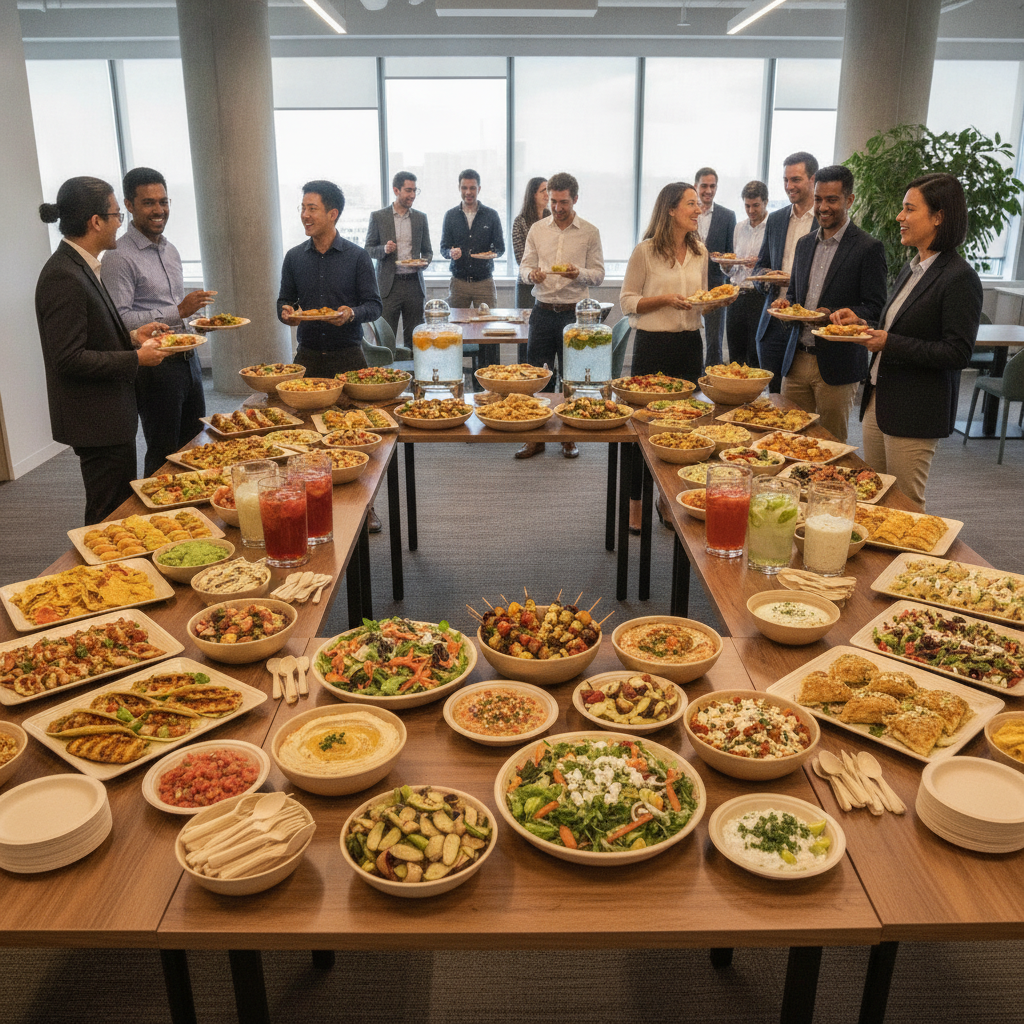
Office catering is the professional planning, preparation, labeling, and delivery of workplace meals for meetings, trainings, and recurring programs. From our Woodbridge base at Unit #23 120 Woodstream Blvd, LunchLink coordinates chef-curated menus and on-time delivery across Toronto and the GTA so every team member eats safely and meetings stay on schedule.
By Yash Patel • Last updated: 2026-06-21
Quick Overview
Use office catering to feed teams consistently, safely, and on time. Select the right format (boxed, buffet, or recurring), confirm dietary needs, and lock delivery windows. LunchLink streamlines menu curation, inclusive labeling, and corporate invoicing so office managers spend minutes—not hours—coordinating meals for 10–500+ guests.
In this complete guide, we translate real Toronto office needs into practical steps. You’ll see how to match service formats to meetings, capture dietary restrictions once, and keep a simple rotation that prevents menu fatigue. We’ll also share examples from finance, healthcare, education, and professional services.
• What office catering includes and how it fits your workday
• When to choose boxed meals, buffet-style spreads, and recurring programs
• Dietary coverage (halal, vegan, gluten-free, nut-free, dairy-free) with clear labels
• Planning timelines, headcount flexibility, and delivery logistics
• Best practices, templates, and Toronto-based case studies
What Is Office Catering?
Office catering is a workplace-focused food service that plans, prepares, labels, and delivers meals for on-site teams and guests. It supports one-off meetings and recurring meal programs, balancing taste, nutrition, and dietary safety with reliable timing and simple corporate invoicing.
At its core, office catering removes friction. You get balanced, chef-prepared meals without asking staff to manage menus, pick-ups, or cleanup. With LunchLink, the process spans menu planning, portioning, allergen-safe prep, fully labeled packaging, route planning, and post-event feedback for continuous improvement.
Our service portfolio reflects real office rhythms: individually packaged meals for training rooms, buffet-style spreads for team socials, breakfast catering for workshops, and recurring office meal programs when you want a set-and-forget schedule. Each option keeps inclusivity and presentation front and center.
• Formats: Individually packaged lunches, buffet-style spreads, breakfast service, and recurring programs.
• Dietary coverage: Halal, vegan, vegetarian, gluten-free, nut-free, dairy-free, and pescatarian options.
• Scale: Reliable for 10–500+ attendees with short-window headcount flexibility.
• Quality: Fresh, locally sourced ingredients from vetted Toronto partners; never-frozen meats.
• Operations: One point of contact and corporate invoicing simplify procurement.
If you’re new to workplace meals, our office lunch catering overview introduces key formats, while our corporate catering hub dives deeper into broader use cases.
Why Office Catering Matters for Teams
Done well, office catering improves attendance, focus, and culture. Clear labels and inclusive menus reduce allergy risk, and reliable delivery keeps agendas on track. In Woodbridge and the wider ON L4L 7Z1 area, shared meals help hybrid teams reconnect on anchor days without losing time to lunch logistics.
When lunch shows up complete and correctly labeled, meetings start on time. That reliability compounds: executives stay focused, clients feel hosted, and employees with dietary restrictions eat with confidence. Variety—Mexican, Mediterranean, and Greek plus healthy salads—keeps engagement high across months of recurring service.
In our experience supporting 850+ events and 25,000+ employees across the GTA, three patterns stand out: attendance rises on catered days, agendas run tighter with predictable delivery, and allergy confidence goes up when labeling is unambiguous. Those outcomes are why so many teams standardize catering rather than handling it ad hoc.
For a deeper dive into culture-building food moments, see our practical take in elevating corporate catering.
How Office Catering Works with LunchLink
We simplify the workflow: confirm headcount and diets, choose a menu, set your delivery window, and receive fully labeled meals on time. Afterward, you get one invoice and an easy path to reorder or schedule recurring office meal programs.
Here’s how a typical engagement flows from intake to delivery and feedback. This sequence keeps ownership clear, protects timelines, and ensures inclusive coverage without back-and-forth.
• Scope: Lock the event date, headcount range, arrival window, and dietary requirements. Note room location and any building access steps.
• Menu curation: Select chef-driven options across cuisines with vegetarian/vegan parity and balanced macros for afternoon energy.
• Labeling & safety: Provide clear ingredient and allergen labels, including halal, gluten-free, nut-free, dairy-free, and more.
• Delivery & setup: Expect on-time drop-off. Individually packaged meals require no setup; buffet options include serving utensils and portion cups.
• Post-meal support: Capture quick ratings to guide the next rotation, reduce leftovers, and streamline reorders.
Local considerations for Woodbridge
• Winter weather days can slow traffic. Buffer delivery earlier to protect meeting starts; we route with neighborhood patterns in mind.
• For Toronto anchor days, pre-plan recurring menus so bigger on-site cohorts get variety without last-minute scrambles.
• Healthcare and education offices often need strict labeling. Our inclusive packaging speeds safe distribution.
To see this process mapped to different event types, our ultimate corporate catering guide breaks down workflows by meeting style.
Office Catering Formats and When to Use Each
Choose individually packaged meals for speed and safety, buffet-style for collaboration and variety, and recurring programs for predictable calendars. Mixing formats across the month covers stand-ups, client demos, and all-hands without re-planning from scratch.
Every format fits a different moment. Individually packaged meals move fast and minimize contact. Buffets build community and let people portion to appetite. Recurring programs take lunch off your weekly to-do list by presetting windows and rotating menus with seasonal options.
FormatBest ForStrengthsConsiderations Individually packagedTraining rooms, back-to-back meetingsFast handoff, portion control, allergen confidenceLess interaction than a shared buffet Buffet-styleTeam-building lunches, client socialsShared experience, flexible portions, visual impactNeeds serving space and utensils Recurring programsWeekly office lunches, hybrid anchor daysSet-and-forget scheduling, rotating variety, one invoiceDefine dietary profiles up front; refresh quarterly Breakfast cateringMorning stand-ups, workshopsEarly energy, improved 9 a.m. attendanceConfirm hot beverages and warmers where needed
If you favor one approach most of the time, you can still layer others. For instance, keep a recurring Tuesday lunch, then add buffet-style for monthly all-hands. Our primer on boardroom-to-bbq corporate catering shows how formats scale from small rooms to larger gatherings.
Menu Planning and Dietary Accommodations
Start with an inclusive baseline—halal, vegan, and gluten-free in every order—then rotate cuisines to prevent fatigue. Clear ingredient and allergen labels speed distribution and boost confidence for employees with dietary restrictions.
Menu variety sustains interest across months. We rotate Mexican, Mediterranean, and Greek options alongside salad-forward bowls to balance flavor with nutrition. The goal is parity: plant-forward and halal choices should look, taste, and present as well as standard entrees.
• Inclusive baseline: Always include at least one halal, one vegan, and one gluten-free option.
• Rotations: Change cuisines weekly and refresh staples quarterly to use seasonal ingredients.
• Allergen clarity: Labels should list major allergens and dietary tags prominently for quick scanning.
• Portion planning: Pair mains with sides (salads, grains, or seasonal veg) to right-size appetite ranges.
• Beverages: For morning sessions, plan coffee and tea service; for lunch, offer still/sparkling water.
We’ve found that collecting dietary data once and keeping it current is the single biggest time-saver. If you need a refresher on healthy options, browse our healthy catering ideas for corporate teams.
Logistics and Delivery Timing in Toronto
Protect meeting starts by requesting arrival 15–20 minutes before agendas kick off. Account for weather and traffic, confirm building access, and stage food near the room entrance to reduce bottlenecks.
Toronto traffic ebbs and flows around school hours, construction, and weather. We pad routes to land early, especially in winter. Hot items travel in insulated carriers; individually packaged meals speed handoff with no setup required. Buffets need a stable surface and a defined flow line.
• Arrival buffer: Target 15–20 minutes pre-start to stage food and brief presenters.
• Access details: Note docks, elevators, and security sign-ins in the intake form.
• Flow planning: Place plates and utensils first, proteins next, sides after, and napkins at the end.
• Waste plan: Provide bins and designate cleanup roles to exit the room quickly.
When timing matters—client demos, board meetings—consider individually packaged meals for clockwork precision. For recurring calendars, we’ll align consistent windows so your team knows exactly when lunch arrives.
Best Practices for Stress-Free Planning
Lock your delivery window, collect dietary needs early, and keep a rotating menu calendar. Use labeled meals for allergy confidence and maintain a reusable checklist for room setup, utensils, and waste reduction.
Great office catering is repeatable. The same small habits—clear intake forms, realistic buffers, and inclusive menus—compound over time. That’s how large Toronto workplaces run dozens of lunches a quarter without firefighting.
• Collect diets once: Maintain a living roster covering halal, vegan, gluten-free, nut-free, dairy-free.
• Sequence the month: Alternate Mexican, Mediterranean, and Greek with salad bowls to avoid fatigue.
• Right-size portions: Mix mains with sides and fruit to cover light and heavy appetites.
• Protect the start: Request a 15–20 minute arrival buffer; assign a host for larger buffets.
• Close the loop: Capture quick ratings and comments; adjust the next rotation accordingly.
For managers balancing budget and wellness goals, our corporate catering Toronto page outlines how we maintain consistency while keeping operations simple for your team.
Tools, Templates, and Resources
Standardize planning with a one-page intake form, a rotating menu template, and a reusable delivery checklist. Pair these with inclusive labeling and simple corporate invoicing to cut admin time from hours to minutes.
Templates make ordering predictable. Most Toronto teams we support use the same three artifacts to keep everyone aligned: one intake form, one rolling menu calendar, and one delivery checklist. With those in place, reorders become a two-minute task.
• Intake form: Date, headcount range, dietary list, arrival window, room location, building access, and cleanup plan.
• Menu calendar: Pre-plan 8–12 weeks with alternating cuisines and at least one plant-forward option weekly.
• Delivery checklist: Utensils, serving tongs, napkins, waste and recycling plan, and extra portion cups.
• Reorder workflow: Save favorite menus and windows to streamline recurring office meal programs.
• Inclusive labeling: Ingredient and allergen tags for safe, fast distribution.
Looking to stretch your catering program further without complexity? Explore ideas in our boardroom-to-bbq guide for inspiration across seasons.
Need a hand mapping your next quarter? Our team can turn your calendar into a rotating menu plan with delivery windows and dietary parity. Start with our Toronto corporate guide or reach out through any page linked above.
Case Studies and Real Examples
Toronto teams use office catering to increase attendance, protect allergies, and simplify admin. With 850+ events completed, LunchLink’s labeled meals and reliable delivery help finance, healthcare, education, and professional services run smoother calendars.
Finance stand-ups: A downtown firm runs 30-minute stand-ups at 12 p.m. Individually packaged bowls arrive 20 minutes early, with vegan and gluten-free parity. Analysts grab meals, sync quickly, and return to client work without overruns.
Healthcare seminars: For compliance-heavy sessions, fully labeled, nut-free buffets move attendees through lines faster. Educators can scan for safe choices at a glance, reducing pre-session questions and delays.
Education workshops: Breakfast catering improves 9 a.m. attendance during exam periods. Protein-forward options stabilize morning energy, and set service times keep workshops punctual.
Professional services all-hands: A hybrid team schedules recurring Tuesday lunches. Predictable windows lift in-office participation on anchor days, and rotating cuisines maintain engagement across quarters.
For a tactical overview of planning from boardrooms to seasonal outdoor events, see how formats scale in practice.
Budget Planning and Decision Factors
Skip guesswork by clarifying headcount range, dietary mix, and service format. Real value comes from reliable delivery, inclusive labeling, and consistent quality that protect meeting outcomes and reduce admin time—not from chasing the lowest per‑meal figure.
In our experience, four inputs drive most planning decisions: group size, menu complexity, dietary coverage, and format. Reliability is the multiplier. When delivery is predictable, agendas stay tight, guest experience improves, and last-minute scrambling fades.
• Drivers: Group size, menu complexity, dietary coverage, and service format (boxed vs. buffet).
• Reliability ROI: On-time delivery protects meeting minutes and reduces rescheduling risk.
• Program gains: Recurring schedules reduce per-event planning time and stabilize attendance.
• Waste control: Right-sizing portions and smart sides limit leftovers without underserving guests.
For more ideas on structure without stress, skim our brief on low-effort office catering wins.
Key Takeaways
Pick the right format per meeting, collect dietary needs once, and standardize logistics. A reliable partner like LunchLink turns office catering into a repeatable, inclusive process that feeds teams well and keeps agendas on time.
• Match boxed, buffet, or recurring programs to the goal of each meeting.
• Centralize dietary data and insist on clear, inclusive labels.
• Pre-plan menus on a rotating calendar to avoid fatigue and rush orders.
• Protect start times with realistic delivery buffers and room setup.
Frequently Asked Questions
These quick answers address the most common buyer questions about office catering—from timelines to dietary coverage and delivery logistics—so you can plan with confidence.
How far in advance should I book office catering?
Secure dates early for large events. For standard office lunches, many teams finalize headcount and dietary needs 24–72 hours ahead. Same‑day options exist, but recurring calendars reduce stress and improve consistency over time.
Can you accommodate halal, vegan, and gluten-free in one order?
Yes. We coordinate inclusive menus and use clear labeling so guests identify safe choices quickly. Mixed orders are common in Toronto workplaces and are fully supported with equal variety and presentation.
Do I need serving staff for buffet-style lunches?
Most corporate buffets are self-serve with provided utensils and portion cups. We recommend a host to guide traffic and refresh platters during larger all‑hands or client socials for a smoother flow.
What happens if headcount changes last minute?
We plan with ranges and offer short‑window adjustments. For ongoing programs, a quick weekly headcount review keeps orders aligned and reduces waste while ensuring everyone is fed.
Conclusion
Office catering works best when it’s standardized: inclusive menus, clear labels, realistic buffers, and set delivery windows. With that foundation, your team can scale from small meetings to recurring programs without stress or guesswork.
Here’s the thing: food is both fuel and a culture driver. When your plan respects time, diets, and variety, everything else gets easier—attendance, focus, and the flow of your workday. If you want a hand turning your calendar into a consistent meal rhythm, we’re ready to help across Toronto and the GTA.
Ready to design a quarter that runs itself? Start with the internal resources linked above, then lock your first recurring window. We’ll bring the chef-curated menus, inclusive labels, and on-time delivery that let your meetings run like clockwork.