Catering
Office Lunch Catering: Feed Teams Better in 2026
A practical, inclusive guide to office lunch catering in Toronto and the GTA—formats, menus, labeling, and logistics—so meetings run on time and teams eat well.
June 22, 2026 · LunchLink
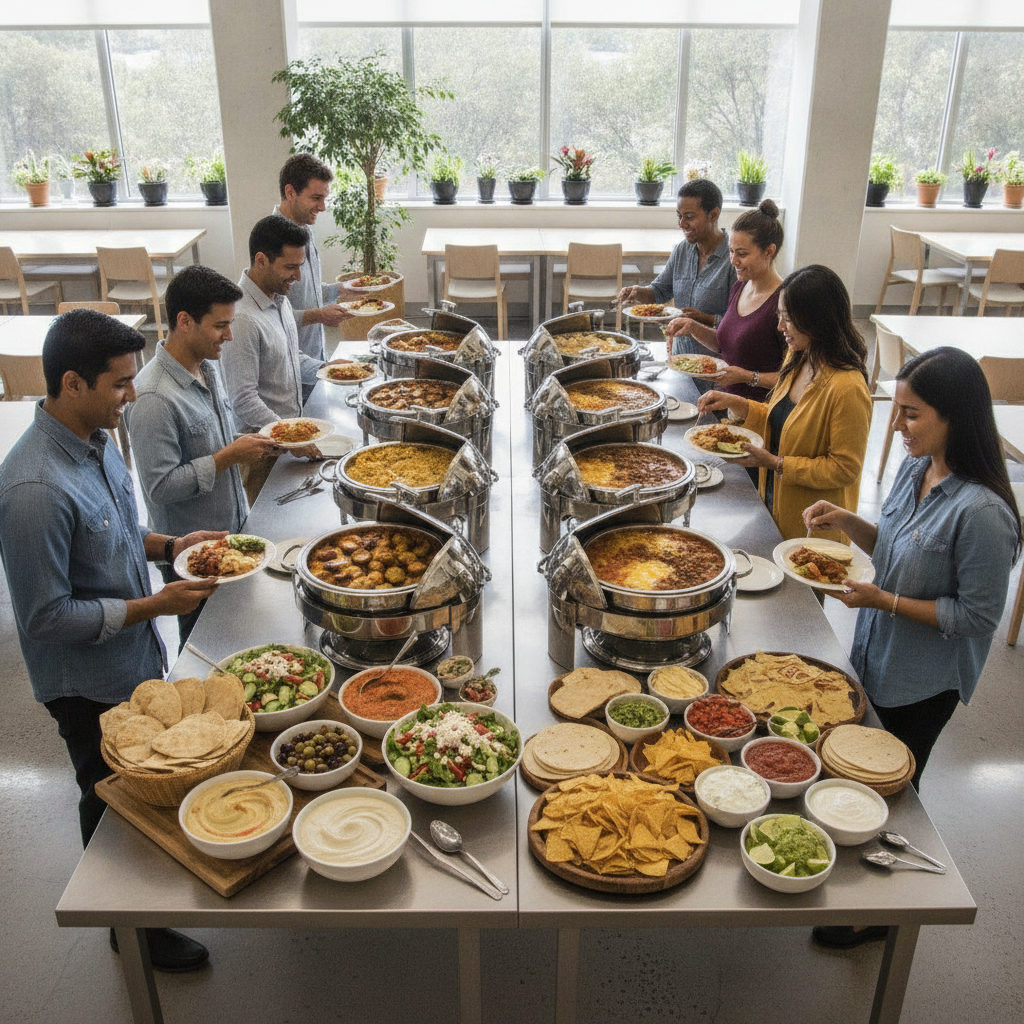
Office lunch catering is the coordinated planning, preparation, delivery, and setup of midday meals for workplaces. It supports meetings and team culture by providing inclusive menus, reliable timing, and professional presentation. In Woodbridge at Unit #23 120 Woodstream Blvd, LunchLink organizes office lunch catering across the GTA with labeled meals, dietary coverage, and smooth corporate workflows.
By LunchLink • Last updated: 2026-06-22
Above-Fold Guide + Quick TOC
Use this guide to run stress-free office lunch catering: align headcount and goals, select inclusive menus, plan delivery windows, and set out serviceware for fast, tidy service. We cover formats, timelines, dietary accommodations, and on-site flow so your team eats well—and your meeting stays on track.
Busy office? Tight agenda? This playbook helps you feed teams without derailing the workday. You’ll learn how to match formats to events, order with confidence, and create a smooth, safe experience for every guest.
• What office lunch catering is—and what it isn’t
• Why lunch programs lift culture, wellness, and attendance
• How the end-to-end process works with LunchLink
• Formats and menu styles for different meetings
• Best practices for ordering, setup, and food safety
• Tools and templates for planners and EAs
• Local delivery tactics for Woodbridge and the GTA
What Is Office Lunch Catering?
Office lunch catering is a workplace-focused meal service that delivers preplanned lunches—boxed or buffet—to teams on a set schedule. The goal is punctual, inclusive meals that fit meetings, training, and client sessions without kitchen staff or on-site cooking.
At its core, office lunch catering blends logistics and hospitality. You’re coordinating people, time, and food into a 45–60 minute window while maintaining quality and variety.
• Core components: forecasting headcount, dietary mapping, menu selection, delivery timing, serviceware, and cleanup planning.
• Common use cases: town halls, trainings, client briefings, all-hands, quarterly planning, and hybrid collaboration days.
• Inclusive coverage: halal, vegan, vegetarian, gluten-free, nut-free, dairy-free, and pescatarian labeling so everyone eats confidently.
• Format choices: individually packaged meals for speed and clarity, or buffet-style spreads for variety and communal energy.
LunchLink is purpose-built for corporate needs across Toronto and the GTA. The team reports 850+ events coordinated, 25,000+ employees fed, and a 98% satisfaction rate—numbers that reflect repeatable systems more than one-off luck.
Why Office Lunch Catering Matters
Lunch catering fuels productivity, connection, and attendance. Well-run programs reduce time away from desks, streamline meetings, and make hybrid days more attractive. Inclusive meals also demonstrate care—boosting morale and supporting wellness goals.
Food brings people together—and keeps agendas moving. When meals arrive labeled, on time, and portioned correctly, meetings start on time, conversations flow, and organizers can focus on outcomes instead of logistics.
• Engagement: shared meals increase cross-team interactions, especially during all-hands and workshops.
• Time savings: on-site lunch can reclaim 20–30 minutes compared with external takeout runs for a 20-person group.
• Equity + inclusion: transparent labeling ensures dietary-restricted team members aren’t sidelined.
• Employer brand: consistent, high-quality food signals standards and care to clients and candidates.
• Wellness: balanced menus (lean proteins, grains, vegetables) stabilize afternoon energy compared with ad-hoc snacks.
In our experience, a small set of predictable standards—clear labeling, sturdy packaging, and accurate headcounts—does more for satisfaction than any single “trendy” dish. That’s the scaffolding that makes variety possible week after week.
How Office Lunch Catering Works (with LunchLink)
The process runs on five stages: scope, select, confirm, deliver, and debrief. Define headcount and dietary needs, choose the format and menu, lock drop-off details, receive on schedule, then capture feedback to refine the next order.
Here’s our standard workflow that corporate planners rely on across the GTA.
• Scope the event (10–500+ guests). Clarify meeting type, service length, and any VIP or presenter needs.
• Map dietary requirements (halal, vegan, gluten-free, nut-free, dairy-free, pescatarian). Decide if you’ll run all-labeled boxes or a labeled buffet.
• Select menu + format from globally inspired sets: Mexican, Mediterranean, Greek, or salad-forward builds.
• Lock logistics: building access, delivery window, contact on arrival, and placement plan for tables or credenzas.
• Delivery + setup: food arrives labeled; hot-holds stay closed until service; utensils and serving pieces are laid out in order of use.
• Debrief + iterate: capture portions left, guest feedback, and timing notes to improve the next round.
If you’re planning a recurring cadence, our corporate catering guide outlines rotation strategies that keep menus fresh for monthly or weekly programs. For one-time events, explore our corporate catering options to match the room, run-of-show, and dietary mix.
Need a fast primer? Our elevate-your-catering checklist covers packaging, signage, and flow—small details that prevent service bottlenecks for groups of 25–100.
Types of Office Lunch Catering (Formats & Menus)
Choose from individually packaged meals for speed and clarity, buffet-style for variety and collaboration, or a hybrid for mixed needs. Pair formats with cuisines—Mexican, Mediterranean, Greek, or salad-forward—to cover tastes and dietary restrictions.
Format drives flow. Menu drives satisfaction. Together, they determine how quickly guests eat and how confident they feel about ingredients.
Service formats
• Individually packaged: one label per guest; fastest line speed; minimal cross-contact risk; easiest cleanup.
• Buffet-style: more variety; communal energy; ideal for workshops and celebratory lunches.
• Hybrid line: a small set of labeled boxes for dietary needs plus a buffet for everyone else.
Menu approaches
• Mexican-inspired: protein bowls or taco kits with rice, beans, salsas, and roasted vegetables.
• Mediterranean: grilled chicken or falafel, grains, chopped salads, tahini or yogurt dressings.
• Greek: souvlaki proteins, Greek salad, lemon potatoes, roasted vegetables, and pita.
• Salad-forward: hearty greens with grains, legumes, crunchy vegetables, and customizable dressings.
Dietary coverage (labeled)
• Halal: halal proteins or fully vegetarian builds.
• Vegan: plant-forward entrees and sides without animal products.
• Gluten-free: dedicated boxes or grain swaps on salad/bowl builds.
• Nut-free: ingredients verified; trays kept separated during service planning.
• Dairy-free: dressings/sauces on the side with clear labels.
• Pescatarian: fish-forward builds or optional add-on proteins.
Our lunch catering overview explains how we tailor portioning by meeting length—typically planning 2–3 components per guest in boxed builds and 4–5 in buffets to keep lines moving and plates balanced.
Comparison table: Format vs. Outcomes
Format Speed of service Dietary control Setup effort Best for Individually packaged Fastest (1–2 minutes/guest) Highest (one label per guest) Low Trainings, tight agendas, hybrid days Buffet-style Moderate (2–3 minutes/guest) Moderate (labeled components) Medium Town halls, celebrations, workshops Hybrid Fast for labeled; moderate overall High for labeled; moderate for buffet Medium Mixed dietary profiles; all-hands
Best Practices for Ordering and Hosting
Commit to clear counts, visible labels, and room flow. Order a small buffer for late RSVPs, stage utensils in grab order, and place beverages at the end of the line. These basics prevent bottlenecks and ensure inclusive service.
Ordering discipline
• Confirm headcount 24 hours out and hold a 5–8% buffer for late RSVPs.
• Map dietary needs using your HR directory or RSVP form; aim for at least six labeled categories.
• Lock a delivery window that ends 10–15 minutes before the agenda resumes.
Room flow and setup
• One-way line: plates first, then mains, then toppings, then beverages last to reduce traffic.
• Spacing: leave 18–24 inches between chafers or stations to avoid crowding.
• Signs and labels: place dietary icons at eye level; repeat on lids for visibility.
• Waste planning: position bins after napkins to encourage tidy disposal.
Food safety and presentation
• Hold hot foods closed until service; rotate lids rather than fully removing them.
• Refresh surfaces with a dry towel every 10–15 guests to keep the line inviting.
• Backup utensils staged every 10–12 feet to prevent line stalls when tongs wander.
For more hosting details, see our corporate lunch tips covering agenda timing, room setups, and cross-contact prevention when serving buffet lines beside labeled boxes.
Tools and Resources for Planners
Standardize your lunch program with templates and tech. Use a shared intake form for dietary needs, calendar holds for delivery windows, and a tracker for menu rotation. LunchLink’s upcoming app adds individual ordering, live tracking, and admin dashboards.
Great programs are predictable behind the scenes and delightful on the table. Here’s a toolkit we recommend for offices running frequent lunches.
• Intake template: event date, headcount, dietary tags, on-site contact, and access notes.
• Rotation tracker: rotate cuisines weekly or biweekly; avoid repeating a menu inside a 4–6 week window.
• Service checklist: tables, power (if warmers are used), waste bins, water, and allergen signage.
• Feedback loop: collect quick thumbs-up/neutral/down from 10–15% of attendees after each lunch.
When you’re ready to scale, our low-lift office catering tips outline simple changes—like pre-bundled utensil kits—that shave minutes off service for 50–100 guests.
Free planning consult for your next lunch
We’ll map dietary needs, recommend a format, and set a delivery window that fits your agenda. Share your next date and headcount, and we’ll handle the rest.
Start with our office catering overview for ideas you can implement this week.
Case Studies and Real-World Examples
Repeatable systems win. LunchLink has coordinated 850+ events and served 25,000+ employees with a 98% satisfaction rate by standardizing menu rotation, labels, and on-time delivery across Toronto offices.
Weekly hybrid day (120 guests)
• Challenge: long lines and cross-contact concerns on a hybrid collaboration day.
• Approach: hybrid format—20 labeled boxes for allergen and religious needs; Mediterranean buffet for the rest.
• Outcome: line cleared in 18 minutes; attendance for the next hybrid day rose by 12%.
Quarterly town hall (300 guests)
• Challenge: limited break window and multiple speaker transitions.
• Approach: individually packaged bowls (Mexican + salad-forward) staged on two parallel lines.
• Outcome: all guests served in ~25 minutes; zero schedule slippage reported.
Client workshop (40 guests)
• Challenge: accommodate pescatarian and dairy-free guests; impress an enterprise client.
• Approach: Greek buffet with labeled proteins, dairy-free dressings on the side, and pescatarian add-ons.
• Outcome: 9.5/10 average feedback; follow-up workshop expanded to 80 guests.
Want more playbooks? Our office lunch catering overview shows sample pairings by meeting type so you can copy a plan and run.
Local Delivery & Logistics in Woodbridge and the GTA
LunchLink operates from Woodbridge (ON L4L 7Z1) to serve Toronto and the GTA with punctual lunch delivery and labeled meals. Neighborhood familiarity shortens handoffs, supports building access steps, and keeps food hot and tidy on arrival.
Local knowledge matters. Building access, elevator timing, and loading protocols vary across offices. We document these details so your food reaches the right floor—on time and intact.
• Access notes: security desk check-ins, loading docks, and elevator reservations reduce delay risk.
• Weather buffers: rainy or snowy forecasts trigger earlier departure windows and insulated carriers.
• Arrival flow: we text the on-site contact 5–10 minutes out, then confirm placement before we leave.
Local considerations for Woodbridge
• Plan lunch windows outside typical neighborhood arrival surges to keep lines short and service crisp.
• During winter and spring storms, allow extra time for delivery and room setup so hot-holds stay closed until service.
• For mixed teams, combine labeled boxes with a Mediterranean or Greek station to cover halal and vegetarian needs confidently.
Managing recurring meals across multiple offices? Our Toronto office catering page outlines how to standardize delivery windows and menus across locations.
FAQ: Office Lunch Catering
You’ll find quick answers to the most common questions below—from lead times and format choices to dietary labeling and on-site setup. Each response is concise so planners can act fast.
How far in advance should I order office lunch catering?
Place orders as soon as your meeting is set. For recurring programs, set a monthly rotation. For one-time events, confirm headcount and dietary needs at least 24–48 hours out so labels and logistics are precise.
Should I choose individually packaged meals or a buffet?
Use individually packaged meals when time is tight or you’re serving many dietary needs. Choose a buffet when you want variety and conversation. A hybrid works for mixed groups: labeled boxes for specific diets plus a buffet for everyone else.
How does LunchLink handle allergies and dietary restrictions?
We provide fully labeled meals and clearly marked buffet components across halal, vegan, vegetarian, gluten-free, nut-free, dairy-free, and pescatarian categories. Labels appear on packaging and trays so guests can choose confidently.
What if my headcount changes last minute?
It happens. Hold a small buffer (5–8%) for late RSVPs. If headcount jumps significantly, contact us; we’ll advise substitutions or fast add-ons and adjust labels to keep service accurate.
Can you support recurring office lunch programs?
Yes. We manage rotating menus, consistent delivery windows, and single-invoice workflows across multiple locations. Weekly or biweekly schedules work best, with cuisine repeats avoided for 4–6 weeks to maintain variety.
Conclusion and Next Steps
Great office lunch catering is predictable behind the scenes and delightful on the table. Standardize counts, labels, and timing; rotate cuisines; and document access. The result: faster lines, safer choices, and happier teams.
Here’s how to put this guide to work the next time you feed a team.
Key takeaways
• Match format to agenda: boxed for speed, buffet for variety, hybrid for mixed needs.
• Labeling drives confidence; staging drives speed. Both matter.
• Use rotation trackers so menus stay fresh over 4–6 weeks.
• Document access once; benefit every time you reorder.
Ready to plan with a partner? Explore our corporate catering services, review our office lunch catering overview, and align your next delivery window with our Toronto office catering guide. Let’s make your next lunch the smoothest yet.