Guides
What should you ask before choosing live catering delivery tracking?
Checklist for Toronto office buyers: exact questions, demo tests, and red flags to validate live catering delivery tracking before you commit.
August 12, 2026 · Yash Patel
What should you ask before choosing live catering delivery tracking?
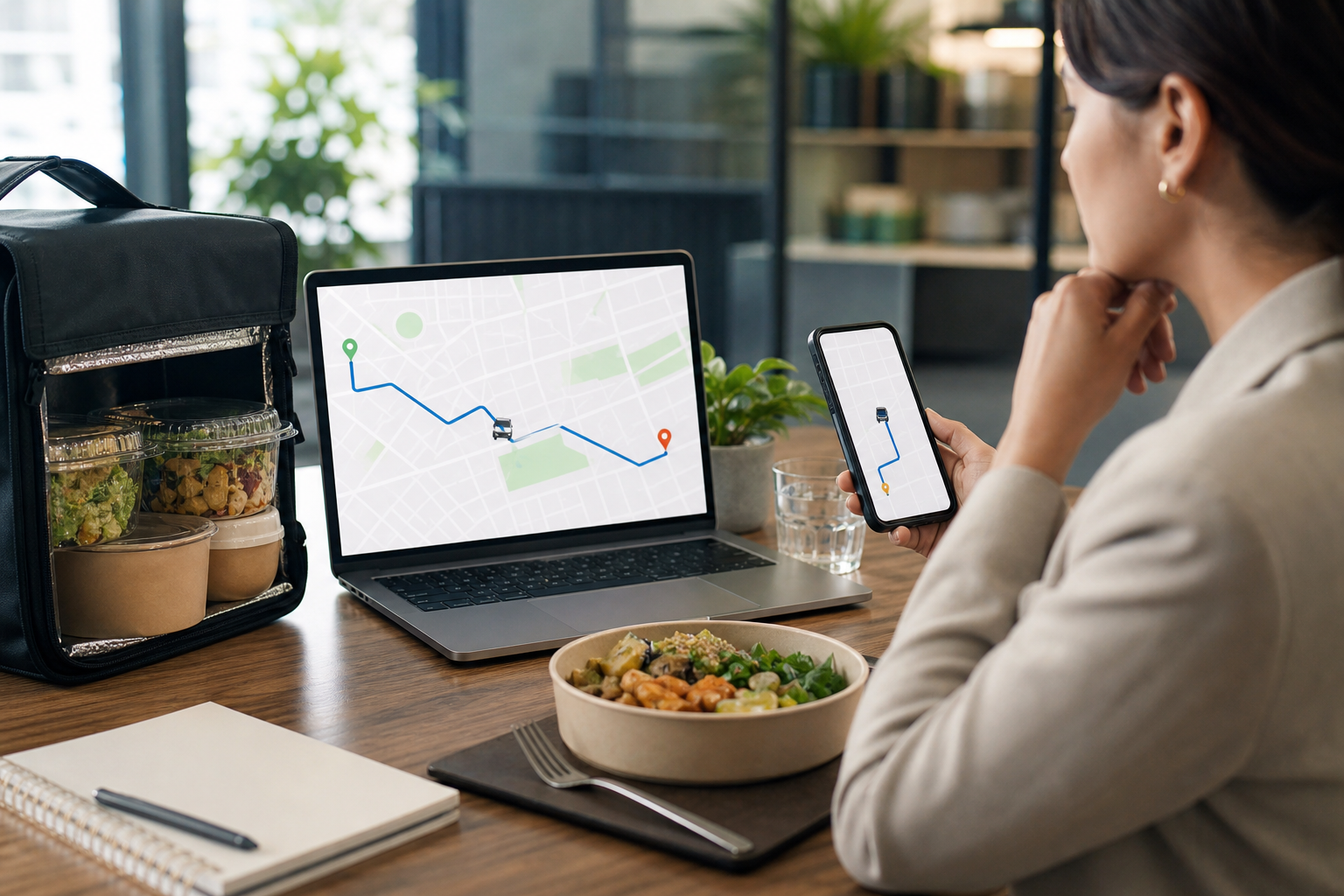
If your role includes ordering office lunches, running recurring meal programs, or booking event catering in Toronto and the GTA, choosing a tracking solution matters. A working tracker does more than show a pin on a map. It must provide operational milestones, photo or timestamp evidence, and integration with corporate processes so you can diagnose delays, protect food quality, and reduce vendor management overhead. This checklist explains the exact questions to ask vendors, the demo tests that reveal real gaps, and the local delivery details you must confirm before you sign.
Quick decision checklist: nine essential questions to ask first
Use these nine questions to immediately eliminate vendors that offer only cosmetic tracking:
• Does your tracking include milestone events with timestamps for kitchen completion, pickup, en route, arrival, and setup?
• Can the tracker deliver SMS map links and in-app updates, and which will my staff actually receive?
• Is there photo verification or a timestamped handover record at delivery and setup?
• Which interfaces exist: customer app/website, vendor panel, driver app, and an admin dashboard?
• Do you provide APIs or webhooks for order status, and can they integrate with our procurement or admin systems?
• What are your SLAs for on-time arrival, and what remedies exist for missed windows?
• How long do you retain tracking and location telemetry, and how is that data protected?
• Can you run a pilot using our typical order types and a real delivery address, including an office tower or hospital?
• How do you train drivers on catering setup and temperature handling versus general food delivery?
These questions reflect best practice checks for white-label and delivery platforms, which treat real-time GPS tracking as a baseline but layer on operational controls to be useful for catering operations; for a vendor checklist see guidance on what a complete delivery platform requires in a demo White-Label Food Delivery App: 15 Questions to Ask.
Technical capabilities that must be present
Milestones, timestamps, and photo verification
Ask for milestone granularity, not just GPS coordinates. The system should record kitchen completion, pickup, driver assigned, on-route, arrival at loading area, and setup complete, each with timestamps. Photo verification at pickup and setup lets you confirm that items were loaded correctly and that the buffet or boxed-lunch handoff was completed. Industry advice explains why milestones and photo evidence are necessary to diagnose handoff failures during a delivery breakdown How to Fix Catering Delivery Breakdowns in 2026.
Multi-interface architecture
Demand that the platform provide four distinct interfaces: a customer-facing app or website, a vendor panel for kitchens, a driver app with guided checklists, and an admin dashboard for your procurement team. Real-time GPS tracking is a baseline expectation, but the full workflow matters when you coordinate setup and invoicing White-Label Food Delivery App: 15 Questions to Ask.
APIs, webhooks, and data retention
If you need consolidated corporate invoicing or integration with your order system, test APIs or webhooks for order and status events. Clarify retention policies for tracking telemetry and delivery photos, and ask whether data export and audit logs are available for billing disputes. These details determine whether tracking is useful for accounting and compliance.
Notifications and user experience: what staff and guests will actually see
Decide which notification channel works best for your team. Major catering marketplaces send SMS map links as the event time approaches, but offices often prefer admin dashboards with audit trails and email confirmations for record keeping. Vendors like ezCater highlight the practical value of SMS map links timed to event windows Can I track my food delivery?, and some platforms deliver the same experience through a tracking page link in a text message How do I track an order?.
In your demo, validate message content. Each status update should include an ETA, the milestone label, and contact information for the driver or operations coordinator. Test the latency from a status change to the notification, and verify whether notifications are human readable for non-technical staff.
Operational checks and demo tests to run during vendor trials
Run the following scripted tests during a live demo or pilot. These scenarios are designed to expose common failure modes so you can evaluate whether the solution is operationally ready for office towers, hospitals, or campus venues.
• Simulated rush order: Place an order with a short lead time to test kitchen completion timestamps and whether the driver is dispatched early enough to meet your arrival window. Industry checklists recommend aligning arrival 15 to 45 minutes before guests begin eating to preserve temperature and presentation Questions to Ask Catering Companies.
• Building access failure: Use a delivery address with expected access friction, such as an office tower requiring security sign-in or a loading dock with timed access. Confirm the driver receives specific access instructions and that the tracker logs arrival at the loading area versus the final delivery room. Shawarma Moose notes that a street address is not a delivery plan and that final metres often create delays Toronto Corporate Catering Delivery & Access Checklist.
• Last-minute headcount change: Add or remove 10 to 20 percent of the order within the confirmed window and watch how the vendor handles inventory, substitutions, and billing adjustments in the admin dashboard and in the driver checklist.
• Temperature and setup verification: Require a timestamped photo of plated food or boxed-lunch stacks on setup, and record a temperature reading where appropriate. Photo evidence should be available in the order audit for disputes.
• Driver handoff test: Confirm that the driver follows a catering checklist in the app rather than a generic food delivery flow. A catering driver should present labelled items, confirm allergen labels, and stage buffet trays for service.
Insist that the vendor run at least one pilot using your real order types and one of your actual delivery addresses so you experience how the tracker behaves under realistic constraints.
Integrations, privacy, and commercial terms to verify before you sign
Before procurement, confirm these contract and governance items:
• Corporate invoicing and one-invoice consolidation for recurring programs.
• APIs or webhooks that send order, status, and billing events to your finance system.
• Data retention policies for GPS and photo evidence, and controls for who in your organization can access sensitive location data.
• Service-level agreements for on-time arrival with measurable metrics and remedies for missed windows.
• Driver training standards for catering-specific handling and allergen controls.
These items let tracking data serve as audit evidence for disputes and for continuous improvement in recurring office meal programs. Last-mile evaluation guides recommend aligning the tracking granularity and integration surface with the operational problems you plan to solve Questions to Ask Before Choosing Last-Mile Delivery Software.
Common red flags and failure modes buyers often miss
Watch for these warning signs that tracking is cosmetic or incomplete:
• GPS-only map links without milestone events or photos. That map might show movement but not whether the driver actually completed setup.
• No driver checklist or app specifically for catering. Generic drivers are more likely to mishandle setup or leave items in bags.
• Vendor refuses a demo using your order types or declines a pilot at one of your addresses.
• Promises of guaranteed same-day fulfilment without written capacity or blackout dates.
• No audit trail or exportable records for tracking events, photos, and timestamps.
If you see any of these issues during a demo, treat them as a procurement risk that requires mitigation before you proceed.
Toronto and GTA venue realities: briefing drivers and avoiding access delays
Local delivery challenges make a tracking system far more valuable if the vendor will accept and operationalize specific access instructions. For office towers, hospitals, universities, and hotels, provide the vendor with:
• Exact delivery point and contact name with a phone number that will be reachable on delivery.
• Security pass instructions, expected wait times, and any credential forms the driver must complete in advance.
• Loading dock location, elevator booking windows, and parking permit needs.
• Preferred arrival window, typically 15 to 45 minutes before service, so hot items and presentation meet your expectations; for recommended arrival windows see the event planning checklist Toronto Corporate Catering Delivery & Access Checklist.
For recurring programs, add these delivery rules to purchase orders and to the vendor onboarding document so drivers learn site-specific procedures.
How to score pilots and make the final decision
Use a three-tier scoring rubric for a 1 to 2 week pilot:
• Must-have (pass required): milestones with timestamps, photo verification at setup, driver catering checklist, and documented access plan for your sites.
• Important: API/webhook availability, admin dashboard audit logs, SMS and in-app notifications, and SLA terms for on-time arrival.
• Nice-to-have: single sign-on, automated corporate invoicing, and dietary filters within the app.
Run two pilot orders: a standard recurring lunch and an event-style buffet or boxed-lunch setup in a high-friction delivery location. Score each pilot across the rubric and require remediation plans for any must-have failures. This approach keeps procurement practical and risk limited.
FAQ
What tracking milestones should a catering tracker include to protect food quality?
Include at minimum kitchen completion, driver pickup with photo, driver assigned, on-route, arrival at building or loading area, arrival at final room, and setup complete with a timestamped photo. These milestones let you measure the time between pickup and service, which affects food temperature and presentation; see practical milestone recommendations in operational guides How to Fix Catering Delivery Breakdowns in 2026.
Can live delivery tracking guarantee on-time arrival for office tower deliveries?
No tracking system can guarantee punctuality by itself. Tracking provides visibility and evidence, but you should require documented SLAs, driver training, and site-specific access plans to reduce risk. Industry checklists also advise building in a 15 to 45-minute buffer before service to protect quality Questions to Ask Catering Companies.
How do I test a vendor's tracking during a one-off event versus a recurring program?
For a one-off event run a stress test with a short lead-time order to validate milestones and setup photos. For a recurring program run at least two deliveries to measure consistency and to test invoice reconciliation with your accounting flow. Always pilot using your real delivery addresses.
What data privacy questions should I ask about delivery location and driver telemetry?
Ask how long GPS tracks and photos are retained, who can access them, whether data exports are provided for audit, and what encryption controls are in place. Limit access to location telemetry to staff who need it for operations or dispute resolution.
Which tracking failures typically cause the biggest guest experience problems?
Failures that most often cause guest complaints are late arrival without notice, missing setup or mislabeled items, and lack of allergen labels at handoff. Photo verification and milestone alerts prevent most of these issues by giving your team early warning to intervene.
Key next steps: run the demo script above with any shortlisted vendors, add site-specific delivery instructions to every order, and insist on a short pilot before you commit to recurring programs. For office catering quotes and pilots that can include a live delivery tracking trial, consider speaking with local providers that support corporate programs and tailored briefs for the GTA—for example, request a quote for catering that can be trialled at your site.
Ready to test a live delivery tracking pilot with a Toronto-based corporate caterer? Contact LunchLink to schedule a demo and pilot of their office meal programs and tracking features.