Catering
Team Lunches: Boost Morale and Save Time in 2026
Plan team lunches in Woodbridge that boost morale and save time. Learn formats, menus, logistics, and a checklist for inclusive, on-time office meals.
June 27, 2026 · Yash Patel
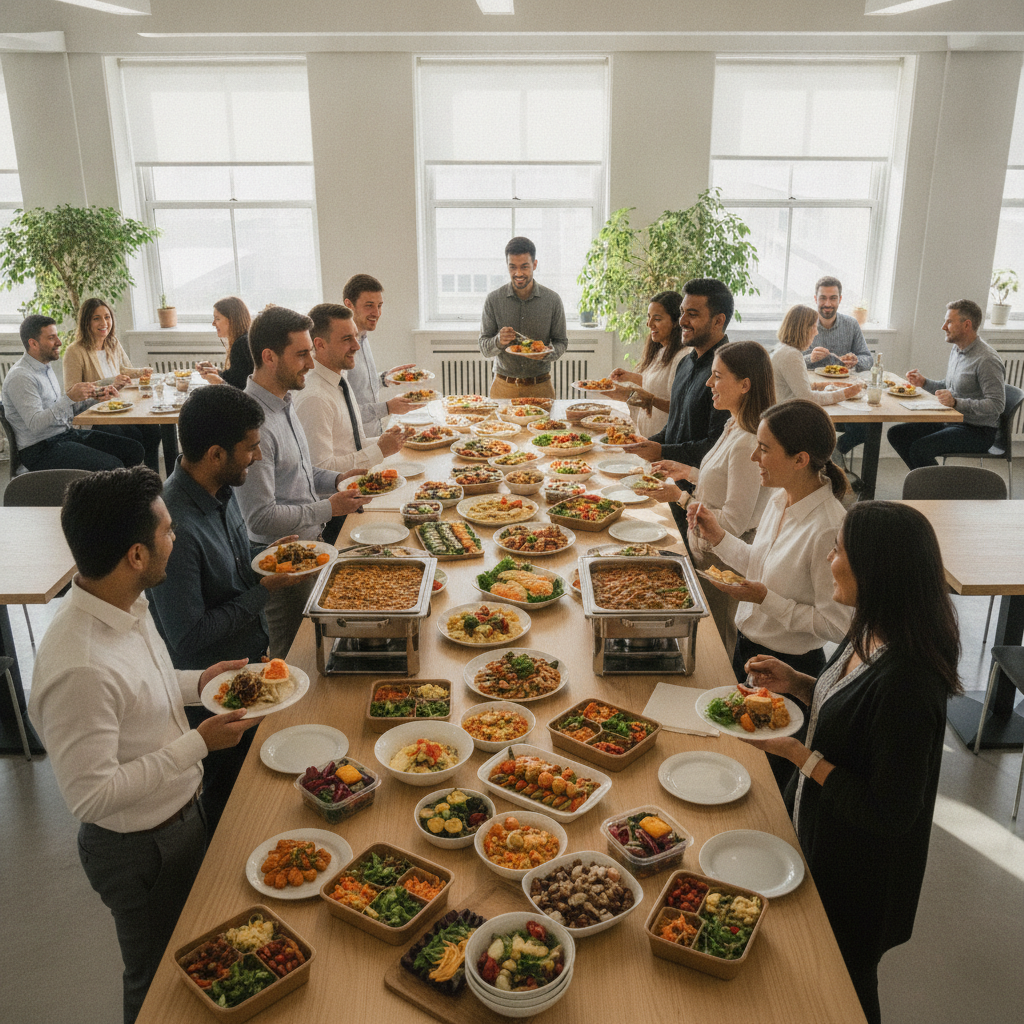
Team lunches are recurring or one-off shared meals that bring coworkers together to eat, connect, and recharge during the workday. They strengthen culture, spark collaboration, and make meetings more productive. In Woodbridge offices, team lunches work best when menus are inclusive, deliveries run on time, and ordering is simple for busy coordinators.
By Yash Patel • Last updated: 2026-06-27
Summary
This complete guide shows Woodbridge coordinators how to plan inclusive, on-time team lunches with minimal effort. You’ll learn formats (boxed and buffet), menu ideas for dietary needs, an ordering workflow, logistics tips, and a repeatable checklist for weekly or monthly meals.
Coordinating food for 10–500+ people is a real project. The good news: there’s a simple pattern that works. In this guide, we’ll cover what team lunches are, why they matter, how to run them well, formats to use, best practices, and tools to keep everything on track. You’ll also see examples from LunchLink’s Woodbridge and GTA programs—built for corporate teams that need professional presentation, labeled meals, and dependable delivery.
What are team lunches?
Team lunches are planned office meals—either recurring or ad hoc—designed to bring coworkers together, boost morale, and support meetings. Effective team lunches balance variety, dietary inclusion, and reliable delivery so everyone can eat confidently without derailing the workday.
At their best, team lunches are a culture engine. They’re structured breaks that help people reset, share ideas, and feel appreciated. Unlike last‑minute takeout, corporate-grade lunches are organized: menus are chosen in advance, dietary needs are accounted for, and deliveries land at the right room and time.
LunchLink supports team lunches across the GTA with chef-curated Mexican, Mediterranean, Greek, and healthy salad menus. Coordinators can choose individually packaged meals or buffet-style spreads, both fully labeled. For offices that host frequent meetings, a recurring office meal program removes weekly planning while keeping menus fresh.
• Inclusive by design: Halal, vegan, gluten-free, nut-free, dairy-free, and pescatarian coverage.
• Operational fit: One invoice, one point of contact, and flexible headcounts.
• Proven at scale: 850+ events served; 25,000+ employees fed; 98% client satisfaction reported.
For Woodbridge teams, predictable logistics are crucial. Many offices coordinate client sessions and all-hands around lunchtime; on-time delivery and clear labeling keep the agenda moving.
Why team lunches matter
Team lunches improve connection, productivity, and wellness. They reduce time lost to ad‑hoc ordering, support inclusive culture with labeled meals, and create a consistent moment for collaboration—especially useful for hybrid schedules and busy meeting days.
Food is a fast, tangible way to show appreciation—and it’s measurable. Organizations using structured lunches often see better attendance at town halls, stronger engagement during workshops, and smoother client meetings. Internally reported program data shows that reliable food logistics can save hours per coordinator per month by standardizing menus, headcounts, and drop-off procedures.
• Culture & morale: Shared meals build trust quickly, especially for new hires and cross-functional teams.
• Meeting efficiency: Fewer late returns and side trips when food is on-site, clearly labeled, and ready at agenda breaks.
• Wellness & inclusion: Balanced options (e.g., Mediterranean bowls, hearty proteins, and vibrant salads) help everyone participate safely.
• Vendor simplicity: One partner that can serve 10–500+ covers growth, offsites, and seasonal surges.
Here’s the thing: the best programs aren’t extravagant—they’re consistent. A reliable cadence, rotating menus, and transparent dietary labeling deliver most of the value without creating planning overhead.
How team lunches work (step-by-step)
Successful team lunches follow a clear workflow: define goals and headcount, choose an inclusive format, select rotating menus, lock delivery details, communicate clearly, and capture feedback for the next cycle. Repeat this cadence for stress-free weekly or monthly meals.
Planning workflow
• Clarify goals: Culture-building, client-facing, training day, or project sprint? Goals guide format and menu tone.
• Scope headcount: Confirm dietary needs and any allergies; plan for 10–500+ guests with a 24‑hour update window.
• Pick a format: Individually packaged meals for speed and labeling; buffet-style for social energy and variety.
• Select menus: Rotate cuisines (Mexican, Mediterranean, Greek, salads) to keep interest and balance nutrition.
• Lock logistics: Room, floor, service elevator timing, and drop-off instructions; confirm serving utensils and disposables.
• Communicate: Send calendar holds with menu highlights and dietary notes; include pickup/cleanup plan.
• Capture feedback: Quick post-lunch pulse (“favorite dish, any gaps?”) to improve the next order.
Pro tips from delivery operations
• Designate a delivery point person with phone-on-hand during a 30‑minute arrival window.
• Ask for fully labeled meals (name of dish + dietary icons) to reduce line friction by 50%+ during peak arrival.
• Stage a traffic flow: one table for pickup; a second for beverages/sauces to avoid bottlenecks.
• Keep a backup cooler or warming chafers for workshops running long.
LunchLink’s corporate processes are built for this flow: one point of contact, corporate invoicing, and vetted partners who understand building access, meeting room drop-offs, and labeled packaging. It’s purpose-built for offices, not ad‑hoc takeout.
Team lunch formats: boxed, buffet, and recurring programs
Choose individually packaged meals for speed and dietary clarity, buffet-style for social energy and variety, or recurring programs to automate weekly lunches. The right choice depends on headcount, agenda, room layout, and labeling needs.
Format Best for Strengths Watch-outs Individually packaged meals Training days; tight agendas; allergy-sensitive teams Fast pickup; full labeling; easy leftovers; minimal setup Less communal feel; more packaging to manage Buffet-style spreads Celebrations; all‑hands; social connection Mix‑and‑match variety; interactive; fewer containers Needs staging space; stronger portion monitoring Recurring meal program Weekly or monthly lunches across teams “Set‑and‑forget” planning; rotating menus; one invoice Requires a simple feedback loop to fine‑tune favorites
Popular menu directions
• Mexican: Chicken tinga bowls, roasted veggie fajitas, cilantro-lime rice, salsas, and gluten‑free tortillas.
• Mediterranean: Herb chicken, lemon potatoes, roasted veg, hummus, and crisp salads with dairy‑free dressings.
• Greek: Grilled souvlaki, rice, village salad, tzatziki on the side, and pita; pescatarian swaps available.
• Healthy salads: Protein‑forward bowls (vegan/halal options), seeds, nuts on the side, and clearly labeled allergens.
In our experience serving 850+ events, rotating across these cuisines keeps engagement high. Teams appreciate familiar anchors and a few seasonal twists—not radical overhauls each week.
Dietary and labeling best practices
Make inclusion the default: gather dietary needs up front, choose menus that naturally cover major restrictions, and ensure every item is labeled. Separate sauces and allergens, and provide clear vegetarian, vegan, halal, and gluten‑free options.
Inclusive planning checklist
• Collect dietary notes during headcount (halal, vegan, gluten‑free, nut‑free, dairy‑free, pescatarian, allergies).
• Confirm fully labeled meals by default—no detective work at the table.
• Keep sauces and dressings on the side to maximize flexibility.
• Use separate utensils for veg/halal/gluten‑free stations; brief your setup team.
• Flag peanuts and tree nuts clearly and separate those trays.
LunchLink menus are designed for workplace inclusion with halal, vegan, gluten‑free, nut‑free, dairy‑free, and pescatarian coverage—and the packaging backs that up with transparent labeling. These small details reduce line questions and let everyone eat confidently and safely.
Logistics for on-time delivery (Woodbridge focus)
On-time lunches hinge on precise instructions: building access details, elevator timing, room drop-off, and a 30‑minute arrival window with a named contact. For Woodbridge offices, align deliveries with midday traffic patterns and service elevator availability.
Logistics consistency saves real time. Offices using the same delivery notes week to week reduce coordinator interruptions and late arrivals. Teams also benefit from a standard buffet layout or boxed-meal pickup line so movement is familiar.
• Access details: Note security check‑in steps and a phone extension for reception.
• Elevators: Reserve or schedule service elevator access where needed.
• Room routing: Include floor, room name, and the best cart route to avoid crowded hallways.
• Arrival contact: Name and phone number live during the window.
• Staging: Table count and placement; power access if using warmers.
Local considerations for Woodbridge
• Midday traffic can compress delivery windows—plan a slightly earlier slot for large all‑hands.
• Winter months increase coat and boot traffic; widen the buffet path and add extra floor protection.
• Hybrid schedules vary by team; anchor recurring lunches on in‑office days to maximize attendance.
Recurring programs that scale
A recurring office meal program automates weekly or monthly lunches with rotating menus, one invoice, and a simple feedback loop. It reduces planning time and ensures steady quality across teams and headcounts.
Recurring programs are a force multiplier for operations teams. After one solid kickoff, you’re running on a cadence: headcount updates 24 hours out, menus rotate monthly, and deliveries follow the same route notes. Internally reported outcomes show coordinators reclaim hours each month while engagement stays high due to menu variety.
• Rotating diversity: Alternate Mexican, Mediterranean, Greek, and salad-heavy weeks.
• Single owner: One point of contact and corporate invoicing across departments.
• Consistent delivery: Same arrival window, same drop-off routine, minimal disruption.
LunchLink’s program approach is built for 10–500+ employees, with labeled, never‑frozen proteins and locally sourced produce through vetted partners. That’s how quality scales without micromanaging every order.
Tools and resources for coordinators
Use a simple toolkit: a headcount and dietary tracker, a rotating menu calendar, templated delivery notes, and a 3‑question feedback form. Tie it together with a single vendor partner that offers labeled meals and corporate invoicing.
Coordinator toolkit
• Headcount + dietary tracker: One sheet for each lunch—name, restriction, dish type.
• Menu calendar: A 4–6 week rotation across cuisines with seasonal swaps.
• Delivery note template: Access steps, elevator timing, room, contact, and table layout.
• Feedback pulse: “Top dish? Missing anything? Setup smooth?” (two-minute survey)
To see how a balanced menu plan looks end to end, review our complete corporate catering guide and this focused page on office catering in Toronto. For healthier patterns, browse healthy office lunch ideas curated for workplace wellness.
Menu ideas that work for teams
Balance comfort and color: offer a lean protein, a hearty vegetarian or vegan anchor, a vibrant salad, and a gluten‑free starch. Keep allergens separate and label clearly so the line moves fast and everyone eats confidently.
Build-a-bowl blueprint
• Base: Cilantro-lime rice, lemon potatoes, or quinoa (gluten‑free).
• Protein: Herb chicken, falafel, roasted fish, or halal beef.
• Veg: Roasted peppers, zucchini, cherry tomatoes, cucumber.
• Accents: Hummus, pickled onions, olives, feta (on the side), tahini or dairy‑free dressing.
Pre-portioned crowd-pleasers
• Mediterranean chicken bowls with roasted vegetables and lemony greens.
• Greek salad boxes with a plant-based protein add‑on.
• Mexican veggie fajita bowls with gluten‑free tortillas and salsa trio.
Variety drives satisfaction. Across 25,000+ meals served, the top-rated spreads pair a familiar favorite with one new flavor element—just enough novelty to spark conversation without confusing the line.
Case examples from Woodbridge and the GTA
Real programs win with consistency. Woodbridge and GTA teams succeed by rotating menus, labeling thoroughly, and standardizing delivery notes—yielding high attendance and fewer coordinator interruptions.
• Weekly engineering lunch: 60 guests; individually packaged bowls; labeled vegan and halal options; 10‑minute pickup window; attendance up week‑over‑week.
• Monthly client showcase: 40–70 guests; buffet-style Mediterranean with pescatarian trays; sauces on the side; positive client feedback on presentation.
• Quarterly all‑hands: 180 guests; mixed buffet + boxed for speakers; two stations to split lines; steady 15‑minute service time.
These patterns repeat across industries—finance, healthcare, education, and professional services—because the fundamentals don’t change: inclusive menus, labeling, and predictable logistics.
Risks and mistakes to avoid
Most issues stem from unclear instructions or missing labels. Avoid last‑minute menu changes, ambiguous delivery notes, and single‑line buffets. Confirm dietary counts the day before and split stations to keep traffic moving.
• Ambiguous delivery notes: Missing room info or access steps create delays at arrival.
• No labeling plan: Teams spend minutes reading trays; lines stall; allergens become a guessing game.
• One long line: Split into two identical stations for groups over 50.
• Over‑novel menus: Rotate gradually; keep one familiar favorite each week.
In our programs, standardized notes and labels cut coordinator pings dramatically. It’s the simplest lever for smoother service.
Budget and operations (without pricing)
Optimize value by standardizing portions, rotating cost‑aware proteins, and reducing packaging through hybrid setups. Use one vendor who can scale headcounts, consolidate invoices, and keep quality consistent across events.
• Portion planning: Right‑sized boxes or buffet pans reduce over‑ordering and leftovers.
• Hybrid setup: Box entrées + shared salads/fruit to balance convenience and waste.
• Seasonal swaps: Feature produce at peak freshness for better flavor and value.
• One partner: Consolidated invoicing and a shared operating rhythm save admin time.
LunchLink’s vetted partner network and corporate invoicing help teams realize these efficiencies without sacrificing dietary inclusion or presentation.
How LunchLink helps busy coordinators
LunchLink streamlines team lunches with chef-curated menus, labeled meals, reliable delivery, and corporate-friendly operations. Choose boxed or buffet formats, or run a recurring program that rotates cuisines with one invoice and one point of contact.
• Chef-curated, workplace-ready menus across Mexican, Mediterranean, Greek, and healthy salads.
• Dietary coverage for halal, vegan, gluten‑free, nut‑free, dairy‑free, and pescatarian needs.
• Operational reliability for last‑minute and same‑day orders when schedules shift.
• Corporate processes including labeled meals, flexible headcounts, and consolidated invoicing.
Explore options on our corporate catering page and corporate lunch catering overview. If you’re building a seasonal event, see our ideas to elevate catering and cross‑check with office lunch catering formats.
Soft CTA: Planning a Woodbridge team lunch for 25–150 guests? Request a rotation plan and delivery notes template—made for your building and schedule.
Implementation checklist (copy/paste)
Use this checklist to standardize every lunch: confirm goals and headcount, finalize menus and labels, lock delivery notes, stage the room, and gather two-minute feedback. Repeat the same template weekly to save hours.
• Goal + agenda confirmed
• Headcount + dietary list captured
• Format chosen (boxed | buffet | hybrid)
• Menu rotation assigned (4–6 weeks)
• Delivery note template completed
• Room staging (tables, flow, disposables)
• Arrival contact and 30‑minute window set
• Labels verified (dietary + allergens)
• Backup plan (warmers/coolers)
• Two‑minute post-lunch feedback collected
Frequently Asked Questions
These concise answers cover planning basics: timelines, formats, dietary accommodation, and recurring schedules. Each response is designed for quick scanning and internal team sharing.
How far in advance should I order for a team lunch?
Lock your headcount and menu 48–72 hours in advance when possible. For dynamic schedules, aim for a 24‑hour update window. Same‑day service can work for standard menus, but complex dietary mixes benefit from a longer runway.
What’s better for big groups—boxed meals or a buffet?
For speed and dietary clarity, boxed meals shine. For social energy and variety, buffets win. Many offices use a hybrid: boxed entrées for structure plus shared salads and fruit platters to reduce packaging and maintain flow.
How do you handle allergies and special diets?
Capture restrictions during headcount, choose menus that naturally cover major needs, and label everything. Keep sauces on the side and use separate utensils for vegan, halal, and gluten‑free stations to reduce cross‑contact risk.
Can team lunches run as a recurring program?
Yes. Recurring office meal programs automate weekly or monthly lunches with rotating menus, one invoice, and a simple feedback loop. This saves planning time and keeps variety high without constant vendor juggling.
What if our headcount changes last minute?
Use a 24‑hour adjustment policy when you can, and build in a small buffer of extra meals for essential meetings. Keeping a few shelf-stable snacks and beverages on hand can smooth unexpected spikes.
Key takeaways
Standardize the process, rotate inclusive menus, and over-communicate delivery details. These three moves eliminate 80% of friction and turn team lunches into a reliable culture engine for Woodbridge offices.
• Team lunches work when they’re consistent, labeled, and punctual.
• Boxed meals drive speed; buffets drive connection; programs scale both.
• One vendor partner + one template saves hours every month.
Ready to put this into action? Explore event-to-office catering tips or tap our corporate catering service to map a rotation for your teams.
Final CTA: Plan a discovery session in Woodbridge to align menus, labeling, and delivery notes to your building’s rhythms.