Catering
Wedding Catering: A Simple Plan for 2026 Couples
A complete wedding catering guide for Toronto and Woodbridge: service styles, inclusive menus, staffing ratios, rentals, and timelines—planned for a smooth, delicious day.
June 10, 2026 · LunchLink
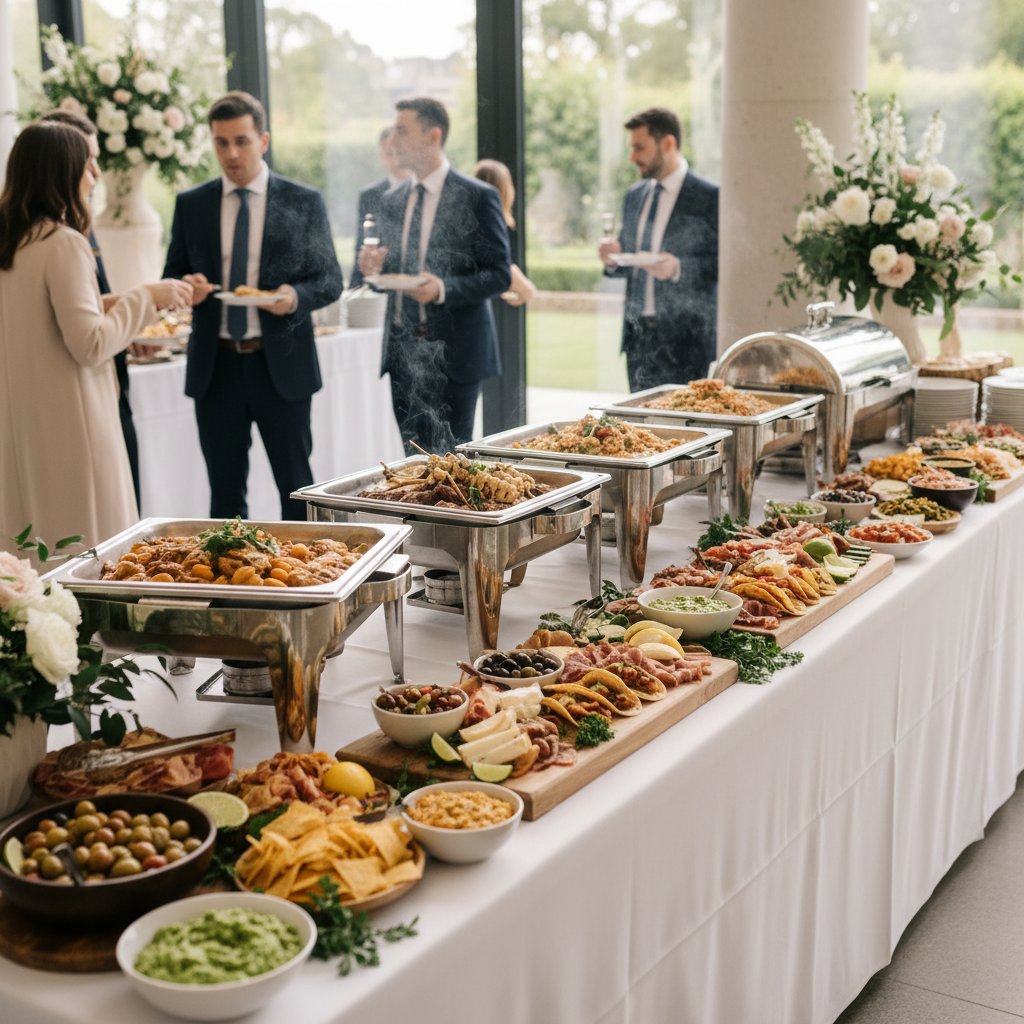
Wedding catering is the end-to-end planning, cooking, and service that feeds your guests from welcome bites to last-call snacks. From our Woodbridge base at Unit #23 120 Woodstream Blvd, LunchLink coordinates chef-curated menus, staffing, and logistics across Toronto and the GTA so your wedding day runs smoothly and deliciously.
By LunchLink • Last updated: 2026-06-10
Above-Fold Overview: What You’ll Learn
This complete wedding catering guide shows you how to plan menus, choose service styles, cover all dietary needs, and run a tight timeline. You’ll get checklists, staffing ratios, rental tips, and a realistic run-of-show so you can brief vendors confidently and feed every guest well.
Planning wedding food shouldn’t be guesswork. Use this practical playbook to move from ideas to an organized, guest-friendly meal experience.
• Clear definitions: what wedding catering includes (and doesn’t)
• Menu strategy by season, guest count, and venue rules
• Service styles compared: plated vs buffet vs family-style vs stations
• Dietary accommodations done right: halal, vegan, gluten-free, nut-free
• Logistics, staffing, rentals, and timeline checkpoints
• Toronto/Woodbridge nuances for smooth day-of execution
Quick Summary
Start with headcount, venue rules, and your service style. Lock a caterer 9–12 months out, finalize menu and rentals 6–8 weeks out, and confirm counts 5–7 days out. Plan 8–10 passed bites per guest for cocktail hour and 60–90 minutes for dinner service with one server per 10–12 guests.
Here’s the high-level flow you can adapt to any venue, season, or guest mix.
• Define service style and dietary boundaries
• Draft a balanced, labeled menu (starters, mains, sides, dessert)
• Confirm rentals, staffing ratios, and back-of-house needs
• Sequence your timeline from arrival to last call
• Share a one-page brief with all vendors and your coordinator
Wedding Catering 101: What It Is and What to Expect
Wedding catering covers menu design, cooking, delivery, setup, service, and breakdown for the entire celebration. A complete scope typically includes tastings, dietary labeling, rentals coordination, and a staffed service plan that matches your venue’s kitchen, power, and timing constraints.
Think beyond food. Great catering aligns menu, flow, and staffing to your venue, guest mix, and timeline.
• Menu design: Seasonal choices with a protein, vegetarian/vegan entrée, and inclusive sides
• Dietary coverage: Clear labels for halal, vegan, gluten-free, nut-free, and dairy-free
• Service plan: Passed bites, buffet, plated, or stations—plus bussing and resets
• Rentals: Chafers, platters, china/flatware, beverage tubs, and back-of-house gear
• Staffing: Coordinated team for prep, service, and teardown
In our experience, dinner service works best when you budget 60–90 minutes for mains and aim for 8–10 passed bites per guest during cocktail hour to keep lines short and energy high.
Why Wedding Catering Matters for Guest Experience
Food shapes how guests remember your wedding. The right plan keeps lines moving, covers allergies confidently, and matches the mood—elegant seated, social stations, or lively family-style. When service flows, you gain time for photos, toasts, and dancing without sacrificing a hot, satisfying meal.
Here’s why smart planning pays off.
• Memorability: Signature flavors and late-night snacks become moments guests talk about.
• Confidence: Labeled meals prevent guesswork for halal, vegan, and gluten-free guests.
• Flow: A tight run-of-show avoids queues and protects first-dance timing.
• Waste control: Portion planning (5–6 oz protein per guest) limits over-ordering.
• Operations: Clear bussing plans keep tables tidy for speeches and photos.
We’ve found that one server per 10–12 guests at plated dinners, or one per 20–25 guests for buffets with bussers, keeps service smooth and attentive.
How Wedding Catering Works: Timeline, Steps, and Roles
Book your caterer 9–12 months out for peak dates. Confirm menu, rentals, and staffing 6–8 weeks before. Share a final headcount and labeled guest list 5–7 days prior. On the day, a captain oversees load-in, setup, service, and strike with a minute-by-minute schedule.
LunchLink adapts our corporate logistics engine to weddings: reliable delivery windows, labeled meals where helpful, and a single point of contact.
Local considerations for Woodbridge
• Weekend traffic into Toronto can add 20–30 minutes; schedule earlier dock windows for downtown venues.
• Summer heat demands extra ice and shaded staging for outdoor receptions; plan 1–2 backup coolers per 50 guests.
• Many GTA venues require vendor certificates and arrival manifests; prepare these alongside your run-of-show.
• Discovery and vision: Guest count, service style, dietary needs, and venue constraints.
• Tasting and selection: Shortlist 2–3 menus with seasonal and cultural balance.
• Operations plan: Load-in route, prep space, power/water, rentals, and staffing matrix.
• Final details: Seating chart, table numbers, and special meals list with labels.
• Event day: Captain meets coordinator, aligns on timing, runs service and resets.
Rule of thumb: cocktail hour runs 60–75 minutes, dinner 60–90, speeches 15–25, and dessert/late-night 45–60, depending on your timeline and traditions.
Service Styles Compared: Plated, Buffet, Family-Style, Stations
Choose service style based on guest flow, venue, and staffing. Plated is elegant and structured, buffet is flexible and efficient, family-style is social and abundant, and stations are interactive. Pair one core format with a short, labeled menu to keep timing tight and waste low.
Here’s a quick comparison to help you decide.
Style Best For Pros Trade-offs Plated Formal receptions, fixed timelines Predictable portions; elegant presentation; seated comfort Higher staffing needs; limited on-the-fly flexibility Buffet Mixed diets, casual formality Guest choice; efficient for 100–300+; easier dietary labeling Line management required; décor needs tidy resets Family-Style Communal energy, shared tables Warm, abundant feel; easy seconds Table space required; heavier bussing Stations Interactive, progressive dining High variety; fun chef action Space and power needs; careful queuing
For diverse teams and families, we often recommend a buffet or stations anchored by two proteins and a robust vegetarian entrée, plus clearly labeled sides.
Menu Planning and Dietary Accommodations
Offer a balanced menu with at least one vegetarian or vegan entrée and sides that are naturally gluten-free and nut-free where possible. Label everything clearly. Build flavor arcs that move from bright starters to satisfying mains and a familiar, celebratory dessert.
LunchLink curates globally inspired menus—Mediterranean, Mexican, and Greek—plus healthy salads that adapt well to weddings.
• Starters: 8–10 passed bites per guest; mix hot and cold.
• Mains: Two proteins (e.g., chicken and salmon), one hearty vegan entrée.
• Sides: Two vegetables, one starch; lean into seasonal produce.
• Dessert: Bite-sized sweets keep lines moving; 2–3 pieces per guest is plenty.
• Kids’ meals: Simple, fast, and served first to help parents relax.
If halal is on your list, ensure certified sourcing and separate handling. For deeper guidance on labeling and sourcing, review this overview of halal catering in Toronto.
Dietary Labeling and Food Safety
Clear, consistent labels are non-negotiable. Maintain separate prep tools for allergens, label every platter, and provide a master sheet that maps guest names to meals. This protects safety, streamlines service, and builds trust with your guests.
LunchLink’s workplace roots show here: we’re obsessive about transparent labels and safe handling.
• Label format: Halal, Vegan, GF, NF, DF; avoid ambiguous abbreviations.
• Prep discipline: Dedicated boards/knives; separate pans for allergen-free items.
• Service map: A one-page sheet for the captain with seat numbers and special meals.
• Communication: Announce where to find allergen-friendly dishes at buffets.
As a rule of thumb, plan for at least 10–15% of guests to request special meals across vegan, gluten-free, and halal—sometimes higher depending on community and venue.
Logistics, Staffing, and Rentals (Toronto + Woodbridge)
Great food needs great logistics. Confirm load-in routes, elevator access, and kitchen power. Staff at one server per 10–12 guests for plated, plus bussers. Reserve chafers, platters, and beverage tubs early. Always stage a backup prep area and cooling plan for outdoor events.
Our team coordinates timelines and rental counts with your planner and venue.
• Back-of-house: Minimum 2 eight-foot tables for prep; power strips and clean-up bins.
• Front-of-house: Extra linen for resets; discreet bussing stations per 40–50 guests.
• Ice and beverages: 2 drinks per guest in first hour, 1 each additional hour (rule of thumb).
• Outdoor: Shade, wind screens, and food-safe holding between 40–140°F.
If your venue limits onsite cooking, menu engineering (braises, room-temp salads, sturdy starches) ensures hot, timely service without a full kitchen.
How LunchLink Applies Corporate Precision to Weddings
We bring corporate operations to wedding days: reliable delivery windows, labeled meals, vetted partner kitchens, and a single point of contact. That means smooth dock times, accurate counts, and a menu plan that respects your venue’s rules and your guests’ needs.
Browse how we manage large groups in our corporate catering approach and adapt the same discipline for weddings.
• One point of contact: Clear updates and fewer emails.
• Menu versatility: Buffet-style spreads or individually packaged meals when needed.
• Dietary inclusion: Fully labeled plates and platters.
• Reliable logistics: Planned routes and contingencies for GTA traffic and loading.
If you prefer casual pre-wedding events, our small events catering service translates perfectly to welcome dinners and day-after brunches.
Sample Menu Archetypes (Mediterranean, Mexican, Greek)
Design menus around familiar, crowd-pleasing flavors with bright accents and inclusive options. Mediterranean, Mexican, and Greek profiles offer vibrant produce, halal-friendly proteins, and vegan-forward sides that scale well for buffets, stations, or family-style service.
Here are three proven archetypes we customize for season and venue.
• Mediterranean: Herb roasted chicken, saffron rice, roasted vegetables, Greek salad, baked fish or vegan moussaka, and lemon-forward desserts.
• Mexican-inspired: Citrus-marinated chicken, seared salmon, seasonal veg, cilantro-lime rice, hearty beans, and salsa bars with vegan add-ons.
• Greek: Lemon-oregano chicken, herbed potatoes, grilled vegetables, village salad, and spinach-and-feta vegetarian mains.
For sweets, many couples add cultural desserts or mithai; this overview on wedding menu planning offers ideas for pairing traditional sweets with modern menus.
Timeline Checkpoints and a One-Page Brief
Work backward from ceremony time. Lock vendors early, confirm menu and staffing at 6–8 weeks, and deliver final counts 5–7 days prior. Share a single-page brief with arrivals, contacts, seating map, and dietary notes so every vendor operates from the same playbook.
Use these milestones to avoid last-minute scrambles.
• 9–12 months: Reserve venue and hold your caterer for preferred dates.
• 3–4 months: Tasting, menu direction, rentals list started.
• 6–8 weeks: Finalize menu, staffing matrix, and run-of-show.
• 2–3 weeks: Share vendor contact sheet and seating map.
• 5–7 days: Final headcount, labeled dietary list, and timeline tweaks.
Want more planning structure? See our broader catering planning guide for corporate events—its checklists map cleanly to weddings.
Staffing Math You Can Trust
Aim for 1 server per 10–12 guests for plated dinners (plus a captain), or 1 per 20–25 guests for buffets with bussers. Add 1 bartender per 50–75 guests depending on cocktail complexity. This keeps service moving while leaving room for photos and toasts.
These ratios balance attentiveness with efficiency.
• Plated: 1 server per 10–12 guests; 1 runner per 2–3 servers.
• Buffet: 1 server per 20–25 guests; 1–2 bussers per 50 guests.
• Bars: 1 bartender per 50–75 guests; add a barback beyond 100.
• Captain: 1 per 75–125 guests to call the show.
For stations, staff each action point with a chef or attendant, then add floaters to reset and manage queues.
Rentals, Setup, and Layout
Map your room to minimize lines: straight buffets for speed, U-shaped for visibility, and dual-sided for 150+ guests. Reserve chafers, platters, tongs, beverage tubs, and linens early. Always stage an emergency kit: lighters, gaffer tape, gloves, sanitizer, and spare utensils.
Great layout is a guest experience multiplier.
• Buffet math: One 6–8 ft table per 60–80 guests (dual-sided) with reset space.
• Family-style: Platters sized to pass comfortably; avoid overloading tables.
• Plated: Expedite tables closest to the kitchen first to protect temperature.
• Dessert: Bite-sized portions speed lines; set near photo ops for crowd flow.
Share a simple diagram with your venue and caterer to confirm power, bussing stations, and spill kits.
Budgeting Without Numbers: What Actually Drives Cost
Cost is shaped by service style, staffing, rentals, and complexity. Plated dinners and chef-run stations demand more labor, while buffets and family-style reduce staffing. Rental scope, venue access, and late-night service windows also influence your final investment.
Focus conversations on drivers you can control—scope, timing, rentals, and menu complexity—not line-item prices.
• Style: Plated and stations are labor-intensive; buffets scale efficiently.
• Menu: Multiple entrées, custom desserts, and premium proteins add complexity.
• Rentals: China/flatware/glassware vs. elegant disposables shift logistics.
• Access: Tight load-ins and upper floors add time and team members.
• Timeline: Extended cocktail hours and late-night menus increase service hours.
We’ll translate your priorities into a menu and service plan that maximizes value without compromising hospitality.
Real-World Examples from GTA Weddings
Every couple’s needs differ, but consistent planning wins. We align flavor, flow, and dietary coverage, then staff to match the room. Here are three GTA scenarios that show how menus and logistics adapt to venue rules, guest mix, and cultural traditions.
Consider how these patterns map to your celebration.
• Multicultural buffet for 220: Dual-sided lines, Mediterranean mains, vegan moussaka, halal chicken, and station-style salad bar. We staged two bussing stations per 80 guests and kept average buffet times under 20 minutes.
• Intimate plated for 68: Three-course seated meal with a pescatarian main. Captain released tables in waves; 75-minute dinner start-to-finish with warm plates and tidy resets.
• Garden stations for 140: Taco, pasta, and salad action points. Shade tents, ice baths, and a backup prep table protected food temps during a July heat wave.
Thinking about welcome parties or farewell brunches? Our office catering systems handle group breakfasts and next-day drop-offs with the same reliability.
Toronto and Woodbridge Nuance: Venue Rules and Traffic
Local rules matter. Many GTA venues require certificates of insurance, vendor lists, and timed dock access. Woodbridge (ON L4L 7Z1) couples should pad load-in for weekend traffic and confirm service elevators for downtown properties to keep schedules on track.
We coordinate paperwork and dock times so trucks, staff, and rentals arrive in the right order.
• Paperwork: Insurance, permits (if needed), and contact sheets prepared together.
• Dock times: Book earliest windows—arrive ready to stage, then pace service.
• Elevators: Pre-scout dimensions; stage carts and linens to speed trips.
For outdoor spaces, confirm noise cutoffs and generator placement before you lock your run-of-show.
Tools and Resources You Can Use
Use lightweight templates to align your team: a one-page run-of-show, a labeled dietary roster, and a rentals checklist. Share them with your venue, planner, and caterer so everyone references the same information all day.
Here’s a simple toolkit many couples rely on.
• Run-of-show: A minute-by-minute schedule from vendor arrival to strike.
• Dietary roster: Alphabetical list that maps guests to labeled meals.
• Rentals list: Chafers, platters, utensils, linens, tubs, and safety supplies.
• Contact sheet: Phone and email for planner, venue, photo/video, DJ, and captain.
Our operations checklists for corporate events mirror what you need for a wedding day—simple, shared, and specific.
Talk With a Caterer Who Plans Like a Producer
If you want wedding food that’s delicious and on schedule, start with a quick planning call. We’ll outline service style, staffing, and dietary coverage, then build a menu that fits your venue and timeline without the stress.
Prefer to start with a menu sketch? Share your date, venue, and headcount, and we’ll return a sample plan with labeled options and a staffing matrix.
Explore how we scale meals reliably in our operations-focused catering guide, then reach out to align on your wedding day goals.
Wedding Catering FAQ
These are the most common wedding catering questions couples ask us in Toronto and the GTA. Use these quick answers to pressure-test your plan and brief vendors clearly.
How far in advance should we book a wedding caterer?
Reserve your caterer 9–12 months ahead for peak-season Saturdays. Off-peak dates can be 6–9 months. You’ll finalize menu and staffing 6–8 weeks out and confirm headcount and labeled dietary needs 5–7 days before the event.
Which service style is best for a mixed-diet guest list?
Buffets or stations work well for mixed diets because guests can self-select. Offer two proteins and a hearty vegan entrée, label sides clearly (halal, vegan, GF, NF, DF), and staff lines to keep wait times short.
How many hors d’oeuvres should we plan per guest?
A practical rule of thumb is 8–10 passed bites per person for a 60–75 minute cocktail hour. Mix hot and cold options and include at least one vegan bite so every guest has choices without holding up trays.
Can we plan halal, vegan, and gluten-free meals together?
Yes. Build the menu around inclusive mains and sides, then label everything clearly. Keep prep and service separate for allergens, and provide a master sheet that maps guest names to special meals to speed delivery and protect safety.
What should be on our one-page wedding day brief?
Include vendor contacts, dock times, load-in route, power/water notes, room diagram, seating map, timeline from arrival to strike, and a labeled dietary roster. Share it with all vendors so everyone executes the same plan.
Key Takeaways
Define service style, label inclusively, and staff smartly. Lock logistics early, share one clear brief, and keep menus focused. That’s how you serve great food on time and enjoy every minute of your day.
• Pick a service style that matches your venue and timeline.
• Plan inclusive menus with clear labels; keep sides naturally allergen-friendly.
• Staff to proven ratios so lines stay short and plates stay hot.
• Confirm rentals, load-in, and dock times early—especially downtown.
• Share a one-page brief so every vendor reads the same playbook.
Want help turning this plan into a menu? Explore our catering systems and group meal logistics, then contact LunchLink in Woodbridge to start your wedding plan.