Catering
Backyard BBQ Catering for 30 Guests: A Toronto Guide
Plan backyard BBQ catering for 30 guests with practical portions, menu ideas, buffet versus boxed guidance, dietary labels, and Toronto-GTA logistics.
June 12, 2026 · LunchLink
Last updated: October 2026
Key takeaway:For backyard BBQ catering for 30 guests, plan two complementary mains, three or four sides, clear dietary labels, and either a buffet or boxed format that fits your schedule. Confirm the guest count, access details, serving time, and weather backup before delivery so a casual BBQ feels organized rather than improvised.
By LunchLink • Last updated: October 29, 2026
In this guide:
• Planning the event
• Menu and portions for 30 guests
• Choosing a service style
• Dietary needs and labeling
• Woodbridge and GTA logistics
• Planning timeline and checklist
• Common mistakes to avoid
• Backyard BBQ catering FAQ
• Plan with LunchLink
What to decide before booking backyard BBQ catering
Backyard BBQ catering can mean several different service models. A caterer may deliver ready-to-serve trays, prepare individually packaged meals, provide staffed buffet service, or grill food on-site. Those options create different requirements for space, timing, equipment, staffing, and cleanup, so the first step is to define what “catering” should look like for your event.
For a 30-person workplace lunch, the most useful planning brief is short but specific. Record the date, serving window, guest count, venue address, access instructions, preferred format, dietary requirements, and a weather contingency. If the event is connected to a meeting or employee program, include the time guests can actually leave their desks; that determines whether a flexible buffet or pre-portioned boxes will work better.
Confirm the guest count and event rhythm
Thirty guests is large enough to need organized staging but small enough for a simple service plan. Ask whether everyone will eat at once or whether people will arrive in waves. A 30-person buffet can move efficiently when the table is arranged logically, while boxed meals are often easier when attendees have staggered breaks or need to return to work quickly.
Use a planning range if the RSVP list is not final. Separate confirmed guests from possible attendees, then tell the caterer when the final count will be available. The menu, packaging, labels, and portion quantities should be updated together rather than changing only the number of meals.
Choose the experience you want to create
A backyard-style menu does not automatically require live grilling. You can create the relaxed feel with grilled or grill-inspired mains, colourful salads, buns, sauces, and outdoor-friendly presentation. Live grilling is a different operational choice that may require more space, ventilation, equipment, staff time, and venue approval.
For a workplace gathering, decide whether the priority is interaction, speed, customization, or minimal cleanup. A buffet encourages people to build their own plates and talk around the serving area. Boxed meals provide a more controlled experience, with each guest receiving a clearly identified meal and fewer shared utensils.
How much food should you order for 30 guests?
For 30 guests, a practical starting point is 6–8 ounces of cooked protein per person when protein is the centre of the meal. That equals approximately 11.25–15 pounds of cooked protein, depending on appetite, the number of mains, the amount of food in the sides, and whether the event falls during a full meal period. Confirm final quantities with the caterer because cooked yield varies by menu item.
Build the menu around two complementary mains rather than offering several similar proteins. A poultry or beef option can be paired with a substantial vegetarian or vegan main. This gives guests meaningful choice without making the buffet difficult to understand or leaving the kitchen to prepare too many small quantities.
A balanced 30-person BBQ menu
• Mains: Choose grilled chicken, beef burgers, brisket-style beef, kebabs, or another grill-forward entrée, plus a substantial vegetarian or vegan option such as vegetable skewers, falafel, plant-based burgers, or a grain-based bowl.
• Sides: Select three or four items, combining a leafy salad, a hearty salad or starch, a vegetable, and a fresh option. Examples include Greek salad, slaw, potato salad, grilled corn, quinoa tabbouleh, roasted vegetables, or watermelon with mint.
• Bread and condiments: Provide buns or wraps where appropriate, along with lettuce, tomato, onion, pickles, ketchup, mustard, and one or two sauces that suit the menu.
• Dessert: Mini brownies, lemon bars, cookies, or fruit are easy to portion and serve outdoors. Plan one piece per guest, with some extra pieces if dessert is central to the event.
• Drinks: Include still and sparkling water, then add iced tea, lemonade, or another non-alcoholic option if the event format calls for it.
Menu componentPlanning guidelineApproximate quantity for 30Decision note
Cooked protein6–8 ounces per person11.25–15 poundsAdjust for appetite, meal timing, and the amount of food in sides MainsTwo complementary choicesOne familiar option plus one vegetarian or vegan mainMore variety is not always better if quantities become too small SidesThree or four selectionsEnough for roughly two to three scoops per guestCombine leafy, hearty, vegetable, and fresh elements Buns or wrapsOne to 1.5 per guest when required30–45Increase for burger-focused menus; reduce for bowls or plated meals DessertOne piece per guest, plus a modest reserveApproximately 30–40 piecesSmall portions allow guests to try dessert without excessive waste
These are planning guidelines, not a substitute for a menu-specific quote. Burgers, sandwiches, bowls, and buffet proteins have different yields and serving patterns. Tell the caterer whether the BBQ is a full lunch, a late-afternoon snack, or part of a larger event so quantities can be matched to the occasion.
How to make the menu feel complete
Contrast makes a BBQ menu more appealing. Pair a rich or smoky main with bright acidity, crisp vegetables, or a fresh salad. Include at least one mild sauce and place hotter sauces separately so guests can choose their own level of heat.
Think about how food will be eaten outdoors. Dishes that hold well, can be served with minimal carving, and do not require complicated assembly are easier for a 30-person workplace event. If guests will be standing, offer manageable portions and sturdy plates. If there is seating and a longer meal period, a more generous buffet can work well.
Which BBQ catering format is best: buffet, boxed, or on-site grilling?
The right format depends on the venue, agenda, desired experience, and available setup area. Buffet service is usually the most flexible for a social lunch, boxed meals are efficient for a scheduled workday, and on-site grilling creates theatre but brings additional operational requirements.
FormatBest suited toAdvantagesQuestions to resolve
Drop-off buffetGuests eating together with enough table spaceChoice, flexible portions, relaxed backyard atmosphereWhere will food be staged, and who will manage replenishment? Boxed mealsShort breaks, staggered attendance, or limited spaceClear portions, individual labels, simple distribution and cleanupHow will guests select meals, and where will empty packaging go? Staffed buffetEvents where presentation and guided service matterProfessional flow, help with portions, and support for dietary separationHow many staff members and how much setup space are included? On-site grillingExperiential events with suitable outdoor spaceFresh preparation, aroma, and a visible cooking experienceAre equipment, ventilation, power, fire restrictions, and cleanup covered?
When a buffet is the better choice
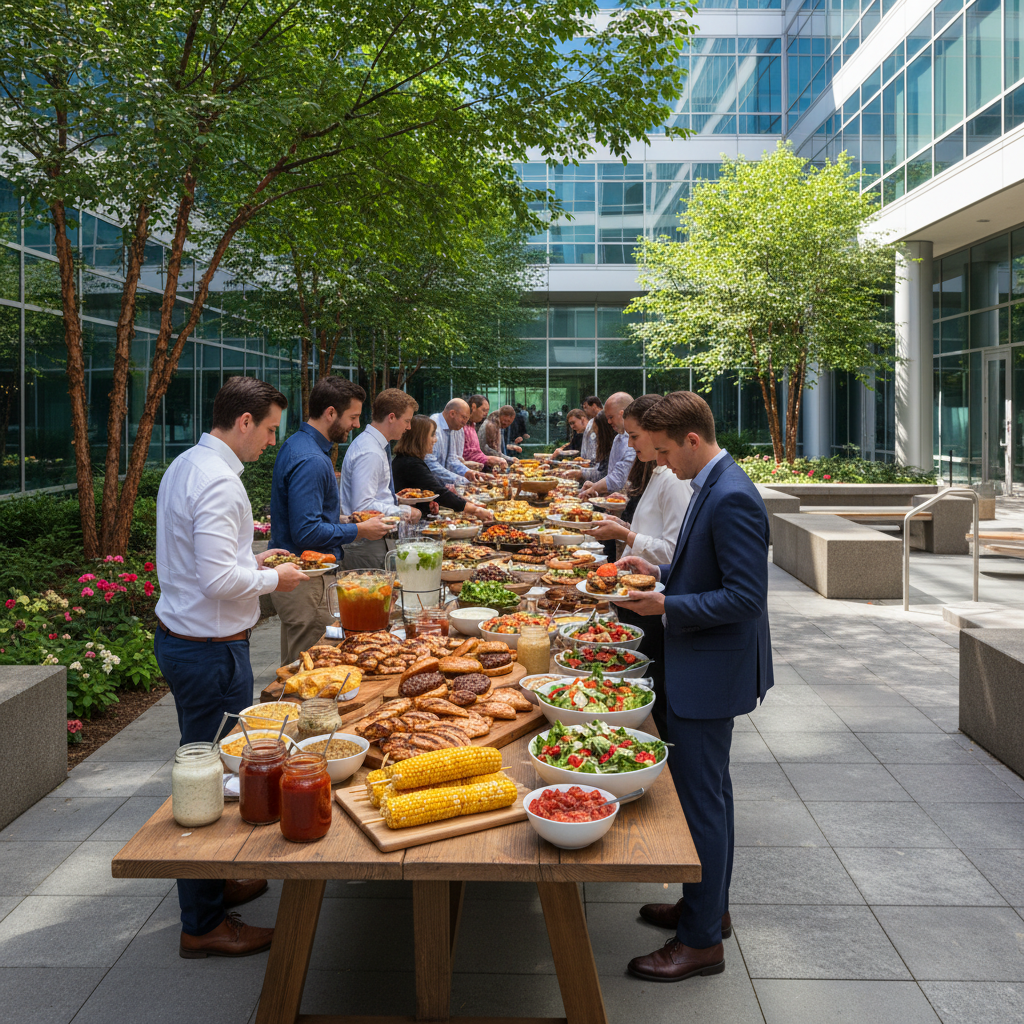
Choose a buffet when guests value choice and the event has a shared meal period. For 30 people, use one table for plates and napkins, then arrange mains, sides, sauces, and desserts in a natural sequence. Put dietary-specific dishes in clearly marked positions rather than making guests search for them.
Leave room between hot dishes and cold salads, and keep serving utensils with the correct trays. A named point person can monitor the table, answer basic questions, and contact the caterer if an item needs attention. That small assignment prevents the organizer from being pulled away from the event.
When boxed meals are the better choice
Boxed meals are useful when the lunch must begin and end at a defined time. They also help when the venue has limited table space or when attendees are working from different rooms. Each box should show the guest’s meal type and relevant dietary information in readable language.
Do not treat boxed service as a reason to remove variety. Offer a small number of clearly defined meal choices, collect selections before the event, and keep a sensible number of extras for late additions. Position boxes alphabetically, by team, or by meal type so distribution does not become a queue of questions.
When on-site grilling is worth considering
On-site grilling is best when cooking is part of the event rather than simply a way to serve lunch. It can create an engaging atmosphere for a company picnic or outdoor celebration, but it requires a suitable location and enough time for setup and service. Confirm whether open flames, cooking equipment, fuel, ventilation, and waste handling are permitted at the venue.
If live grilling is not practical, a delivered buffet can still deliver a convincing BBQ experience through grilled mains, sauces, sides, and presentation. The important distinction is to describe the service accurately so the organizer and guests know what will happen on the day.
How should dietary needs be handled at a catered BBQ?
Dietary planning should begin when invitations or RSVPs are collected, not when food arrives. Ask guests to identify relevant requirements in plain language, then separate preferences from allergies and other needs that require careful handling. Share the final list with the caterer and confirm how those meals will be prepared, packaged, labeled, and staged.
A welcoming BBQ menu includes substantive alternatives rather than treating dietary guests as an afterthought. A vegan guest should have a filling main, not only salad and bread. Guests avoiding gluten should have a clearly identified base and suitable sides, while halal requirements should be addressed with appropriate menu planning and distinct service arrangements.
Use labels that guests can understand quickly
• Name the dish in ordinary language.
• Identify relevant categories such as halal, vegan, vegetarian, or gluten-free only when they accurately apply.
• Call out common allergens in readable text, including dairy, nuts, wheat, egg, or sesame when relevant to the menu.
• Use separate serving utensils for dishes that must remain distinct.
• Place dietary-specific foods where guests can find them without opening boxes or asking several people.
Labels communicate the menu, but they do not remove the need to discuss preparation and cross-contact. If a guest has a severe allergy, provide the caterer with the information early and ask what controls are available. Avoid promising an allergen-free environment unless the supplier has specifically confirmed that standard.
For halal menu planning, LunchLink provides additional information through its halal corporate catering guidance. The same principle applies to every dietary requirement: confirm the specific need, choose a suitable dish, and keep the meal identifiable through delivery and service.
Woodbridge, Toronto, and GTA delivery logistics
Outdoor catering succeeds or fails on access and timing as much as on the menu. LunchLink operates from Woodbridge and serves workplace events across Toronto and the GTA. Availability, delivery windows, menu choices, staffing, and service details are supplier-specific, so request a quote with the complete event brief rather than relying on a general service-area assumption.
For a Woodbridge event, provide the full address, postal code, entrance or loading instructions, parking information, and the exact location of the serving table. For a Toronto workplace, include building reception procedures, elevator requirements, security rules, and whether the driver can reach the event area or must leave food at a designated receiving point.
Plan the delivery window around the serving time
Food should arrive with enough time for safe staging and setup but not so early that quality suffers. Ask the caterer to recommend a delivery window based on the chosen format, then communicate one named on-site contact who can answer the driver’s questions.
For buffet service, allow time to position tables, arrange labels, separate utensils, and confirm the food sequence. For boxed meals, allow time to sort packages and identify dietary meals before guests arrive. A delivery window is not the same as a guaranteed serving time, so include setup needs in the booking conversation.
Keep a weather backup for outdoor events
Toronto and GTA weather can change quickly during the outdoor event season. Hold a covered area or indoor room as a backup, and decide in advance who will make the change if rain, high heat, or strong wind affects the site. Move the plan early enough that the caterer can adjust staging and the attendees can receive clear instructions.
A backup location should have a usable serving surface, guest access, and enough room for food and people to move safely. If the plan includes live grilling, confirm whether the alternative location allows the equipment; otherwise, agree on a delivered or hot-held service option before the event date.
A practical backyard BBQ catering timeline
A short timeline keeps decisions visible and reduces last-minute changes. The exact lead time depends on the date, menu, guest count, staffing, and supplier availability, but the following sequence gives an office organizer a useful starting point.
When the event is first approved
• Set the date, meal period, venue, and approximate headcount.
• Decide whether the event is a drop-off buffet, boxed meal, staffed buffet, or live-grilling experience.
• Ask about dietary requirements in the invitation or RSVP process.
• Identify whether the venue permits outdoor cooking, tents, equipment, or open flames.
• Request a menu proposal that explains what setup, delivery, staffing, and cleanup include.
Several days before service
• Confirm the final headcount range and the list of dietary meals.
• Approve the menu, sauces, beverages, serving equipment, and packaging.
• Send the delivery address, contact name, phone number, access instructions, and serving location.
• Confirm the weather backup and explain how the decision will be communicated.
• Prepare tables, waste and recycling containers, signage, and any building approvals.
The day before and day of the event
• Reconfirm the delivery and serving windows with the supplier.
• Share a simple run-of-show with the on-site contact and any host or facilities staff.
• Set up the covered or indoor alternative if weather conditions make it prudent.
• Check labels and place dietary-specific meals or trays where guests can identify them easily.
• Keep hot and cold foods in the appropriate service conditions and follow the caterer’s handling instructions.
• Stage utensils, beverages, napkins, and waste receptacles before guests arrive.
Common backyard BBQ catering mistakes to avoid
Choosing too many mains
Offering five or six mains may sound generous, but it can spread quantities too thin and make labels and service confusing. Two well-chosen mains usually create a clearer experience for 30 guests. Add variety through sides, sauces, and one meaningful vegetarian or vegan option.
Planning only for the average guest
Average portions do not describe every event. A lunch after a long outdoor activity may need a different balance from a short meeting break. Tell the caterer about the agenda, meal timing, guest profile, and whether other snacks will be available so the quantity recommendation reflects the event.
Leaving dietary details until delivery
Late dietary requests can affect ingredients, preparation, packaging, and labeling. Collect requirements early and verify them against the final menu. If a guest reports a severe allergy, do not make assumptions about what is safe; obtain a specific response from the caterer.
Forgetting the venue infrastructure
A backyard or patio may not have enough tables, shade, power, refrigeration, lighting, or waste capacity. Walk through the site before booking and note where food will arrive, where guests will queue, and how the area will be reset afterward.
Assuming outdoor means casual in every respect
A relaxed setting still benefits from professional organization. Clear labels, a named contact, an orderly buffet, and a weather plan make the experience easier for guests and the host. The goal is to remove friction without making the gathering feel formal.
Backyard BBQ catering FAQ
How much BBQ food do I need for 30 guests?
Start with approximately 6–8 ounces of cooked protein per guest, or about 11.25–15 pounds total, then adjust for the menu and appetite. Plan two complementary mains, three or four sides, and enough buns or wraps for the chosen format. A caterer can refine the quantity based on the specific recipes and expected cooked yield.
Is buffet or boxed BBQ catering better for an office event?
Choose a buffet when guests will eat together and want flexible portions and variety. Choose boxed meals when breaks are staggered, space is limited, or individual labels and quick distribution matter most. For 30 guests, both formats can work well when the serving flow and dietary information are planned in advance.
Can a BBQ menu accommodate halal, vegan, and gluten-free guests?
Yes, provided the requirements are shared early and the menu includes substantial alternatives. Use clearly labeled dishes, distinct serving utensils, and separate staging where appropriate. Confirm preparation and cross-contact controls with the caterer, especially for severe allergies or requirements that must remain strictly separated.
What should I do if the weather changes?
Reserve a covered or indoor backup area before the event and set a decision point with the venue and caterer. The alternative should have enough space for food staging, guest movement, and any permitted equipment. Communicate the change promptly so delivery, setup, and guest instructions remain aligned.
Plan your Toronto-area BBQ catering menu
LunchLink helps workplace organizers compare menu formats, communicate dietary needs, and coordinate delivery for events across Toronto and the GTA. Share your guest count, date, serving style, venue details, and dietary requirements to begin planning a backyard-style BBQ that is enjoyable for guests and manageable for the host.
For a broader service overview, visit LunchLink’s corporate catering service and request a menu proposal based on your event.