Catering
Funeral Catering Toronto: A Practical Memorial Meal Guide
Plan funeral catering in Toronto with inclusive menus, clear labels, service options, setup timelines, and practical guidance for a respectful memorial.
June 2, 2026 · LunchLink
Last updated: October 2026
Key takeaway:Funeral catering in Toronto combines a respectful menu with dietary accommodations, dependable delivery, discreet setup, and clear day-of coordination. Choose the service style that fits the venue, confirm a headcount range and food requirements, and allow enough setup time so the reception can remain focused on remembrance rather than logistics.
By LunchLink • Last updated: 2026-06-02
How to plan a memorial meal in Toronto
Planning food after a death can feel like one more demanding task at an already difficult time. A short, practical plan helps the family make decisions without repeatedly revisiting details. Start with the venue, timing, approximate attendance, preferred service style, and any cultural or dietary requirements.
LunchLink is a Toronto-area corporate catering service based in Woodbridge at Unit #23, 120 Woodstream Blvd. Its workplace catering systems - menu planning, labeled meals, routing, confirmations, and setup - can also support appropriate memorial and celebration-of-life receptions across Toronto and the GTA.
• What funeral catering includes
• How to choose a service style
• How to build an inclusive menu
• Toronto and Woodbridge logistics
• A practical planning checklist
• Frequently asked questions
What does funeral catering include?
Funeral catering is organized food and beverage service for a visitation, memorial service, wake, or celebration of life. Depending on the provider and venue, it may include menu design, dietary accommodations, delivery, buffet or packaged-meal setup, warming equipment, labels, staffing, and cleanup coordination.
The right level of service depends on the reception rather than on a fixed formula. A family hosting a small gathering at home may need delivery and simple setup, while a community hall or workplace may need a complete buffet plan, clear table signage, and a person assigned to receive the order.
Core decisions to make
• Guest count: Use a range if attendance is uncertain, such as a lower and upper estimate.
• Venue: Confirm access, elevator or loading instructions, tables, power, waste rules, and whether outside food is permitted.
• Service format: Select individually packaged meals, buffet service, or a hybrid.
• Menu coverage: Include familiar choices as well as vegetarian, vegan, halal, gluten-free, or other requested options.
• Handoff: Name one person who can receive the delivery and answer questions without placing that responsibility on the closest family members.
Ontario’s official funeral-planning guidance also recommends confirming what a funeral establishment will accept before purchasing outside supplies or services. This is useful when a reception is being held at a funeral home or another regulated facility; venue rules should be checked separately from catering decisions. Ontario funeral-arrangement guidance provides the relevant official context.
Why thoughtful memorial catering matters
Food gives guests a natural reason to pause, sit together, and share memories. A calm meal does not need to be elaborate, but it should be easy to understand, easy to access, and appropriate to the tone of the gathering.
Good planning also protects the family’s limited attention. When labels, delivery timing, table placement, and dietary questions have been addressed in advance, relatives and volunteers can spend more time greeting guests and less time troubleshooting trays or searching for serving utensils.
What a considerate plan accomplishes
• Reduces decision fatigue: A short menu with clear choices is easier to approve than a long catalogue of possibilities.
• Welcomes different guests: Distinct vegetarian, vegan, halal, and allergen-aware items help people eat confidently.
• Supports the venue: A defined setup and cleanup plan avoids blocking entrances, circulation paths, or service areas.
• Preserves dignity: Neutral presentation and quiet arrival procedures let the food support the event without becoming its focus.
LunchLink reports experience catering more than 850 events and serving more than 25,000 guests in Toronto workplaces. Those figures describe its corporate catering operations, not funeral-specific outcomes, but the same operational disciplines - accurate counts, dietary labeling, routing, and confirmation - are relevant to a memorial reception.
Which service style works best for a memorial reception?
Choose the format based on the venue, guest mobility, number of locations, and amount of help available on site. Individually packaged meals prioritize clarity and speed; buffets create a more communal experience; a hybrid can balance both.
Memorial reception service styles Service styleUseful whenAdvantagesPlanning considerations Individually packaged mealsGuests move between locations, allergy needs are prominent, or service must be fastSimple portions, clear labels, easy handoffPlan packaging disposal and a place for guests to collect meals BuffetGuests will linger in a hall, home, place of worship, or community spaceWarm communal feel and flexible portionsProvide serving utensils, table space, labels, and someone to monitor the line HybridThe group has varied mobility or dietary requirementsCombines shared warm dishes with individually portioned itemsCoordinate two presentation formats and make labels consistent
When individually packaged meals are the better choice
Packaged meals are practical for a visitation followed by travel, a reception spread across more than one room, or a gathering where guests arrive at different times. They also make it easier to identify a specific vegetarian, vegan, halal, or gluten-free meal before it is picked up.
When a buffet is the better choice
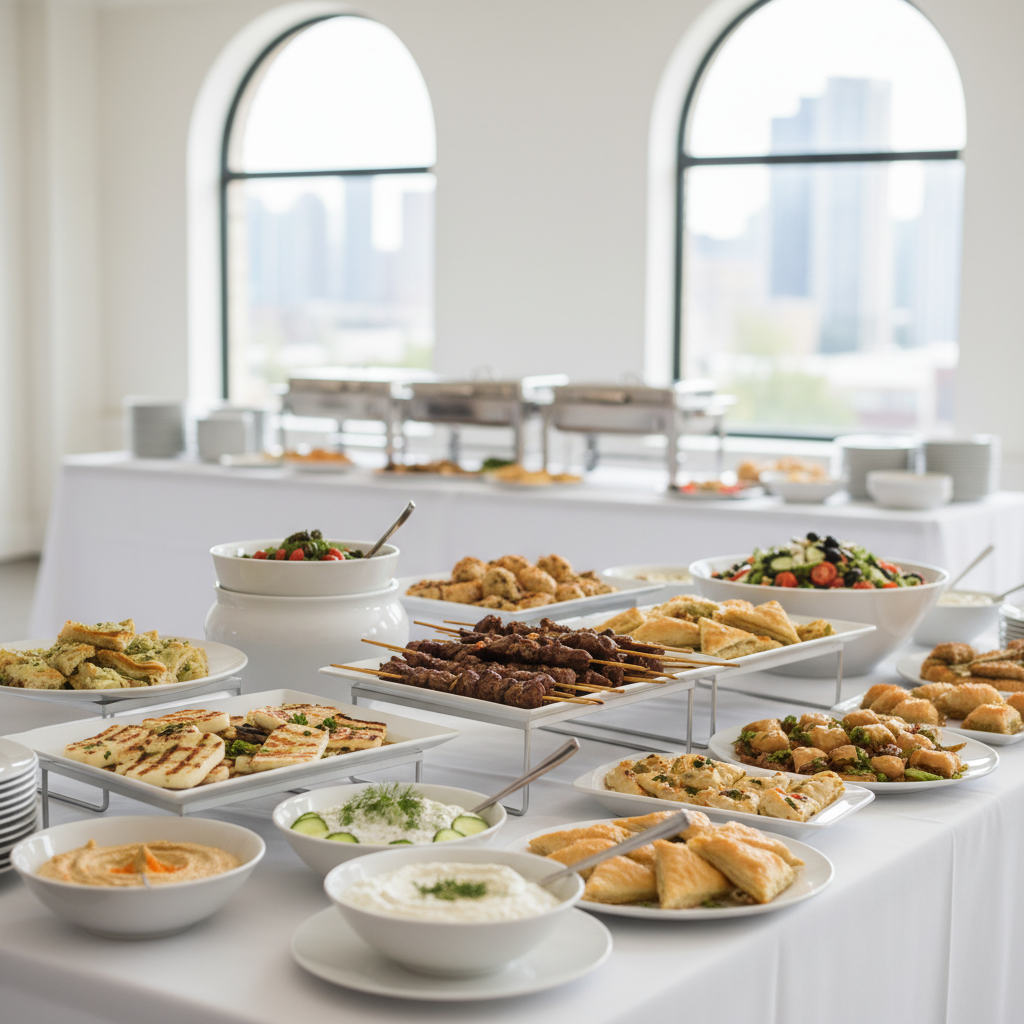
A buffet suits guests who are sitting together and may want different portions. It works particularly well when a venue has suitable tables and one or two volunteers can help keep the line orderly. Place labels directly in front of each dish rather than relying on a separate menu that guests must carry.
How to build an inclusive memorial catering menu
A useful menu has enough variety to welcome guests without creating unnecessary complexity. One or two main proteins, a substantial vegetarian or vegan option, two sides, a salad, bread or spreads, and a modest dessert can form a complete meal. The final selection should reflect the family’s preferences and any cultural or faith-based requirements.
Menu components that travel well
• Main dishes: Grilled chicken, fish, falafel, or roasted vegetable dishes offer familiar choices and can work in buffet or packaged formats.
• Sides: Rice pilaf, roasted potatoes, seasonal vegetables, and grain salads generally hold well and are easy to portion.
• Fresh items: Green salads, chopped vegetables, fruit, and dressings served separately help preserve texture.
• Shared accompaniments: Hummus, pita, olives, and similar items can provide flexible options for guests who want a lighter plate.
• Dessert and drinks: Bite-size pastries, fruit, coffee, tea, and water offer simple hospitality without requiring a formal dessert service.
Mediterranean and Greek-inspired menus can be adaptable because they combine grilled proteins, vegetables, legumes, salads, and shared accompaniments. They are not the only appropriate choices. The important criteria are clear ingredients, reliable holding, suitable portions, and respect for the family’s traditions.
How to handle dietary requirements safely
Ask for dietary information early and distinguish allergies from preferences. Labels should identify the dish and relevant ingredients or allergens, while separate utensils and distinct platters reduce accidental mixing. A provider should confirm its own preparation and cross-contact procedures rather than relying on a generic “dietary-friendly” label.
For groups with several requirements, individually packaged meals can provide the clearest handoff. For a buffet, keep specialty dishes physically separate, label them at the tray and table level, and tell the person receiving the order where those items are placed.
Toronto and Woodbridge logistics for a calm reception
Timing is especially important when catering follows a service or visitation. Confirm the time guests will eat, not only the time the ceremony begins. The caterer also needs a realistic arrival window, access instructions, a contact person, and enough time to arrange the food before guests enter the room.
Information to give the caterer
• Venue name, full address, room name, and any loading or parking instructions.
• Service start time, guest arrival pattern, and whether food must remain available for late arrivals.
• Headcount estimate, update deadline, and expected children or mobility considerations.
• Available tables, power outlets, refrigeration, waste facilities, and restrictions on warming equipment.
• Name and phone number of the person receiving the delivery.
For a typical setup, allow a 45–60 minute window before guests are expected to eat, subject to the menu, venue, and provider’s instructions. This is a planning target rather than a universal service guarantee. GTA traffic, winter conditions, elevator access, and multi-site schedules can all affect the practical arrival plan.
LunchLink’s Woodbridge base supports service planning for Toronto and the GTA. For a Woodbridge venue, confirm the exact entrance and staging area rather than assuming the kitchen address or venue front door is the delivery point. For central Toronto or Scarborough locations, provide loading and elevator details in advance so the driver can arrive quietly and avoid disrupting the gathering.
A practical funeral catering checklist
Use this checklist as a single-page planning note. One family member, venue contact, or event coordinator should own the final version so the caterer does not receive conflicting instructions.
One to several days before the reception
• Confirm the date, venue, room, service time, and whether outside catering is permitted.
• Estimate attendance and identify a lower and upper headcount if the number is not final.
• Choose packaged meals, buffet service, or a hybrid based on the room and guest flow.
• Select a concise menu with at least one substantial vegetarian or vegan option.
• List allergies, halal requirements, gluten-free needs, and other dietary requests separately.
• Confirm labels, serving utensils, beverages, warming requirements, and cleanup expectations.
On the day
• Keep the delivery contact reachable and ready to direct the driver.
• Check that the setup does not obstruct entrances, memorial displays, accessibility routes, or exits.
• Place labels where guests can read them before serving themselves.
• Keep specialty dishes and their utensils separate from general service.
• Assign one helper to answer practical questions and refresh the station.
• Agree in advance how leftover food, packaging, and equipment will be handled.
A simple floor plan can prevent several last-minute problems. Mark the delivery entrance, buffet tables, drinks, waste bins, seating, and a quiet staging area. If the room is small, keep food against one wall or on a separate table so guests can circulate without crowding the family or memorial display.
Tools and coordination that reduce stress
The best planning tool is usually a shared document with only the information people need. Include the venue details, contacts, headcount, menu, dietary notes, arrival window, setup diagram, and final decision-maker. Avoid scattering updates among multiple text threads where an important allergy or timing change can be missed.
Useful documents
• Menu key: Dish name, ingredients or allergens, dietary category, and serving location.
• Contact sheet: Family lead, venue representative, caterer, and delivery contact.
• Room map: Tables, entrance, staging, beverages, waste, and accessible pathways.
• Day-of timeline: Delivery, setup, guest arrival, meal period, refresh, and collection.
Hosts planning an office-based memorial may find the general Toronto corporate catering coordination guide useful for thinking through access, multiple rooms, and internal points of contact. The tone and menu should be adapted to the memorial rather than copied from a workplace lunch.
For menu inspiration, office lunch catering options can help families compare individually packaged and shared formats. Ask the caterer which dishes are best suited to the timing, venue equipment, and dietary plan for the specific reception.
How LunchLink can support funeral catering in Toronto
LunchLink can help organize a memorial meal around inclusive menu choices, labeled items, delivery coordination, and a discreet setup. Its service-area facts confirm a Woodbridge base and coverage across Toronto and the GTA; availability, menu selection, staffing, and timing should be confirmed for each event.
The company’s broader menus include globally inspired options such as Mexican, Mediterranean, Greek, and salad-focused dishes, along with individually packaged and buffet-style formats. A family or event planner should explain the desired tone, cultural requirements, venue restrictions, and dietary needs before selecting a final menu.
For faith-based menus, review the halal catering information and ask specific questions about sourcing, preparation, labeling, and separation. A page describing an option is not a substitute for confirming the requirements of the particular family or community.
Frequently asked questions about funeral catering Toronto
How far in advance should funeral catering be booked?
Book as soon as the date, venue, and approximate attendance are known, even if the final headcount is not. Memorials can be arranged quickly, so confirm the service format, dietary requirements, delivery access, and update deadline first. Then revise quantities when attendance becomes clearer.
What food is appropriate for a celebration of life?
Comforting, easy-to-serve food is usually appropriate, but the family’s culture and preferences should lead the decision. A balanced menu may include one or two mains, a vegetarian or vegan option, simple sides, salad, bread or spreads, dessert, coffee, tea, and water. Choose dishes that hold and travel well for the planned service format.
How can a buffet accommodate halal, vegan, and gluten-free guests?
Use clearly named dishes, separate serving utensils, and distinct platters for specialty items. Confirm ingredients and preparation practices with the caterer, keep labels visible, and avoid placing specialty foods where they can be easily mixed with general dishes. Packaged meals may be clearer when several requirements overlap.
What should the venue contact confirm before delivery?
The venue contact should confirm the entrance, parking or loading route, elevator access, room opening time, tables, power, warming rules, waste arrangements, and the location of the food station. They should also know who is authorized to receive the order and where it should be staged. These details are particularly important for funeral homes, community halls, places of worship, and office buildings with controlled access.
Plan a respectful memorial meal with clear support
Start with the venue and timing, choose the simplest service style that fits the guests, and document dietary requirements clearly. A concise menu, visible labels, one point of contact, and a realistic setup window can remove much of the practical stress from a difficult day.
When you are ready to discuss a Toronto or Woodbridge reception, contact LunchLink through its official site with the date, venue, estimated headcount, preferred format, and dietary needs. The provider can then confirm whether the requested menu and logistics are suitable for the event.